
How to Build a High-Protein Salad That Keeps You Full
You know the feeling. You eat a salad for lunch, and within an hour, you’re raiding the snack drawer. It’s not your willpower that’s the problem. It’s the salad itself. If your bowl is mostly lettuce with a few veggies and a drizzle of dressing, you’re missing the two things that actually keep you full: protein and fiber. The good news? Building a high protein salad that tastes amazing and keeps you satisfied for hours is easier than you think. Here’s what a high protein salad should include, based on the science, plus a dietitian-approved hero recipe that packs 41 grams of protein and 16 grams of fiber per serving.
Key Takeaways
- The 2025-2030 Dietary Guidelines recommend 1.2-1.6 grams of protein per kilogram of body weight per day — that’s about 27-36 grams per meal for a 150-pound woman.
- Protein and fiber work together to keep you full: protein suppresses hunger hormones, while fiber slows digestion.
- A well-built high protein salad can easily deliver 30-40+ grams of protein and 10-16 grams of fiber in one meal.
- You can boost protein in your salad through the protein source itself, plant-based add-ins, and even the dressing.
- Meal prepping high-protein salads is simple with the right strategy — no wilting greens, no sad lunches.
The Science of Satiety: Why Protein + Fiber Work
Let’s start with what’s actually happening in your body. When you eat a meal, your digestive system releases hormones that signal to your brain whether you’re full or still hungry. Protein is a powerful trigger for these signals. A systematic review and meta-analysis on protein’s appetite-suppressing effects found that eating protein acutely decreases the hunger hormone ghrelin and increases satiety hormones like CCK and GLP-1. The result? You feel fuller, and you want to eat less at your next meal.
Now add fiber to the picture. Fiber doesn’t get fully digested — it moves through your system slowly, which physically stretches your stomach and signals fullness over a longer period. It also feeds your gut bacteria, which produce their own satiety signals. Together, protein and fiber create a one-two punch: protein tells your brain “I’m full now,” and fiber makes sure that feeling lasts.
Here’s the thing. Most salads only deliver one of these. A typical garden salad with grilled chicken might give you 20 grams of protein but almost no fiber. A bean salad might be fiber-rich but low in protein. The magic happens when you build a high protein salad that delivers both — and that’s exactly what we’re going to do.
How Much Protein Do You Really Need Per Meal?
You’ve probably heard the number 30 grams thrown around. But where does it come from? The 2025-2030 Dietary Guidelines for Americans recommend 1.2 to 1.6 grams of protein per kilogram of body weight per day for adults. That’s a significant increase from the previous recommendation of 0.8 grams per kilogram, which was the minimum needed to prevent deficiency — not the amount for optimal health.
Let’s do the math. For a 150-pound woman (that’s about 68 kilograms), the new guideline means she needs 82 to 109 grams of protein per day. Spread across three meals, that’s roughly 27 to 36 grams per meal. Our 7-Day High-Protein Meal Plan for Beginners shows how to hit those targets with delicious recipes. A review on protein per meal recommendations confirms that 25-30 grams per meal is sufficient to maximize muscle protein synthesis for most adults — the process your body uses to repair and build muscle tissue.
So when you see a salad with 41 grams of protein, that’s not just a nice number. It’s a meal that covers more than a third of your daily protein needs in one sitting. That’s the kind of lunch that actually powers you through the afternoon.
The Fiber Factor: Why 16g Matters
Protein gets most of the attention, but fiber is the unsung hero of a satisfying salad. Dietary fiber recommendations for heart health suggest women need about 25 grams of fiber per day and men need about 38 grams. Most Americans don’t get enough fiber — in fact, average intake falls well short of the recommended amounts.
A salad with 16 grams of fiber — like the Chicken Fajita Salad we’re about to talk about — delivers more than half of a woman’s daily fiber needs in one meal. That’s huge. Fiber doesn’t just help with fullness. It supports digestive health and heart health — and as we explored in our look at blood sugar salads, the type of fiber-rich ingredients you choose matters for steady energy, too.
The real magic? When you pair protein with fiber, you get the best of both worlds. Protein triggers the initial fullness signal, and fiber extends that feeling for hours. It’s a partnership that turns a salad from a snack into a meal.
The Hero Recipe: Chicken Fajita Salad (41g Protein, 16g Fiber)
Now let’s get practical. Here’s a high protein salad that checks every box. It’s inspired by a dietitian’s go-to recipe, and once you try it, you’ll understand why.
Chicken Fajita Salad
Per serving: 41g protein | 16g fiber | ~450 calories
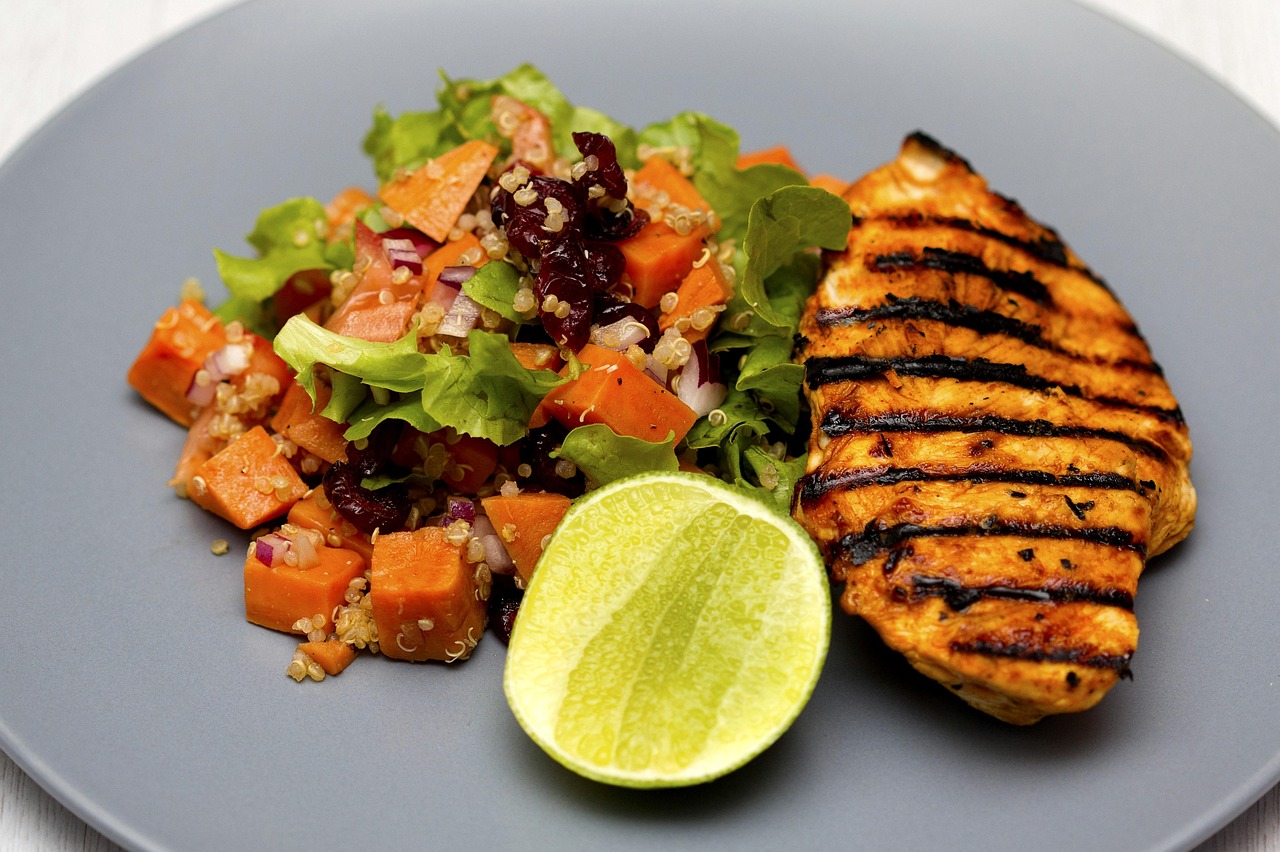
Ingredients: Blackened chicken breast, crisp romaine lettuce, bell peppers, red onions, creamy avocado lime dressing (avocado, Greek yogurt, lime juice, cilantro, salt).
Why it works: The chicken delivers 35+ grams of protein on its own. The Greek yogurt in the dressing adds another 5-6 grams. The bell peppers and romaine contribute fiber, and the avocado adds healthy fats that further slow digestion and support fullness.
Meal prep tip: Grill the chicken ahead of time, chop the veggies, and make the dressing in advance. Store everything separately. The dressing stays fresh for up to four days thanks to the acidity from the lime juice. Assemble just before eating.
What I love about this salad is that it doesn’t feel like “diet food.” It’s bold, flavorful, and genuinely satisfying. The blackened chicken gives it a smoky kick, the creamy dressing ties everything together, and the crunch from the peppers and onions keeps every bite interesting.
How to Build Your Own High-Protein Salad
You don’t need to follow a specific recipe to build a high protein salad that works. Here’s a simple framework you can use with whatever you have on hand.
Start with your protein source. This is the foundation. Aim for 4-6 ounces of cooked protein per serving. Good options include grilled chicken breast (35g protein per 5oz), canned tuna (30g per 5oz can), grilled salmon (30g per 5oz), hard-boiled eggs (12g for 2 eggs), or grilled tofu (20g per cup).
Add plant-based protein boosters. Even if you’re using animal protein, adding beans, lentils, edamame, quinoa, nuts, or seeds increases both protein and fiber. A quarter cup of chickpeas adds 3g protein and 3g fiber. A tablespoon of hemp seeds adds 3g protein. For more on getting the most from legumes, check out our guide to the best ways to eat beans for nutrition.
Load up on fiber-rich veggies. Romaine is fine, but mix in bell peppers, shredded cabbage, cherry tomatoes, cucumbers, and carrots. Each adds fiber and volume without many calories. Aim for at least 2 cups of vegetables per salad.
Boost your dressing. Most store-bought dressings are high in fat and low in protein. Make your own using Greek yogurt as a base. A half cup of plain Greek yogurt adds 12g protein. You can also blend cottage cheese or silken tofu into dressings for a protein boost. Try a simple Greek yogurt ranch with herbs, or a creamy avocado lime dressing like the one in the Chicken Fajita Salad.
Protein Source Comparison for Salads
Protein Per Serving (approximate)
- Grilled chicken breast (5 oz): 35g protein
- Canned tuna (5 oz can): 30g protein
- Grilled salmon (5 oz): 30g protein
- Hard-boiled eggs (2 large): 12g protein
- Grilled tofu (1 cup): 20g protein
- Canned chickpeas (1 cup): 15g protein, 12g fiber
- Edamame (1 cup shelled): 18g protein, 8g fiber
- Quinoa (1 cup cooked): 8g protein, 5g fiber
- Hemp seeds (3 tbsp): 10g protein
- Greek yogurt dressing (1/2 cup): 12g protein
Meal Prep Strategies for High-Protein Salads
Let’s be honest. The reason most of us end up with sad salads is that we’re short on time. Meal prepping changes everything. Here’s how to make high protein salad prep work for a busy week.
Batch cook your protein. On Sunday, grill 2-3 pounds of chicken breasts, cook a batch of quinoa, or hard-boil a dozen eggs. Store them in the fridge so you can grab and go.
Chop your veggies in advance. Wash and chop romaine, bell peppers, onions, and any other veggies. Store them together in an airtight container with a paper towel to absorb moisture. They’ll stay crisp for 3-4 days.
Make dressing for the week. A Greek yogurt-based dressing will keep for 4-5 days. Make a big batch and portion it into small containers.
Assemble just before eating. Keep everything separate until you’re ready to eat. This prevents soggy greens and keeps your salad fresh. If you’re using avocado, add it right before serving to prevent browning.
Consider no-lettuce options. Bean-based salads, quinoa salads, and grain salads actually get better as they sit in the fridge. The flavors meld together, and there’s no lettuce to wilt. These are perfect for making 3-4 servings at once.
Why Protein-Packed Salads Support Healthy Weight Management
If weight management is part of your health goals, a high protein salad is one of the smartest meals you can eat. A meta-analysis on dietary protein and body weight management found that people who ate higher protein diets (18-59% of calories from protein) lost about 1.6 kilograms more weight than those on lower protein diets. That’s not a dramatic difference, but it’s consistent across 37 studies.
Here’s what that means for you. A high protein salad isn’t a magic bullet for weight loss. But it is a reliable tool for managing hunger, which makes it easier to eat fewer calories overall without feeling deprived. When you’re not fighting hunger all afternoon, you’re less likely to reach for snacks or overeat at dinner.
The key is to build your salad around whole, minimally processed ingredients. The 2025-2030 Dietary Guidelines emphasize choosing lean proteins and getting your nutrients from food, not supplements. A salad with grilled chicken, fresh vegetables, beans, and a yogurt-based dressing fits that perfectly.
Frequently Asked Questions
Can I get enough protein from a plant-based salad?
Absolutely. Combine complementary proteins like beans and rice, or tofu and quinoa, to get a complete amino acid profile. A Mediterranean chickpea and quinoa salad with hemp seeds can easily deliver 25-30g of protein per serving. Edamame, lentils, and tempeh are also excellent plant-based protein sources.
How do I make a high-protein dressing?
Use plain Greek yogurt as your base. A half cup adds 12g protein. Blend in herbs, garlic, lemon juice, and a little olive oil for flavor. You can also blend cottage cheese or silken tofu for a creamy, protein-rich dressing. Avoid store-bought dressings that are high in sugar and low in protein.
What if I don’t eat meat?
You have plenty of options. Grilled tofu, tempeh, edamame, chickpeas, lentils, quinoa, hard-boiled eggs, and cottage cheese all work beautifully in salads. A dense bean salad with a Greek yogurt dressing can easily hit 25-30g of protein per serving. The key is to include at least two protein-rich ingredients in your salad.
How do I keep my salad from getting soggy during meal prep?
Keep wet ingredients (dressing, avocado, tomatoes) separate from greens until you’re ready to eat. Store chopped greens with a paper towel to absorb moisture. For no-lettuce salads like bean or grain salads, sogginess isn’t an issue — they actually taste better after a day or two in the fridge.
The Bottom Line
A salad doesn’t have to leave you hungry. When you build it around protein and fiber, it becomes one of the most satisfying meals you can eat. The Chicken Fajita Salad is a perfect example — 41 grams of protein and 16 grams of fiber in one bowl. But the real takeaway is the framework. Start with a solid protein source. Add fiber-rich vegetables. Boost your dressing. Prep ahead. That’s all it takes to turn a sad salad into a meal that actually works.
The next time you’re making lunch, think about what your salad is missing. Is it protein? Fiber? Both? Once you start building your salads around these two nutrients, you’ll wonder why you ever ate any other way.