

Blood Sugar Salads: Potato Salad vs Pasta Salad
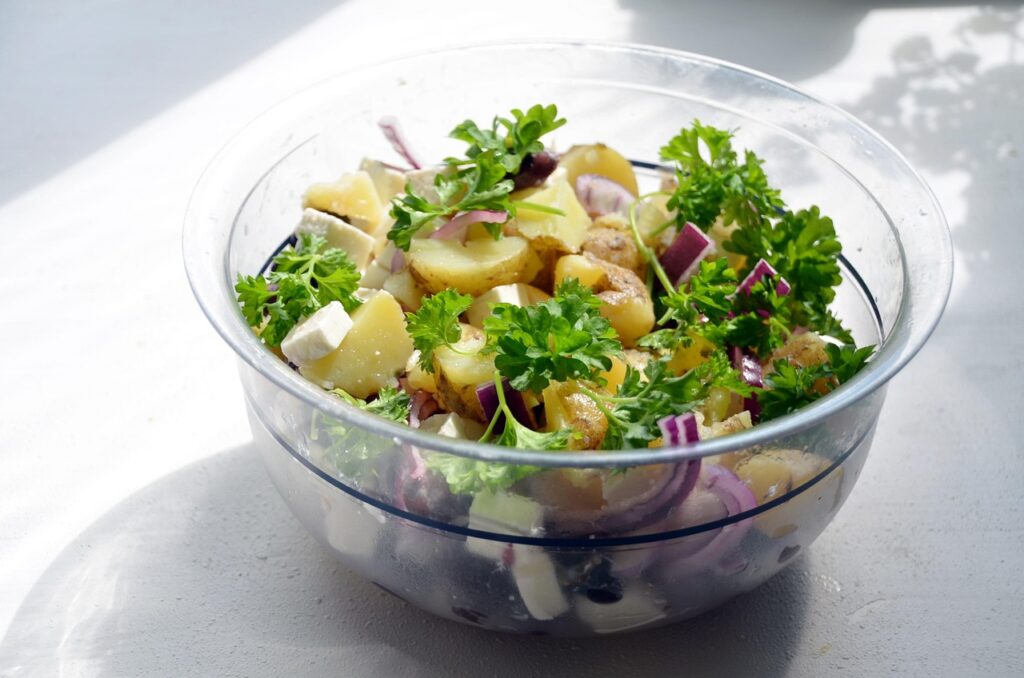
Key Takeaways
- You don’t have to choose: Both potato salad and pasta salad can fit into a blood sugar-friendly eating plan. The key is how you prepare them and what you eat them with.
- Cooling is key: When you cool potatoes or pasta after cooking, they form resistant starch — a type of carb that acts like fiber and blunts blood sugar spikes.
- Vinegar slows starch digestion: The vinaigrette on pasta salad actively slows starch breakdown — lab studies show it reduces starch digestion by more than 50%, which helps explain why vinegar-containing meals produce a gentler blood sugar response.
- Women are more sensitive to GI: Recent research shows women respond more strongly to the glycemic index of foods than men do, making smart salad choices especially important.
- Build a balanced plate: Pair either salad with protein (grilled chicken, fish, tofu) and extra veggies for the best blood sugar response.
Picture this: It’s a summer cookout. The table is loaded with burgers, grilled chicken, corn on the cob, and two iconic salads — creamy potato salad and tangy pasta salad. You’re watching your blood sugar, so you hesitate. Which one is the “better” choice? Should you skip both?
Here’s the liberating truth: You don’t have to choose between flavor and blood sugar stability. Blood sugar salads are absolutely a thing — and both of these summer classics can be part of a balanced, healthy eating plan. The science behind how they affect your blood sugar is actually pretty fascinating, and it might surprise you.
Let’s break down what the research actually says, how preparation methods change the game, and how you can enjoy your favorite summer salads without the guilt.
Quick Answer: Which Salad Is Better for Blood Sugar?
Neither is inherently “better.” Potato salad is lower in total carbs (about 28g per cup vs 43g for pasta salad). But pasta salad has a secret weapon: vinegar in the dressing, which actively slows starch digestion. Both benefit from cooling, which creates resistant starch. The real winner? The salad you enjoy in a reasonable portion, paired with protein and extra veggies.
The Science of Cooling: How Resistant Starch Changes Everything
Here’s something most people don’t know: The temperature of your salad matters almost as much as what’s in it. When you cook and then cool starchy foods like potatoes or pasta, something remarkable happens. A process called retrogradation transforms some of the digestible starch into resistant starch — a type of carbohydrate that acts more like fiber than sugar.
Think of resistant starch as a carb that takes a detour. Instead of being quickly broken down into glucose in your small intestine, it travels to your colon where it feeds beneficial gut bacteria. This means it has a much gentler effect on your blood sugar.
A 2022 study in Nutrients found that 70% of overweight women had a better blood sugar response to cold potatoes compared to hot ones. The cold potatoes contained 13.7 grams of resistant starch per serving versus just 9.2 grams in the hot version — that’s nearly 50% more. And a 2026 randomized trial showed that cooling pasta increases resistant starch and lowers blood sugar by a significant margin. Participants who ate cooled or reheated pasta had peak glucose levels 15% lower than those who ate freshly cooked pasta.
What This Means for Your Cookout Plate
Both potato salad and pasta salad are typically served cold — which means they’ve already gone through this beneficial cooling process. That’s great news. But here’s a pro tip: Make your salads a day ahead. The longer they sit in the fridge, the more resistant starch develops. Your blood sugar will thank you.
The Vinegar Factor: Why Pasta Salad Has a Secret Advantage
Here’s where things get interesting. Pasta salad is typically dressed with a vinaigrette — and that vinegar does more than just add tang. Research shows that acetic acid (the main component of vinegar) actively interferes with how your body digests starch.
A 2025 study in Food Research International revealed the mechanism: acidic foods inhibit starch digestion by prematurely deactivating salivary α-amylase — the enzyme that starts breaking down starch in your mouth. The result? Starch hydrolysis (digestion) was reduced by more than 50% when vinegar was added to a starchy meal.
A comprehensive review in Clinical Nutrition ESPEN confirmed that vinegar lowers blood glucose after carbohydrate-rich meals, with an effective dose of about 2 to 6 tablespoons per day. That’s roughly the amount you’d get in a standard vinaigrette dressing.
Now, traditional potato salad is made with mayonnaise, not vinegar. But here’s a clever workaround: You can add a splash of vinegar or lemon juice to your potato salad recipe. Some potato salad recipes already include a touch of vinegar or pickle juice — and those versions will have a gentler effect on your blood sugar.
Potato Salad vs Pasta Salad: The Nutritional Showdown
Let’s look at the numbers. A typical 1-cup serving of classic potato salad has about 28 grams of carbs and 3 grams of fiber. The same amount of pasta salad has roughly 43 grams of carbs with about 3 grams of fiber. On paper, potato salad looks like the clear winner.
But here’s the thing: Carb content is only part of the story. The glycemic index (GI) of the base ingredient matters too. Pasta naturally has a lower GI than potatoes, meaning it causes a slower, more gradual rise in blood sugar. When you factor in the vinegar from the dressing, pasta salad’s overall glycemic impact may be lower than the carb count suggests.
A landmark 2021 BMJ systematic review of low glycemic index diets found that choosing lower-GI foods as part of an overall pattern can reduce HbA1c by 0.31% in people with diabetes — a meaningful improvement. The takeaway? Both salads can work, but the way you prepare and dress them makes a real difference.
Quick Comparison: Potato Salad vs Pasta Salad
Potato Salad: Lower total carbs (28g/cup) | Mayonnaise-based (no vinegar benefit) | Cooling creates resistant starch | Easy to add extra veggies and protein (eggs)
Pasta Salad: Higher total carbs (43g/cup) | Vinaigrette-based (vinegar benefit) | Cooling creates resistant starch | Easy to use legume-based pasta for extra protein and fiber
Why This Matters for Women: The GI Sensitivity Factor
Here’s a finding that doesn’t get nearly enough attention. A 2023 randomized controlled trial published in Clinical Nutrition found that women are more sensitive to glycemic index than men. In the study, women who ate a high-GI diet had 23% higher average glucose on day one, and that difference grew to 37% after 12 weeks. Men showed no significant difference between low- and high-GI diets.
What does this mean for you? It means that the choices you make about which salad to eat — and how you prepare it — may have a bigger impact on your blood sugar than they would for the guy next to you at the barbecue. This isn’t about restriction. It’s about being strategic with the tools you have.
Choosing a lower-GI option like pasta salad (especially with legume-based pasta) or a well-prepared potato salad (cooled, with skin on, and a splash of vinegar) can make a meaningful difference in how your body responds.
How to Make Any Blood Sugar Salad Work for You
The good news? You don’t need to choose one salad over the other. Here’s how to make either option work beautifully for your blood sugar:
1. Watch your portion size. Stick to about 1 cup of salad. That’s a generous serving that won’t overwhelm your system.
2. Add protein. Have your salad alongside grilled chicken, fish, tofu, or shrimp. Protein slows digestion and blunts blood sugar spikes. Dietitians recommend this as one of the most effective strategies.
3. Pile on the veggies. Extra vegetables add fiber, volume, and nutrients without many carbs. Think bell peppers, celery, red onion, cherry tomatoes, or cucumber.
4. Upgrade your ingredients. For potato salad, leave the skins on for extra fiber and swap some mayo for Greek yogurt to add protein. For pasta salad, try chickpea or lentil pasta for double the protein and fiber.
5. Add acidity. A splash of vinegar or lemon juice to either salad can help slow starch digestion. Even a squeeze of lemon over your potato salad can make a difference.
6. Make it ahead. Both salads taste better after a day in the fridge anyway — and that extra cooling time increases resistant starch content.
FAQ: Your Blood Sugar Salad Questions, Answered
Q: Can I eat potato salad if I have diabetes?
Yes. Diabetes Canada even has a recipe for creamy potato salad on their website. The key is portion control and preparation method.
Q: Does the type of vinegar matter?
Any vinegar works — apple cider, white wine, red wine, or balsamic. They all contain acetic acid, which is the active compound.
Q: What about sweet potato salad?
Sweet potatoes have a lower GI than white potatoes. A sweet potato salad with a tangy dressing could be an excellent option.
Q: Is gluten-free pasta salad okay?
Yes, but choose legume-based pastas (chickpea, lentil) over rice-based ones for more protein and fiber.
The Bottom Line
Here’s what it all comes down to. Blood sugar salads aren’t about deprivation or choosing the “perfect” option. Both potato salad and pasta salad can absolutely be part of a healthy, balanced eating pattern — especially when you use smart preparation methods and build a complete plate around them.
The research is clear: cooling increases resistant starch, vinegar slows starch digestion, and pairing with protein and fiber creates a gentler blood sugar response. And because women are more sensitive to these factors, getting it right matters even more.
So go ahead — pick the salad you love most. Add a generous scoop of grilled chicken or chickpeas. Drizzle on a little extra vinaigrette. And enjoy your cookout knowing you’ve got the science on your side.