

Reduce Microplastic Exposure: Expert Kitchen Swaps
Key Takeaways
- Microplastics are everywhere, but you can take simple steps to limit your exposure without stress.
- Neurologists say the kitchen is key – heat and cutting can release plastic particles into food.
- Small swaps like glass containers, wood cutting boards, and filtered water add up over time.
- The science on brain health is still early, but it is smart to take precautions now.
You have seen the news: microplastics are in our food, water, and even the air. But what does that mean for your health – and what can you really do about it? Neurologists are starting to share their views. Their advice is calm and practical. Rather than panic, they suggest simple kitchen swaps. Here is a science-backed guide to reduce microplastic exposure in your kitchen and beyond.
Quick Answer: Can You Avoid Microplastics Completely?
Not fully. But you can greatly reduce microplastic exposure by changing a few habits. Small steps add up. Even partial cuts are worth it.
How to Reduce Microplastic Exposure in Your Kitchen
The kitchen is where most microplastic exposure takes place. Food storage, cooking, and water all play a role. The good news? You can reduce microplastic exposure without a total kitchen makeover. Try these three simple rules.
Rule 1: Never heat plastic. Heat makes plastic release tiny particles into your food. Do not microwave plastic containers — experts list these among the toxic kitchen tools to replace. Do not put them in the dishwasher. And do not leave plastic bottles in a hot car. A 2023 study in Environmental Science & Technology found that microwaving plastic can release millions of particles per square centimeter.
Rule 2: Swap plastic for glass, steel, or wood. These materials do not shed particles. The Mayo Clinic advises using glass or stainless steel for food storage and avoiding plastic cutting boards.
Rule 3: Skip bottled water. Studies show that bottled water has far more microplastics than tap water — we explore the science in our guide to microplastics in water. A 2025 systematic review found that bottled water was a top source of dietary microplastics. Switching to filtered tap water in a reusable bottle is a great way to reduce microplastic exposure.
5 Kitchen Swaps to Reduce Microplastic Exposure
You do not need a full kitchen redo. Focus on the swaps that matter most. Here are five that work.
1. Glass Storage Containers
Replace plastic Tupperware with glass. They last longer, do not stain, and will not leach when you reheat food. Pick ones with glass lids or silicone seals.
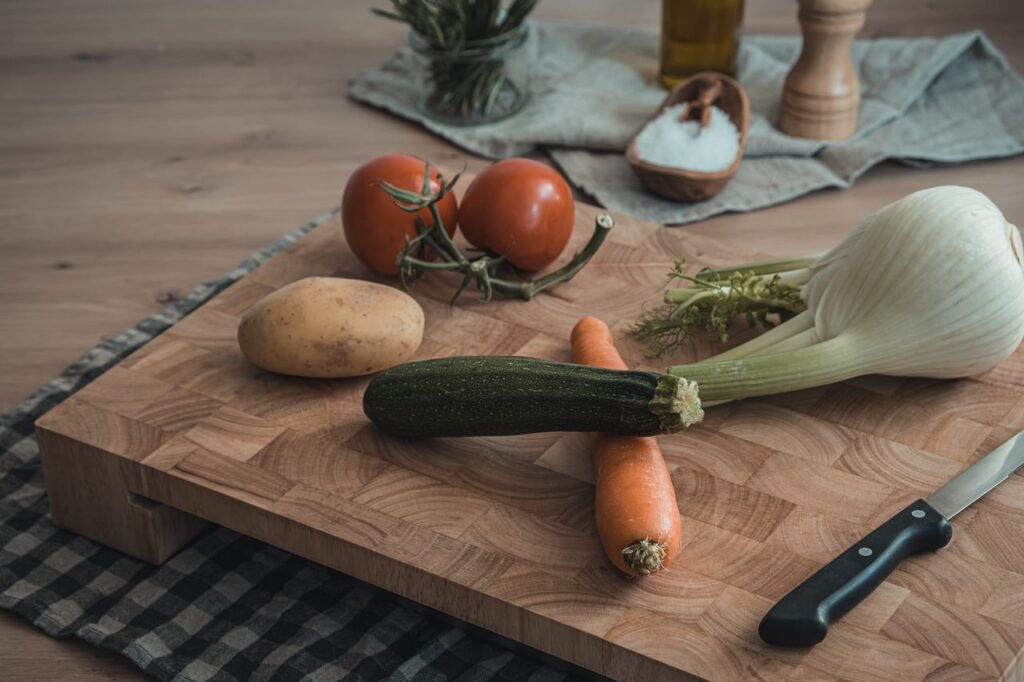
2. Wooden or Bamboo Cutting Boards
Plastic cutting boards shed particles with every cut. Switch to wood or bamboo. They are natural, gentle on knives, and do not release microplastics.
3. Stainless Steel Cookware
Nonstick pans can shed PFAS chemicals when overheated or scratched. For a safe, durable choice that avoids both plastic and PFAS concerns, stainless steel is the way to go. It heats evenly and lasts for years.
4. Beeswax Wraps Instead of Plastic Wrap
Plastic wrap is single-use and often microwaved. Beeswax wraps are reusable and seal with the warmth of your hands. They are a simple swap.
5. Reusable Silicone Bags
Replace zip-top bags with silicone ones. Silicone is generally considered a safer alternative to plastic, though research is ongoing about its behavior under extreme heat. For now, food-grade silicone is widely recommended by experts as a low-risk option.
What Neurologists Say About Microplastics and Your Brain
Here is where the science gets interesting – and less certain. Animal studies show that tiny plastic particles can cross the blood-brain barrier. They may cause inflammation and stress in brain cells. A 2026 review on microplastics and brain health found that nanoplastics might enter the brain and play a role in diseases like Parkinson’s and Alzheimer’s.
But we do not have strong human proof yet. As neurologist Dr. Paul Bendheim told EatingWell, “Rather than becoming overanxious, the most effective response is to take targeted, reasonable, proactive steps to minimize your daily exposure to microplastics.” That means it is wise to take simple steps – not to worry too much.
Think of it this way: you do not need to avoid every plastic particle. Focus on what you can control. That includes the kitchen swaps above. It also means doing other things for brain health, like exercise, good sleep, and a Mediterranean diet.
Should You Filter Your Water?
Tap water has fewer microplastics than bottled water, but it still has some. A filter can help. Consumer Reports tests show that reverse osmosis removes the vast majority of microplastics (over 99% in many tests), while carbon filters can remove up to 80–90%. If you cannot get reverse osmosis, a good carbon filter still helps a lot.
Filtering tap water with a certified filter is one of the most effective ways to reduce microplastic intake.
Other Ways to Reduce Microplastic Exposure at Home
Kitchen swaps are the biggest help. But microplastics also come from other places:
- Clothing: Synthetic fabrics shed microfibers when washed. Wash them less often. Use a microfiber-catching bag. Choose natural fibers like cotton or wool when you can.
- Personal care: Some scrubs, toothpaste, and body washes have polyethylene (PE) or polypropylene (PP) beads. Check the ingredients list and avoid them.
- House dust: Microplastics settle in dust. Vacuum with a HEPA filter and damp-mop floors to lower airborne particles.
The National Institute of Environmental Health Sciences notes that recognizing the potential health effects, individuals may choose to reduce exposure through simple lifestyle changes.
Frequently Asked Questions About Microplastics
Q: Are reusable plastic bottles safe?
A: Yes, if you keep them away from heat. Do not leave them in a hot car or put them in the dishwasher. Glass or stainless steel is better for hot drinks.
Q: Does silicone release microplastics?
A: Silicone is generally considered safer than plastic, though research is ongoing. For everyday use, food-grade silicone is recommended as a low-risk alternative.
Q: Should I stop eating seafood?
A: No. Seafood is a good source of protein and healthy fats. Vary your choices and limit bivalves (mussels, oysters) if you are worried. The benefits are likely worth it.
The Bottom Line
You do not need a plastic-free home to protect your health. The best way to reduce microplastic exposure is to start with your kitchen. Make a few swaps: use glass, wood, stainless steel, and filtered water. Each small change adds up.
The science on brain health is still new. But taking sensible steps now is a smart move. As neurologist Dr. Paul Bendheim put it, “The potential harmful effects of microplastics are currently postulated but not proven.” That is the TEOHL approach: calm, evidence-based, and practical.