

What’s the Best Tea for Kombucha? New Research Has Answers
Key Takeaways
- Different teas produce distinct benefits — recent studies show black, green, oolong, and white teas each create unique antioxidant and polyphenol profiles in kombucha.
- Black tea is a strong choice — it’s known for flavonoid content and consistent fermentation, but not the only winner.
- Herbal teas lack what the SCOBY needs to thrive, so skip them for your first ferment.
- For store-bought kombucha, pick brands made with real tea, low sugar, and live cultures.
Ever wondered if the tea you use for kombucha really changes the health benefits? A 2026 study in Food Chemistry (PMID 41967413) and another in Foods (PMID 42279684) show that different teas produce different antioxidant and polyphenol profiles. So what’s the best tea for kombucha? It depends on what you’re after. Here’s what the science says and how to choose — whether you brew at home or buy a bottle.
Quick Answer: What’s the Best Tea for Kombucha?
There’s no single winner. Black, green, oolong, and white teas each offer unique benefits. Black tea is excellent for flavonoid content and reliable fermentation. Green tea brings catechins like EGCG. Oolong and white teas have their own compounds. For brewing, stick with true teas from the Camellia sinensis plant. Herbal teas don’t feed the SCOBY well. For store-bought, choose brands with real tea, low added sugar, and live cultures.
How Recent Studies Compared the Best Tea for Kombucha
Two 2026 studies looked at how different teas affect kombucha. The Food Chemistry study (PMID 41967413) compared green, black, Pu-Erh, white, and oolong teas. It found that the tea type shapes the final mix of compounds and health properties — we explore this in our guide to kombucha tea types. But it didn’t name a single best tea. The Foods study (PMID 42279684) found that flavonoids increased in both oolong and black teas during fermentation. Gallic acid, a compound tied to antioxidant power, built up in yellow, black, and oolong teas.
The takeaway? Different teas offer different benefits. So the best tea for kombucha depends on what you want — more of one compound or a balanced mix.
What Makes Black Tea a Strong Choice
Black tea naturally contains theaflavins and thearubigins — compounds that form during oxidation. These are linked to antioxidant activity. While the 2026 studies didn’t measure these compounds specifically, research in general suggests they contribute to kombucha’s ability to fight cell damage. Black tea also ferments reliably, making it beginner-friendly.
For the best tea for kombucha, black tea is a top pick if you want consistent results and a bold flavor.
Green, Oolong, and Other Options
Green tea is rich in catechins, especially EGCG. It’s well known for heart health and metabolism support — that’s general nutrition knowledge, not a finding from the kombucha studies. But in kombucha, green tea gives a light, grassy flavor and its own set of antioxidants.
Oolong sits between black and green. It has a mix of compounds, including some from both. White tea is the least processed and offers delicate flavors. All these true teas make good kombucha. Herbal teas (like peppermint or chamomile) lack the nutrients the SCOBY needs for primary fermentation, though some — like mint — have been shown to work in research settings. Stick with true teas for your first batch.
Tea Comparison at a Glance
| Tea Type | Key Compounds | Fermentation Ease | Flavor |
|---|---|---|---|
| Black Tea | Theaflavins, thearubigins, flavonoids, gallic acid | Very easy, consistent | Bold, malty, slightly sharp |
| Green Tea | Catechins (EGCG) | Good, may need a starter | Light, grassy, fresh |
| Oolong Tea | Mixed: some catechins, some theaflavins | Good, balanced | Floral, fruity, semi-oxidized |
| White Tea | Catechins, low oxidation | Okay, but slower | Delicate, subtle, sweet |
| Herbal/Tisane | Varies, not the right nutrients | Unreliable | Varies |
Tips for First-Time Brewers
If you’re new to brewing, start with black tea. It’s the most reliable. Use filtered water and plain white or cane sugar. The SCOBY needs sugar to produce acids and probiotics. Don’t use honey or artificial sweeteners — they can harm the culture.
Brew strong tea: about 1 tablespoon of loose leaf or 2 tea bags per quart of water. Let it cool completely before adding your SCOBY. Keep the temperature between 68-78°F (20-26°C). For a mix, try half black and half green tea to get both antioxidant types.
Quick Brewing Checklist
- Use true tea (Camellia sinensis) — black, green, oolong, or white
- Use filtered water — chlorine kills the SCOBY
- Use plain white or cane sugar — about 1 cup per gallon
- Keep a steady temperature, no big swings
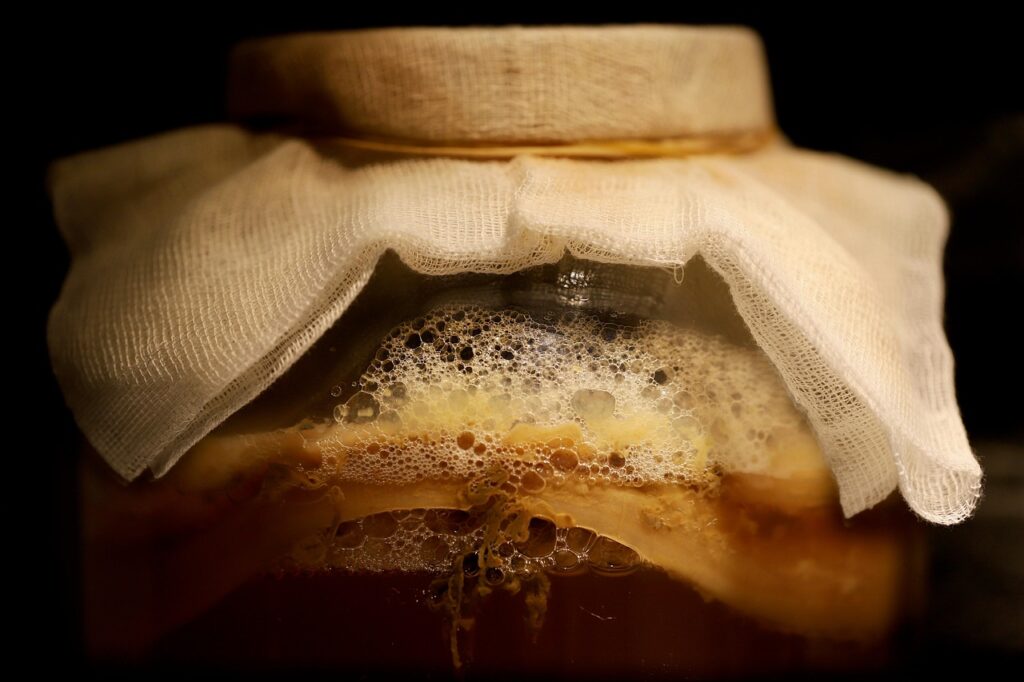
- Cover with a breathable cloth, secure with a rubber band
- Taste after 7-10 days — longer means more tart, less sweet
How to Pick a Store-Bought Kombucha That’s Actually Good
Not all bottled kombucha is the same. Use this quick 3-point check:
- Is it made from real tea? Look for black, green, or oolong on the label. Herbal blends may be less rich in probiotics.
- How much sugar per serving? Aim for 2-6 grams. More than that means extra sugar or incomplete fermentation.
- Does it have live cultures? Look for “live probiotics”, “raw”, or “unpasteurized”. Pasteurization kills the good bugs. Also check for sediment or a “mother” — that’s a sign of active cultures.
If a kombucha passes all three, it’s a great gut-friendly pick. If not, keep looking. Your microbiome will thank you.
Frequently Asked Questions
Can I use any tea for kombucha?
Only true teas from the Camellia sinensis plant (black, green, oolong, white) feed the SCOBY properly. Herbal teas lack the needed nutrients and may cause weak or failed batches. You can add herbs or fruit in a second ferment for flavor, but the first brew needs real tea.
Is green tea kombucha healthier than black tea kombucha?
Both are healthy, but with different compounds. Black tea kombucha has more flavonoids and gallic acid. Green tea kombucha has more catechins like EGCG. The 2026 studies show each type offers unique antioxidant profiles. So neither is better overall — it depends on what you’re looking for.
How much kombucha should I drink per day?
General guidance suggests starting with 4-8 ounces a day, especially if you’re new to fermented foods. Too much can cause stomach upset due to acidity and live probiotics. Increase slowly if you feel fine. Pregnant women, those with weak immune systems, or anyone with gut issues should check with a doctor first.
The Bottom Line
Recent research confirms that different teas create different kombuchas. There’s no single best tea for kombucha — black tea is excellent for antioxidant content and reliable fermentation, while green, oolong, and white teas each bring their own benefits. The key is using real tea from the Camellia sinensis plant.
Whether you brew at home or buy from a store, choose a kombucha made with true tea and minimal added sugar. Your gut will thank you.