

Prunes for Constipation: How Many to Eat for Relief
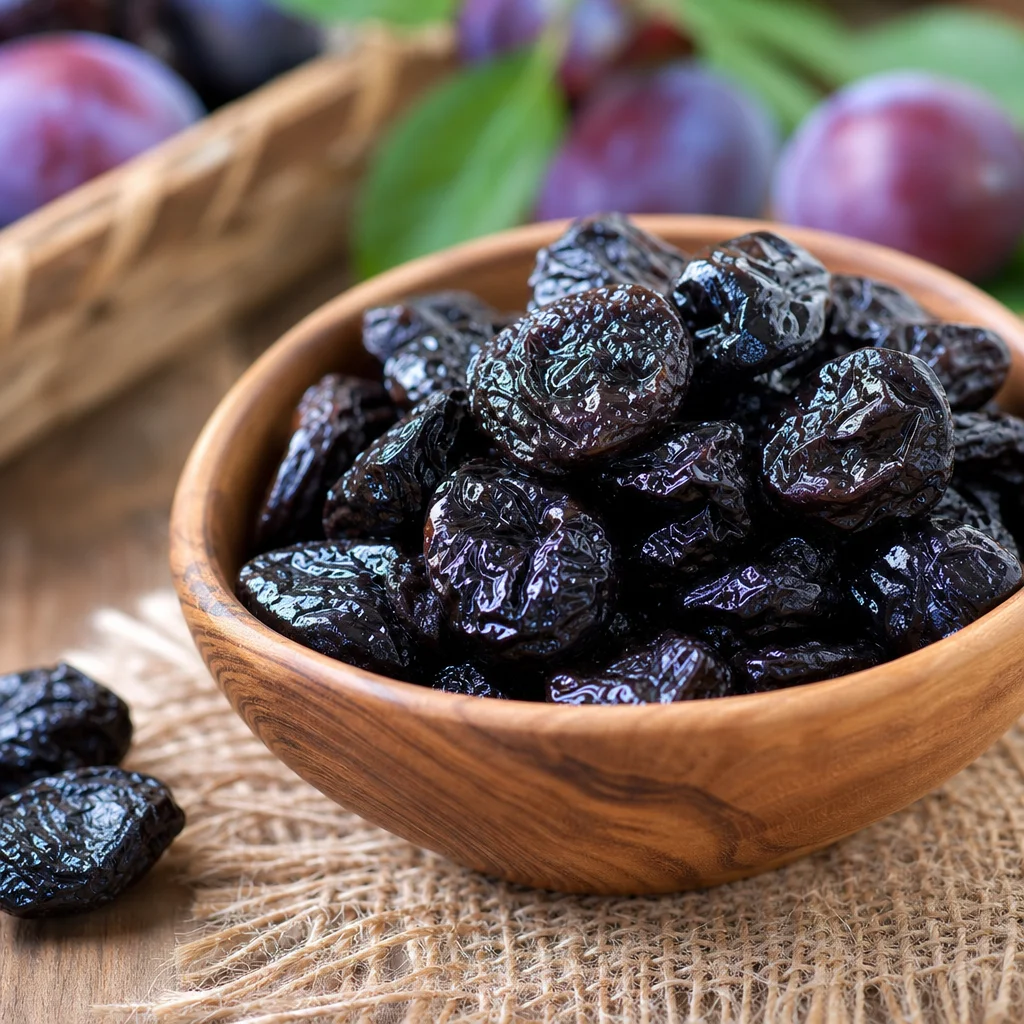
Key Takeaways
- When it comes to prunes for constipation, the evidence is stronger than for any other dried fruit.
- Prunes work through a triple mechanism: insoluble fiber adds bulk, sorbitol draws water into the colon, and polyphenols support a healthy gut.
- Start with 2 to 4 prunes a day and ramp up slowly. This simple habit is how you avoid gas and bloating.
- Whole prunes beat prune juice for daily use. They deliver more fiber, more sorbitol, and a little less than half the sugar of juice.
- See a doctor if constipation lasts more than three weeks, or if you notice blood, severe pain, or weight loss.
Picture this: you haven’t been able to go for days, and you’re staring into your pantry hoping something will help. Maybe you’ve even wondered whether the dried fruit in your snack drawer could do the trick. Here’s the thing — prunes for constipation have real science behind them. And that sets this humble dried plum apart from every other option.
In this guide, I’ll walk you through why prunes beat raisins, dates, and figs. You’ll learn exactly how many to eat, how to avoid bloating, and when to call your doctor. It’s the complete, food-first plan for getting things moving again.
Quick Answer: Do Prunes Really Work for Constipation?
Yes. Prunes are the best-studied dried fruit for constipation relief. They work three ways at once: fiber adds bulk, sorbitol pulls water into the colon, and polyphenols support a healthy gut. Clinical trials show that eating about 100 grams a day — roughly 10 prunes — helps with chronic constipation. Most people, though, do great starting with 2 to 4 prunes and ramping up slowly.
Why Prunes for Constipation Beat Every Other Dried Fruit
A quick look at the nutrition label tells part of the story. Prunes are loaded with fiber. One serving — about four to six prunes — delivers roughly 3 grams of fiber. That’s about 11 percent of the fiber you need in a day. But the type of fiber matters more than the total.
Three Ways Prunes Work
Prunes are especially rich in insoluble fiber — the kind that doesn’t dissolve in water. It adds bulk to your stool and helps keep waste moving. That’s exactly what makes prunes for constipation so effective. The difference between prunes and other dried fruit is striking. Most of that 3 grams is insoluble. Raisins? A similar serving delivers far less of the stool-bulking fiber.
Then there’s sorbitol. This natural sugar alcohol works like a gentle sponge, pulling water into the colon. That softens hard, lumpy stool and makes it easier to pass. The Mayo Clinic notes that prunes contain natural compounds that draw fluid into the colon. It’s why people have reached for them for generations.
Finally, prunes deliver polyphenols — plant compounds with antioxidant and anti-inflammatory effects. A 2022 randomized trial linked prune juice’s benefits to a mix of sorbitol, pectin, and polyphenols. And a 2022 review in Advances in Nutrition highlights prunes’ polyphenols for their antioxidant and anti-inflammatory effects. It’s a plausible supporting role — though the direct gut link is less established than fiber and sorbitol.
What the Research Actually Shows
You might be thinking: “Sure, prunes sound good. But do they actually work?” The science says yes. The evidence on prunes for constipation is stronger than for almost any other food remedy.
A 2014 systematic review in Alimentary Pharmacology & Therapeutics looked at all the available trials. In people with constipation, eating 100 grams of prunes a day for three weeks improved stool frequency and consistency. Prunes even appeared superior to psyllium — the active ingredient in many fiber laxatives.
Fast-forward to 2021. Researchers at the University of Michigan ran a head-to-head comparative trial with 79 adults, most of them women. For four weeks, participants ate two kiwifruit, 100 grams of prunes, or 12 grams of psyllium daily. All three worked. Prunes improved stool frequency, consistency, and straining. Kiwifruit caused the least bloating, while psyllium caused the most side effects.
Then came the 2025 British Dietetic Association constipation guidelines. They were the first complete dietary guidelines for chronic constipation. After 75 trials, the panel formally recommended only a few foods. Prunes made the list. It means prunes are no longer a folk remedy — they’re a guideline-endorsed, food-first treatment.
One honest caveat: the studies are small, and results build over days or weeks. So think of prunes as a daily habit, not an overnight miracle.
How Many Prunes for Constipation: Your Day-by-Day Plan
Here’s where most articles get vague. They say “eat a few prunes” and leave you guessing. Let’s get specific.
In trials, the effective dose of prunes for constipation was 100 grams a day — about 10 prunes. But starting there is a mistake. Prunes are powerful, and your gut needs time to adjust.
Your Start-Slow Ramp-Up
- Day 1–2: Eat 2 to 3 prunes with a full glass of water.
- Day 3–5: Increase to 4 to 6 prunes (about a quarter cup).
- Day 6 and beyond: Work up to 6 to 10 prunes if needed.
That’s the sweet spot for prunes for constipation. Enough to make a difference, but not so many that you end up bloated. The Cleveland Clinic calls this “start slow” — and it works.
Water is non-negotiable here. The NIDDK is clear: fiber only works when you drink enough fluids. Without enough water, fiber can actually make constipation worse. So pair every prune serving with a glass of water. Most adults need 22 to 34 grams of fiber a day, and a serving of prunes gives you a solid start.
Also, keep your portion sensible. Five prunes carry about 17 grams of natural sugar and 104 calories. That’s a reasonable amount for most people — especially compared to the juice option we’ll look at next.
Prunes vs Dates, Raisins, and Figs: Which Dried Fruit Wins?
Let’s be honest: dates and raisins are delicious. Do they work as well for constipation? Not really.
Dates contain fiber and a little sorbitol. But there are no clinical trials showing dates relieve constipation. When a formal guideline reviewed 75 trials, only three foods made the cut. Dates didn’t make it.
You may have seen headlines suggesting dates work just as well. The evidence doesn’t back that up. And raisins? They’re the weakest of the bunch when it comes to insoluble fiber. A small serving of raisins delivers very little of the type of fiber that builds stool bulk — a stark contrast to prunes. Figs are a decent fiber source, but they lack the constipation-specific research that prunes have.
Here’s a quick comparison:
| Dried Fruit | Fiber Per Serving | Constipation Evidence |
|---|---|---|
| Prunes (4–6) | ~3 g per 5 prunes | Strong — randomized trials + 2025 guidelines |
| Raisins (2 tbsp) | Very little insoluble fiber | None specific |
| Dates (2–3) | Some fiber, less sorbitol | None specific |
| Figs (1–2) | Some fiber | None specific |
So can you still enjoy dates and raisins? Of course. Just don’t expect them to do what prunes do. The research on prunes for constipation is the reason they top every list. For a veggie-first option, try our guide to the best vegetable for constipation.
Prune Juice vs Whole Prunes: Which Is Better for You?
Prune juice works too. A 2022 randomized placebo-controlled trial found that about 2 ounces of prune juice a day reduced hard, lumpy stools. It also increased normal stools — without causing diarrhea or extra gas. That’s solid evidence for the juice option.
But here’s the trade-off. During juicing, most of the fiber is lost. Whole prunes have more than double the sorbitol of juice, plus the fiber that keeps things moving. GI specialists put it simply: whole fruit is the better daily choice.
Now for the sugar math. An 8-ounce glass of prune juice packs about 41 grams of sugar and 176 calories. A serving of five whole prunes has about 17 grams of sugar and 104 calories. Same relief, a little less than half the sugar, and more fiber.
My advice: make whole prunes your everyday go-to. Keep juice for mornings when you want something quick and easy to drink. Stick with 4 to 8 ounces, and choose 100% juice with no added sugar.
Easy Ways to Eat Prunes Every Day (Without Getting Bored)
You don’t have to eat prunes straight from the bag — though that works fine. These small swaps make prunes a natural part of your day:
- Oatmeal: Chop 3 or 4 prunes into your morning oats with cinnamon and walnuts.
- Smoothies: Blend prunes with banana, spinach, chia seeds, and oat milk. They add natural sweetness.
- Salads: Chop prunes into a kale or chicken salad. They pair beautifully with a lemon-tahini dressing.
- Stewed prunes: Simmer prunes in water with orange zest for about 10 minutes. Keep them in the fridge for a quick topping.
- Baking: Use prune puree to replace some of the sugar in muffins or energy bites.
Consistency is what actually moves the needle for regularity. So pick one or two of these ideas and make them a habit. Your gut will notice the difference.
What If Prunes Cause Gas or Bloating?
Why Bloating Happens
Let’s address the elephant in the room. Prunes can cause gas and bloating — especially in big doses. Here’s why. Prunes are rich in sorbitol, the same sugar alcohol that pulls water into the colon and softens stool. That’s a good thing in moderation. But in larger amounts, sorbitol can trigger bloating in sensitive people. And really large amounts can lead to cramping or diarrhea.
The fix is simple: start small. Two to three prunes, chewed well, with a full glass of water. Give your gut a few days to adapt, then slowly increase. However, this isn’t a reason to avoid prunes. It’s a reason to respect the ramp-up.
And if prunes for constipation leave you bloated even with a slow start? Try kiwifruit. In the 2021 comparative trial, two kiwifruit a day improved constipation symptoms. They also had the fewest side effects of all three treatments. In fact, only kiwifruit improved bloating.
When to See a Doctor Instead of Reaching for Prunes
Prunes are a wonderful first step, but they’re not a substitute for medical care. The Cleveland Clinic and Mayo Clinic agree on these red flags:
- Constipation that’s new for you, or that lasts more than three weeks
- Blood in your stool
- Unintentional weight loss
- Severe pain with bowel movements
- Thin, narrow stools
Also check in with your clinician if a few weeks of prunes, water, and movement haven’t helped. Constipation affects about 1 in 6 adults. Sometimes it’s a sign that something else needs attention. That’s worth sorting out with a professional.
For more on building a fiber-rich diet, our guide to soluble fiber and probiotics is a great next stop.
FAQ: Your Prune Questions, Answered
How fast do prunes work?
It depends. Some people notice a difference within hours. For others, it takes a few days of daily use. The research measures results over weeks, so think of prunes as a daily habit, not a quick fix.
How many prunes for constipation should I eat?
For everyday prevention, start with 2 to 4 prunes. For ongoing constipation relief, trials used about 10 prunes a day. The ramp-up plan above shows you exactly how to get there.
Can I eat prunes every day?
Yes. Clinical trials have used 50 to 100 grams of prunes daily for months without safety concerns. For most people, 2 to 4 prunes a day is a sensible everyday amount.
Do dates work as well as prunes for constipation?
No. Dates contain fiber, but no clinical trials show they relieve constipation. Prunes, on the other hand, are backed by randomized trials and formal dietary guidelines.
Is prune juice or whole prunes better?
Whole prunes, for daily use. They have more fiber, more sorbitol, and a little less than half the sugar of juice. Juice is fine as a quick option — just stick to 4 to 8 ounces of 100% juice.
The Bottom Line
Prunes for constipation are one of the simplest, most evidence-backed food-first tools we have. Start with 2 to 3 prunes a day, pair them with water, and slowly work your way up. If your body disagrees, kiwifruit is a gentle backup. And if symptoms last more than three weeks, or come with blood, pain, or weight loss, talk to your doctor. Your gut will thank you for taking it seriously.