
High Fiber Lunch Ideas to Beat the 3PM Slump
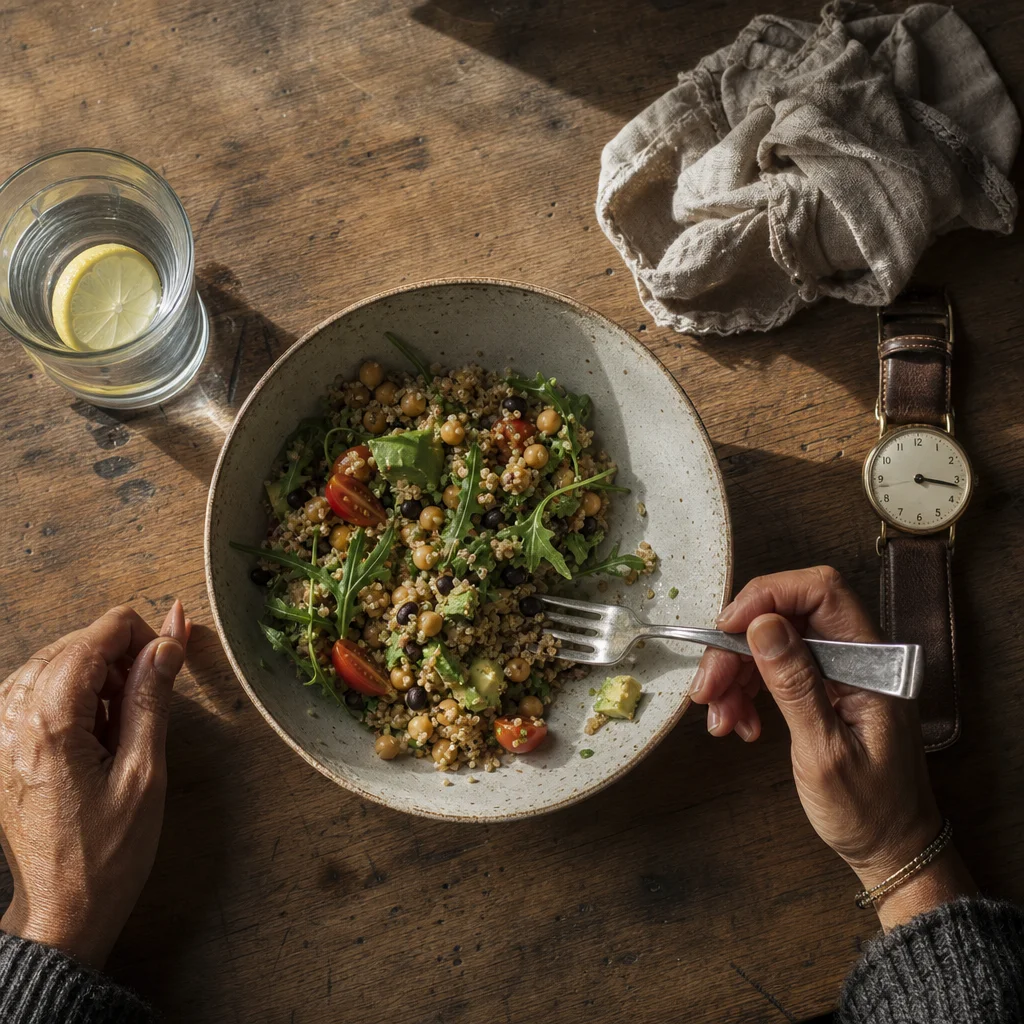
Key Takeaways
- Fiber is your afternoon energy secret. A high-fiber lunch stabilizes blood sugar, prevents the 3PM crash, and keeps you full until dinner.
- Most of us are falling short. Only 5% of US adults get enough fiber — averaging just 16g per day when women need 25g. A single high-fiber lunch can deliver nearly half your daily needs.
- Build your own, don’t just follow recipes. With three simple rules — combine legumes, whole grains, and veggies; add protein and fat; start slow with water — you can create endless satisfying lunches.
- Whole foods beat fiber supplements. Viscous (soluble) fiber from beans, lentils, oats, and vegetables forms a gel that slows digestion and keeps you satisfied. Isolated fiber powders don’t work as well.
It’s 2:30 PM. Your energy is tanking, you’re reaching for a second coffee, and your mind is already wandering toward the vending machine. Sound familiar? The afternoon slump isn’t a character flaw — it’s biology. And the fix might be simpler than you think: a high fiber lunch that keeps your blood sugar steady and your brain focused. Here’s the thing — most of us eat lunches that spike our blood sugar and crash it a few hours later. A white-bread sandwich, a sad salad, or leftovers from last night’s pasta all leave you hungry by 3 PM. But a well-built high fiber lunch? That’s the difference between coasting through the afternoon and being desperate for a nap. In this article, we’ll explain why fiber is the unsung hero of midday satiety, share our favorite lunch ideas (with a handy comparison), and teach you the three simple rules for building your own.
Quick Answer: What Is a High-Fiber Lunch?
A high fiber lunch provides at least 8–12 grams of fiber per serving — about one-third of a woman’s daily goal. It’s built around whole plant foods like legumes, whole grains, vegetables, and nuts. The fiber slows digestion, smooths out blood sugar, and keeps you full for hours. No counting required: think beans, quinoa, leafy greens, and a whole-grain base.
Why a high fiber lunch stops the 3PM slump
Let’s start with what’s actually happening inside your body. When you eat a low-fiber lunch — say, a turkey sandwich on white bread — your body digests the carbs quickly, releasing a flood of glucose into your bloodstream. Your pancreas responds with a big dose of insulin, which clears the glucose fast. Too fast. That’s the crash you feel a few hours later: low blood sugar, fatigue, brain fog, and cravings.
Now picture a high fiber lunch instead. The soluble fiber in beans, lentils, oats, and vegetables dissolves in water and turns into a gel-like substance. As the Cleveland Clinic explains, this gel slows the digestion of carbohydrates and the absorption of glucose. Your blood sugar rises gently, insulin response is moderate, and energy stays steady for hours. No spike, no crash.
What I find fascinating is that the evidence is strong. A 2020 systematic review in PLoS Medicine — one of the largest analyses of fiber and metabolic health — found that increasing fiber intake to 35g per day reduced HbA1c, fasting glucose, insulin resistance, and body weight. The authors reported a dose-response relationship: more fiber, more benefit. A high-fiber diet also lowered total cholesterol and inflammation. That’s a lot of bang for your lunch bowl.
How much fiber do you need — and how much should lunch provide?
The Cleveland Clinic’s daily fiber guide says women ages 31–50 need 25g of fiber per day. (Women under 31 need 28g; over 51 need 22g. Men need a bit more — 31–34g depending on age.) The average American gets only 16g. That’s a gap of 9–18g every single day.
Here’s the good news: a single high fiber lunch can deliver 8–12g of fiber — nearly half your daily target. If you eat a lentil salad with quinoa for lunch (around 11g fiber), you’re already well on your way. The NHS suggests a lunch like wholemeal spaghetti with lentil sauce provides 11g of fiber. That’s a powerful contribution to a 25–30g daily goal.
Now, you might be thinking: that sounds great, but won’t a sudden fiber surge make me bloated? Yes — if you jump from 16g to 30g overnight. The American Heart Association and every major health organization agree: add fiber gradually. Increase by about 5g per week, and drink plenty of water. Your gut microbiome needs time to adjust. Start with one serving of legumes at lunch, then build from there. If bloating happens, it’s normal at first. Stay consistent and your body will adapt over time.
Best high-fiber ingredients to keep in your kitchen
Building a fiber-rich lunch doesn’t require exotic ingredients. The Mayo Clinic’s chart of high-fiber foods is a perfect cheat sheet. Here are the top performers by category, with fiber estimates based on standard USDA nutritional data:
- Legumes (best source): Lentils (15–16g/cup cooked), black beans (15g), split peas (16g), chickpeas (about 12g). These give you the gel-forming soluble fiber that stabilizes blood sugar.
- Whole grains: Quinoa (5g/cup), whole-wheat pasta (6g/cup), barley (6g), oats (4g/cup cooked).
- Vegetables: Artichokes (about 7g each), green peas (9g/cup), broccoli (5g/cup), Brussels sprouts (4.5g), sweet potato with skin (about 4g).
- Fruits (for lunch sides or toppings): Raspberries (8g/cup), pear (5.5g), apple with skin (4.5g), banana (3g).
- Nuts and seeds: Chia seeds (10g/oz.), almonds (3.5g/oz.), flaxseeds (about 3g/Tbsp).
Notice a pattern? The highest fiber foods are also the cheapest and most versatile. Canned beans, frozen peas, and whole grains are pantry staples that make a high-fiber lunch effortless.
Fiber at a Glance: 10 lunch ideas compared
Below are ten satisfying lunch ideas that deliver at least 6g of fiber per serving. The estimated ranges are based on standard ingredient profiles (from Mayo Clinic’s food chart and general nutrition data). These are not exact lab-tested values, but realistic approximations to help you build your meal plan.
| Recipe | Fiber (estimate) | Protein (estimate) | Prep Time | Meal Prep? |
|---|---|---|---|---|
| Bang Bang Chickpea Salad | ~10–14g | ~8–12g | 15 min | Yes |
| Chickpea & Chicken Salad | ~9–12g | ~15–20g | 20 min | Yes |
| 5-Ingredient Avocado & Black Bean Salad | ~10–14g | ~7–10g | 20 min | Yes |
| No-Cook White Bean & Avocado Bowls | ~10–14g | ~8–12g | 10 min | Best fresh |
| French Lentil Salad | ~12–16g | ~10–14g | 30 min | Yes |
| Chickpea-Cucumber Sandwich | ~7–10g | ~10–14g | 15 min | Best fresh |
| Cucumber-Spinach Wrap | ~7–10g | ~6–9g | 10 min | Best fresh |
| Salmon Salad–Stuffed Avocado | ~8–12g | ~16–22g | 15 min | Best fresh |
| Loaded Bean & Broccoli Salad | ~10–14g | ~12–16g | 20 min | Yes |
| Easy Chickpea Salad Lunch Box | ~9–12g | ~8–11g | 15 min | Yes |
For meal prep, the salad-based options (Bang Bang Chickpea, French Lentil, Loaded Bean & Broccoli) keep well in the fridge for 3–4 days stored in airtight containers. Sandwiches and wraps are best assembled the morning of. The no-cook white bean bowl is a lifesaver for chaos days — ready in ten minutes.
How to build your own high fiber lunch (3 simple rules)
Here’s what I love about this approach. You don’t need to follow a recipe every day. Once you learn the formula, you can open your fridge and assemble a fiber-rich lunch in under five minutes.
Rule 1: Start with a legume or whole grain base. Your high fiber lunch needs a solid foundation of ½ to 1 cup of cooked lentils, chickpeas, black beans, quinoa, or farro. This delivers 6–10g of fiber right from the start.
Rule 2: Add at least one non-starchy vegetable. Leafy greens, cucumber, bell peppers, broccoli, or shredded carrots add another 2–4g of fiber plus volume and crunch. Aim for at least 1 cup.
Rule 3: Pair with protein and healthy fat for staying power. Fiber alone helps, but combining it with protein (chicken, tofu, eggs, yogurt) and fat (avocado, olive oil, nuts, seeds) doubles down on satiety. A dollop of tahini or a handful of almonds can push your lunch’s fiber over 12g and keep you full for five hours.
Bonus rule: Drink water. Fiber absorbs water in your GI tract. Without enough fluid, it can cause constipation. Aim for a glass of water with your meal and another in the afternoon.
Common questions about high fiber lunches
Will a high-fiber lunch make me bloated?
It can at first, if your body isn’t used to it. The solution is to increase fiber slowly — no more than 5g extra per week. Drink plenty of water, and your gut bacteria will adapt. Most people find bloating eases within a few weeks as their body adjusts.
What if I don’t like beans?
No problem. You can still get 8–10g of fiber from a whole-grain bowl with quinoa, roasted vegetables, nuts, and seeds. Lentils have a mild flavor, and chickpeas can be blended into hummus. Start with small amounts — even ¼ cup counts.
Can I get enough fiber without eating grains?
Yes. A grain-free lunch with lentils, vegetables, avocado, and nuts easily reaches 10g fiber. Legumes and vegetables are the real fiber powerhouses — grains are just an easy add-on.
The Bottom Line
The afternoon slump isn’t something you just have to push through. It’s a signal — your body telling you it needs more fiber, more whole foods, and a different lunch strategy. A high fiber lunch is one of the simplest, most effective changes you can make for steady energy, better concentration, and fewer cravings. You don’t need fifteen recipes or a complicated meal plan. Start with one high fiber lunch this week. Use the three rules, check the table for inspiration, and see how your afternoon feels. My bet? You’ll never go back.