
Soluble Fiber Probiotics: Why They Work Better Together
Key Takeaways
- Soluble fiber probiotics work together as a synbiotic — the fiber feeds good bacteria while probiotics introduce new strains.
- Research shows that pairing a probiotic with a prebiotic is more effective for regularity than either one alone.
- Spore-forming probiotics like Bacillus coagulans survive stomach acid and have strong evidence for improving bowel movements.
- Food-first pairings like oats with yogurt, apple with kefir, and chia pudding are delicious ways to get synbiotic benefits daily.
- Most Americans eat only about 15g of fiber per day — far below the recommended 25-38g.
You eat your veggies. You drink enough water. But your digestion still feels off. Maybe you feel bloated after meals. Maybe your bathroom visits are unpredictable. Or maybe you’ve tried fiber supplements and probiotics separately, without noticing much of a difference.
Here’s the thing. The latest research suggests that soluble fiber probiotics work best when you take them together. Not separately. Not on alternate days. Together. This pairing — called a synbiotic — is gaining serious attention from researchers and dietitians alike. And the best part? You can get it from foods that actually taste good.
Let’s explore what the science says about soluble fiber probiotics, why the combination matters more than you might think, and how to add both to your daily routine without overcomplicating things.
Quick Answer: What Are Soluble Fiber Probiotics?
Soluble fiber probiotics refers to the practice of pairing soluble fiber (which feeds good gut bacteria) with probiotics (live beneficial bacteria) for a synbiotic effect. Think oatmeal with yogurt, or apple slices with kefir. The fiber acts as food for the probiotics, helping them survive and thrive in your gut. Research suggests this combination may improve digestive regularity better than either ingredient alone.
What Are Synbiotics and Why Do Soluble Fiber Probiotics Matter?
Let’s start with a simple breakdown. Probiotics are live, beneficial bacteria. You find them in fermented foods like yogurt, kefir, kimchi, and sauerkraut. Prebiotics are types of fiber that feed those bacteria. Soluble fiber — the kind that dissolves in water and forms a gel — is a particularly good prebiotic.
When you combine them, you get a synbiotic. The National Institutes of Health defines synbiotics as products that contain both prebiotics and probiotic microorganisms. The idea is simple: the prebiotic fiber feeds the probiotic bacteria, helping them survive longer and work better in your gut.
Now, you might be thinking: “Can’t I just eat more fiber and call it a day?” Sure, fiber alone helps. But here’s what’s interesting. A 2023 randomized trial combined a probiotic (Bacillus coagulans) with a prebiotic (lactulose) and found the synbiotic combination led to faster relief from constipation than the prebiotic alone. The study showed that the synbiotic group had earlier improvements in stool frequency and consistency, plus less pain and straining.
How Soluble Fiber Probiotics Work in Your Gut
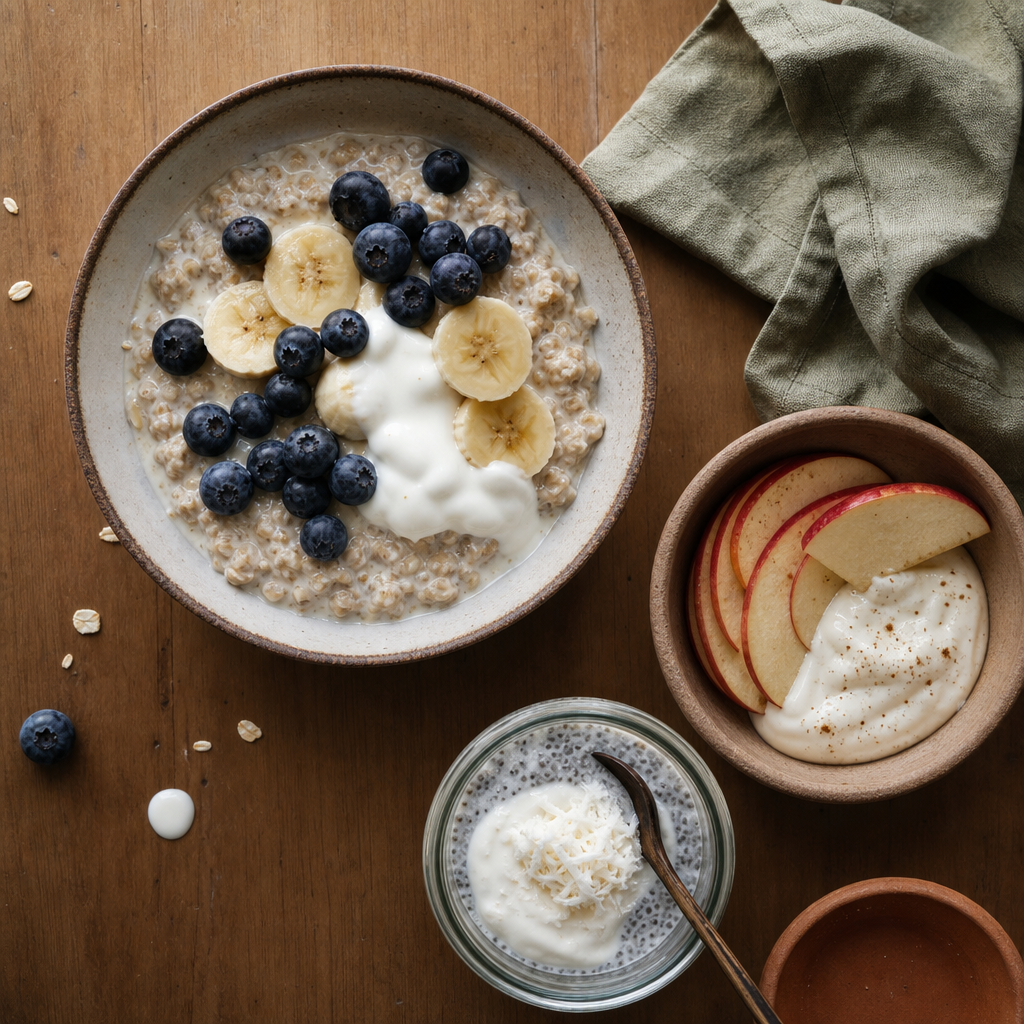
Picture this. You eat a bowl of oatmeal topped with yogurt and sliced banana. Here’s what happens next.
The soluble fiber from the oats and banana dissolves in water, forming a gel-like substance. This gel slows down digestion, which helps you feel full longer. But it also does something else — it becomes food for the bacteria in your colon. When those bacteria ferment the fiber, they produce short-chain fatty acids (SCFAs) like butyrate. These SCFAs are the main fuel for the cells lining your colon. They help strengthen your gut barrier and reduce inflammation.
Meanwhile, the probiotics from the yogurt — live bacteria like Lactobacillus and Bifidobacterium — travel through your digestive system. When they reach your colon, they find a welcoming environment. Why? Because the soluble fiber has already created a food source for them. The World Gastroenterology Organisation recognizes that prebiotics cause specific changes in gut microbiota composition and activity, which is exactly what makes this pairing so effective.
On the flip side, if you take probiotics without enough prebiotic fiber, those good bacteria may not have the fuel they need to thrive. They might pass through your system without really settling in. That’s why soluble fiber probiotics work better together than apart.
Probiotic Strains That Work Best for Regularity
Not all probiotics are created equal. Some strains have stronger evidence for digestive regularity than others. Here’s what the research points to.
Bacillus coagulans is a standout. It’s a spore-forming probiotic, which means it forms a protective shell that helps it survive stomach acid. Most probiotics don’t make it past your stomach acid alive. Spore-formers do. A 2020 randomized, double-blind trial with 100 adults found that Bacillus coagulans significantly increased bowel movements compared to placebo. The study showed that 98% of the probiotic group achieved normal stool consistency, compared to 74% in the placebo group. Participants also reported less pain and straining.
A more recent 2026 study in PLoS One tested a blend of spore-forming probiotics — including Bacillus coagulans, Bacillus subtilis, and Clostridium butyricum — in 78 adults with constipation. The results showed significant improvements in stool consistency, less abdominal pain, and better physical functioning. The probiotic group also reported feeling better overall.
If you’re looking for a strain that pairs especially well with soluble fiber, Bacillus coagulans is a top choice. It survives the journey, reaches your colon, and responds well to prebiotic fuel.
Delicious Food Pairings for Soluble Fiber Probiotics
Here’s where it gets fun. You don’t need a fancy supplement to get the synbiotic effect. Some of the most delicious meals are naturally synbiotic. Let’s look at five pairings that taste great and support your gut.
1. Overnight Oats with Greek Yogurt and Berries
Oats are rich in beta-glucan, a soluble fiber that feeds Bifidobacteria. Greek yogurt provides live probiotics. Berries add extra fiber and polyphenols that also support gut bacteria. This breakfast gives you about 8-10g of fiber plus a solid dose of probiotics. Make it the night before for an easy morning meal.
2. Apple Slices with Kefir Yogurt Dip
Apples contain pectin, a soluble fiber that increases butyrate production in the colon. Kefir is a fermented dairy drink packed with diverse probiotic strains — often more than yogurt. Dip sliced apples into plain kefir for a snack that’s both satisfying and gut-friendly. The pectin in apples feeds the bacteria, while kefir introduces new strains.
3. Chia Pudding with Coconut Yogurt
Chia seeds are a soluble fiber powerhouse — just one ounce provides 10g of fiber. When soaked, they form a gel that slows digestion and feeds gut bacteria — a perfect addition to a gut health breakfast. Pair with coconut yogurt (look for one with live cultures) for a dairy-free synbiotic option. This is perfect for vegan readers or anyone avoiding dairy.
4. Lentil Soup with a Side of Kimchi
Lentils are packed with soluble fiber — one cup of cooked lentils gives you about 15g of fiber. They’re also rich in resistant starch, another prebiotic. Kimchi is a fermented vegetable dish loaded with Lactobacillus probiotics. This savory combo is a warm, satisfying dinner that supports regularity from multiple angles.
5. Green Smoothie with Banana, Spinach, and Kefir
Bananas provide inulin and fructooligosaccharides (FOS), both soluble prebiotic fibers. Spinach adds extra fiber and polyphenols. Kefir brings the probiotics. Blend them together for a quick breakfast or snack that delivers the synbiotic effect in one glass. Add a tablespoon of chia seeds for even more soluble fiber.
What the Research Actually Says About Soluble Fiber Probiotics
Let’s be honest about the evidence. The science on synbiotics is promising but still emerging. Here’s what we know right now.
The British Dietetic Association’s 2025 guidelines on chronic constipation are the most comprehensive to date. They reviewed 75 randomized trials and generated 59 dietary recommendations. For fiber supplements, they made 15 recommendations. For probiotics, they made 20. For synbiotics, they made 2. The evidence levels ranged from moderate to very low — meaning the research is still building.
However, individual studies tell a more encouraging story. The 2023 trial we mentioned earlier — comparing a synbiotic (probiotic plus prebiotic) to a prebiotic alone — found that the combination worked faster and more completely. Participants in the synbiotic group saw improvements in stool frequency by the second week, while the prebiotic-only group took longer. The synbiotic group also reported less pain and a greater sense of complete evacuation.
A 2023 review in Nutrients also found that soluble fiber — particularly inulin-type fructans — can improve symptoms in people with constipation-predominant IBS. The review noted that prebiotics, probiotics, and synbiotics all show potential for symptom improvement, and that the interaction between diet and gut bacteria is central to digestive health.
So what’s the bottom line? The evidence supports the synbiotic approach, but it’s not a guaranteed fix for everyone. Some people respond better than others. The key is consistency — eating synbiotic foods regularly over weeks, not just a few times.
How to Start Adding Soluble Fiber Probiotics to Your Day
If you’re new to this, start slow. Here’s a simple plan to build up without overwhelming your system.
Week one: Add one synbiotic meal per day. Try overnight oats with yogurt for breakfast — an easy high fiber breakfast idea — or apple slices with kefir as a snack. Keep it simple. Don’t change anything else about your diet yet.
Week two: Add a second synbiotic meal. Maybe chia pudding for breakfast and lentil soup with kimchi for lunch. Notice how your digestion feels. Some people experience mild bloating at first — this is normal as your gut bacteria adjust.
Week three: Aim for three synbiotic meals or snacks per day. By now, your gut bacteria are adapting. You may notice more regular bowel movements, less bloating, and more energy after meals.
Important: Drink plenty of water when you increase fiber. Soluble fiber needs water to form that gel. Without enough water, fiber can actually make constipation worse. Aim for at least 8 cups of water per day, more if you’re active.
Also, increase fiber gradually. Jumping from 15g to 40g overnight will likely cause gas and bloating. Add about 3-5g of fiber per week. The Mayo Clinic recommends increasing fiber slowly over several weeks and drinking plenty of fluids.
What About Supplements?
Food comes first. But if you’re considering a supplement, here’s what to look for.
For a synbiotic supplement, check the label for three things. First, the probiotic strain name — look for specific strains like Bacillus coagulans Unique IS2 or Bacillus subtilis. Generic “probiotic blend” without strain names is a red flag. Second, the CFU count — look for at least 2-7 billion CFU per serving. Third, the prebiotic fiber source — Fibersol-2, inulin, or acacia fiber are common options.
Spore-forming probiotics (like Bacillus species) are a smart choice because they survive stomach acid. Non-spore-forming strains like Lactobacillus and Bifidobacterium are more fragile and may not survive the journey as well.
If you have a medical condition like IBS, SIBO, or Crohn’s disease, talk to your healthcare provider before starting any supplement. Some people with sensitive guts may react poorly to certain prebiotic fibers or probiotic strains.
Safety and Who Should Be Careful
For most healthy people, increasing soluble fiber and eating probiotic-rich foods is safe and beneficial. However, a few groups should take extra care.
If you have IBS, especially IBS-C, start with small amounts of soluble fiber and see how you respond. Some people with IBS find that certain prebiotic fibers (like inulin from garlic and onions) trigger bloating. Soluble fiber from oats and chia seeds is often better tolerated.
If you have SIBO (small intestinal bacterial overgrowth), talk to your doctor before increasing prebiotic fiber. The extra fuel can sometimes worsen symptoms.
If you’re pregnant or breastfeeding, eating probiotic-rich foods is generally safe and beneficial. But check with your healthcare provider before taking any probiotic supplement.
And if you’re on immunosuppressant medications, talk to your doctor before taking probiotic supplements. While the risk is low for healthy people, those with compromised immune systems should be cautious with live bacteria.
Frequently Asked Questions
Can I get enough synbiotic benefit from food alone?
Yes, absolutely. Eating a variety of fiber-rich plant foods and fermented foods is the most natural way to support your gut microbiome. The food-first approach gives you additional nutrients, antioxidants, and polyphenols that supplements don’t provide. Aim for 25-38g of fiber daily from whole foods, plus a serving of fermented food like yogurt, kefir, or kimchi.
How quickly will I notice a difference?
Some people notice improvements in bowel regularity within 1-2 weeks. For others, it may take 3-4 weeks. Consistency matters more than quantity — eating synbiotic foods daily is more effective than eating them occasionally. If you don’t notice changes after 4 weeks, consider increasing your fiber intake gradually or trying different probiotic strains.
What if I’m dairy-free or vegan?
You have plenty of options. Coconut yogurt with live cultures, water kefir, kombucha, kimchi, sauerkraut, and tempeh are all dairy-free probiotic sources. Pair them with soluble fiber foods like oats, chia seeds, apples, lentils, and bananas. Chia pudding with coconut yogurt is a great dairy-free synbiotic breakfast.
Can I take too much soluble fiber?
Yes. Increasing fiber too quickly can cause gas, bloating, cramps, and even constipation if you’re not drinking enough water. The key is to increase gradually — add 3-5g of fiber per week — and drink plenty of fluids. If you experience discomfort, scale back and increase more slowly.
The Bottom Line
Here’s what I want you to remember. Soluble fiber probiotics work better together than apart. The fiber feeds the good bacteria, and the probiotics introduce new strains. Together, they create an environment where your gut microbiome can thrive.
You don’t need expensive supplements or complicated protocols. Start with one synbiotic meal today. Oatmeal with yogurt and banana. Apple slices with kefir. Chia pudding with coconut yogurt. These are real foods that taste good and support your digestive health.
The science is still catching up, but the direction is clear. Pairing prebiotic fiber with probiotics is one of the most practical, evidence-supported ways to improve digestive regularity. And the best part? You can start at your next meal.