
Vitamin C Skin Benefits: How It Activates Your Youth Genes
What if the secret to younger-looking skin wasn’t in a jar, but on your plate? That’s the question a groundbreaking new study is asking. And the answer points directly to a nutrient you probably already have in your kitchen: vitamin C. We all know it supports immunity. But new research reveals that vitamin C skin benefits go much deeper \u2014 all the way to your genes. Let’s explore what the science actually says and how you can put it into practice.
Key Takeaways
- New science: A 2025 study found that vitamin C can activate genes that help skin cells grow and renew.
- How it works: Vitamin C helps ‘turn on’ youth-related genes by removing chemical ‘off’ switches on your DNA.
- Food first: Getting enough vitamin C from your diet is the foundation for skin health at the cellular level.
- Both routes matter: Dietary vitamin C supports deeper skin layers, while topical vitamin C targets the surface.
- Easy to achieve: Most people can meet their needs with a few servings of fruits and vegetables each day.
What the Science Says \u2014 The New Study on Vitamin C and Skin Genes
Here’s the thing. For years, we knew vitamin C was good for skin because it helps make collagen and fights free radicals. But a 2025 study in the Journal of Investigative Dermatology found something much more fundamental. Vitamin C doesn’t just support skin \u2014 it actively tells your skin cells to grow and renew.
The researchers, led by Dr. Ishigami’s team in Japan, used 3D human skin models grown in a lab. When they added vitamin C, something remarkable happened. The skin cells started behaving like younger cells. They divided more. They produced more of the proteins that keep skin thick and resilient.
Now, you might be thinking: \”How does that even work?\” Let me explain in plain English.
The TET Enzyme Mechanism \u2014 Simplified
Think of your DNA as a giant control panel with thousands of switches. Some switches turn genes \”on.\” Others turn them \”off.\” As we age, many of the switches for skin-renewal genes get stuck in the \”off\” position. Vitamin C helps flip them back on. It does this by helping an enzyme called TET remove chemical tags (methyl groups) that silence these genes. The study found over 10,000 spots on the DNA where vitamin C removed these \”off\” switches. The result? Twelve key genes that control skin cell growth became 1.6 to 75 times more active. When the researchers blocked the TET enzyme, the effect disappeared \u2014 proving this is exactly how vitamin C works.
How Vitamin C Supports Skin Health at Every Level
This new gene-activation finding is exciting. But it builds on decades of research showing how vitamin C supports skin in multiple ways. A comprehensive scientific review of vitamin C in skin health from the journal Nutrients outlines several key roles.
Collagen production. Vitamin C is a required helper for the enzymes that build and stabilize collagen. Without enough vitamin C, collagen fibers can’t form properly. This is why severe deficiency leads to scurvy \u2014 a condition where skin loses its structural integrity.
Antioxidant protection. Your skin is constantly exposed to UV rays and pollution. These create free radicals that damage cells and accelerate aging. Vitamin C is a powerful antioxidant that neutralizes these threats before they cause harm.
Pigment regulation. Vitamin C can help reduce dark spots by interfering with the enzyme that produces melanin. This makes it a gentle option for evening skin tone.
Barrier support. The review also notes that vitamin C helps skin cells form a healthy outer barrier. This means better moisture retention and protection against irritants.
What the Research Says About Vitamin C and Skin Aging
Let’s be honest. The new study is in a lab dish, not in humans. So what does the real-world evidence look like?
A large NHANES study on dietary vitamin C and skin aging looked at over 4,000 women. It found that those with higher vitamin C intakes had a significantly lower chance of having wrinkled, dry-looking skin. This link held up even after accounting for age, sun exposure, smoking, and other factors.
On the topical side, a systematic review of topical vitamin C for skin aging found that using vitamin C serums can make skin appear smoother and less wrinkled after three or more months of daily use. It also showed significant benefits for reducing dark spots.
The bottom line? The evidence is consistent. Vitamin C \u2014 from food, from supplements, or from a serum \u2014 supports healthier, more youthful-looking skin.
Topical vs. Dietary Vitamin C: What Works for Skin?
This is where things get practical. You might be wondering: \”Should I eat more vitamin C, or should I buy a serum?\” The answer is both \u2014 but for different reasons.
Dietary vitamin C gets absorbed into your bloodstream and delivered to all layers of your skin. This is how you support collagen production in the deeper dermis and provide the raw material for the gene-activation effects we discussed. The NIH Office of Dietary Supplements vitamin C fact sheet confirms that the RDA for adult women is 75 mg per day, and for men it’s 90 mg. Smokers need an extra 35 mg daily.
Topical vitamin C goes directly onto the outer layer of your skin (the epidermis). This is great for antioxidant protection, reducing pigmentation, and supporting the skin barrier. Harvard Health’s guide to topical vitamin C recommends looking for L-ascorbic acid at 10-20% concentration with a pH below 3.5 for best results.
The Best Approach: Combine Both
Think of dietary vitamin C as the foundation and topical vitamin C as the finishing touch. Eating vitamin C-rich foods ensures your skin has the building blocks it needs from the inside out. A good serum adds targeted protection and brightening on the surface. You don’t need to choose \u2014 you can do both.
How Much Vitamin C Do You Need for Skin Health?
The RDA of 75 mg for women is enough to prevent deficiency. But for optimal skin health, many experts suggest aiming higher. The body reaches saturation \u2014 meaning your tissues have all the vitamin C they can hold \u2014 at around 200 mg per day from food and supplements combined.
Here’s the good news. You can easily get 200 mg from food alone. One medium red bell pepper has about 150 mg. One kiwi has about 65 mg. A cup of broccoli has about 80 mg. That’s already more than enough.
Safety note: The upper limit for vitamin C is 2,000 mg per day for adults. At very high doses (over 1,000 mg from supplements), some people experience digestive upset or diarrhea. Getting your vitamin C from food is always the safest bet.
Best Food Sources of Vitamin C for Skin Health
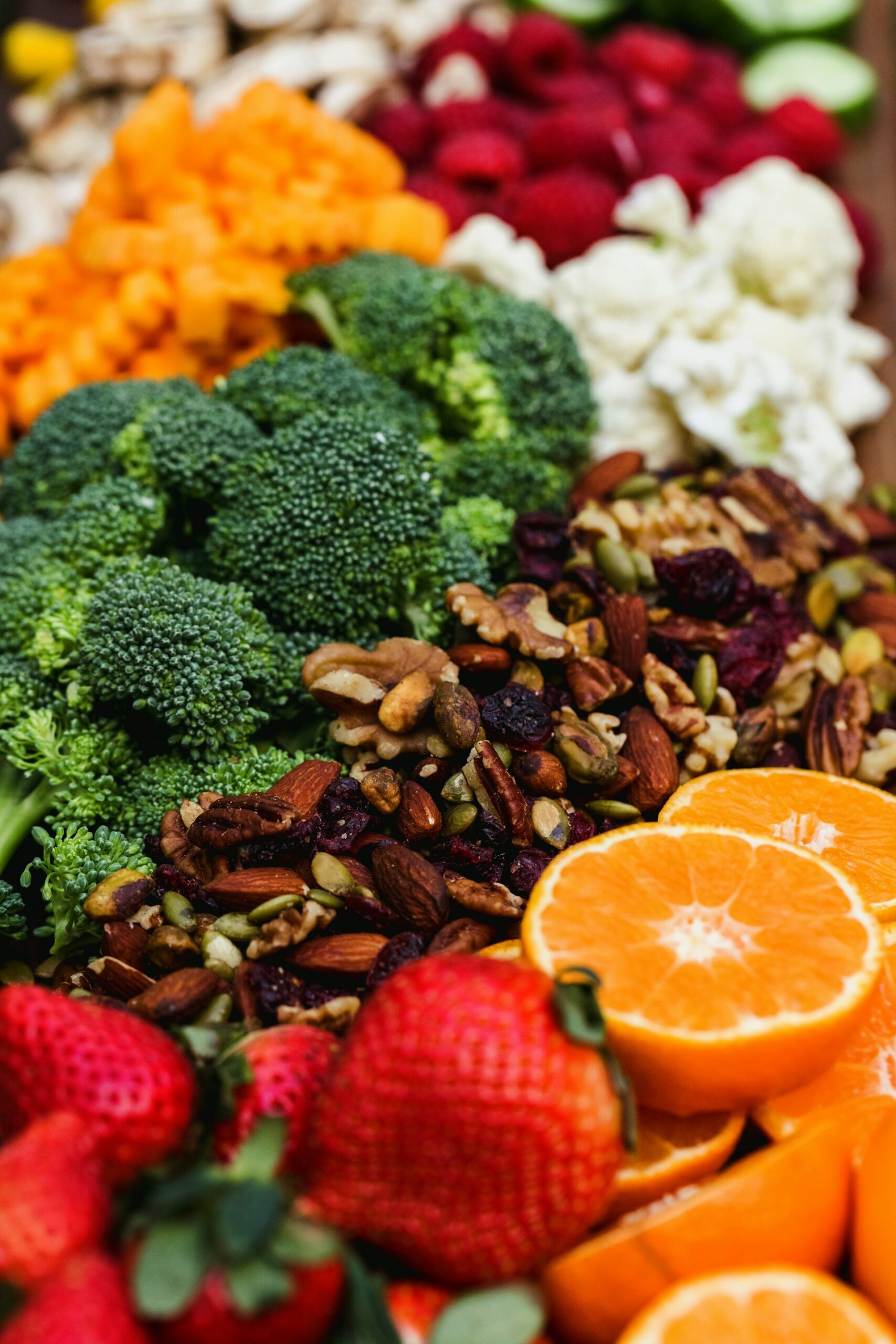
You probably know citrus fruits are good sources. But let’s expand that list. Many of these are anti-inflammatory foods dietitians recommend for women. Here are some of the best foods for getting your daily vitamin C, ranked by how much they provide per serving.
- Red bell pepper (1 medium): ~150 mg \u2014 the highest source per serving
- Kiwi (1 medium): ~65 mg
- Broccoli (1 cup, cooked): ~80 mg
- Strawberries (1 cup): ~85 mg
- Orange (1 medium): ~70 mg
- Brussels sprouts (1 cup, cooked): ~75 mg
- Tomato (1 medium): ~15 mg
- Guava (1 fruit): ~125 mg
Pro tip: Vitamin C is sensitive to heat and water. To preserve the most vitamin C, eat these foods raw or lightly steamed. If you boil broccoli, you lose about half the vitamin C into the water.
A Reality Check: What This New Study Means vs. The Hype
Let’s be real for a moment. The headlines about \”vitamin C turning on youth genes\” are exciting. But here’s what you need to know to keep things in perspective.
This was a lab study using human skin cells grown in a dish. It’s not the same as a clinical trial in real people. The findings are promising and biologically plausible \u2014 but we need human studies to confirm that eating more vitamin C actually triggers these same gene changes in living skin.
What we do know from real-world studies is that people who eat more vitamin C tend to have better-looking skin. The new study gives us a plausible mechanism for why that might be true. It’s a piece of the puzzle, not the whole picture.
So no, you don’t need to rush out and buy expensive supplements. But yes, this is another good reason to eat your fruits and vegetables.
Frequently Asked Questions
Q: Can I get enough vitamin C for skin health from food alone?
Yes, absolutely. Most people can meet their needs with a few servings of fruits and vegetables each day. One red bell pepper and a kiwi provide over 200 mg \u2014 more than enough for saturation.
Q: Should I take a vitamin C supplement for my skin?
If your diet is already rich in fruits and vegetables, a supplement likely won’t provide additional skin benefits. Supplements are most helpful for people with low intake \u2014 such as smokers, those with limited diets, or people with certain health conditions.
Q: Does cooking destroy vitamin C in food?
Yes, heat and water can reduce vitamin C content. To preserve it, eat foods raw when possible, or use gentle cooking methods like steaming or stir-frying for short periods.
Q: Can topical vitamin C trigger the same gene activation as dietary vitamin C?
We don’t know yet. The 2025 study used vitamin C at concentrations that match what’s naturally delivered through the bloodstream. Whether topical application reaches the deeper skin layers in high enough amounts to trigger gene changes is an open question.
The Bottom Line
Here’s what I want you to take away from all this. The science on vitamin C skin health is stronger than ever. We now know it works at the genetic level to support skin renewal. We’ve known for decades that it builds collagen and protects against damage.
The practical takeaway is simple. Eat a variety of vitamin C-rich foods every day. A red bell pepper in your salad. A kiwi with breakfast. Broccoli with dinner. If you want an extra boost, a well-formulated vitamin C serum \u2014 a key part of a simple skincare routine \u2014 can complement your diet by protecting the outer layers of your skin.
Your skin doesn’t need a miracle product. It needs consistent, evidence-based support. And vitamin C \u2014 from your plate, your glass, or your skincare routine \u2014 delivers exactly that.