

ACOG Menopause Guidelines 2026: What Changed, What to Ask
ACOG updated its menopause guidance for the first time since 2014. Here’s what actually changed for hot flushes, sleep and mood, what didn’t — and the questions worth asking your clinician.

ACOG updated its menopause guidance for the first time since 2014. Here’s what actually changed for hot flushes, sleep and mood, what didn’t — and the questions worth asking your clinician.

Four medical societies just published a shared four-stage framework for women’s heart health, from the teen years through postmenopause. Here is what changes at each stage, what gets measured, and what to ask at your next visit.

ACOG’s October 2026 clinical practice guideline strongly recommends menopause hormone therapy for hot flashes, night sweats, and the sleep disruption they cause. Here is how to know whether you are a candidate, what actually changed with the 2025 FDA label update, and what to do if hormones are not right for you.

ACOG has updated its menopause treatment guidelines for the first time since 2014. Here is what changed, who hormone therapy may suit, how local and whole-body treatment differ, and the questions to bring to your clinician.

A 2026 study found the average product listed 16 ingredients but contained 51 detected chemicals — and 26% contradicted a claim on their own label. Here is why the label fails, why detection is not exposure, and what you can actually trust.

Early menopause is linked to faster memory decline and an earlier Alzheimer’s diagnosis — but the effect is modest. Here’s what the research really shows, why surgical and natural menopause differ, and the evidence-backed steps that protect your brain.

A normal BMI does not rule out PCOS or insulin resistance. Here are the labs worth requesting, what the evidence supports when weight loss is off the table, and how to move a stalled GLP-1 conversation forward.

Told your regular periods rule out PCOS? They don’t. Here’s the two-of-three rule, why a “normal” testosterone proves little, and the tests to ask for by name.

First-time stroke rates in adults ages 20 to 54 rose about 83% between 1993 and 2020 — even as rates in older adults fell. Here’s what’s driving the shift, the warning signs people dismiss as stress, the risk windows specific to women, and the numbers to check now.
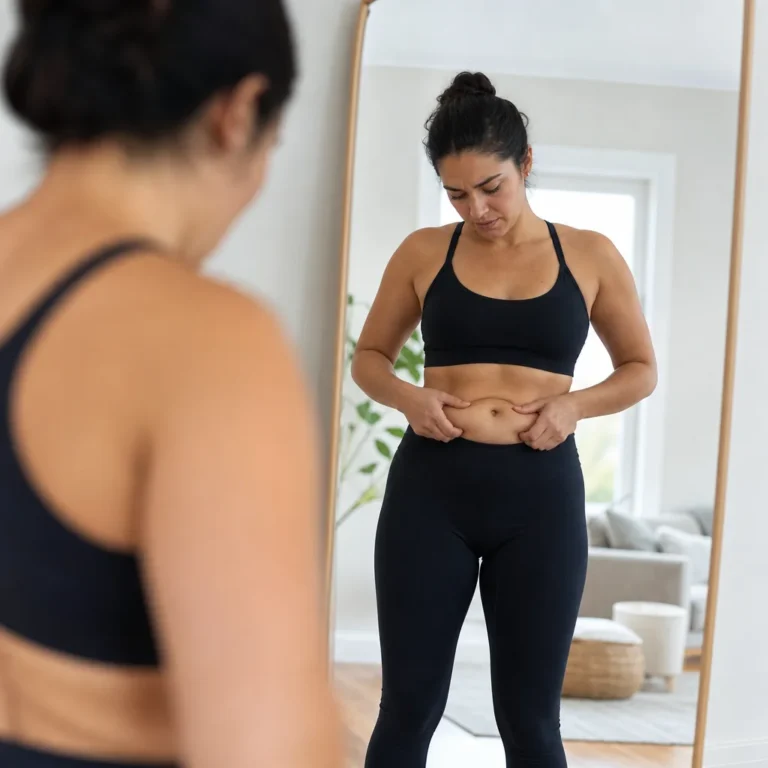
Is ‘cortisol belly’ real? Research says everyday stress rarely causes belly fat. Here’s the evidence-based truth about the trend — and what actually helps.