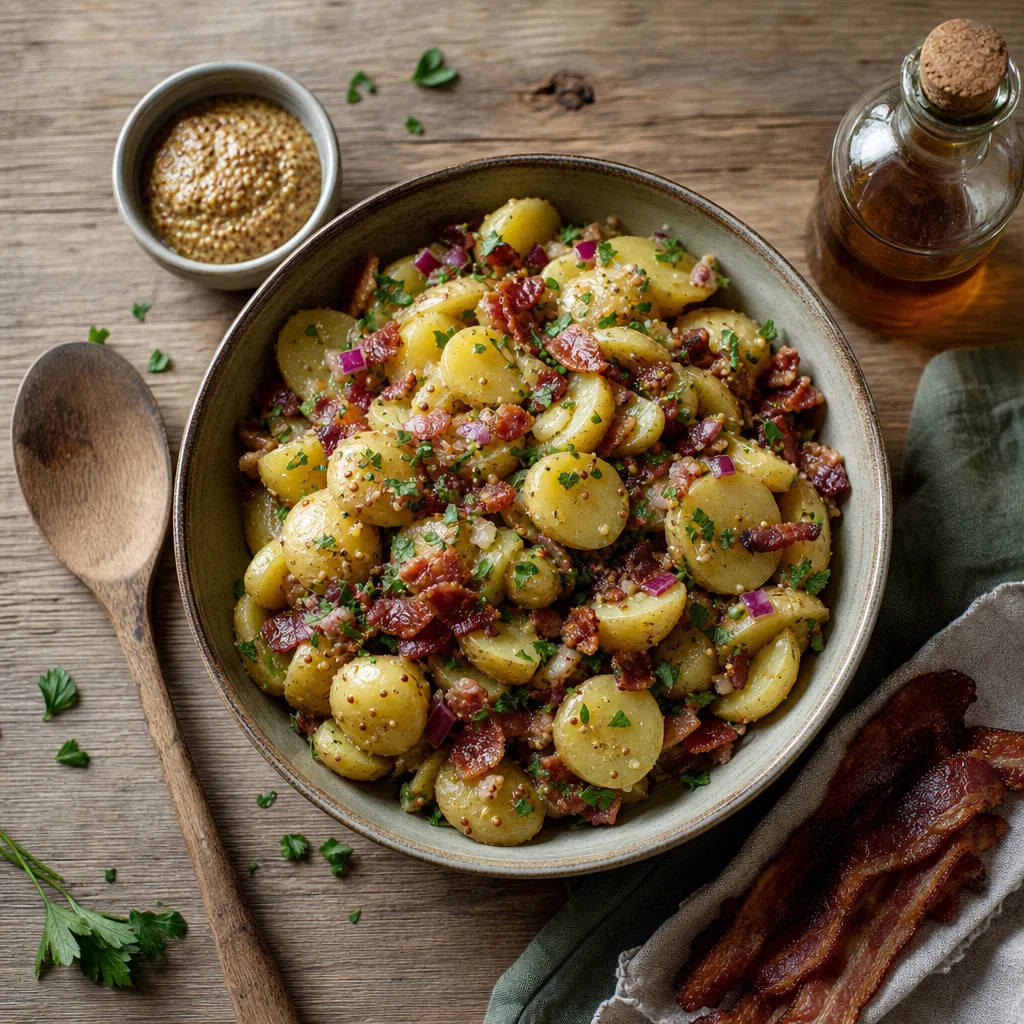
Healthy German Potato Salad with Tangy Vinegar Dressing
Key Takeaways
- Vinegar-based is better for you: German potato salad uses a tangy vinegar dressing instead of mayo — cutting calories while helping manage blood sugar and increasing fullness.
- Potato prep matters: Boiling then cooling potatoes increases resistant starch, which lowers the glycemic impact of this side dish.
- You can lighten it up: Reduce bacon, use olive oil, and skip the sugar without losing authentic flavor. We’ll show you three variations.
- Slow cooker option: Make this easy, fuss-free version in your slow cooker for hands-off summer cooking.
- Calorie savings are real: A serving of German-style potato salad has about 200 calories — nearly half the 360 calories in traditional mayo-based versions.
You know the scene. You’re at a summer cookout, eyeing the potato salad. You want a scoop — but you also know that creamy, mayo-drenched version is basically a calorie bomb in disguise. What if I told you there’s a potato salad that actually works with your body instead of against it? That’s where german potato salad comes in. This vinegar-based classic skips the mayo entirely, and the science says that swap matters more than you might think. Let me show you why this lighter side deserves a permanent spot at your table — plus exactly how to make it.
Quick Answer: Is German Potato Salad Actually Healthier?
Yes. A typical serving of German potato salad has about 200 calories — compared to 360 calories in traditional mayo-based versions. Plus, the vinegar in the dressing helps manage blood sugar and keeps you feeling fuller longer. It’s a classic comfort food that happens to be a smarter choice for your waistline and your metabolism.
Why German Potato Salad Is the Smarter Summer Side
Here’s the thing about traditional American potato salad: it’s delicious, but it’s also a lot. Mayo, eggs, sometimes sour cream — it all adds up fast. A single cup can pack 360 calories or more, mostly from fat. German potato salad flips that script entirely.
Instead of a creamy mayo base, this version uses a warm vinaigrette made with apple cider vinegar, a touch of bacon drippings, and sometimes a little mustard. The result? A tangy, savory side that’s every bit as satisfying — with roughly half the calories and a fraction of the fat.
But the benefits go beyond calories. Research shows how you cook potatoes affects their impact on your blood sugar. Boiling potatoes and letting them cool — which is exactly what you do for German potato salad — increases resistant starch. That’s a type of starch that resists digestion, so it has less of a blood sugar spike than freshly cooked hot potatoes. We take a closer look at how different salads affect blood sugar in our guide to blood sugar salads: potato salad vs pasta salad.
What the Science Says About Vinegar and Your Health
Now, you might be thinking: “It’s just potato salad. Does the dressing really make that much of a difference?” The answer might surprise you.
A landmark study from Lund University found that acetic acid — the active compound in vinegar — significantly lowers blood glucose and insulin responses after a carbohydrate-rich meal. Even more compelling: research shows vinegar can help manage blood sugar and keep you fuller longer in a dose-dependent way. That means the more vinegar in your dressing, the better the effect on your blood sugar and satiety.
How does it work? A comprehensive review published in Molecular Nutrition & Food Research identified multiple mechanisms: vinegar activates receptors in your gut that trigger GLP-1 release (a hormone that helps regulate blood sugar and appetite), improves insulin sensitivity, and promotes satiety by slowing digestion. In plain English? Vinegar offers multiple health benefits beyond just fewer calories — it actively helps your body process carbs more efficiently.
And if you’re using apple cider vinegar — which most German potato salad recipes call for — that’s one more reason to feel good about this dish. The research on vinegar’s blood-sugar benefits is well-established across multiple high-quality studies. So that tangy kick in your potato salad isn’t just flavor. It’s functional.
Quick Nutrition Comparison (per 1-cup serving)
German Potato Salad: ~200 calories
Traditional Mayo-Based Potato Salad: ~360 calories
How to Make German Potato Salad in Your Slow Cooker
Here’s where this recipe really shines. Most German potato salad recipes have you boil potatoes on the stove, cook bacon in a skillet, and mix everything together. That’s fine — but a slow cooker makes it even easier, especially when you’re feeding a crowd.
This method comes from a lighter, modern take on the classic. The potatoes simmer gently in the slow cooker instead of boiling on the stove, and the dressing stays separate until serving time. The result is tender, perfectly cooked potatoes that soak up just the right amount of tangy vinaigrette.
Slow Cooker German Potato Salad
Ingredients:
- 2 lbs fingerling potatoes or Yukon Gold potatoes, cut into 1-inch pieces
- 4 strips bacon (instead of the usual 6-8)
- 1/2 cup diced red onion
- 1/3 cup apple cider vinegar
- 2 tbsp extra-virgin olive oil
- 1 tbsp whole grain Dijon mustard
- 1 tsp sugar (optional — you can skip it)
- 1/4 cup chopped fresh parsley
- Salt and pepper to taste
Directions:
- Place cut potatoes in a slow cooker with 1/2 cup water. Cover and cook on low for 3-4 hours or high for 1.5-2 hours, until fork-tender.
- While potatoes cook, cook bacon in a skillet until crisp. Remove bacon, crumble it, and set aside. Reserve 1 tablespoon of the rendered fat.
- In the same skillet, sauté the diced onion in the reserved bacon fat for 3-4 minutes until softened.
- Whisk in the apple cider vinegar, olive oil, Dijon mustard, and sugar (if using). Bring to a gentle simmer, then remove from heat.
- Drain any excess liquid from the slow cooker. Pour the warm dressing over the potatoes and gently toss to coat.
- Fold in the crumbled bacon and fresh parsley. Season with salt and pepper. Serve warm or at room temperature.
Yield: 6-8 servings
Three Ways to Customize Your German Potato Salad
One of the best things about this dish is how adaptable it is. Here are three versions that let you choose your own adventure.
The Classic: Use the recipe above as written. The touch of bacon and the mustard-vinegar dressing give you authentic flavor with about half the calories of a mayo-based salad. This is the version that pleases everyone at the table.
The Lighter Version: Skip the bacon entirely. Cook the onions in 2 tablespoons of olive oil instead of bacon fat. Add 1/2 teaspoon of smoked paprika to the dressing for that savory depth. This version is vegetarian-friendly and drops the fat content even further — without losing the smoky, tangy character that makes German potato salad special.
The Plant-Based Version: Inspired by clever vegan versions, swap the bacon for 1 teaspoon of smoked salt or smoked paprika and add 2 tablespoons of capers for briny depth. Use all olive oil instead of bacon fat. The capers give you that salty, savory punch that makes you forget the bacon was ever there.
Tips for Potato Salad Success
- Choose the right potato: Fingerling, red, or Yukon Gold potatoes hold their shape best. Avoid russets — they’ll turn mushy.
- Don’t peel them: The skin adds fiber, nutrients, and a rustic look. Just scrub them well.
- Dress while warm: Warm potatoes absorb the vinaigrette much better than cold ones. This is the secret to maximum flavor.
- Let it rest: If you have time, let the salad sit for 15-20 minutes before serving. The flavors meld beautifully.
- Watch the sugar: Traditional recipes sometimes call for 3 tablespoons of sugar. Start with 1 teaspoon — you probably won’t miss the rest.
Storage, Meal Prep, and Serving Ideas
Here’s the thing about German potato salad: it actually gets better as it sits. The flavors continue to develop, and you can serve it warm, at room temperature, or even chilled.
Make ahead: You can prepare this salad up to two days in advance. Store it in an airtight container in the refrigerator. To serve warm, gently reheat it in a skillet or microwave — adding a splash of vinegar or water to refresh the dressing.
Storing leftovers: German potato salad keeps well for 4-5 days in the fridge. The flavor actually deepens overnight. Just give it a gentle stir before serving.
What to serve with it: This side pairs beautifully with grilled sausages, bratwurst, roasted chicken, pork chops, or a simple green salad. It’s also fantastic alongside burgers or grilled vegetables at summer cookouts. For more ideas on keeping meals satisfying, see our guide to building a high-protein salad that keeps you full.
Frequently Asked Questions
Can I freeze German potato salad?
It’s not recommended. Potatoes become watery and grainy when frozen and thawed. This salad is best made fresh or stored in the fridge for up to 5 days.
Is German potato salad served hot or cold?
Traditionally, it’s served warm. But it’s also delicious at room temperature or even chilled. The choice is yours — and that flexibility makes it perfect for potlucks and gatherings.
How is this different from regular potato salad?
The dressing is the biggest difference. German potato salad uses a warm vinegar-based vinaigrette instead of mayonnaise — it’s a classic German side dish, just like our Gurkensalat (German cucumber salad). It also typically includes bacon and onion, and it’s served warm rather than cold. The result is tangier, lighter, and more savory.
Is this healthy enough for everyday eating?
Absolutely. With about 200 calories per serving and the added benefit of vinegar’s blood-sugar-stabilizing effects — which we explore in more depth in our comparison of blood sugar salads for summer cookouts — this is a side dish you can enjoy regularly, not just on special occasions. The fiber from potato skins and protein from bacon (or your chosen alternative) make it satisfying and balanced.
The Bottom Line
German potato salad is proof that eating healthier doesn’t mean sacrificing flavor. By swapping mayo for a tangy vinegar dressing, you save calories, support better blood sugar management, and get a side dish that’s every bit as satisfying as the original.
Whether you make it the classic way, lighten it up with less bacon, or go fully plant-based, this recipe works for real life. It’s perfect for summer cookouts, meal prep, or any night you want a comfort-food side that also happens to be good for you.
So the next time you’re staring down a bowl of mayo-heavy potato salad at the potluck, remember: there’s a smarter option. And now you know exactly how to make it.