

GABA Benefits: How This Calming Compound Supports Your Whole Body
Key Takeaways
- GABA benefits go beyond the brain. This calming compound also affects your gut, immune system, and metabolism.
- Oral GABA supplements may not reach the brain directly. But they may work through your gut’s own nervous system.
- Newer research (2024–2025) found that 100–200 mg of GABA daily may improve sleep, mood, and heart rate in women. Larger studies are still needed.
- Fermented foods, green tea, yoga, and meditation are evidence-backed ways to support your body’s natural GABA activity.
- A 2025 research review found that GABA signaling affects the immune system, gut-brain axis, and metabolic health.
When you hear “GABA,” you likely picture a brain chemical that helps you unwind. That is true — gamma-aminobutyric acid is your body’s main calming compound. But here is what researchers are finding: GABA benefits go far beyond your brain. This same signaling molecule also affects your gut, your immune system, and how your body handles energy. A 2025 review of studies found that GABA signaling works on tissues throughout the body, including the immune system and the gut-brain axis. And a 2024 trial showed that 200 mg of GABA each day helped sedentary women sleep better and feel calmer. So whether you are curious about supplements or just want to support your body’s own GABA production, this guide covers the science, the practical steps, and what is still uncertain.
Quick Answer: What Are the Main GABA Benefits?
GABA helps calm overactive nerve signals, which makes it key for stress relief, restful sleep, and focus. Newer research shows it also affects gut health, immune balance, and metabolism. The strongest human data is in women for sleep and mood, with studies using 100–200 mg daily. Larger trials are still needed to confirm the full range of GABA benefits.
What Is GABA and How Does It Work?
GABA is a naturally occurring amino acid. It acts as your brain’s main brake pedal. When GABA binds to its receptors, it slows down nerve signals, which has a calming effect. The Cleveland Clinic notes that low GABA activity is linked to anxiety, mood issues, poor sleep, and even seizures.
Here is a twist you may not expect. GABA is not just made in your brain. GABA receptors are found in your gut lining, immune cells, liver, and ovaries. So the old “brain only” view of GABA is expanding fast. Understanding the full scope of GABA benefits means looking at every system it touches.
GABA Benefits Beyond the Brain: Gut, Immunity, and Metabolism
A growing body of evidence is changing how scientists see this compound. A 2025 review in Obstetrics & Gynecology Science found that GABA signaling affects the immune system, the gut-brain connection, and metabolic organs. The review also noted that GABA may help lower insulin resistance and balance sex hormones, which makes it a promising area for conditions like PCOS.
What does this mean for you? The evidence suggests that GABA benefits are not limited to calm feelings. They may extend to how your gut and immune system function. But it is important to be honest: most of this systemic GABA research is still in animal or cell models. Human data is growing but not yet firm. We need more large-scale trials to know for sure.
Do GABA Supplements Work? The Blood-Brain Barrier Question
If you swallow a GABA pill, does it reach your brain? That is the big question. The 2015 Frontiers in Psychology review concluded that the passage of oral GABA across the blood-brain barrier (BBB) is “controversial and contradictory.” Most medical sources say GABA supplements likely do not cross the BBB in meaningful ways. So how could they help?
One possible answer: your gut’s own nervous system. Your gut has its own nervous system (the enteric nervous system). When GABA interacts with receptors there, it may signal your brain to relax through the gut-brain connection. This gut-brain pathway may explain why some people feel calmer after taking GABA. Still, the placebo effect may also play a role.
Recent trials are adding new data. A 2024 randomized trial in the Journal of Dietary Supplements gave 30 sedentary women with overweight 200 mg of GABA daily for 90 days. Compared to placebo, the GABA group had better sleep, fewer negative emotions, lower depression scores, and better heart rate variability (a sign of calm nervous system activity). Another 2025 study in Menopause used 50 mg of GABA with a plant extract. Hot flash intensity dropped within one day, and sleep got better after five weeks. These findings are promising, but the studies are small, and the combo products make it hard to tell what GABA alone does.
GABA Supplement Dosage Guide
Typical dose: 100–200 mg daily (based on clinical trials).
Duration: Studies have used up to 90 days. Check with your doctor if you take it longer.
Safety: GABA supplements are generally well-tolerated in trials, but talk to your healthcare provider before starting, especially at higher doses.
How to Support GABA Naturally: Food and Lifestyle
You do not have to rely on supplements. Several research-backed strategies can help your body make or activate more GABA. These approaches dodge the BBB debate entirely. They work through your body’s own natural pathways.
Foods That Contain or Support GABA
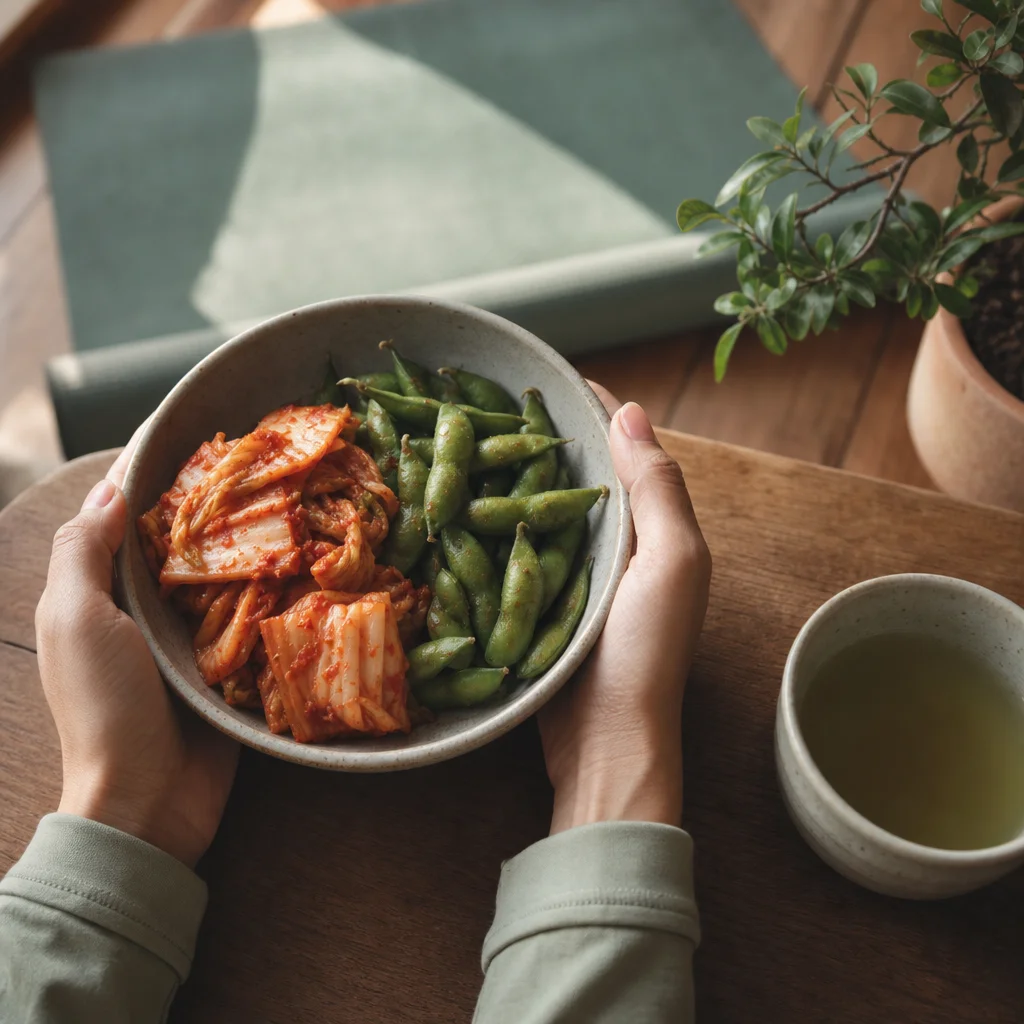
Fermented foods are your best source. Kimchi, miso, tempeh, yogurt, kefir, and natto all contain GABA. Other good options: green, white, and oolong teas — all recognized as GABA-supporting foods by the Cleveland Clinic; brown rice; sprouted grains; tomatoes; shiitake mushrooms; chestnuts; adzuki beans; cruciferous vegetables (broccoli, cabbage, Brussels sprouts); spinach; and sweet potatoes. The Cleveland Clinic lists many of these as GABA sources. Eating a mix of these foods each day can support healthy GABA levels.
Your gut and brain also communicate through the gut-brain axis — a connection we’ve explored in how your coffee habit affects your gut bacteria — and GABA plays a role in that conversation. So eating well for your gut — with fiber-rich foods and fermented options — may help your body use GABA more effectively.
Lifestyle Practices With Evidence Behind Them
Yoga has some of the strongest data for supporting GABA activity. Research suggests that regular practice may help increase GABA levels in the brain. Meditation and deep breathing may also support GABA function. Regular exercise has been linked to better GABA activity too. These approaches are safe, free, and come with many other health benefits besides.
Safety: Who Should Be Cautious With GABA Supplements?
Talk to your healthcare provider before taking GABA supplements, especially if you are taking prescription medications. The Cleveland Clinic lists several medications that work on GABA receptors, including benzodiazepines, barbiturates, and certain sleep aids. In theory, taking GABA supplements alongside these could increase sedative effects, but this has not been well-studied in humans. As always, your doctor knows your personal health history best.
FAQ: Your GABA Questions Answered
Q: Can GABA help with anxiety?
A: Possibly. The evidence is mixed. Some people find it helpful, but placebo effects are likely. Lifestyle approaches like yoga and meditation have stronger data for reducing anxiety through GABA pathways.
Q: Is it better to take GABA or magnesium for sleep?
A: Both work in different ways. Magnesium helps GABA receptors function and may be more reliable. GABA supplements offer a direct but debated approach. Many people use both.
Q: How quickly will I notice GABA benefits from supplements?
A: In trials, improvements in sleep and mood appeared after a few weeks of daily use. Some people report a mild calming feeling within an hour, but that may be a gut-based sensation rather than direct brain action.
Q: Can I get too much GABA from food?
A: No. There is no known risk from food sources of GABA. Your body handles food-based GABA very differently from concentrated supplements.
The Bottom Line
GABA is far more than a brain relaxant. It affects your gut, immune system, metabolism, and stress response. While oral GABA supplements have a mixed track record, newer studies — especially in women — show real promise for sleep, mood, and nervous system health. Your best approach? Combine fermented foods, green tea, and yoga or meditation to support your body’s natural GABA activity. If you want to try a supplement, start with 100 mg and talk to your healthcare provider. The science is still unfolding, but one thing is clear: GABA benefits reach throughout your body, and supporting that system is one of the smartest things you can do for your overall health.