

Coffee Gut Bacteria: Study Reveals Hidden Benefits
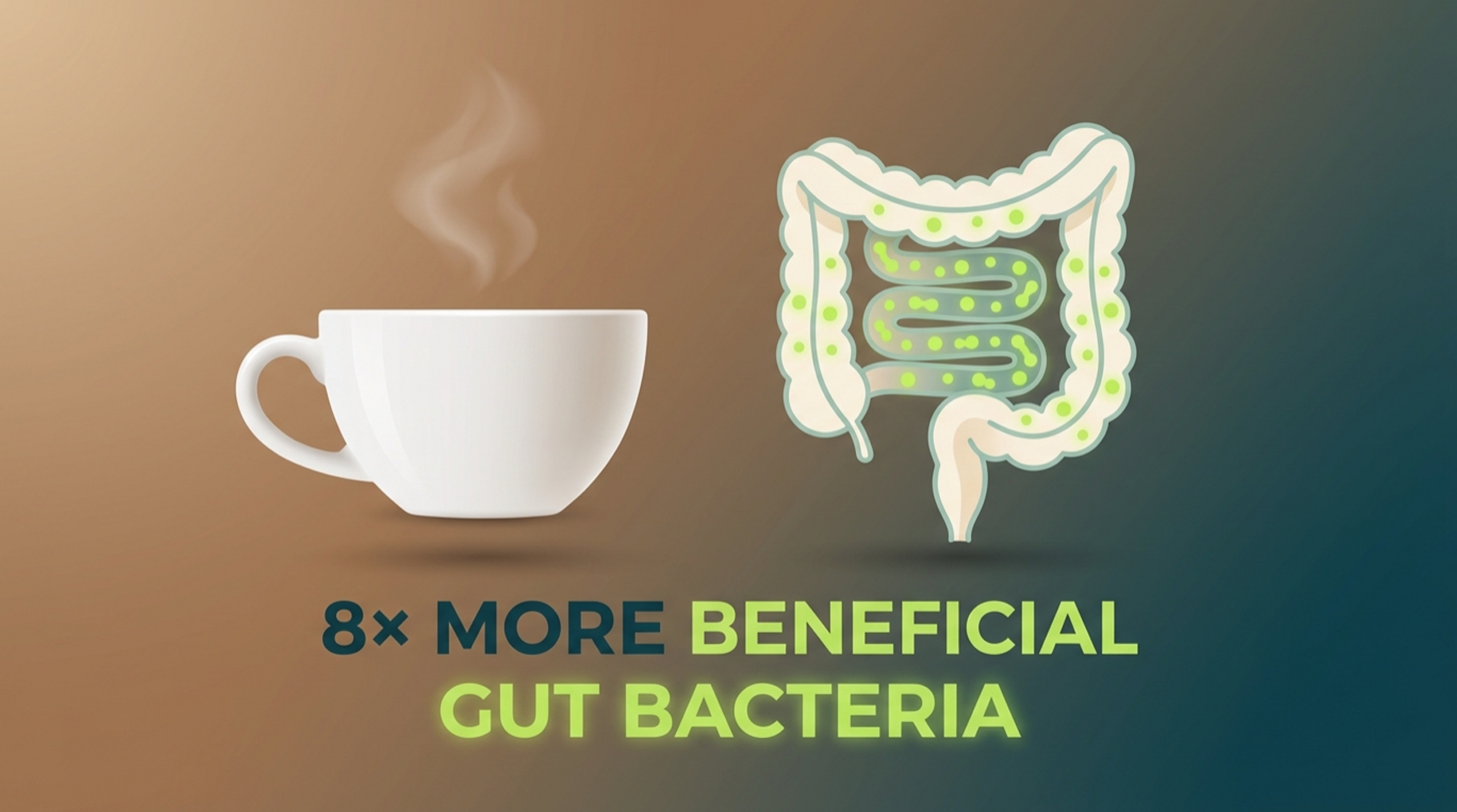
You drink coffee every day, but did you know it’s feeding a secret army of coffee gut bacteria that could transform your health? While most health advice focuses on what you eat, groundbreaking 2024 research reveals that your daily habits might be creating a powerful gut ecosystem you never knew existed. The difference isn’t just about digestion—it’s about whether you’re cultivating beneficial bacteria that fight inflammation, boost metabolism, and protect against chronic disease.
Here’s the truth: coffee drinkers have up to 8 times more of a specific beneficial bacteria called Lawsonibacter asaccharolyticus than non-coffee drinkers. This bacteria produces butyrate—a compound scientists call “gut superfood” that strengthens your intestinal barrier, reduces inflammation, and supports metabolic health. Plus, this groundbreaking study analyzed over 77,000 people across multiple countries, making it the largest investigation ever on coffee gut bacteria.
This article reveals exactly how your morning coffee is reshaping your microbiome—and how to maximize these powerful benefits naturally.
Quick Answer: How Does Coffee Affect Your Gut Bacteria?
Coffee gut bacteria = beneficial microbes that thrive on coffee’s compounds. The largest study ever (77,000+ people) found coffee drinkers have 8x more Lawsonibacter asaccharolyticus—a bacteria that produces butyrate for gut health, inflammation reduction, and metabolism support. This works with both caffeinated and decaf coffee, meaning everyone can benefit from coffee’s microbiome-boosting power.
The Groundbreaking Discovery About Coffee Gut Bacteria (That Changes Everything)
In November 2024, researchers published the largest study ever conducted on coffee and the human microbiome in the prestigious journal Nature Microbiology. The findings were stunning.
Scientists analyzed over 77,000 participants from the United States and United Kingdom, examining detailed dietary records and gut microbiome samples. Out of more than 150 different foods tested, coffee showed the strongest association with gut bacteria composition.
But here’s what makes this discovery extraordinary: they identified a specific bacterial species that thrives on coffee.
Meet Lawsonibacter asaccharolyticus: Your Coffee-Loving Gut Bacteria
First isolated from human feces in 2018, Lawsonibacter asaccharolyticus remained relatively unknown until this massive 2024 study revealed its critical connection to coffee consumption. Here’s what makes this bacteria so remarkable:
The numbers are striking: Coffee drinkers have 6-8 times more of this bacteria compared to people who don’t drink coffee. Additionally, it appears in 93.5% of regular coffee drinkers but only 2.4% of rural, non-Western populations where coffee consumption is minimal.
Moreover, this bacteria was barely detected in ancient microbiome samples (only 2 out of 37) and is almost non-existent in newborns and non-human primates. Translation: L. asaccharolyticus appears to be intimately tied to modern coffee-drinking habits.
Furthermore, researchers didn’t just observe this association—they proved it in the lab. When scientists cultured L. asaccharolyticus and added coffee to the growth medium, the bacteria thrived with a 350% increase in growth at optimal concentrations.
Why Coffee Gut Bacteria Matter for Your Health (The Butyrate Connection)
Here’s where the coffee gut bacteria story gets really exciting. L. asaccharolyticus is a butyrate-producing bacteria—and butyrate is one of the most important compounds for human health.
What Is Butyrate? (Your Gut’s Superfood)
Butyrate is a short-chain fatty acid that serves as the primary fuel source for the cells lining your colon. Think of it as premium gasoline for your digestive system.
Here’s what butyrate does for your body:
1. Strengthens Your Gut Barrier
Butyrate provides energy for colonocytes (intestinal lining cells), increases mucus production to protect against pathogens, and prevents “leaky gut” by reinforcing tight junctions between cells. Consequently, this keeps bacterial products from crossing into your bloodstream and causing inflammation.
2. Powerful Anti-Inflammatory Effects
Furthermore, butyrate boosts production of glutathione (your body’s master antioxidant), reduces chronic inflammation linked to disease, and modulates immune system responses. Remember, approximately 70-80% of your immune cells live in your gut—making gut health critical for overall immunity.
3. Supports the Gut-Brain Axis
Additionally, butyrate influences neurotransmitter production (dopamine, noradrenaline), supports Brain-Derived Neurotrophic Factor (BDNF)—essential for memory and mood, may reduce anxiety and improve sleep quality, and connects to better cognitive function and mental clarity.
4. Metabolic Health Benefits
Moreover, butyrate stimulates GLP-1 hormone release (regulates appetite and blood sugar), improves insulin sensitivity, and supports healthy weight management. For those focusing on weight loss after 40, supporting your gut bacteria becomes even more important.
5. Disease Protection
Research shows adequate butyrate levels help protect against inflammatory bowel disease (IBD, Crohn’s disease, ulcerative colitis), colorectal cancer, type 2 diabetes, cardiovascular disease, and allergies.
For those dealing with digestive discomfort, combining coffee consumption with an anti-bloat meal plan can provide comprehensive gut support.
The Science: How Coffee Feeds Your Beneficial Gut Bacteria
Researchers didn’t just observe the coffee gut bacteria connection—they identified exactly how it works at the molecular level.
It’s Not the Caffeine (Decaf Works Too!)
One of the most important findings: decaffeinated coffee produced the same strong association with L. asaccharolyticus abundance as regular coffee.
This confirms that the gut health benefits come from coffee’s polyphenols and other bioactive compounds—not caffeine. Therefore, whether you drink regular or decaf, enjoy it hot or iced, your gut bacteria will benefit equally.
For evening wellness routines, try cinnamon before bed with decaf coffee for gut support without sleep disruption.
The Active Compounds: What Makes Coffee Special
The magic ingredients feeding your coffee gut bacteria are:
Quinic Acid – A polyphenol that contributes to coffee’s acidity and acts as specialized “food” for L. asaccharolyticus. Interestingly, researchers found that coffee drinkers with higher levels of this bacteria also had increased blood levels of quinic acid and its derivatives.
Chlorogenic Acid – Coffee’s main antioxidant compound, which gut bacteria metabolize into beneficial metabolites including caffeic acid, dihydroferulic acid, and potentially pyrogallol.
Trigonelline – An alkaloid with anti-inflammatory properties that correlates with beneficial gut bacteria abundance.
These compounds act as specialized nutrients that L. asaccharolyticus metabolizes, allowing it to multiply and dominate other bacteria in your gut ecosystem. If you’re wondering about adding spices, check out how much cinnamon in coffee can amplify these gut health benefits.
The Global Evidence: Coffee Consumption Patterns Mirror Bacterial Prevalence
One of the most compelling aspects of this study was the population-level analysis spanning 43 countries.
Researchers discovered a remarkable pattern: countries with higher coffee consumption showed consistently higher prevalence of L. asaccharolyticus. The correlation was statistically significant, meaning this isn’t coincidence—it’s a real, measurable relationship.
High coffee-consuming countries like Finland, Norway, and Denmark showed bacterial prevalence above 75%. In contrast, populations with minimal coffee consumption showed prevalence as low as 2.4%.
This global pattern strongly suggests that widespread coffee drinking has literally shaped the modern human gut microbiome—creating a beneficial bacterial ecosystem that didn’t exist in our ancestors.
How Much Coffee Do You Need?
The study categorized participants into three groups:
Never: Less than 3 cups per week
Moderate: Up to 3 cups per day
High: More than 3 cups per day
Here’s the good news: Even moderate consumption showed significant benefits. The biggest bacterial increase occurred when going from “never” to “moderate” drinking—meaning you don’t need to drink excessive amounts to see gut health benefits.
Specifically, moderate coffee drinkers had bacterial levels 3.4 to 6.4 times higher than non-drinkers. High consumers had 4.5 to 8 times more bacteria, but the difference between moderate and high was minimal.
Translation: 1-3 cups of coffee daily appears to be the sweet spot for optimizing your gut microbiome.
Beyond L. asaccharolyticus: 115 Bacterial Species Respond to Coffee
While Lawsonibacter asaccharolyticus showed the strongest response, the study identified 115 different bacterial species that increased with coffee consumption.
These included several other beneficial bacteria:
Massilioclostridium coli – Another butyrate producer with positive health associations
Various Clostridium species – Important for gut fermentation
Faecalibacterium species – Well-known gut health promoters
Alistipes species – Associated with metabolic health
Importantly, the vast majority of these associations were positive rather than inhibitory. This means coffee tends to support diverse beneficial bacteria rather than harming your microbiome.
This aligns well with intuitive eating principles—coffee can be part of a balanced approach to nutrition that supports your gut health naturally.
Other Beneficial Compounds: What Else Coffee Gut Bacteria Produce
The researchers used advanced metabolomic analysis to identify other beneficial compounds associated with coffee consumption and L. asaccharolyticus:
Quinic Acid Derivatives – Six previously unknown metabolites that appear to be produced when gut bacteria metabolize coffee compounds
Hippurate – A marker of metabolic health and diverse gut microbiome. Higher hippurate levels have been associated with better overall health outcomes.
Shikimic Acid – An intermediate compound with potential health benefits, synthesized from quinic acid by gut microorganisms
Pyrogallol – A derivative of quinic acid with antioxidant properties
These findings suggest a complex biochemical pathway where coffee compounds are transformed by gut bacteria into multiple beneficial metabolites that enter your bloodstream and influence your health systemically.
How to Maximize Coffee’s Gut Health Benefits (What Actually Works)
Based on this research, here’s how to optimize coffee’s microbiome benefits:
1. Drink It Regularly
Consistency matters more than quantity. Daily coffee consumption creates a stable environment for beneficial bacteria to thrive and multiply. Aim for 1-3 cups daily for optimal microbiome support.
2. Choose Quality Coffee
Higher-quality coffee typically contains more polyphenols. Look for freshly roasted beans, organic when possible to avoid pesticide residues, and medium to dark roasts (though lighter roasts have more chlorogenic acid).
3. Skip Excessive Sugar
While study participants added milk, cream, and sweeteners without losing benefits, excessive sugar can feed harmful bacteria. Keep additions moderate to maintain the positive microbiome effects.
4. Combine with Fiber-Rich Foods
Butyrate-producing bacteria also thrive on dietary fiber. Enhance the effect by eating whole grains (oats, brown rice, quinoa), legumes (beans, lentils, chickpeas), vegetables (especially leafy greens, cruciferous vegetables), and fruits (especially berries, apples).
Try pairing your morning coffee with healthy oat apple bread for a gut-healthy breakfast combination.
5. Consider Coffee Timing
Morning coffee fits naturally with your circadian rhythm. For those concerned about sleep quality, stop caffeine intake 6-8 hours before bed, or switch to decaf in the afternoon.
6. Add Gut-Supportive Spices
Enhance coffee’s benefits with cinnamon (supports blood sugar regulation), ginger (anti-inflammatory), and cardamom (digestive support).
A ginger cinnamon tea alongside your coffee can provide complementary gut benefits throughout the day.
Who Benefits Most from Coffee Gut Bacteria? (Special Populations)
While coffee’s gut health benefits apply broadly, certain groups may see particular advantages:
Women Over 40
Changes in hormone levels and metabolism make gut health increasingly important. Coffee’s metabolic benefits align perfectly with weight loss needs for women over 40.
People with Digestive Issues
Those dealing with bloating, IBS, or gut discomfort may find coffee (especially paired with anti-bloating strategies) helpful for supporting beneficial bacteria.
Individuals Focused on Healthy Aging
Butyrate’s anti-inflammatory effects support optimal wellbeing after 60 and may help protect against age-related diseases.
Anyone Interested in Metabolic Health
Coffee’s influence on the gut-brain axis and metabolic hormones makes it valuable for those managing macros for weight loss or improving body composition.
Important Considerations and Limitations (What You Should Know)
While this research is compelling, keep these points in mind:
Not a Magic Bullet
Coffee supports beneficial gut bacteria, but it works best as part of an overall healthy lifestyle. This includes diverse whole foods, regular movement, adequate sleep, and stress management.
Individual Variation
Genetics, existing microbiome composition, and overall diet influence how your gut bacteria respond to coffee. Results may vary from person to person.
Quality Matters
The study didn’t differentiate between coffee types or brewing methods. Highly processed coffee drinks loaded with sugar may negate benefits.
Listen to Your Body
Some people experience digestive upset, anxiety, or sleep disruption from coffee regardless of gut benefits. If coffee doesn’t agree with you, focus on other gut-healthy foods instead.
The Future of Coffee Gut Bacteria Research (What’s Next)
This landmark study opens exciting new research directions. Scientists are now investigating:
Can we isolate and culture L. asaccharolyticus as a probiotic supplement? This could make the benefits available to non-coffee drinkers.
Do specific coffee varieties or brewing methods maximize bacterial benefits? Cold brew versus espresso versus pour-over may have different effects.
Could butyrate levels predict coffee’s health benefits in individuals? Personalized nutrition based on microbiome testing.
What role does genetics play in how people respond to coffee? Understanding individual variation.
The researchers specifically noted that future studies should explore whether coffee’s well-documented reduction in all-cause mortality risk is mediated by L. asaccharolyticus and butyrate production.
Frequently Asked Questions About Coffee Gut Bacteria
Q: Does decaf coffee work as well as regular coffee for gut bacteria?
Yes! The study found that decaffeinated coffee produced the same strong association with L. asaccharolyticus as regular coffee. The benefits come from polyphenols (quinic acid, chlorogenic acid, trigonelline), not caffeine.
Q: How much coffee do I need to drink to see benefits?
The biggest jump in beneficial bacteria occurs at moderate consumption (1-3 cups daily). You don’t need to drink excessive amounts—the difference between moderate and high consumption was minimal.
Q: Will adding milk or sugar to coffee ruin the gut benefits?
Study participants added milk, cream, and sweeteners without losing the bacterial benefits. However, excessive sugar can feed harmful bacteria, so keep additions moderate.
Q: What if I don’t like coffee? Can I get these benefits another way?
Focus on other sources of polyphenols and fiber to support butyrate-producing bacteria. Try our anti-bloat meal plan which includes gut-friendly foods that don’t require coffee.
Q: How long does it take to see changes in gut bacteria from coffee?
While the study didn’t specify exact timelines, gut microbiome changes typically occur within 2-4 weeks of consistent dietary changes. Regular daily coffee consumption should show measurable effects within a month.
The Bottom Line on Coffee Gut Bacteria
This groundbreaking research reveals that your daily coffee habit is doing far more than providing an energy boost—it’s actively shaping your gut microbiome in beneficial ways.
By feeding Lawsonibacter asaccharolyticus, coffee consumption increases production of butyrate, a powerhouse molecule that strengthens your gut barrier, reduces inflammation, supports brain health, improves metabolic function, and may protect against chronic disease.
With 77,000+ participants and lab-verified mechanisms, this study provides the strongest evidence yet for coffee as a genuine gut health supporter. Whether you prefer regular or decaf, hot or iced, 1-3 cups daily appears to optimize these microbiome benefits.
So tomorrow morning, when you brew that cup of coffee, know that you’re not just waking up your brain—you’re feeding trillions of beneficial bacteria that are working hard to keep you healthy from the inside out.
Related Articles You’ll Love:
- Intuitive Eating for Beginners: Complete Guide
- Anti-Bloat Meal Plan: 7-Day Reset
- 9 Surprisingly Nutritious “Junk Foods”
- Cinnamon Before Bed: Benefits & Science
- How Much Cinnamon in Coffee for Weight Loss
- 9 Science-Backed Benefits of Ginger Cinnamon Tea
- Complete Weight Loss Guide for Women Over 40
- Calculate Your Macros for Weight Loss
- Optimal Wellbeing After 60: Complete Guide
- Why Your Brain Feels Foggy After Bad Sleep
“