

Daily Napping: The 20-Minute Rule for Better Sleep
Key Takeaways
- A short daily nap — about 20 to 30 minutes, before 2 or 3 p.m. — is safe and beneficial for most people.
- Naps under 30 minutes show no significant health risks in large studies. Naps over 60 minutes are a different story.
- That groggy feeling after a nap is usually a sign you napped too long — not that naps are bad for you.
- If you need a nap every single day just to function, it’s worth a conversation with your doctor.
Picture this: It’s 2 p.m., your to-do list is long, and your eyelids feel like they have weights on them. You have two choices — push through with more coffee, or steal 20 minutes for a quick nap. Many of us assume daily napping is a bad habit. A sign of laziness, maybe. Or a surefire way to wreck tonight’s sleep. Sleep experts say that’s not the whole story.
Here’s the thing. A short, well-timed daily nap can be genuinely healthy. It can lift your mood, sharpen your focus, and carry you through the rest of your day. But the way you nap matters — a lot. This guide breaks down what the research actually says, why some naps backfire, and exactly how to make daily napping work for you without sabotaging tonight’s sleep.
Quick Answer: Is Daily Napping Healthy?
Yes — when done right. Research consistently shows that short naps of about 20 to 30 minutes, taken in the early afternoon, are safe and beneficial for most adults. Problems start when naps run past 60 minutes or happen late in the day. And if you need a nap just to function, that’s a sign to check in with your doctor.
Daily Napping: What the Science Actually Says
You’ve probably seen two very different headlines about naps. One says a daily nap is a wonderful habit that boosts your brain and mood. The other warns that napping is linked to a higher risk of death. Both are right — and both are incomplete. The difference comes down to one thing: nap length.
Here’s the short version: daily napping is not the problem. Nap length is.
Let’s look at the data. A 2024 meta-analysis of 44 cohort studies involving 1.86 million people found that habitual naps of 30 minutes or longer carried higher risks of death, heart disease, and metabolic disease. Naps under 30 minutes? No significant risks. The pattern held across age, sex, and body weight.
A comprehensive 2026 umbrella review of 16 meta-analyses reached a similar conclusion. Naps under 60 minutes delivered the strongest cognitive gains while keeping disease risks low. Naps over 60 minutes came with a 30% higher risk of heart disease and a 20% higher risk of diabetes and obesity.
So yes — short daily napping is safe for most people. Long napping is where the trouble lives.
What a Short Nap Can Do for You
So what does a short nap actually give you? Quite a bit, according to the research. For healthy adults, short daily napping is less a guilty pleasure and more a smart energy strategy.
Sharper focus and better alertness
A meta-analysis of short daytime naps and cognitive performance found that a brief afternoon nap improved overall thinking, with the biggest gains in alertness. Those gains lasted up to two hours after waking. Early-afternoon naps worked best — and the effects were the same for women and men of all ages.
A calmer, better mood
Sleep balances our emotions. Research shows short naps can ease irritability and leave you feeling more patient. Everything feels more manageable after real rest. That’s not imaginary.
Faster physical recovery
If you’re active, a 20- to 30-minute nap can boost athletic performance and speed recovery, especially when you’re short on sleep. Think of it as a recovery tool. However, it’s not a replacement for a good night’s rest.
Why Long Naps Are the Problem (Not Napping Itself)
Let’s talk about those scary headlines. The risks tied to daily napping are really risks tied to long naps. A 2024 meta-analysis of 21 cohort studies, covering more than 371,000 people, found that naps under one hour showed no significant link to death or heart disease. Naps of one hour or more carried a 22% higher risk of death and a 37% higher risk of cardiovascular events — heart attacks, strokes, and the like.
Why the headlines are misleading
Here’s what most stories leave out. These are observational studies. They can’t prove naps cause harm. In many cases, a long nap is a marker of something else — poor nighttime sleep, an underlying health condition, or a sleep disorder. Think of a long nap like a fever. It’s often a sign that something else is going on, not the problem itself.
The nuance nobody talks about
A 21-country study of more than 116,000 people added an important twist. Daytime napping showed a higher risk only in people who already slept more than six hours at night. For people sleeping six hours or less, naps showed no elevated risk. So if you nap because you’re genuinely sleep-deprived, a short nap can truly help. But if you sleep seven to nine hours and still need a long nap daily, something else may be going on.
What about women and long naps?
One study that flagged long daily naps in women found that naps longer than 90 minutes came with a higher chance of metabolic syndrome — a cluster of changes that includes higher blood pressure, blood sugar, and waist size. The link showed up in women only. It’s a single study, so treat it as a signal, not a verdict. Either way, the message is the same: keep naps short.
As for that groggy feeling? It’s called sleep inertia — waking up disoriented because you roused from deep sleep. Longer naps pull you into those deeper stages. According to Mayo Clinic’s napping guidelines, sleep inertia usually clears within about 35 minutes. A shorter nap avoids it altogether.
The 20-Minute Rule: How to Nap the Right Way
Ready for the practical part? Here’s how to make daily napping work for you — based on the evidence, not just opinion.
Keep it short
Aim for 20 to 30 minutes. Set an alarm, and don’t hit snooze. Cleveland Clinic’s nap guidance calls this the power-nap sweet spot: long enough to refresh, short enough to skip deep sleep. Even 10 minutes can help. The exception is shift workers or severely sleep-deprived people, who may need a full 90-minute sleep cycle. For most of us, that’s not a daily habit.
Nap before 2 or 3 p.m.
Your body’s internal clock — the same circadian rhythm that shapes your evening hunger — dips naturally in the early afternoon. That sleepy feeling after lunch isn’t just the sandwich — it’s biology. Napping during this window works with your body. On the flip side, napping later steals sleep drive from the night ahead.
Set up your space
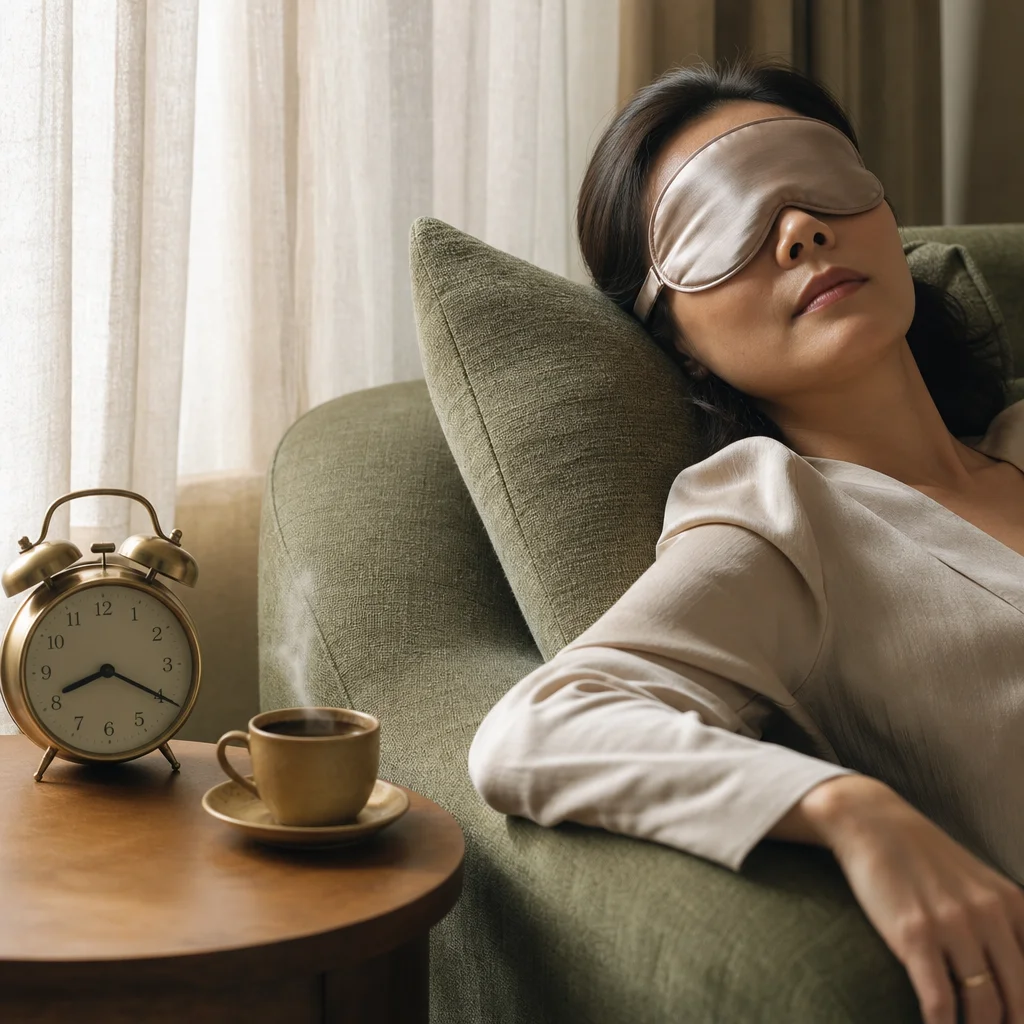
Cool, dark, and quiet is the goal. An eye mask, earplugs, or a white-noise app can make a desk nap work. Also, give yourself a few minutes to wake up before anything that needs sharp focus.
Try the caffeine nap
Here’s a trick from the Sleep Foundation’s napping guide: drink a small coffee, then nap for 20 minutes. Caffeine takes about 30 minutes to kick in — right as you’re waking up. You stack the two boosts. Just don’t do this too late in the day.
Can’t fall asleep? Don’t force it. Resting quietly with your eyes closed in a dark room still gives your brain time to recharge. Think of it as a half-rest — better than nothing, and sometimes exactly what you need.
Red Flags: When Daily Napping Means Something More
Here’s the question that matters most: Is your nap optional or required?
An optional nap is a choice. You’re a little tired, you have 20 minutes, and you decide to rest. It’s a bonus, not a lifeline. A required nap is different. It’s the only thing holding you together at 3 p.m. That difference is everything.
Harvard Health’s advice on daily naps is blunt: if you get at least seven hours of sleep at night and still feel exhausted during the day, talk to your doctor. The same applies if you suddenly need to nap more than usual. That urge can signal sleep debt, poor sleep quality, or an underlying issue like sleep apnea.
Pay attention to the clues around your sleep. Loud snoring, gasping at night, waking up unrefreshed, or dozing off at your desk are worth mentioning to a healthcare professional. Feeling sleepy even after a full night’s rest can point to a sleep disorder or a medication side effect.
None of this is meant to shame you. Daily napping can be a healthy part of your routine — as long as it’s not the only thing keeping you going. If you’re chronically short on nighttime sleep, the real fix is better nights, not longer afternoons.
Your Napping Questions, Answered
Is daily napping bad for you?
No — for most people. Short, early naps are safe and genuinely helpful. Problems appear when naps run long, happen late in the day, or become something you need just to function.
Coffee or nap at 2 p.m.?
It depends on your afternoon. A short nap can improve memory and focus for up to two hours. Coffee gives you a faster lift. Facing a tough call? Try a caffeine nap — a small coffee, then 20 minutes of sleep. You get both boosts.
I only nap on weekends. Is that different?
Frequency matters. One study linking one to two naps per week with lower heart risk found that occasional napping was tied to fewer cardiovascular events. Treat it as interesting — not proven. But it suggests weekend naps are fine, and likely healthier than daily marathon naps.
Why do I feel worse after a nap?
That’s sleep inertia — the grogginess that comes from waking out of deep sleep. It usually means you napped too long or too late. Keep naps under 30 minutes, and you’ll skip deep sleep entirely.
Your Napping Plan: A Simple Checklist
Here’s the whole article in one box. Follow these steps, and your daily napping can become a genuine boost — not a drain.
The Healthy Nap Checklist
- Keep it 20 to 30 minutes. Set an alarm, and skip the snooze button.
- Nap between 1 and 3 p.m. — before the window that steals nighttime sleep.
- Stay consistent. The same nap time each day works best.
- Make your spot dark, cool, and quiet. Eye masks and earplugs help.
- After waking: get up, stretch, drink water, and step into daylight.
- Run the optional-or-required test. If your nap is required every day, book a check-in with your doctor.
The Bottom Line
Daily napping isn’t the enemy. Done right, it’s a small, evidence-backed habit that can lift your mood, sharpen your focus, and carry you through the afternoon.
The formula is simple: 20 to 30 minutes, before 3 p.m., in a dark and quiet room — never at the expense of the sleep you need at night. And if your body is asking for a nap every single day just to function? Listen. That’s not a reason to feel guilty. It’s a reason to get curious — and maybe talk to your doctor.