

6 in 10 Women Will Have Heart Disease by 2050 — What You Can Do Now
Most women still think heart disease is a man’s problem. It isn’t. Heart disease is the number one killer of women in the United States — and a landmark study published in February 2026 by the American Heart Association just issued a serious warning: if nothing changes, 6 in 10 women will have some form of cardiovascular disease by 2050.
The good news? These numbers are not inevitable. The risk factors driving this trend are largely preventable — and the earlier you pay attention, the better your odds. Here’s what the science actually says, and what you can do about it starting today.
The Bottom Line
A major 2026 American Heart Association report projects that 6 in 10 U.S. women will have cardiovascular disease by 2050 — driven by rising rates of high blood pressure, obesity, and diabetes. The encouraging truth: up to 90% of heart disease cases are preventable through diet, movement, sleep, and regular screenings.
What the 2026 Study Actually Found
The American Heart Association published its findings in Circulation — one of the most respected cardiovascular journals in the world. Researchers analyzed national health data and used census projections to estimate where women’s heart health is headed over the next 25 years.
The numbers are sobering. High blood pressure is projected to rise from 48.6% to 59.1% of all adult women. Diabetes is expected to climb from 14.9% to 25.3%. Obesity from 43.9% to 61.2%. As these risk factors grow, so does cardiovascular disease — rising from 10.7% to 14.4% prevalence overall.
One finding stands out in particular: this is no longer just an older woman’s problem. The study projects that nearly 1 in 3 women between the ages of 22 and 44 will have some form of cardiovascular disease by 2050 — compared to fewer than 1 in 4 today.
There is one positive trend worth noting: unhealthy cholesterol levels in women are actually projected to decline — from 42% today to around 22% by 2050. This shows that prevention works when people act on it consistently.
Why Women Face a Different Kind of Risk
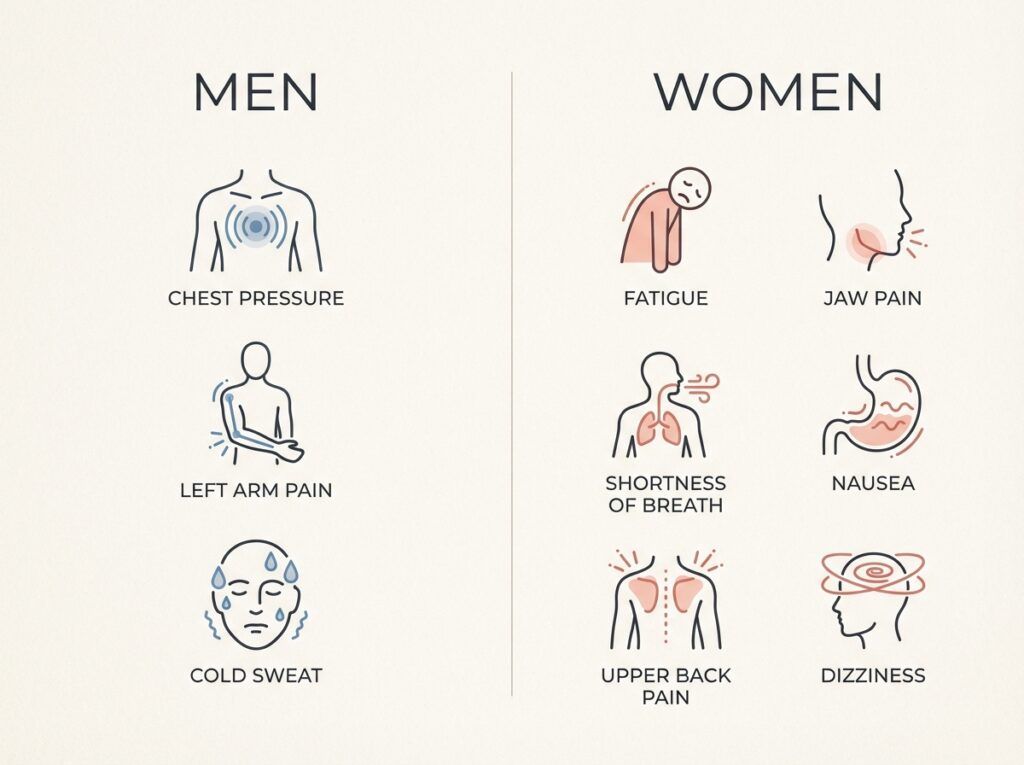
Women also carry unique biological risk factors that don’t apply to men. Hormonal changes during perimenopause and menopause significantly increase cardiovascular risk. Pregnancy complications like preeclampsia and gestational diabetes are also established risk factors for heart disease later in life — yet they’re rarely discussed in that context.
According to Dr. Bethany Gray at Blue Shield of California, women are four to six times more likely to die of heart disease than breast cancer. Yet awareness of this fact remains low — especially among the women most at risk.
The Signs Your Body May Already Be Sending
Cardiovascular disease doesn’t appear overnight. It builds quietly — often for years — before it shows up on a test or causes a crisis. These are the early signals most women overlook:
Unexplained fatigue. Not the tired-after-a-long-day kind. A persistent, deeper exhaustion that doesn’t improve with rest.
Blood pressure creeping up. Anything above 120/80 mmHg consistently deserves attention — even if it doesn’t feel like anything at all. High blood pressure has no symptoms. That’s exactly what makes it dangerous.
Disrupted sleep. Poor sleep quality is both a symptom and a driver of cardiovascular risk. If you’re waking frequently or feeling unrested, it’s worth looking at the full picture. Sleep and metabolic health are more connected than most people realize.
Increasing belly fat. Visceral fat — the fat stored around the organs — is directly linked to insulin resistance, inflammation, and cardiovascular disease. It’s not just a weight issue.
Chronic stress with no outlet. The connection between stress and metabolic health is real and documented. Ongoing high stress raises blood pressure, promotes inflammation, and disrupts sleep — all risk factors for heart disease.
5 Things You Can Do Starting Today
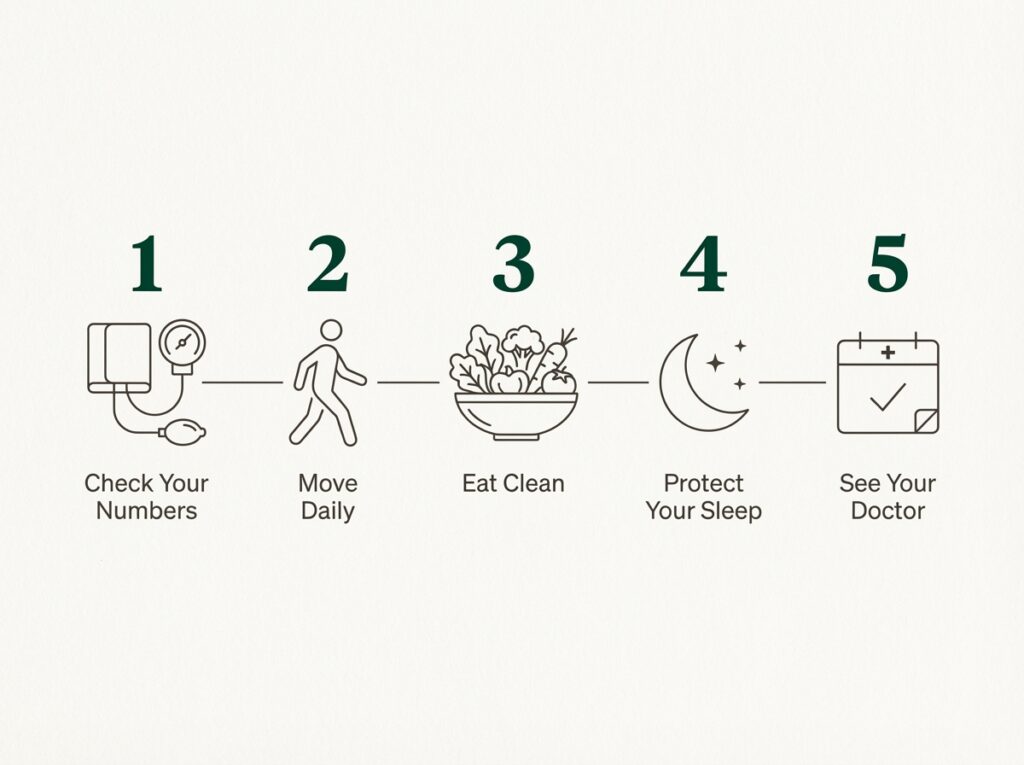
1. Know your numbers. Blood pressure, blood sugar, and cholesterol. If you haven’t checked these in the past year, that’s your first step. High blood pressure is called the “silent killer” for a reason — it has no symptoms but is the single biggest modifiable risk factor for cardiovascular disease.
2. Move your body daily. You don’t need a gym membership. A brisk 30-minute walk most days lowers cardiovascular risk significantly. According to the Office on Women’s Health, even breaking it into three 10-minute sessions counts toward your daily total.
3. Eat more whole foods, fewer ultra-processed ones. You don’t need a restrictive diet. Focus on adding — more vegetables, legumes, fish, whole grains, and healthy fats like olive oil and avocado. The foods that balance hormones also tend to be the ones that protect your heart.
4. Prioritize sleep. Seven to eight hours isn’t a luxury — it’s a cardiovascular necessity. Poor sleep raises blood pressure, promotes weight gain, and drives inflammation. If sleep is consistently difficult, it’s worth discussing with your doctor, not just accepting as normal.
5. Don’t try to change everything at once. Dr. Rina Mauricio, director of women’s cardiovascular health at UT Southwestern Medical Center and co-author of the AHA report, put it plainly: “If you want to make sustainable change, you can’t do it all at once because you’re going to burn out.” Pick one thing. Do it consistently. Then build from there.
Is heart disease really more dangerous than breast cancer for women?
Yes — by a significant margin. Women are four to six times more likely to die of heart disease than breast cancer. Heart disease kills more women each year than all cancers combined. This isn’t widely known, which is part of the problem.
Does menopause increase heart disease risk?
Yes. Estrogen has a protective effect on the cardiovascular system. As estrogen declines during perimenopause and menopause, that protection diminishes. Blood pressure often rises, cholesterol patterns can shift, and weight tends to redistribute around the abdomen — all of which increase cardiovascular risk. This makes the years around menopause a critical window for prevention.
What should I ask my doctor at my next visit?
Ask for your blood pressure reading, fasting blood glucose, and cholesterol panel. Also ask whether your pregnancy history, family history, or any autoimmune conditions you have should factor into your cardiovascular risk assessment. Many women are never asked these questions — so ask them yourself.
The Takeaway
The 2026 American Heart Association projections are a wake-up call — not a verdict. Heart disease is largely preventable, and the steps that protect your heart are the same ones that support your overall health, your weight, your hormones, and your energy.
You don’t have to overhaul your entire life. You just have to start. Know your numbers. Move a little more. Sleep better. Eat a little cleaner. And talk to your doctor about your personal risk — especially if you’re approaching or going through menopause.
Your heart has been working for you every single day. It’s worth a little attention in return.