

Coffee and Gut Health: How Much Is Actually Good for You?
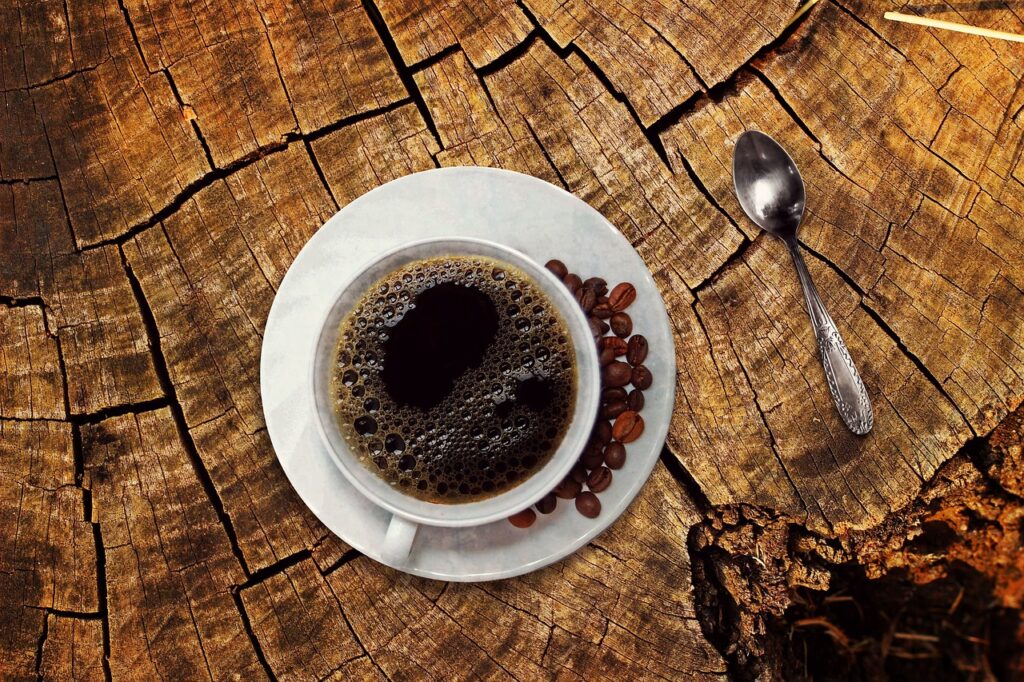
Key Takeaways
- Coffee speeds up digestion and can ease constipation, and decaf does it too.
- Your daily cup feeds a specific gut microbe called Lawsonibacter asaccharolyticus.
- The gut benefits show up below 4 cups a day. More is not better.
- Coffee probably does not cause reflux, but it can still be your personal trigger.
- Coffee can block iron absorption and change how some medications work.
You take one sip, and ten minutes later your body sends a very clear signal. For some women, that signal is a welcome nudge. For others, it is a cramp, a burn, or a sudden dash. So where does coffee and gut health actually stand? Here is the thing. Both reactions come from the same small set of effects. Your morning cup is not a villain. It is not a cure either. Mostly, it is dose-dependent and deeply personal. Let us look at what the research really says.
Quick Answer: Is Coffee Good or Bad for Your Gut?
For most people, coffee helps. It wakes up the digestive tract and feeds certain gut bacteria. But the perks come from 1 to 3 cups a day. Past 4 to 5 cups, reflux risk climbs. And if you are sensitive, coffee can trigger heartburn, cramping or loose stools. The fix is usually dose, timing or additives, not quitting.
Coffee and Gut Health: What the Research Really Shows
Coffee is not one thing. It is a mix of caffeine, polyphenols, acids and minerals. Each part touches your digestive system differently. And much of what you have heard about coffee and gut health is either overstated or flat wrong.
It Wakes Up Your Digestive Tract
Picture this. You finish one cup, and within minutes your colon starts contracting. Researchers call this the gastrocolic reflex. Coffee triggers it quickly. A 2024 review in Nutrients reported that 29 percent of 99 healthy volunteers felt a strong urge to go after a single cup. Distal colon activity rose within minutes.
Here is the part most people miss. Decaf does it too. The 1999 review found coffee’s effect on the colon rivals a 1,000-calorie meal. And the cup contains almost no calories at all. Researchers also blocked the effect with a drug called atropine. That points to a direct action on gut muscle, not a caffeine trick.
It Feeds Certain Gut Bacteria
Your gut holds trillions of microbes, and coffee gives some of them exactly what they want. A study in Nature Microbiology looked at 22,867 people in the US and UK, plus 211 more groups. Coffee turned out to be the food most strongly linked to a single gut bug.
That bug is called Lawsonibacter asaccharolyticus. It showed up six to eight times more often in coffee drinkers. Two later studies reproduced the same link. In one of them, the correlation was as strong as any food-microbe pairing on record.
Now, you might be thinking: does that mean my microbiome is healthier? Not so fast. That bacterium was only discovered in 2018. Researchers still do not know what it does. More of it is not automatically better. And the one trial that actually withdrew and reintroduced coffee found no change in overall diversity. It shifted specific strains instead. We dig deeper in our guide to coffee gut bacteria.
It Turns On Your Digestive Juices
Coffee also nudges your upper digestive tract. It raises gastrin, the hormone that signals your stomach to make acid. It also triggers bile release and pancreatic enzymes. Both help you break down fats and fat-soluble vitamins.
Decaf raises gastrin too, at about 1.7 times, versus 2.3 times for regular coffee. Some researchers have suggested that coffee’s bitter compounds may play a role here by triggering taste receptors on the tongue. However, that mechanism has not been confirmed in human studies.
How Much Coffee Is Actually Good for Your Gut?
Here is where the internet gets messy. Some sources say 1 to 3 cups. Others say stay under 4. Others warn about 5 or more. All three can be right, because they describe different outcomes. Researchers studying coffee and gut health keep landing in a similar range, but for different reasons.
First, the safety ceiling. The FDA cites 400 milligrams of caffeine a day as an amount not generally linked to negative effects. That is roughly two to three 12-ounce cups. Past that, sleep, anxiety and heart rate tend to suffer. See our guide to coffee and heart health.
Second, the gut-benefit zone. A 2024 review in Nutrients found that microbiome benefits appear below 4 cups a day. Researchers at Harvard T.H. Chan School of Public Health also weighed in. They found that regular coffee drinkers had higher levels of several possibly beneficial gut bacteria. They cautioned that palpitations and sleep disruption become more likely above three to four cups a day. So 1 to 3 cups is well supported.
Third, the reflux threshold. That same review found that more than 4 to 5 cups a day is linked to higher reflux risk. Below 4 cups, that link did not appear.
One catch: cup counting is unreliable. A single 12-ounce coffee can hold anywhere from 113 to 247 milligrams of caffeine. Brew strength, bean and method all shift the number. So grams of coffee matter more than mugs.
When Coffee Works Against Your Digestion
This is where the coffee and gut health conversation gets complicated. Coffee is not bad for everyone. But for some people, it clearly makes things worse.
Reflux and Heartburn: The Advice You Can Retire
Let us be honest. For years, anyone with reflux heard the same instruction: quit coffee. The evidence is thinner than that advice suggests. A 2026 meta-analysis pooled 40 studies and 122,074 people. Coffee drinkers had slightly more reflux, about 35 percent versus 31 percent. The odds ratio was 1.18. Real, but small. Coffee showed no significant link to Barrett esophagus, a more serious reflux complication.
Then came genetic research. A Mendelian randomization study found no causal link between coffee and reflux. It did find a small signal for caffeine itself. So any risk may come from caffeine, not from coffee as a whole.
However, that does not mean your heartburn is imaginary. Coffee relaxes the valve at the bottom of your esophagus. It also raises stomach acid. If you are sensitive, you will feel it. Test it yourself rather than quitting preemptively.
IBS: Two Truths That Seem to Contradict
Here is a puzzle. An analysis of 432,022 people found coffee drinkers had a lower risk of developing IBS. The odds ratio was 0.84. Yet a diary study of 9,710 symptom logs found caffeinated coffee strongly linked to diarrhea one to two hours later.
Both are true. They answer different questions. Coffee does not give you IBS. But it can trigger a flare if you already have it. One cross-sectional study of 3,362 adults did find higher IBS odds with coffee, with a stronger signal in women.
The Coffee and Gut Health Self-Audit
This is the part nobody hands you. Instead of guessing, run a short experiment. Change one thing at a time and give each change five to seven days. Real coffee and gut health answers come from your own tracking, not from a headline.
Step 1: Strip Your Additives
Start here. It is the cheapest change with the lowest risk. Flavored syrups and heavy creamers add a lot of sugar and fat. Sugar itself can leave some people feeling bloated. Our added sugar and gut health guide explains that link. Switch to black coffee, or coffee with a small amount of plain milk, for one week. If symptoms fade, you have your answer.
Step 2: Cut Your Dose in Half
If additives were not the issue, lower the amount. Go from three cups to one and a half. This matters because caffeine content varies so widely. If you feel better, dose was the problem.
Step 3: Change Your Timing
Try drinking coffee after breakfast instead of before. Food buffers the acid hit. Our gut health breakfast blueprint makes that easy. You may also want to stop by early afternoon. Caffeine has a long half-life. Poor sleep makes gut symptoms worse, so this step can matter more than it sounds.
Step 4: Switch Your Brew
Different brewing methods pull out different compounds, so it is worth testing more than one. Many people find cold brew gentler on the stomach. Just know that acidity varies more by bean and roast than by temperature. And cold brew usually delivers more caffeine, not less.
Step 5: Try Decaf
If nothing else worked, test decaf for a full week. Keep in mind that decaf keeps most gut effects. It still stimulates motility, acid and gastrin. It also still carries 2 to 15 milligrams of caffeine per cup.
Caffeine, Decaf and Your Digestion: What Actually Changes
Decaf is where coffee and gut health advice most often goes wrong. People assume caffeine-free means gut-neutral. It does not.
One 2026 trial had 31 coffee drinkers abstain for two weeks. Then they reintroduced either regular or decaf coffee. Both groups reported less stress and lower depression scores. The decaf group also improved on memory tests. And the microbiome changes happened in both groups. So many of coffee’s effects do not come from caffeine at all. That is the most useful fact in this whole debate.
One honest caveat, though. The same trial found that coffee drinkers started out scoring higher on impulsivity and emotional reactivity than non-drinkers. They also had lower levels of two gut-made compounds, GABA and indole-3-propionic acid. Those findings have not been replicated. The most likely explanation is reverse causality — people who seek novelty may simply be more likely to drink coffee. Still, remember one thing. “Coffee is good for the gut-brain axis” is a shorter sentence than the evidence supports.
However, caffeine still matters for some things. Only the caffeinated group saw less anxiety and better attention. And decaf is not a fix for heartburn. It still relaxes the esophageal valve and raises acid.
So here is a simple rule. If your problem is jitteriness, sleep or anxiety, decaf will likely solve it. If your problem is heartburn or reflux, decaf probably will not.
Coffee, Medications and Iron: The Missing Warnings
Two topics barely get covered in most coffee and gut health writing: minerals and medications. Both deserve a spot on your radar.
Start with iron. That 2024 review found that drinking coffee with an iron-rich meal may cut iron absorption by 39 to 90 percent. That is a wide range, and it matters if you are anemic or eat plant-based. The good news: coffee taken an hour before a meal did not reduce iron absorption.
Medications matter too. The same review reported that two to three cups of coffee raised blood levels of clozapine by 97 percent. Levels of lithium, theophylline, warfarin and some antidepressants also rose. Coffee and several drugs compete for the same liver enzymes.
So what should you do? If you take any of these medications, do not change your coffee habit abruptly. Talk to your prescriber first. A steady intake is safer than a sudden jump.
Simple Timing Fix for Iron
If you have low iron or take an iron supplement, drink your coffee at least an hour before an iron-rich meal. That is the one timing the research actually tested, and it did not reduce iron absorption. Avoid drinking coffee alongside iron-rich meals, where absorption can drop by 39 to 90 percent.
If You Do Not Drink Coffee
Coffee and gut health do not have to go together. If coffee is not your friend, plenty of other foods carry the same polyphenols. Chlorogenic acid shows up in tea, zucchini, broccoli, okra and eggplant. Research on chlorogenic acid shows it reaches the colon and feeds beneficial bacteria.
There are more options, too. Fermented foods like kefir, yogurt and sauerkraut support a healthy gut. Our guide to yogurt for gut health explains how to choose. And fiber still does the heavy lifting.
Frequently Asked Questions
Is coffee bad for your gut?
Not for most people. For many, it helps with regularity and feeds helpful bacteria. It becomes a problem mainly at high doses or for people with reflux, IBS or caffeine sensitivity.
Does decaf count in the coffee and gut health picture?
Yes. Decaf still stimulates motility, acid and gastrin. It also still shifts the same gut bacteria. Just remember it contains 2 to 15 milligrams of caffeine per cup. It is not caffeine-free.
Can coffee cause diarrhea?
It can. Caffeinated coffee is linked to diarrhea one to two hours after drinking in people with IBS. If that timing matches your symptoms, coffee may be the trigger.
Should I drink coffee on an empty stomach?
There is no strong evidence that it harms your gut. But many people feel better when they pair it with food. Try both and compare.
How many cups are safe?
For most healthy adults, up to 400 milligrams of caffeine a day is not linked to negative effects. That is about two to three 12-ounce cups. For coffee and gut health specifically, 1 to 3 cups is the best-supported range.
The Bottom Line
The bottom line on coffee and gut health is simpler than the headlines. For most people, one to three cups a day helps. It wakes up the digestive tract and feeds certain microbes. Decaf keeps much of that, minus the jitters.
But coffee is not a free pass. Past four or five cups, reflux risk rises. If you have IBS, coffee can trigger a flare within two hours. And if you take certain medications or struggle with low iron, timing matters.
So do not quit out of habit or fear. Test it instead. You already have the data — you just have not been writing it down. Keep a two-week log, change one variable at a time, and let your own pattern guide your next step. If symptoms persist after that, bring the log to your doctor or dietitian rather than guessing.
Sources and Further Reading
- FDA: Spilling the Beans – How Much Caffeine Is Too Much?
- Nutrients 2024: Effects of Coffee on Gut Microbiota and Bowel Functions
- Nature Communications 2026: Habitual Coffee Intake and the Gut-Brain Axis
- Clinical and Translational Gastroenterology 2026: Coffee Intake and GERD Risk
- Nature Microbiology 2024: Coffee and Lawsonibacter asaccharolyticus
- Nutrients 2023: Coffee Intake and IBS Risk Meta-Analysis
- Digestive Diseases and Sciences 2024: Food-Symptom Diary Study