

Build Your Own Gut Health Breakfast: A 3-Step Blueprint
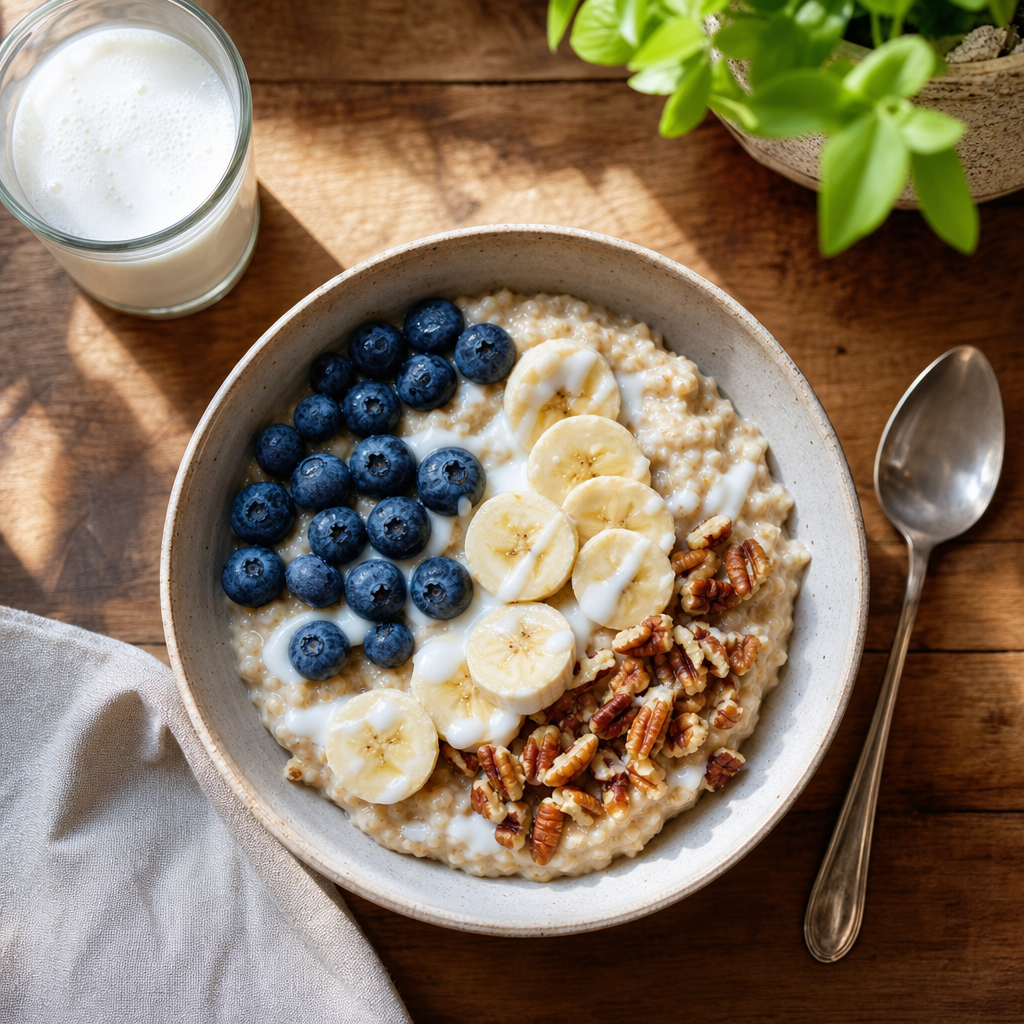
Ever wonder what makes a breakfast truly good for your gut? It’s not about one magic ingredient or a single perfect recipe. The secret is simpler than you think. A truly gut health breakfast combines three key elements: fiber, prebiotics, and probiotics. When you get all three in one meal, you’re not just eating breakfast — you’re actively feeding the good bacteria in your gut. Here’s how to build your own gut health breakfast using this simple blueprint.
Key Takeaways
- Three-part blueprint: A gut health breakfast needs fiber + prebiotics + probiotics working together.
- Oats are a powerhouse: They provide both fiber and prebiotics that feed beneficial gut bacteria.
- Yogurt delivers probiotics: Look for “live and active cultures” on the label for the best gut benefits.
- Berries, nuts, and seeds add more: These toppings boost fiber, prebiotics, and healthy fats.
- Consistency matters most: A single healthy breakfast won’t transform your gut, but a daily habit will.
Let’s be honest — gut health can feel complicated. There are probiotics, prebiotics, fermented foods, fiber types, and a whole lot of science. But here’s the thing: you don’t need a degree in nutrition to eat for your gut. You just need to know three words: fiber, prebiotics, and probiotics. Get those three into your breakfast, and you’re already ahead of the game.
Quick Answer: What Makes a Gut Health Breakfast?
A gut health breakfast combines three components: fiber (from whole grains, fruits, nuts, or seeds), prebiotics (the type of fiber that feeds good bacteria, found in oats, bananas, and onions), and probiotics (live beneficial bacteria from yogurt, kefir, or other fermented foods). Think of it as building a bowl: start with oats or whole grains, add yogurt or kefir, then top with berries, nuts, and seeds.
Fiber: The Foundation of Your Gut Health Breakfast
Fiber is the unsung hero of digestive health. It does more than keep you regular — it feeds the good bacteria living in your gut. The Mayo Clinic recommends women aim for 21 to 25 grams of fiber per day, and men 30 to 38 grams. But here’s the reality: many of us fall short of that goal.
Your breakfast is a perfect opportunity to close that gap. A bowl of oatmeal with berries and nuts can deliver a solid amount of fiber before you even leave the house. For example, one popular recipe provides 6 grams per serving. For more inspiration, check out our guide to 5 high fiber breakfast ideas that make starting your day with fiber easy and delicious.
There are two types of fiber, and both matter for gut health. Soluble fiber dissolves in water and helps lower cholesterol and blood sugar. You’ll find it in oats, apples, and bananas. Insoluble fiber adds bulk to your stool and keeps things moving. It’s in nuts, seeds, and the skins of fruits. A good gut health breakfast includes both.
Prebiotics: Feeding Your Good Gut Bacteria
Now, you might be thinking: “Isn’t fiber enough?” Not quite. Prebiotics are a special type of fiber that acts as food for your gut bacteria. Think of them as fertilizer for your microbiome. The Harvard Health prebiotics guide explains that prebiotics are indigestible food ingredients that feed the beneficial bacteria in your gut.
Oats are a standout prebiotic food. A 2021 randomized controlled trial published in Frontiers in Immunology found that daily oat consumption significantly increased beneficial gut bacteria like Akkermansia and Roseburia. The study on oats and gut microbiome changes involved 210 participants and showed that these bacterial changes were linked to improved cholesterol levels. The study also observed correlations between Bifidobacterium abundance and better cholesterol numbers.
Other prebiotic-rich foods include bananas (especially slightly green ones), garlic, onions, and whole grains. A 2026 review in Nutrients analyzing 22 clinical trials confirmed that prebiotics consistently increase beneficial bacteria and short-chain fatty acid production — the compounds that support gut barrier health and immune function. The review of prebiotic clinical evidence found benefits across diverse populations, from healthy adults to those with digestive issues.
Probiotics: The Live Cultures Your Gut Needs
Here’s where the magic happens. Probiotics are live microorganisms that confer health benefits when consumed. The NIH probiotics fact sheet defines them as “live microorganisms that, when administered in adequate amounts, confer a health benefit on the host.” In plain English: they’re good bacteria that help keep your gut balanced.
Yogurt is the most accessible probiotic-rich breakfast food. Look for labels that say “live and active cultures” — that’s your guarantee that the beneficial bacteria are still alive and ready to work. A 2026 randomized crossover study in The Journal of Nutrition found that yogurt consumption transiently increased yogurt-associated bacteria (Streptococcus thermophilus) in the gut. The study on yogurt and oats effects on gut microbiome also showed that adding rolled oats to yogurt increased microbial evenness in some participants, supporting the synergy between prebiotics and probiotics.
If you’re dairy-free, don’t worry. Kefir (which can be made from coconut or water), fermented coconut yogurt, and kimchi are all excellent probiotic sources. The key is finding a fermented food you enjoy and can eat consistently. For other options to support your digestive system throughout the day, explore our roundup of healthy natural drinks for gut health — including kombucha and water kefir.
Build Your Own Gut Health Breakfast Bowl
Here’s a simple template you can use every morning. Pick one option from each layer:
Layer 1: Base (Fiber + Prebiotics)
• Rolled oats or steel-cut oats
• Cooked whole grains (quinoa, millet, buckwheat)
• Whole-grain toast (sourdough or sprouted)
Layer 2: Probiotics
• Plain Greek yogurt (look for live active cultures)
• Kefir (dairy or plant-based)
• Cottage cheese with live cultures
Layer 3: Toppings (More Fiber + Prebiotics)
• Fresh or frozen berries (blueberries, raspberries, strawberries)
• Sliced banana (especially slightly green for resistant starch)
• Nuts (walnuts, pecans, almonds)
• Seeds (chia, flax, hemp, pumpkin)
• A drizzle of honey or maple syrup (optional)
How to Start Your Gut Health Breakfast Habit
Here’s the thing: your gut microbiome is remarkably stable. A 2026 study found that in healthy people, the gut microbiome is largely resilient to short-term diet changes. That means one healthy breakfast won’t transform your digestion overnight. But consistency will.
Start small. If you’re not used to eating much fiber, increase it gradually over a few weeks. The Mayo Clinic recommends adding fiber slowly to avoid gas and bloating. Here’s a practical schedule:
Week 1: Add a handful of berries to your current breakfast.
Week 2: Switch to whole-grain oats or toast. Add a tablespoon of seeds.
Week 3: Include yogurt or kefir with live cultures.
Week 4: Build your full bowl with all three layers.
And drink plenty of water. Fiber works best when it has enough fluid to move through your digestive system smoothly.
What to Watch Out For
Not all breakfast foods labeled “healthy” are good for your gut. Here are a few things to keep in mind:
Added sugars: Many flavored yogurts contain significant amounts of added sugar — some have 15 grams or more per serving. That’s about 4 teaspoons. Choose plain yogurt and sweeten it yourself with fruit.
Artificial sweeteners: Some research suggests artificial sweeteners may affect gut bacteria in ways we’re still studying. Stick with natural sweetness from fruit or a small amount of honey.
Granola: It sounds healthy, but some store-bought granolas are high in added sugar. Check the label — look for options with at least 3 grams of fiber and less than 5 grams of added sugar per serving.
Going too fast: If you jump from 10 grams of fiber a day to 30 grams overnight, your gut will let you know. Bloating, gas, and discomfort are signs you need to slow down.
Frequently Asked Questions
Can I get enough prebiotics from breakfast alone?
A well-built breakfast with oats, banana, and seeds can provide a significant portion of your daily prebiotic needs. However, variety matters for gut health. Aim to include prebiotic-rich foods throughout the day — garlic in cooking, onions in salads, and legumes at lunch or dinner.
What if I’m lactose intolerant?
You have plenty of options. Try lactose-free yogurt, coconut or water kefir, or skip the probiotic layer and focus on fiber and prebiotics. Fermented vegetables like sauerkraut or kimchi can also provide probiotics — though they’re less traditional at breakfast, they work well in a savory bowl.
How long until I notice changes in my digestion?
Some people notice improvements in regularity within a few days of increasing fiber. However, meaningful changes to your gut microbiome take weeks to months of consistent healthy eating. Be patient and focus on the habit, not the timeline.
Is instant oatmeal as good as steel-cut?
Steel-cut and rolled oats are less processed than instant oats, so they retain more of their natural fiber structure. This can help with steady energy release. If convenience is key, instant oats are fine — just choose plain varieties without added sugar.
The Bottom Line
You don’t need a complicated gut health diet or expensive supplements. The simplest way to support your gut every morning is to build a breakfast that includes fiber, prebiotics, and probiotics. Start with oats or whole grains, add yogurt or kefir, and top with berries, nuts, and seeds.
What I love about this approach is that it’s flexible. You can make it sweet or savory. You can prep it ahead or throw it together in five minutes. You can adapt it to whatever you have in your kitchen. The blueprint stays the same — only the ingredients change. For busy mornings, our collection of healthy breakfast on the go ideas can help you keep your gut on track even when you’re in a rush.
Remember, consistency beats perfection. A simple gut health breakfast that you actually eat every day is far better than an elaborate one you only make once. Start with one small change this week, and build from there. Your gut will thank you.