

Best and Worst Carbs for Your Weight: A New Study’s Findings
Key Takeaways
- A large 2023 study in The BMJ ranked carb sources by their impact on long-term weight — and fiber quality was the deciding factor.
- The best carbs for weight health are whole, fiber-rich foods like whole grains, fruit, non-starchy vegetables, and legumes.
- The worst carbs for weight are refined, low-fiber options like sugary cereals, white bread, white rice, and packaged snacks.
- You do not need to cut carbs to manage your weight — upgrading quality matters more than cutting quantity.
- Simple swaps can shift your carb choices from weight-unfriendly to weight-supporting without feeling deprived.
You have heard it a hundred times: carbs are bad, carbs are good, cut carbs, keep carbs. No wonder you are confused. A major 2023 study published in The BMJ cuts through the noise by actually ranking carb sources by how they affect long-term weight. And here is the good news — understanding the best and worst carbs does not mean swearing off bread forever. It means knowing which ones work with your body and which ones work against it. Let’s break it down.
Quick Answer: What Are the Best and Worst Carbs for Weight?
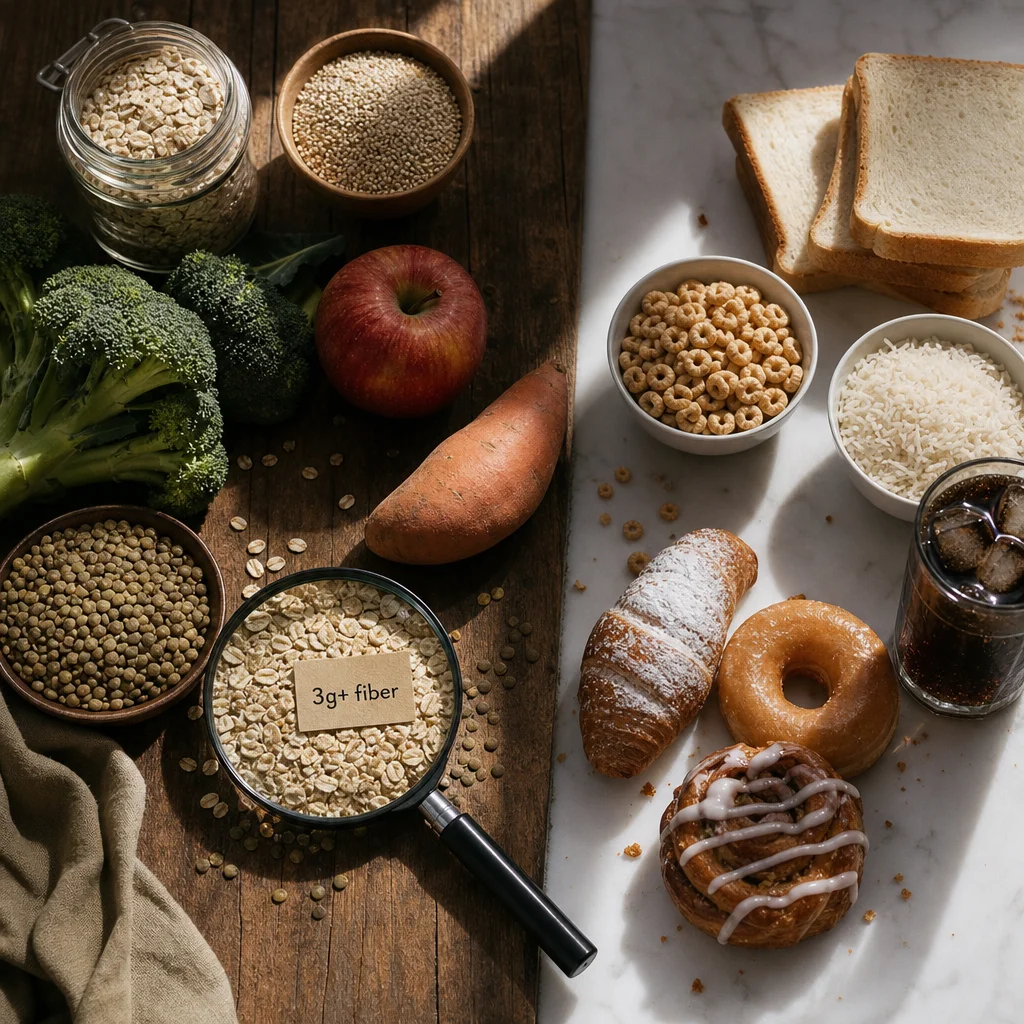
Best carbs: Whole grains (oats, quinoa, brown rice, barley), whole fruit (apples, berries, pears), non-starchy vegetables (broccoli, spinach, bell peppers), and legumes (lentils, chickpeas, beans). These are high in fiber, digest slowly, and keep you full.
Worst carbs: Sugary breakfast cereals, white bread, white rice, refined crackers, cookies, pastries, sugary drinks, and packaged snack bars. These are low in fiber, digest quickly, and spike blood sugar.
The key difference? Fiber. The more fiber a carb contains, the better it is for your weight and overall health.
What Research Reveals About Best and Worst Carbs
Here is the thing — not all carbs behave the same way inside your body. A 2023 study in The BMJ followed over 120,000 adults for up to 24 years and found that the type of carbohydrate you eat significantly influences weight change over time. The researchers specifically ranked carb-containing foods by their association with long-term weight maintenance, and the pattern was clear: fiber-rich whole grains, fruit, and non-starchy vegetables consistently linked to less weight gain.
On the flip side, refined carbs and sugary foods linked to more weight gain, even after researchers adjusted for total calorie intake in their statistical models. That is worth repeating: the type of carb matters as much as the amount. As a 2020 review in Nutrition Reviews put it, growing evidence points to carbohydrate quality over quantity for metabolic health.
What sets best and worst carbs apart is how quickly your body digests and absorbs them. High-fiber carbs slow digestion, stabilize blood sugar, and keep you satisfied for hours. Low-fiber carbs rush through your system, spike your blood sugar, and leave you hungry again within an hour or two. The BMJ study found that replacing refined grains and starchy vegetables with whole grains, fruit, and non-starchy vegetables was associated with less weight gain over time.
The Best Carb Sources for Healthy Weight
If you want carbs that support your weight and energy, these are your go-to choices. The BMJ study specifically identified whole grains, fruit, and non-starchy vegetables. Legumes like lentils, chickpeas, and beans — while not separately analyzed in this study — fit the same high-fiber pattern supported by broader nutritional evidence.
Top Carbs to Eat Regularly
- Whole grains — oats, quinoa, brown rice, barley, farro, bulgur. The study linked these to less weight gain over time.
- Non-starchy vegetables — broccoli, spinach, bell peppers, cauliflower, zucchini. Low-calorie carb sources packed with fiber and water.
- Whole fruit — apples, berries, pears, oranges. The fiber in whole fruit slows sugar absorption. Fruit juice does not have the same effect.
- Legumes — lentils, chickpeas, black beans, kidney beans. According to USDA data, one cup of cooked lentils gives you about 15 grams of fiber.
- Starchy vegetables — sweet potatoes, winter squash, peas. Eat the skin for extra fiber and keep preparation simple (baked, not fried).
What I find interesting is that these foods do more than just help with weight. They also support gut health, heart health, and steady energy throughout the day. That is the beauty of whole-food carbs — they come with benefits that refined carbs simply cannot offer.
Which Carbs Work Against Weight Goals
Now, you might be thinking — does this mean I have to give up all my favorite foods? Not at all. But it helps to know which carbs are more likely to work against your efforts, so you can make informed choices.
The BMJ study identified several carb sources that consistently linked to greater weight gain over time. These foods share a common pattern: they are low in fiber, high in refined flour or sugar, and easy to overeat. The study found that swapping refined carbs for whole-grain options was associated with meaningful differences in weight trajectory. And if you are looking for better options, check out our roundup of the 25 Best Snacks for Diabetics That Won’t Spike Your Blood Sugar for plenty of nutritious, blood sugar-friendly ideas.
Carbs to Limit or Avoid
- Sugary breakfast cereals — most contain less than 3 grams of fiber and 10 or more grams of added sugar per serving, according to nutrition labels.
- White bread and refined wraps — made from refined flour with most of the fiber removed.
- White rice — per USDA data, one cup has less than 1 gram of fiber compared to about 3.5 grams in brown rice.
- Packaged snack foods — crackers, pretzels, chips, and cookies combine refined flour, sugar, and unhealthy fats.
- Sugary drinks and fruit juice — liquid carbs with zero fiber that spike blood sugar rapidly.
- Pastries, muffins, and baked goods — even ones that sound healthy often hide sugar and refined flour.
The issue with these foods is not just the calories. It is how they affect your body. They digest fast, spike blood sugar, trigger an insulin response, and leave you hungrier than before. This cycle makes it harder to maintain a healthy weight over time. Understanding the difference between the best and worst carbs gives you the power to break that cycle.
How to Choose Best and Worst Carbs at Every Meal
Let’s be honest — knowing which carbs are best and worst is one thing. Actually choosing them in real life is another. Here is how to make it work without overthinking every bite.
Start with a simple rule: look for the fiber. If a carb source has 3 grams of fiber or more per serving, it is probably a good choice. If it has less than 1 gram, it is probably working against you. Check the nutrition label — it tells you everything you need to know.
Here is a quick way to think about it. At breakfast, choose steel-cut oats with berries over sugary cereal. At lunch, pick a quinoa bowl with beans instead of a white bread sandwich. At dinner, swap white rice for brown rice or roasted sweet potatoes. Small shifts, big impact. Choosing between the best and worst carbs really comes down to asking one question: is this carb in its whole form?
A Simple Rule for Any Meal
Ask yourself one question: Is this carb in its whole form? Potatoes, beans, oats, and whole grains are close to how nature made them. White flour, white rice, and refined sugar have been stripped of their fiber. Choose the version that is closest to whole. Your body knows the difference.
Simple Swaps to Upgrade Your Carb Choices
You do not need to overhaul your entire kitchen overnight. Start with these swaps. Each one shifts you from a low-fiber carb to a high-fiber carb without making you feel like you are missing out. The BMJ study found that swapping refined carbs for whole-grain options made a meaningful difference in long-term weight outcomes.
- Instead of: white rice → Try: brown rice, quinoa, or cauliflower rice
- Instead of: white bread → Try: 100% whole grain or sprouted grain bread — and if you want to know which loaves dietitians recommend most, check out our guide to The Best Bread for Blood Pressure.
- Instead of: sugary cereal → Try: rolled oats with nuts and berries
- Instead of: regular pasta → Try: lentil or chickpea pasta (more fiber, more protein)
- Instead of: crackers and chips → Try: raw veggies with hummus or roasted chickpeas
- Instead of: fruit juice → Try: whole fruit with a handful of nuts
- Instead of: granola bars → Try: an apple with peanut butter
What I love about these swaps is that they add nutrients instead of subtracting them. You are not giving up carbs. You are upgrading them. Understanding the best and worst carbs makes the choice feel empowering, not restrictive.
Frequently Asked Questions
Do I need to cut carbs completely to lose weight?
No. The BMJ study and other research consistently show that the type of carb matters more than the amount. People who eat high-fiber carbs like whole grains, fruit, and vegetables tend to maintain healthier weights than people who eat low-fiber refined carbs — even after accounting for total calorie intake. Understanding the best and worst carbs helps you make better choices without feeling restricted.
Is fruit a carb I should worry about?
Whole fruit is a healthy carb source. The fiber in fruit slows down sugar absorption and supports gut health. Dried fruit, fruit juice, and fruit-flavored snacks are a different story — they lack the fiber that makes whole fruit beneficial. The BMJ study included whole fruit among the carb sources linked to healthier weight maintenance.
Can I eat potatoes on a weight-healthy diet?
Yes, with one caveat — how you prepare them matters. A baked potato with the skin on is a good carb source. French fries and potato chips are not. Keep the skin, skip the deep fryer, and pair potatoes with protein and vegetables for a balanced meal.
How much fiber should I aim for each day?
The Dietary Guidelines for Americans 2020-2025 recommend 25 to 30 grams of fiber per day for adults. Yet most Americans get only about half that amount, according to USDA survey data. Choosing whole-food carbs instead of refined ones is the easiest way to close the gap.
The Bottom Line
Carbs are not the enemy. Low-quality carbs are. The science from the 2023 BMJ study is clear: swapping refined, low-fiber carbs for whole, high-fiber carb sources supports a healthy weight, steady energy, and overall wellness. The science behind the best and worst carbs comes down to one thing: fiber. You do not have to cut carbs. You just have to choose them wisely.
Start small. Swap one refined carb for a whole-food version this week. Add beans to your salad. Choose whole-grain bread instead of white. Your body will thank you — and you will still get to enjoy the carbs you love.