

The Roasted Vegetables Method You’ll Actually Use
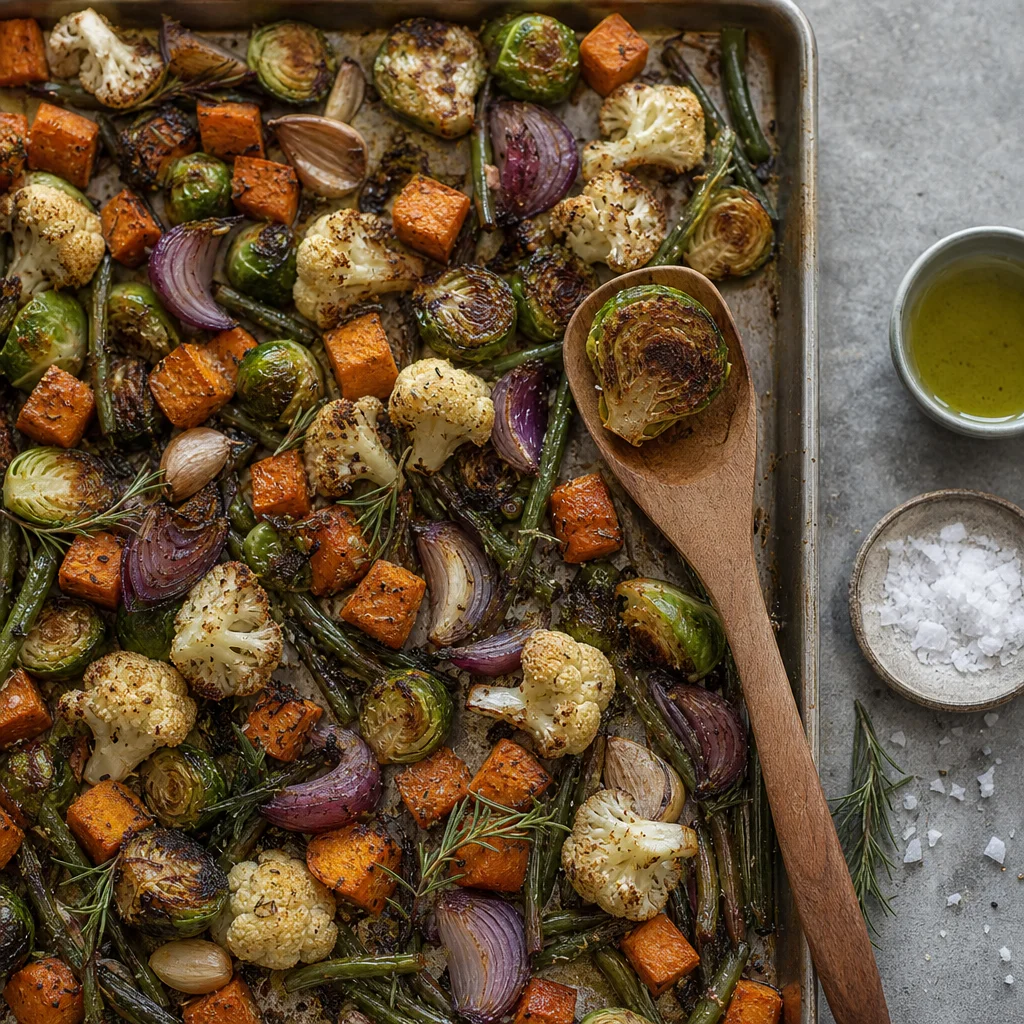
Key Takeaways
- Roasted vegetables turn out best at 425°F, spread in a single layer with just enough oil to coat evenly.
- Cut everything roughly the same size, so the whole pan finishes cooking at once.
- One sheet pan holds about 4 to 6 servings — a big step toward the 2 to 3 cups of vegetables adults are encouraged to eat daily.
- Roast to golden-brown edges, not blackened char. It tastes better and follows FDA guidance.
- Batch-roasted vegetables keep for 3 to 5 days in the fridge and reheat crispiest in the oven or air fryer.
Picture this: it’s 6 p.m., you’re tired, and dinner needs a side dish that doesn’t demand much. You grab whatever vegetables are in the crisper drawer. Toss them with oil and salt, then slide a pan into the oven. That’s the quiet magic of roasted vegetables. A hot oven turns humble produce into something sweet, crispy, and genuinely craveable — no complicated recipe required.
Here’s the thing: most of us could eat more produce. In fact, only about 1 in 10 U.S. adults eats enough vegetables, according to the CDC. Roasting is one of the easiest, most budget-friendly ways to close that gap. In this guide, we’ll cover the method that makes roasted vegetables turn out crispy every time. We’ll also look at which vegetables roast best — and how one batch becomes a week of meals.
Quick Answer: Are Roasted Vegetables Healthy?
Yes. Roasting is a healthy, practical way to cook vegetables. It doesn’t strip away their fiber or antioxidant value — and because it makes vegetables taste delicious, it helps you actually eat more of them. That’s what matters most.
Why Roasted Vegetables Deserve a Spot in Your Rotation
Let’s start with the numbers. In 2019, only about 10% of U.S. adults met the federal vegetable recommendation. That target is 2 to 3 cups per day, per the Dietary Guidelines. Women did a bit better, at 12.4% — but that still means nearly 9 in 10 of us fall short.
That gap matters. Population studies consistently connect vegetable-rich eating with better health. A 2026 meta-analysis, for example, found that diets rich in vegetables are associated with a lower risk of cardiovascular disease. Meanwhile, a 2025 meta-analysis of 26 studies found that vegetable intake is associated with a lower likelihood of metabolic syndrome.
To be fair, these are observational findings. They show patterns across large groups, not guarantees for any single plate. But the pattern is remarkably consistent. Vegetables remain one of the few foods where the advice is simply “eat more.”
Roasting is also a budget-friendly habit. A tray of roasted vegetables costs less than most packaged sides. Sturdy produce like carrots, potatoes, and cabbage caramelizes beautifully. Using up odds and ends from the crisper drawer cuts food waste, too.
Worried about nutrition? Don’t be. Fiber is one of the most heat-stable parts of a plant. That crispy, golden tray is still doing real work for your digestion.
The Easiest Roasted Vegetables Method, Step by Step
You don’t need a rigid recipe. You need a reliable method. This garlic-forward version is the one I use most weeks. It’s forgiving, flexible, and works with whatever you have in the fridge.
The Master Sheet Pan
What you need:
- 1.5 to 2 pounds mixed vegetables (sweet potato, cauliflower, Brussels sprouts, red onion, green beans)
- 1 to 2 tablespoons avocado or olive oil
- 4 to 5 garlic cloves, smashed
- ½ teaspoon salt, plus black pepper
- Optional: dried thyme, rosemary, or Italian seasoning
Step 1: Heat the oven to 425°F. A hot oven is the secret. Temps between 400°F and 450°F work, but 425°F is the sweet spot for crispy edges and tender centers. Lower temps with longer cook times work for dense roots — they just take more patience.
Step 2: Cut everything to a uniform size. The secret to perfectly cooked roasted vegetables is even cuts. Root vegetables should be about ¾ inch. Florets can be about 1 inch (or a bit larger for cauliflower — smaller florets cook faster). Halve Brussels sprouts and cut onions into wedges. Moisture is the enemy, so pat everything dry after washing.
Step 3: Toss with oil and salt. Use just enough oil to coat — about 1 to 2 tablespoons per pound. The pieces should look glossy, not greasy, with no puddles. Toss in a big bowl or right on the pan.
Step 4: Smash your garlic. Minced garlic burns before the vegetables finish. Smashed whole cloves roast into sweet, mellow nuggets of flavor. It’s a small trick that makes a big difference.
Step 5: Spread in a single layer. Crowded vegetables steam. Spaced vegetables caramelize — they turn golden and sweet at the edges. If the pan looks packed, use two pans.
Step 6: Roast, flip, and watch for gold. Most trays need 20 to 35 minutes at 425°F. Stir once halfway through. Pull them when they’re fork-tender with browned, caramelized edges.
Step 7: Finish with something bright. A squeeze of lemon, a drizzle of balsamic glaze, or fresh herbs after roasting. Acid and freshness balance all that sweetness.
Which Vegetables Roast Best (and Which to Pair Together)
Almost any vegetable roasts well. The real trick is knowing which ones finish at the same time. Here’s a quick guide at 425°F.
- Root vegetables (potatoes, carrots, parsnips, beets, sweet potatoes): 30 to 45 minutes. Cut them smaller, around ¾ inch.
- Crucifers (broccoli, cauliflower, Brussels sprouts, cabbage): 15 to 25 minutes.
- Winter squash (butternut, delicata): 25 to 40 minutes.
- Soft vegetables (zucchini, bell peppers, eggplant, tomatoes, mushrooms): 10 to 25 minutes. Eggplant and mushrooms soak up oil, so give them a little extra.
- Quick greens (asparagus, green beans): 10 to 20 minutes.
- Onions: 30 to 40 minutes, or add them later for more bite.
Pair roasted vegetables that cook at the same pace: cauliflower with broccoli, carrots with parsnips, zucchini with peppers, Brussels sprouts with onion. For mixed trays, start the hardest vegetables first. Then add quick-cooking ones later.
The Science of Browning: Caramelization vs. Acrylamide
What makes roasted vegetables taste so good? It’s the Maillard reaction — the chemical dance between natural sugars and amino acids at high heat. Hundreds of new flavor compounds form. That browned, slightly sweet crust is the payoff.
That same browning also produces small amounts of acrylamide. Per the FDA, acrylamide forms when starchy foods are roasted, fried, or baked at high heat. It sounds alarming, so let’s put it in perspective.
The levels in food are far lower than the amounts that caused cancer in lab animals. And the National Cancer Institute notes there is no consistent evidence that dietary acrylamide is linked to cancer in humans. A 2021 meta-analysis of 14 cohort studies looked specifically at women’s cancers. It found no significant link between dietary acrylamide and breast, endometrial, or ovarian cancer.
So here’s the simple rule: roast to golden-brown, not blackened char. Golden caramelization is the flavor sweet spot — and it aligns with FDA guidance to avoid overcooking or burning starchy foods. If a few edges get too dark, just pick them off. Also, keep potatoes in a cool, dark cabinet. Refrigeration can increase acrylamide formation when potatoes are cooked later.
Is Roasting as Healthy as Raw or Steamed?
You’ve probably heard that raw vegetables are “healthier.” The science is more interesting than that. A 2009 study on domestic cooking methods found that cooking does not automatically destroy the antioxidant value of vegetables — in some cases, certain antioxidant measures actually increased.
To be fair, heat does reduce some water-soluble vitamins, like vitamin C. If that’s your priority, steaming is a great choice. But the bigger win is eating more vegetables in any form. A bowl of roasted broccoli you actually enjoy beats a bag of raw greens that wilts in the fridge. Roasting makes vegetables more palatable — and palatability is a legitimate nutrition strategy.
One Sheet Pan, One Week: Batch Cooking and Reheating
This is where roasted vegetables become a lifestyle. One standard 18×13-inch sheet pan holds about 6 to 8 cups of raw vegetables. That’s roughly 4 to 6 side servings — a meaningful chunk of the 2 to 3 cups per day in the Dietary Guidelines.
Let the batch cool, then store it in an airtight container in the fridge for 3 to 5 days.
Here’s the thing about reheating: the microwave makes roasted vegetables soggy. Dry heat restores them. Reheat on a sheet pan at 400°F for 5 to 7 minutes. Or use an air fryer at 375°F for 3 to 5 minutes. The edges crisp right back up.
Ways to use them all week: toss into scrambled eggs or a frittata. Layer into grain bowls with chickpeas, greens, and a tahini dressing. Warm with pasta and a splash of pasta water for a 15-minute dinner. Fold into quesadillas, top a flatbread, or pile onto a sandwich with pesto.
Can you roast frozen vegetables? Yes. Thaw, drain, and pat them completely dry before tossing with oil. Or roast them straight from frozen and add a few extra minutes. They won’t be quite as crispy as fresh, but they’re a budget-friendly lifesaver.
Frequently Asked Questions
Why are my roasted vegetables soggy?
Usually one of three things: the pan was overcrowded, the oven wasn’t hot enough, or the vegetables were wet. Fix it by roasting at 425°F, giving pieces space, patting them dry, and flipping halfway.
How much oil do roasted vegetables need?
Just enough to coat — about 1 to 2 tablespoons per pound. The pieces should look glossy, not greasy, with no puddles. For less oil, use an avocado oil spray on a hot pan.
How long do roasted vegetables last in the fridge?
About 3 to 5 days in an airtight container. Reheat in the oven or air fryer to bring back the crisp edges.
The Bottom Line
Roasted vegetables are the workhorse of healthy weeknight cooking. The method is forgiving: hot oven, even cuts, enough oil, plenty of space, and a golden-brown finish.
One sheet pan can move you closer to your daily vegetable goal, save money, and feed you for days. Whether you’re a meal-prep regular or a total beginner, this is a technique you’ll actually use. Now go preheat that oven.