

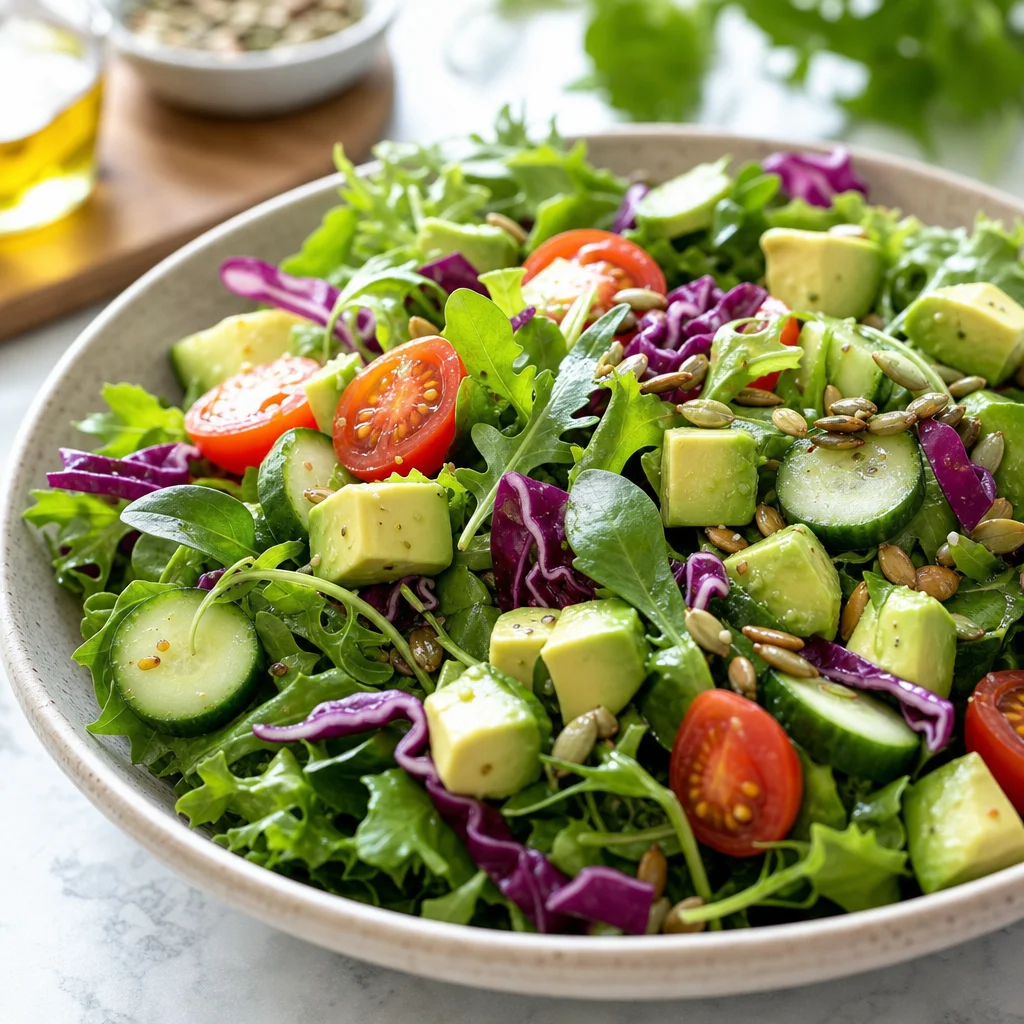
Blood Sugar Friendly Salad: Tomato, Watermelon & Avocado
Key Takeaways
- Fruit — including watermelon — fits into a blood sugar friendly eating pattern.
- Protein, fiber, and healthy fats slow the rise in blood sugar.
- This salad delivers 13g carbs and 9g fat per serving.
- Pair it with grilled chicken, salmon, shrimp, or a turkey burger for a complete meal.
- Watermelon’s glycemic load is low, even though its glycemic index varies.
Picture this: it’s the middle of summer, and the cookout table is loaded. Pasta salad, chips, potato salad, sweet tea. If you’re watching your blood sugar, that spread can feel like a minefield. You want to enjoy the gathering. You also want to feel good an hour later. Here’s the thing: a blood sugar friendly salad can help you do both.
Its star ingredient? Watermelon. Yes, really. Here’s the good news: fruit is not the enemy. In this article, we’ll bust the biggest myth in blood sugar management. We’ll explain the simple science of a balanced plate. Then we’ll share the full recipe for the tomato-watermelon-avocado salad. Plus four protein pairings that turn a side dish into a complete meal.
Quick Answer: Is Watermelon Bad for Your Blood Sugar?
No — not when it’s part of a balanced plate. Watermelon is over 90% water and has about 12 grams of carbs per cup. Its glycemic load is low, so a normal serving won’t dramatically spike blood sugar. Pair it with protein, fiber, and healthy fats — like the avocado in this salad. The rise is even gentler.
Why This Blood Sugar Friendly Salad Starts With Fruit
There’s a myth that just won’t quit. Fruit spikes your blood sugar, so anyone watching their glucose should avoid it. Nutrition experts hear this constantly. Yet the American Diabetes Association’s fruit guidance says the opposite. It even lists watermelon as an acceptable fruit for people with diabetes.
The research backs this up. A landmark 2013 study in the BMJ followed more than 187,000 women and men. It found no link between whole fruit and a higher risk of type 2 diabetes. Fruit juice, on the other hand, raised the risk. A 2025 meta-analysis in Nutrition Reviews went further. People with type 2 diabetes who ate more fruit had an 18% lower risk of death from any cause.
So when you’re building a blood sugar friendly salad, fruit isn’t the enemy. Added sugars and fruit juice are. Whole fruit brings water, fiber, and antioxidants to the party — especially watermelon. See our blood sugar foods grocery list for everyday staples.
The Science Behind a Blood Sugar Friendly Salad
Now let’s talk about why this salad works. It’s not magic — it’s how your body digests food.
The CDC’s diabetes meal planning guidance puts it simply. Eating carbs with protein, fat, or fiber slows down how quickly your blood sugar rises. That’s the whole game. Watermelon and tomatoes bring natural carbs. The avocado brings fat and fiber. Together, they slow digestion, so sugar enters your bloodstream gradually instead of all at once.
Studies back this up. A randomized trial in Nutrients tested this directly. Including half or whole avocado in a meal — in place of some of its carbohydrate — reduced post-meal blood sugar and insulin responses in overweight adults. Mayo Clinic’s diabetes diet guide also lists avocados among the “good” fats.
Here’s a detail that matters for our readers. A 2019 study in Nutrition & Metabolism tracked post-meal glucose in 150 adults. In women specifically, higher fat intake flattened the glucose curve. And higher fiber intake lowered glucose responses.
So when we say this is a blood sugar friendly salad, it’s not just a label. The evidence shows that fat and fiber help soften the rise — especially for women. One honest note: in the avocado study, avocado replaced some carbohydrate calories. Think of this salad as a smart swap for heavier sides, not an addition on top of everything else.
What Watermelon’s Glycemic Index Really Tells Us
You may have heard that watermelon has a high glycemic index, or GI. That’s a score that estimates how fast a food raises blood sugar. Here’s the thing: published GI values for watermelon range from about 55 to 80. It depends on the variety, the ripeness, and the testing method. A clinical study in the Asia Pacific Journal of Clinical Nutrition measured it directly. It found a GI of 55 — squarely in the low-to-medium range.
The more practical number is glycemic load, or GL. It accounts for both the GI and the actual carbs in a serving. Because watermelon is over 90% water, one cup has only about 12 grams of carbs. That gives it a low glycemic load — around 5 to 8 for a typical serving. In plain terms, a normal portion doesn’t have enough carbs to cause a dramatic spike.
This distinction matters. A 2024 meta-analysis in Lancet Diabetes & Endocrinology looked at this closely. It linked high-GI eating patterns to a 27% higher risk of type 2 diabetes — and high-GL patterns to a 15% higher risk. But that’s about your overall dietary pattern. It’s not about one slice of watermelon.
So don’t judge the fruit by its GI alone. Judge the whole meal. Watermelon also offers lycopene, an antioxidant that some research links to lower fasting blood sugar. Promising — but not yet proven.
The Recipe: Tomato, Watermelon & Avocado Salad
Here’s the dish that dietitians keep in heavy rotation all summer. It checks every box: juicy, creamy, tangy, salty. And it comes together with about 30 minutes of easy chopping. No oven required. This blood sugar friendly salad is proof that eating for steady glucose doesn’t mean boring food.
Ingredients (Serves 4)
- 1½ cups cubed ripe tomatoes
- 1½ cups cubed watermelon
- ½ jalapeño, seeded and thinly sliced
- Zest of 1 lime
- 2 tablespoons fresh ginger, grated
- 3 tablespoons lime juice
- ½ teaspoon toasted sesame oil
- ¼ teaspoon kosher salt
- 1 ripe avocado, cubed
- 2 teaspoons black sesame seeds
- 2 tablespoons torn fresh mint
- ½ teaspoon flaky sea salt
Directions
- Gently toss the tomatoes, watermelon, jalapeño, and lime zest in a large bowl.
- Press the grated ginger through a fine strainer to catch the juice. Whisk it with the lime juice, sesame oil, and kosher salt.
- Add the avocado and sesame seeds. Pour the dressing over the top, then toss everything gently.
- Sprinkle with mint and flaky sea salt right before serving.
Nutrition Facts (Per Serving)
129 calories, 13g carbs, 9g fat (mostly from avocado’s heart-healthy monounsaturated fats), 2g protein. This salad is naturally vegan, dairy-free, and gluten-free. Want a fun twist? Dice everything into small pieces and use it as a fresh salsa for grilled fish or chicken.
Here’s what those numbers mean in real life. At 13 grams of carbs per serving, this salad fits easily into a typical per-meal carb budget — many diabetes educators suggest roughly 45 to 60 grams of carbs per meal, depending on individual targets. You’re not blowing your carb count on a side dish. You’re spending it on produce, healthy fat, and flavor.
Four Protein Pairings for a Balanced Cookout Plate
A salad alone doesn’t make a meal — and it doesn’t need to. The magic happens when you pair it with protein. A 2024 randomized trial in Frontiers in Nutrition found that protein-rich meals produced smaller glucose peaks than carb-heavy meals.
Here are four pairings that work beautifully with the salad’s bright, gingery flavors:
- Grilled lemon-herb chicken
- Chili-lime salmon
- Garlic shrimp skewers
- Classic turkey burgers
Any of these turn this blood sugar friendly salad into a complete cookout meal. It’s a plate that follows the CDC’s Plate Method: half non-starchy veggies, a quarter lean protein, a quarter carbs. This salad covers the produce and healthy fat. Your protein fills the lean quarter.
Make-Ahead Tips and Food Safety
One of the best things about this salad? It gets better as it sits. The tomato and watermelon juices mingle with the dressing. That creates a light marinade that coats every bite. But there’s a right way to make it ahead.
Prep the tomatoes, watermelon, jalapeño, and dressing a few hours early. Keep them chilled. Add the avocado and mint right before serving — that keeps the avocado bright and the texture fresh. According to the ADA’s Diabetes Food Hub, cut watermelon keeps in the refrigerator for a few days. You can even prep the fruit the night before.
One food-safety note: cut fruit and avocado don’t love the hot sun. Keep the salad chilled until it’s time to serve. Don’t let it sit out for hours in the heat. A little planning keeps it both delicious and safe.
Frequently Asked Questions
Can I eat watermelon if I have diabetes?
Yes. The American Diabetes Association lists watermelon as an acceptable fruit. Keep your portion around a cup — that’s roughly 12 grams of carbs — and pair it with protein or fat. Or blend it — see our blood sugar friendly smoothies guide.
How much of this blood sugar friendly salad can I eat?
Each serving has about 13 grams of carbs. Many diabetes educators suggest roughly 45 to 60 grams of carbs per meal, depending on individual targets. A generous serving fits easily — especially with the fiber and healthy fat it brings. Your healthcare team can help you set the right carb targets for your body.
Can I make this salad ahead of time?
Yes. Prep the fruit, tomatoes, and dressing up to a day ahead. Keep everything chilled. Add the avocado and mint right before serving.
What about food sensitivities?
This salad is naturally vegan, dairy-free, and gluten-free. If you follow a low-FODMAP diet, watermelon is higher in fructose. Keep your portion modest and notice how you feel.
The Bottom Line
Eating for steady blood sugar doesn’t mean eating a sad, separate “diet” meal while everyone else enjoys the cookout. A blood sugar friendly salad doesn’t have to be a compromise — this one is proof. Watermelon brings the sweetness. Avocado brings the fat and fiber that slow digestion. A simple grilled protein pulls the whole plate together.
Next cookout, skip the pasta salad anxiety. Bring this bowl. Your blood sugar — and your taste buds — will thank you. A post-meal stroll helps — see our walking after meals guide.