

Blood Sugar Friendly Smoothies: The 3-Part Formula
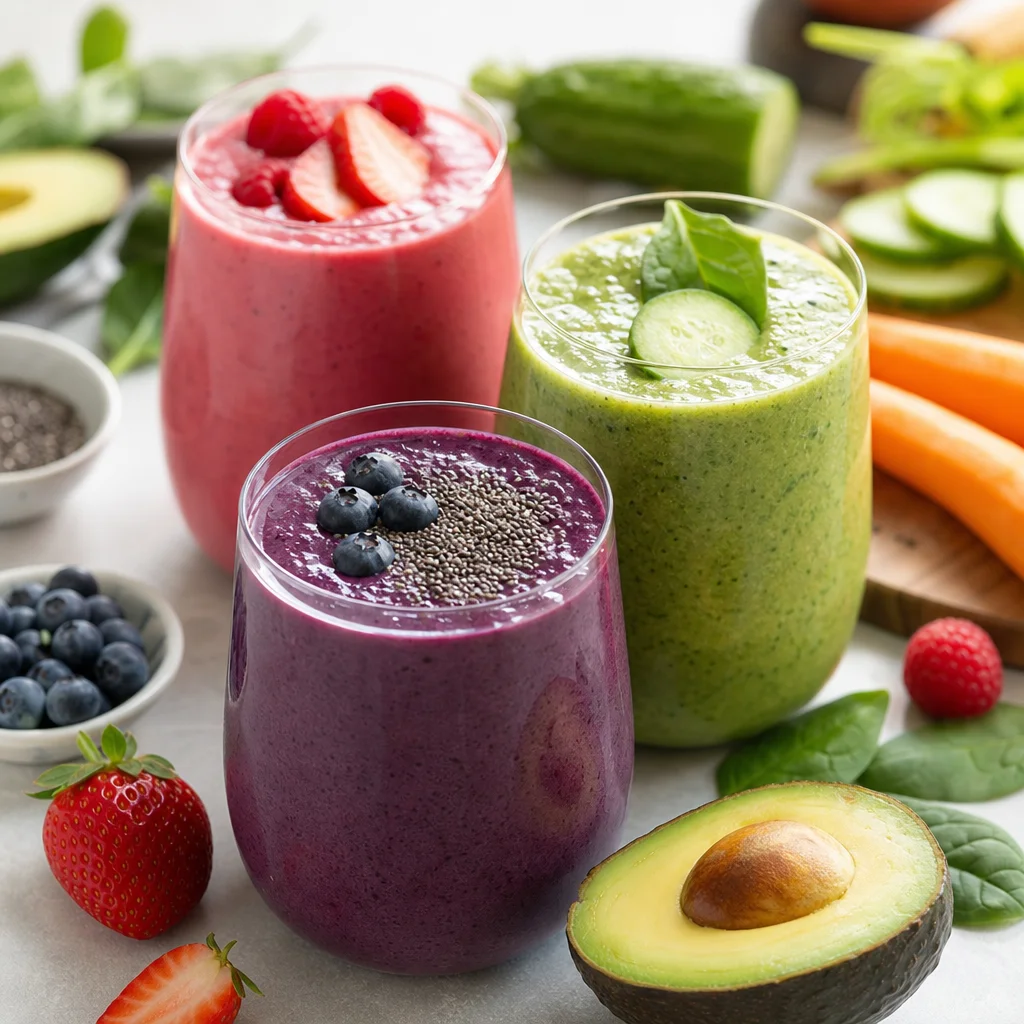
Key Takeaways
- Blood sugar friendly smoothies follow one simple rule: balance fruit with fiber, protein, and healthy fat.
- Blending doesn’t destroy fiber. New research shows blended berries can actually soften the blood sugar response.
- Keep fruit to about 1 cup per smoothie (half that for banana or mango) and aim for 30-45 grams of total carbs.
- The real spike culprits are juice bases, added sugar, and oversized store-bought cups — not your blender.
- Everyone responds differently. Test your blood sugar 1-2 hours after drinking to learn what works for you.
Picture this: It’s 10:30 a.m. and you’re already fighting that heavy, foggy feeling. The strawberry-banana smoothie you blended at 7 a.m. tasted great, but an hour later your energy hit the floor. Here’s the thing: blood sugar friendly smoothies aren’t about giving up fruit or flavor. They’re about how you build the blend.
Let’s be honest — smoothies have a reputation problem. Some people call them health food. Others call them sugar bombs. The truth sits in between, and the science is on your side. Once you learn the formula, you can fix almost any smoothie you love.
Quick Answer: Can Smoothies Be Blood Sugar Friendly?
Yes. A smoothie’s effect on your blood sugar depends on its ingredients — not on the fact that it’s blended. Keep fruit to about one cup, then add a protein, a healthy fat, and a fiber booster. That combination slows digestion and helps prevent the spike-and-crash.
The 3-Part Formula Behind Blood Sugar Friendly Smoothies
You can rebuild every smoothie you’ve ever loved with one simple idea. The secret to blood sugar friendly smoothies is balance. Here’s what’s actually happening: when you drink fruit alone, the sugar hits your bloodstream fast. Add protein, fiber, and fat, and digestion slows way down — the same principle behind our favorite high-fiber snacks. You get a gentle rise instead of a sharp spike.
Harvard Health puts it simply: pairing fruit with foods that contain fiber, protein, and fat slows digestion. That can prevent a blood sugar spike. It’s the same balanced-meal thinking behind the plate method recommended by the NIH. That plan calls for half vegetables, a quarter protein, and a quarter carbs.
A 2024 randomized trial tested how smoothie ingredients change post-meal blood sugar. In that study, 41 people with type 2 diabetes drank smoothies with different carb mixes. The version with balanced protein, natural fats, and modified carbs led to significantly better glucose and insulin responses. The formula matters more than the blender.
The 3-Part Formula at a Glance
- Fiber: berries, greens, chia, flax, or cauliflower. Fiber slows sugar absorption.
- Protein: Greek yogurt, kefir, silken tofu, nut butter, or plain protein powder. Protein keeps you full.
- Healthy fat: avocado, nut butter, or chia and hemp seeds. Fat smooths out the glucose curve.
Your target: roughly 15-25 grams of protein, 5-8 grams of fiber, and 30-45 grams of total carbs for a meal-sized smoothie.
Myth-Busting: Are All Smoothies Sugar Bombs?
Myth vs Fact
Myth: Blending destroys fiber, so smoothies always spike blood sugar.
Fact: Blending keeps fiber intact. Juicing removes it. And research shows blended seeded berries can actually blunt the glucose response.
A 2022 study in the journal Nutrients compared blended fruit to whole fruit. Blended apple and blackberries produced a lower blood sugar peak than the same fruit eaten whole. The numbers tell the story: a peak of 28.8 versus 42.5 mg/dL. The researchers suspect that grinding berry seeds releases extra fiber and plant compounds that slow sugar absorption.
Another study in the International Journal of Food Sciences and Nutrition measured two commercial fruit smoothies. Both kept their fiber after blending. Their glycemic index came in low, at 36 and 39. Glycemic index scores how fast a food raises blood sugar.
So yes — blood sugar friendly smoothies are not just possible. They have real science on their side. But here’s the catch. The same researchers warn that juice and sorbet bases change the story. So do giant 20-ounce cups. The problems are added sugar, juice instead of whole fruit, and portions that are way too big. Not the blender.
The Blood Sugar Friendly Smoothies Swap-and-Build Chart
Here’s your reusable tool. Pick one item from each column, and you can build blood sugar friendly smoothies without a recipe. No specialty ingredients. No fancy powders. Just everyday staples — many already on our blood sugar foods grocery list.
| Pick a Fruit (about 1 cup; ½ cup for banana or mango) | Pick a Protein | Pick a Healthy Fat | Add a Veggie Booster |
|---|---|---|---|
| Berries — strawberries, blueberries, raspberries, blackberries | Plain Greek yogurt | Almond or peanut butter | Handful of spinach |
| Cherries | Kefir | Avocado (¼) | Kale |
| Peach or nectarine | Silken tofu | Chia seeds | Riced cauliflower |
| Orange or clementine | Plain protein powder | Ground flax or hemp seeds | Cucumber |
| Mango or banana (½ cup) | Cottage cheese | Unsweetened coconut | Zucchini |
Sweeten smart. Ripe berries, cinnamon, and a splash of vanilla add sweetness without added sugar. If you need more, one date or a teaspoon of maple syrup is fine. Just count it like the carb it is.
6 Smoothie Recipes That Pass the Blood Sugar Test
These six blood sugar friendly smoothies use everyday ingredients. Each one shows you which part of the formula does the heavy lifting.
1. Very Berry Greek Yogurt Smoothie
Blend: 1 cup frozen mixed berries, ¾ cup plain Greek yogurt, 1 tbsp chia seeds, ½ cup unsweetened milk.
Why it works: The yogurt carries the protein. The berries carry the fiber. The chia adds healthy fat. No powders needed. Research also suggests blueberry smoothies can help temper the post-meal glucose response.
2. Berry-Mint Kefir Smoothie
Blend: 1 cup frozen berries, 1 cup plain kefir, 1 tbsp hemp seeds, a few fresh mint leaves, splash of vanilla.
Why it works: Kefir brings protein and gut-friendly probiotics. Hemp seeds add omega-3 fat and staying power. The mint makes it taste like summer.
3. Chocolate-Peanut Butter Oat Smoothie
Blend: ½ small banana, 2 tbsp rolled oats, 1 tbsp natural peanut butter, 1 tbsp hemp hearts, 1 tbsp cocoa, 1 cup unsweetened soy milk, vanilla.
Why it works: It tastes like dessert, but the half-banana keeps carbs in check. Oats add fiber. Peanut butter and hemp hearts add fat and protein. A vegan pick that lands in the target zone.
4. Green Matcha-Avocado Smoothie
Blend: ½ cup frozen mango, ¼ avocado, 2 cups baby spinach, 1 tsp matcha, 1 scoop plain protein powder or ½ cup Greek yogurt, hemp milk to blend.
Why it works: Avocado supplies creamy fat that slows digestion. Spinach is a fiber booster you won’t taste. Matcha adds gentle, steady energy.
5. Cherry-Cauliflower-Chia Smoothie
Blend: 1 cup frozen cherries, ½ cup riced cauliflower, 1 tbsp chia seeds, ¾ cup plain kefir or Greek yogurt, vanilla.
Why it works: Cauliflower adds creaminess and a veggie serving. Chia contributes fiber and healthy fat. Cherries bring natural sweetness with zero added sugar.
6. Strawberry-Silken Tofu Smoothie
Blend: 1 cup frozen strawberries, ½ block silken tofu, 1 tbsp almond butter, 1 cup unsweetened soy milk, vanilla.
Why it works: Silken tofu blends into a thick, creamy texture with plant protein. You won’t taste it. Strawberries keep the carb count lower than most fruits.
How to Know a Smoothie Works for YOUR Blood Sugar
Here’s the part most articles skip. Your body is unique. The same smoothie that works for your friend might not work for you. Harvard Health recommends checking your blood sugar one to two hours after eating fruit. That’s the best way to learn your own response.
There’s another nuance worth knowing. A 2025 study in The American Journal of Clinical Nutrition looked at continuous glucose monitors. These small sensors track blood sugar all day. The study found they can overestimate spikes — in fact, by up to about fourfold before adjustment. Individual responses vary a lot too. So that dramatic spike screenshot on social media? It might look worse than reality.
If you have diabetes or prediabetes, work with your care team. Your meal plan is personal. As NIDDK guidance explains, planning meals with your healthcare team is part of healthy living with diabetes. A smoothie can absolutely fit.
Common Questions About Smoothies and Blood Sugar
Can I still use banana or mango?
Yes — just watch the portion. Use about half a cup for denser fruits like banana and mango, compared to a full cup for berries. Pair them with protein and fat, and they fit the formula beautifully.
Is a smoothie as filling as eating whole fruit?
The research here is limited. Blending changes the physical structure of fruit, so some people feel less full than if they’d chewed it. That’s exactly why the formula adds protein, fiber, and fat — they boost fullness and keep energy steady.
Are store-bought smoothies ever okay?
Sometimes. A few commercial smoothies have measured low on the glycemic index. But homemade blood sugar friendly smoothies give you full control — no hidden juice, no added sugar. If you do buy one, read the label and treat a 20-ounce bottle as two servings.
Is a smoothie a meal or a snack?
Think of it as a meal — it fits into a blood sugar meal plan nicely. If you treat a balanced smoothie like breakfast or lunch, portions and carbs stay in check. It’s not a drink to add on top of one.
The Bottom Line
Blood sugar friendly smoothies come down to one reusable skill. Balance every fruit with fiber, protein, and healthy fat. Start with about a cup of fruit — berries are your best friend. Add Greek yogurt or silken tofu for protein. Spoon in nut butter or seeds for fat. Throw in a handful of greens or cauliflower for extra fiber.
Then blend, sip slowly, and notice how your energy feels. No specialty foods. No sugar-bomb guilt. Just a better breakfast — and a formula you can use on any smoothie you already love.
Sources
- Harvard Health: Blood sugar–friendly fruits if you have diabetes (2025)
- Nutrients: Whole fruit vs blended fruit and post-meal glucose (2022)
- International Journal of Food Sciences and Nutrition: GI of commercial fruit smoothies (2019)
- The American Journal of Clinical Nutrition: CGM accuracy and glycemic response (2025)
- Nutrients: Diabetes-specific smoothie formulas and glucose response (2024)
- Food & Function: Blueberry smoothie and post-meal glucose (2017)
- NIDDK (NIH): Healthy living with diabetes (2023)