

Healthy Canned Foods: 4 Dietitian-Approved Pantry Staples
Key Takeaways
- Canned foods can be as nutritious as fresh — sometimes even more so.
- A cup of canned pumpkin delivers over 200% of your daily vitamin A.
- Canned salmon with bones adds nearly 20% of your daily calcium.
- Draining and rinsing chickpeas cuts sodium by up to 40%.
- Choose no-salt-added, juice-packed, and BPA-free cans when you can.
Picture this: you’re in the canned food aisle, holding a can of chickpeas. You’ve been told fresh is better. But here’s the truth about healthy canned foods: they’re not the compromise you think. Dietitians keep them stocked in their own kitchens — and the science backs them up.
Canning is simply a way of preserving food with heat. It locks in nutrients and keeps food safe for months, sometimes years. For some foods, canned actually beats fresh. So let’s look at the research, the best cans to buy, and how to read labels like a pro.
Quick Answer: Are Canned Foods Healthy?
Yes — when you pick the right ones. Healthy canned foods like beans, fish, pumpkin, and tomatoes deliver real nutrition at a budget price. Look for no-salt-added or low-sodium options. Rinse beans to cut sodium by up to 40%. And choose fruit packed in juice, not syrup.
Why Healthy Canned Foods Deserve a Spot in Your Pantry
Let’s start with the numbers. A 2015 study in the journal Nutrients looked at nearly 10,000 Americans. People who ate canned foods often did better. Six or more times a week, they consumed more fruits, vegetables, dairy, and protein-rich foods. They also had higher intakes of 17 essential nutrients, including potassium, calcium, and fiber. The research on canned food intake and diet quality makes a strong case for keeping cans in rotation.
Why does that happen? Producers pick and pack these foods at peak ripeness. That locks in nutrients at their best moment. The American Heart Association lists canned beans, fish, and fruit among its five must-have pantry staples. It’s normal to wonder whether canned food really measures up. The evidence says it does.
Then there’s the budget angle. Canned fish costs a fraction of fresh. Canned beans cost pennies per serving. And since they last for years, they help cut food waste. When you’re feeding a family on a busy week, healthy canned foods are your best friend — and so are the heart-healthy snacks you keep on hand.
How Canning Changes What’s in Your Food
Here’s what’s actually happening inside the can. Heat, pressure, and the lack of oxygen do three important things. They kill bacteria that cause spoilage. They soften the food. And they change the structure of some nutrients.
Some nutrients handle heat beautifully. Fiber, protein, minerals, and fat-soluble vitamins like A and D stay intact. Canned beans have an increased amount of soluble fiber, which supports heart health. So yes — healthy canned foods can be just as nourishing as fresh. Ohio State dietitians explain that canning can boost antioxidants in tomatoes and corn.
On the flip side, water-soluble vitamins like vitamin C and some B vitamins may be lower after canning. That’s why the best approach mixes canned, fresh, and frozen foods.
Now for the surprise. Processing can actually help some foods. A study in the Journal of Nutrition found that heat and pureeing make lycopene in tomatoes easier to absorb. Studies on lycopene absorption from canned tomatoes show the canned version wins. For usable lycopene, canned tomatoes beat raw.
Which Nutrients Survive Canning?
- Stay strong: fiber, protein, minerals like calcium and potassium, and fat-soluble vitamins A and D.
- Can be reduced: vitamin C and some B vitamins, which are sensitive to heat.
- Get a boost: lycopene in tomatoes, antioxidants in corn, and soluble fiber in beans.
The 4 Healthy Canned Foods Dietitians Actually Stock
Ask a dietitian which healthy canned foods earn permanent shelf space, and the same names keep coming up. Each one has a surprise worth knowing.
Canned Pumpkin: The Concentration Effect
Fresh pumpkin is about 94% water. Canning removes much of that water, so the purée becomes concentrated. One cup of canned pumpkin delivers over 200% of your daily vitamin A needs and 7 grams of fiber. That’s more than a cup of fresh pumpkin. USDA nutrient data backs this up.
Buy pumpkin purée, not pie filling. Pie filling has added sugar and spices; purée is just pumpkin. Use it in oatmeal, soups, smoothies, or savory dishes. Try a spoonful in morning oats with cinnamon for a fiber-rich start.
Canned Salmon: The Calcium Surprise
One of the most surprising healthy canned foods is canned salmon. Here’s why: those soft bones in the can are safe to eat. They’re pressure-cooked until soft, so you won’t notice them. But your body will. A 3-ounce serving provides nearly 20% of your daily calcium. The NIH’s calcium fact sheet lists canned salmon with bones as a real food source of calcium.
That’s big for anyone who skips dairy. You also get omega-3 fats, vitamin D, and protein in the same can. Canned salmon is generally lower in mercury than larger fish like tuna. And it’s budget-friendly, often a fraction of the cost of fresh.
Try mixing canned salmon with mayo, lemon, and dill for a 5-minute salmon salad on toast.
Canned Chickpeas: The Sodium Fix
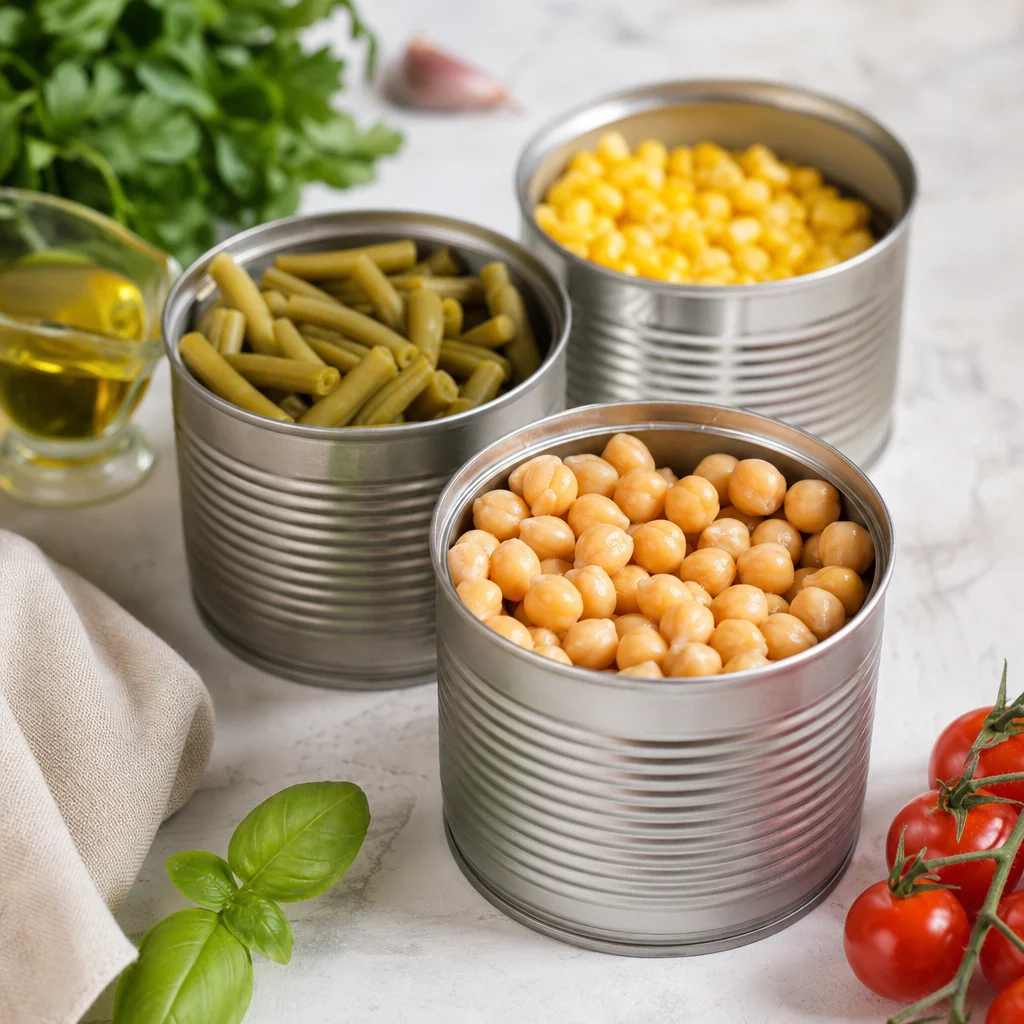
Chickpeas are the workhorse of the canned aisle. A half-cup gives you nearly 4 grams of protein and about 5 grams of fiber. A 2023 systematic review on legumes and heart health found real benefits. Beans and chickpeas can support healthy cholesterol and blood sugar levels.
The catch is sodium. The canning liquid may hold 700 milligrams or more. The fix is simple: drain the can completely, then rinse well under running water. That cuts sodium by up to 40% while keeping protein and fiber. The FDA recommends rinsing canned beans for this exact reason.
One honest note: rinsing can also wash away some water-soluble nutrients. So no-salt-added cans are the gold standard. Research on rinsing canned foods shows the method matters. And when you need a dependable staple, canned chickpeas are one of the most reliable healthy canned foods.
Canned Peaches: The Sugar Reality
Canned peaches get a bad rap because some are packed in heavy syrup. But the peach itself has no added sugar. A half-cup of canned peaches has about 13 grams of natural sugar — the same as fresh.
Look for peaches packed in 100% fruit juice or light syrup. You skip added sugar and keep more flavor. Use the juice in smoothies or sparkling water. Or layer peaches with Greek yogurt and granola for a 2-minute breakfast that feels like dessert.
How to Read a Canned Food Label Like a Pro
This is the skill that makes healthy canned foods easy to spot. The FDA gives us a simple tool: the % Daily Value, or %DV, for sodium. The FDA’s guide to sodium and the Nutrition Facts label explains the rule.
- 5% DV or less per serving = low sodium. Great pick.
- 20% DV or more per serving = high sodium. Put it back.
Learn the label claims, too. “No-salt-added” means no salt added during processing. “Low sodium” means 140 mg or less per serving. “Reduced sodium” means at least 25% less than the regular version. For fruit, “packed in juice” beats “packed in syrup” every time.
Canned Food Label Cheat Sheet
- 5% DV sodium or less — low. Choose these.
- 20% DV sodium or more — high. Skip these.
- No-salt-added / Unsalted — no salt during processing.
- Low sodium — 140 mg or less per serving.
- Fruit packed in juice or water — choose. Heavy syrup — skip.
- Pumpkin purée — choose. Pumpkin pie filling — skip.
- Fish packed in water — choose. Fish packed in oil — higher in calories.
Canned Foods to Limit — And What to Skip
Not every can deserves your trust. Some are desserts or condiments in disguise.
- Pumpkin pie filling: pumpkin plus added sugar and spices. Use purée instead.
- Fruit in heavy syrup: extra sugar with no benefit.
- Canned soups and pasta: check the label — skip anything at 20% DV or more per serving.
- Oil-packed fish: fine sometimes, but water-packed saves calories.
- Processed canned meats: high in sodium and saturated fat.
Here’s the simple rule. If a can has a sauce, syrup, or long seasoning list, it’s probably not the best pick. Whole foods in their own juices always win.
Canned Food Safety and the BPA Question
Canned food safety is easy to manage. Skip cans that are dented, bulging, leaking, or rusted. These can signal spoilage, and in rare cases, botulism. Check the lid seal, too. It should lie flat, not pop up. Ohio State’s food safety guidance covers this well.
After opening, move leftovers to a glass or plastic container. Don’t store food in the open can. And rotate your pantry — use older cans first.
Now, about BPA. You may have heard concerns about the resin lining in some cans. Research on canned foods and BPA exposure links canned food intake to higher BPA levels in the body. However, the FDA considers current levels safe, and many brands now use BPA-free linings.
The balanced take: if you eat canned food often, choose BPA-free when available. For most people, the nutrient and budget benefits outweigh the theoretical risk. If you’re pregnant and want extra caution, look for BPA-free cans when possible.
Quick Ways to Use Your Canned Staples
Here’s where healthy canned foods earn their keep — fast meals on busy days.
- 5-minute chickpea salad: rinsed chickpeas, lemon, olive oil, herbs. Serve with greens.
- Salmon cakes: canned salmon, an egg, breadcrumbs, dill. Pan-fry for a 15-minute dinner.
- Pumpkin overnight oats: oats, milk, pumpkin purée, cinnamon. Stir before bed.
- Peach chia smoothie: juice-packed peaches, Greek yogurt, chia seeds, ice. Blend and go.
- Pantry pasta: canned tomatoes, white beans, garlic, olive oil. Toss with whole-grain pasta.
See the pattern? Pick one protein, one vegetable, and one fruit. You’ve got a week of meals with zero planning stress.
Frequently Asked Questions
Are canned vegetables as healthy as fresh?
Yes, for the most part. Fiber, minerals, and fat-soluble vitamins survive canning well. Vitamin C and some B vitamins may be lower. Mix fresh, frozen, and canned for the best balance.
Does rinsing canned beans remove nutrients?
A quick rinse can wash away some water-soluble nutrients. But the sodium savings are worth it. For the best of both, choose no-salt-added beans and give them a light rinse.
Is canned salmon safe to eat regularly?
Yes. Canned salmon is generally lower in mercury than larger fish. It’s a great source of protein, omega-3s, and calcium — and it’s budget-friendly.
Which canned foods should I avoid?
Skip heavy syrup, pumpkin pie filling, cream soups, and processed canned meats. Canned soups are often very high in sodium. Check the label — skip anything at 20% DV or more per serving. Whole foods in their own juices are the smarter pick.
The Bottom Line
Let’s be honest — canned food has taken undeserved heat for too long. Healthy canned foods like pumpkin, salmon, chickpeas, and peaches are convenient, affordable, and genuinely nutritious. The secret is in the label. Choose no-salt-added. Pick fruit packed in juice. Rinse your beans.
So next time you’re in the aisle, grab the can with confidence. Your wallet, your schedule, and your body will thank you.