
7 Daily Mindfulness Anchors: Science-Backed Micro-Moments
You know that feeling. You want to be more present, less scattered. You’ve heard that mindfulness helps. But the idea of sitting still for 20 minutes? That feels impossible with your schedule. Here’s the good news: you don’t need to. The latest research shows that weaving daily mindfulness into the moments you already have — while brushing your teeth, making coffee, or walking to your car — can be just as powerful as a formal meditation session. And for many of us, it’s actually more effective.
Key Takeaways
- Mindfulness doesn’t require a cushion or a quiet room — micro-moments during everyday activities work.
- A 2025 study found that informal mindfulness (being mindful during daily tasks) reduced stress better than formal meditation in a head-to-head comparison.
- Consistency matters as much as duration — some research suggests that five minutes every day may be more effective than 30 minutes once a week.
- Research suggests that with consistent daily practice, many people notice changes in how they feel and respond to stress within weeks (see: studies on immediate stress reduction from informal mindfulness and HRV improvements at 12 weeks).
- Mindfulness is safe for most people, but it’s not a replacement for professional mental health care.
The Myth of the 20-Minute Sit
Let’s be honest. When most of us hear “mindfulness,” we picture someone sitting cross-legged on a cushion, eyes closed, completely still. It looks peaceful. It also looks like something you need a separate block of time for — time most of us don’t have.
But here’s what the research actually shows: you don’t need to sit still to practice daily mindfulness. In fact, a 2025 randomized controlled trial compared formal mindfulness (sitting meditation) with informal mindfulness (being mindful during everyday activities). The result? Only informal mindfulness reduced stress in the moment. And participants consistently preferred it.
This is a game-changer. It means your morning coffee, your commute, your walk to the grocery store — these aren’t obstacles to mindfulness. They’re opportunities.
Why Daily Mindfulness Micro-Moments Work
You might be thinking: “Can a few seconds of awareness really do anything?” It’s a fair question. The answer lies in how the brain builds habits.
Think of it like exercise. A 20-minute workout is great. But if you never do it because you can’t find 20 minutes, it’s useless. A 2-minute walk you actually take every day? That’s real progress. The same logic applies to your brain.
Richard Davidson’s lab at the Center for Healthy Minds conducted a landmark study published in the American Journal of Psychiatry. It found that an 8-week mindfulness-based stress reduction (MBSR) program measurably reduced the brain’s pain response. However, daily home practice alone was not significantly linked to those neural changes — more intensive practice showed stronger effects. This tells us that the type and intensity of practice matter.
Emerging research suggests that practicing more frequently may be more important than practicing for longer sessions, though researchers are still studying the minimum effective dose. The key word is consistency. Each time you notice your mind has wandered and gently return your attention, you’re strengthening your focus — like doing one rep for your attention muscles. The same principle of consistency helps keep your brain younger through daily habits — small, regular efforts build lasting cognitive resilience.
The Science in Plain English
When you practice mindfulness — even for a few seconds — you’re training your brain to notice when your mind has wandered and gently bring it back. Each time you do this, you strengthen the neural pathways for attention and emotional regulation. The more reps you do, the stronger the connection gets. And you can do reps while brushing your teeth.
Your 7 Daily Mindfulness Anchors
Here’s the practical part. Based on the work of Richard Davidson, Ph.D., and the Center for Healthy Minds, here are seven moments in your day where you can layer in a micro-moment of awareness. Pick one. Try it for a week. See what changes.
1. Before You Eat
Take 30 seconds before your first bite. Look at your food. Notice the colors, the smells. Take one breath. That’s it. This simple pause shifts you from autopilot eating to a moment of presence.
2. On a Walk
Whether you’re walking to your car, the mailbox, or the office, feel your feet on the ground. Notice the air on your skin. You don’t need to change anything. Just notice.
3. During Your Morning Coffee or Tea
Instead of scrolling while you sip, just sip. Feel the warmth of the mug. Smell the coffee. Taste it. This is one of the easiest ways to start your day with intention.
4. In the Car or on the Train
Before you turn on the radio or a podcast, sit for one breath. Notice how you feel. Are your shoulders tight? Is your jaw clenched? Just noticing is the practice.
5. Before a Meeting or Conversation
Take three breaths before you walk into a meeting or pick up the phone. This tiny reset can change the entire tone of the conversation. You’ll listen better and react less.
6. While Brushing Your Teeth
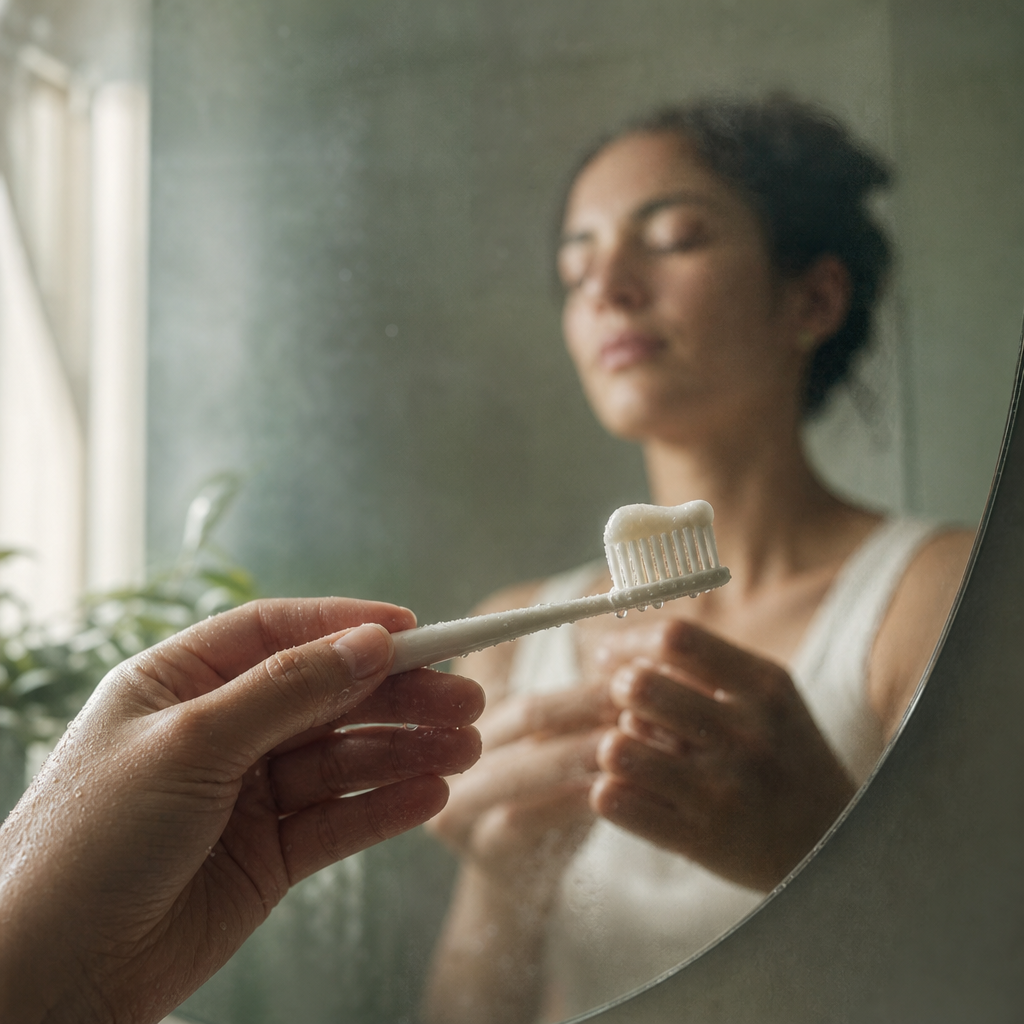
This is a perfect anchor. You do it twice a day. Feel the brush in your hand. Notice the taste of the toothpaste. Feel the sensation on your teeth and gums. Two minutes of mindfulness, built into a habit you already have.
7. Your Evening Wind-Down
As you get into bed, take one minute to reflect on something that went well today. It doesn’t have to be big. A good cup of coffee counts. This trains your brain to notice the positive. If your mind tends to race at night, learning how to calm a racing mind at night can help you ease into restful sleep.
What Daily Mindfulness Can and Can’t Do
Let’s be real about what this practice delivers. The evidence is strong that daily mindfulness can reduce stress, improve emotional regulation, and help you feel more present. A 2025 study from Duke University found that mindfulness training improved heart rate variability — a physiological measure of how well your body handles stress.
However, it’s important to be honest about what the research doesn’t support. A large JAMA study with 585 participants found that mindfulness training did not improve memory or executive function in older adults. And a Cleveland Clinic study found that just 5 minutes of daily online meditation wasn’t enough to change immune biomarkers.
What does this mean for you? Mindfulness is excellent for stress and emotional well-being. It’s not a magic pill for memory or immunity. And it’s definitely not a replacement for medical care. Think of it as a healthy habit — like eating vegetables or getting sleep. It helps, but it’s not a cure-all.
Common Challenges and How to Handle Them
If you try daily mindfulness and find it difficult, you’re not alone. Here are the most common obstacles and what to do about them.
“My mind won’t stop wandering.”
This is not a failure. It’s the whole point. Every time you notice your mind has wandered and gently bring it back, you’ve just done a rep. That’s the practice. The wandering is not the problem. The returning is the workout.
“I keep forgetting to do it.”
This is why we anchor mindfulness to existing habits. You already brush your teeth. You already make coffee. You already walk. Attach your mindfulness moment to something you already do, and you won’t have to remember. It becomes automatic.
“It makes me feel more anxious.”
This can happen, especially when you first start. When you slow down, you might notice feelings you’ve been pushing aside. Research from the Center for Healthy Minds found that about 10-28% of people report difficult experiences during meditation. But here’s the important part: these experiences were not caused by the meditation itself. They were related to pre-existing stress or anxiety. And 90% of people who had difficult experiences were still glad they learned to meditate.
If this happens to you, start even smaller. One breath. That’s it. And if the feelings are overwhelming, talk to a therapist. Mindfulness is a tool, not a treatment.
How to Build Your Daily Mindfulness Habit
Here’s a simple framework to make daily mindfulness stick.
Week 1: Pick one anchor from the list above. Just one. Commit to doing it every day. That’s your only goal.
Week 2: Keep your first anchor. Add a second one. Now you have two micro-moments of awareness built into your day.
Week 3: Notice what’s changing. Are you more aware of your stress levels? Do you catch yourself before reacting? Don’t judge it. Just notice.
Week 4: If you want to go deeper, try one formal 5-minute meditation using an app or a guided recording. But only if it feels right. The informal practice is enough.
Frequently Asked Questions
How long do I need to practice each day?
Start with 30 seconds to 2 minutes. The research shows that consistency matters more than duration. Five minutes daily is better than 30 minutes once a week.
Can I replace my therapy with mindfulness?
No. Mindfulness is a complementary practice, not a replacement for professional mental health care. If you’re dealing with depression, anxiety, or trauma, work with a therapist.
What’s the difference between mindfulness and meditation?
Meditation is a formal practice where you set aside time to focus your attention. Mindfulness is the quality of being present that you can bring to any activity. You can practice mindfulness without meditating.
How do I know if I’m doing it right?
If you’re noticing the present moment — even for a second — you’re doing it right. There’s no wrong way to be aware.
The Bottom Line
You don’t need more time. You don’t need a cushion. You don’t need to quiet your mind. What you need is permission to start small — and the understanding that those small moments add up.
Daily mindfulness is not about adding another thing to your to-do list. It’s about bringing a new quality of attention to the things you’re already doing. Your morning coffee. Your walk to the car. Your toothbrush.
Start with one moment today. One breath. That’s all it takes to begin.