

How to Reduce Visceral Fat With One Simple Lunch
Key Takeaways
- Three mechanisms matter most: Fiber, antioxidants, and unsaturated fats work together to target visceral fat. A lunch that combines all three is a powerful start.
- Fiber is your fat-fighting friend: Eating 25-35 grams of fiber daily is linked to significantly less visceral fat. One serving of chickpea salad gives you 17 grams.
- Antioxidants break the cycle: Visceral fat causes inflammation, which leads to more fat storage. Antioxidant-rich foods like tomatoes and avocado interrupt this loop.
- Swap your fats, not cut them: Replacing saturated fats with unsaturated fats (like olive oil and avocado) may help your body store less visceral fat.
- Start with one meal: You don’t need a complete diet overhaul. Changing your lunch is a practical, evidence-based first step.
You’ve heard the advice before: eat less, move more, do more crunches. But if you’re trying to reduce visceral fat — that deep belly fat wrapped around your organs — the standard playbook often misses the mark. Here’s the thing: you don’t need to overhaul your entire diet or spend hours at the gym. Research suggests that changing just one meal can start shifting this stubborn fat.
Let’s be honest, lunch is often the meal we rush through or skip entirely. But what if your midday meal could do more than just fill you up? What if it could actively work against visceral fat, using three science-backed mechanisms that most diet advice ignores?
We’re talking about a simple, 5-ingredient salad that dietitians are calling a game-changer for visceral fat. But more importantly, we’re talking about why it works — and how you can apply the same principles to any lunch you make.
Quick Answer: Can one lunch really help reduce visceral fat?
Yes, when that lunch is built around three key nutritional strategies: high fiber for satiety and blood sugar balance, antioxidants to break the inflammation-visceral fat cycle, and unsaturated fats to replace harmful saturated fats. A lunch like the 5-Ingredient Avocado & Chickpea Salad delivers all three in one bowl. While no single meal is a magic bullet, consistently eating lunches built on these principles can meaningfully support visceral fat loss over time.
Why Visceral Fat Matters More Than the Scale
Before we talk about lunch, let’s talk about why this type of fat deserves your attention. Visceral fat lies deep inside your abdominal cavity, where it wraps around internal organs including your liver, pancreas, and intestines. Unlike the subcutaneous fat you can see and pinch just beneath your skin, visceral fat is metabolically active — it releases inflammatory compounds and stress hormones that can affect your entire body.
Here’s what’s actually happening: excess visceral fat promotes chronic inflammation, which can lead to insulin resistance, more fat storage, and a higher risk of heart disease, type 2 diabetes, and even certain cancers. The health risks of excess belly fat are well-documented by the National Institutes of Health.
But here’s the good news — and it’s genuinely encouraging. A landmark 2026 study published in Circulation (the journal of the American Heart Association) found that a 10% reduction in visceral fat may reduce diabetes risk by nearly 30%. Even more remarkable? The benefits partially persisted even when participants regained weight. This means that losing visceral fat specifically — not just weight on the scale — is the real target for metabolic health.
The Three Mechanisms That Help Reduce Visceral Fat
Most articles give you a long list of things to do. We’re going to do something different. We’re going to explain how three specific nutrients work in your body to target visceral fat. Once you understand these mechanisms, you can apply them to any meal.
Mechanism #1: Fiber — Your Gut’s Fat-Fighting Ally
Fiber is the unsung hero of visceral fat loss. When you eat fiber-rich foods like chickpeas, beans, and vegetables, something remarkable happens. The fiber travels undigested to your gut, where your gut bacteria ferment it. This process produces compounds called short-chain fatty acids (SCFAs).
Research suggests these SCFAs may help reduce fat storage and support healthier body composition overall. But that’s not all. Fiber also slows digestion, which helps you feel full for longer. It slows the absorption of carbohydrates and sugar, which helps balance blood sugar and protect against insulin resistance — a key driver of visceral fat storage.
The numbers are compelling. A 2026 study using NHANES data from over 9,000 adults found that higher fiber intake is linked to less visceral fat. Compared to people eating under 15 grams daily, those eating 25-35 grams had nearly 8% less visceral fat. The effect was even stronger in women.
How Much Fiber Do You Need?
The Daily Value for fiber is 28 grams. Most Americans get only about 15 grams. The featured avocado chickpea salad delivers 17 grams per serving — more than half your daily target in one meal. A 2026 RCT found that fiber supplementation with dietary guidance can reduce visceral fat scores within 4 weeks. That’s fast.
Mechanism #2: Antioxidants — Breaking the Inflammation Cycle
Here’s where things get interesting. Visceral fat doesn’t just sit there — it actively promotes inflammation. This inflammation, in turn, encourages more visceral fat storage. It’s a vicious cycle that can feel impossible to escape.
But plant foods loaded with antioxidants can help break this cycle. The DIRECT-PLUS trial, a major study published in Obesity, found that a polyphenol-rich diet (think colorful vegetables, herbs, and healthy fats) reduced pro-inflammatory proteins in the body. The antioxidant-rich diets reduce inflammation linked to visceral fat, and the strongest effects were seen in people who lost the most visceral fat.
The chickpeas, tomatoes, onions, and avocado in our featured salad are all packed with antioxidants. Each one contributes to breaking that inflammation cycle. Think of it as putting out a small fire before it spreads.
Mechanism #3: Unsaturated Fats — The Smart Swap
Fat isn’t the enemy — but the type of fat matters enormously. Higher intakes of saturated fat (found in fatty cuts of red meat and full-fat dairy) are associated with increased visceral fat. On the flip side, replacing those saturated fats with unsaturated fats may favor body composition in a way that minimizes visceral fat accumulation.
The Mayo Clinic recommends choosing monounsaturated and polyunsaturated fats — found in fish, nuts, avocados, and olive oil — over saturated fats for managing belly fat. The avocado and olive oil in our salad are perfect examples. They provide healthy fats that help your body absorb fat-soluble vitamins while supporting a healthier fat distribution pattern.
The Lunch That Puts It All Together: Avocado & Chickpea Salad
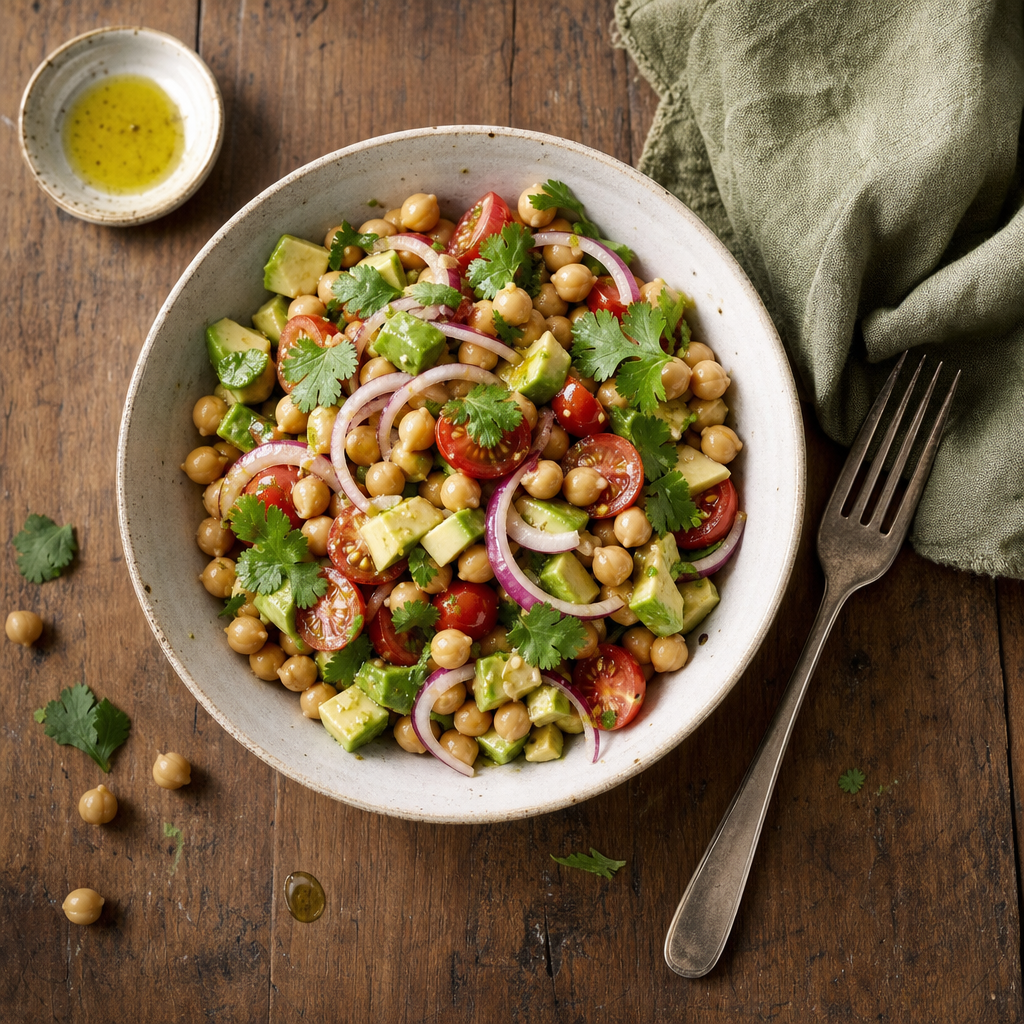
Now, you might be thinking: “This all sounds great, but what do I actually eat?” That’s where the 5-Ingredient Avocado & Chickpea Salad comes in. It’s not just a recipe — it’s a practical application of all three mechanisms in one bowl.
Here’s how it breaks down:
- Chickpeas (17g fiber per serving): The fiber powerhouse. Feeds your gut bacteria, produces SCFAs, stabilizes blood sugar, and keeps you full for hours.
- Tomatoes and red onion: Rich in antioxidants like lycopene and quercetin. Help break the inflammation-visceral fat cycle.
- Avocado and olive oil: Provide monounsaturated and polyunsaturated fats. Replace saturated fats in your diet and support healthier body composition.
The best part? It takes 20 minutes to make, uses just five main ingredients, and requires only one bowl. You can make four servings at once and have lunches ready for several days.
Two More Quick Lunch Ideas to Reduce Visceral Fat
Not a fan of chickpeas? No problem. The same three mechanisms can be applied to other lunches. Here are two more ideas that hit all the same targets.
Mediterranean Quinoa Bowl
Combine cooked quinoa (fiber + protein) with canned salmon (omega-3s, which are anti-inflammatory), chopped cucumbers and tomatoes (antioxidants), kalamata olives (healthy fats), and a drizzle of olive oil and lemon juice. This bowl delivers fiber, antioxidants, and unsaturated fats in one satisfying meal.
High-Fiber Lentil Soup with Avocado
A warm bowl of lentil soup (fiber and plant protein) loaded with spinach or kale (antioxidants), topped with half an avocado (healthy fats). Lentils provide about 15 grams of fiber per cup, and the leafy greens add a powerful antioxidant punch. Make a big batch on Sunday for easy lunches all week.
Other Strategies to Support Visceral Fat Loss
While lunch is a great place to start, these additional habits can amplify your results.
Prioritize Protein
Protein helps keep you full and supports muscle preservation during weight loss. If you need quick high-protein meal ideas, the chickpea salad is a great start — it gives you 14 grams of protein per serving. Adding a hard-boiled egg or a piece of grilled chicken can boost it further. While protein supports overall weight management, the strongest evidence for directly targeting visceral fat points to fiber, antioxidants, and unsaturated fats.
Move Your Body
Any movement helps, but vigorous aerobic exercise — like jogging, biking, or high-intensity interval training (HIIT) — is particularly effective for targeting visceral fat. A systematic review found that intermittent fasting — specifically the 5:2 diet and time-restricted eating — also reduces visceral fat. If intermittent fasting doesn’t suit you, vigorous aerobic exercise and strength training remain among the most reliable tools.
Get Enough Sleep
Getting adequate sleep supports healthy hormone balance and appetite regulation. When you’re well-rested, you’re more likely to make healthy food choices and have the energy to exercise — both of which support your efforts to reduce visceral fat.
Frequently Asked Questions
How quickly can I expect to see results?
Visceral fat changes can happen faster than you might think. The 2026 fiber supplementation study showed measurable reductions in visceral fat scores within 4 weeks. However, meaningful changes typically take 8-12 weeks of consistent healthy eating and exercise. Focus on the process, not the timeline.
Do I need to cut out all carbs?
No. The type of carbs matters more than the amount. Focus on fiber-rich carbohydrates like beans, lentils, quinoa, and vegetables. These provide the fiber your gut needs to produce those fat-fighting short-chain fatty acids. Refined carbs (white bread, sugary snacks) are the ones to limit.
Can I lose visceral fat without exercise?
Dietary changes alone can reduce visceral fat, as the research on fiber and antioxidants shows. However, combining a healthy diet with regular exercise — especially aerobic exercise and strength training — produces the best results. Exercise also helps preserve muscle mass during fat loss, which supports your metabolism.
How do I know if I have too much visceral fat?
The simplest way is to measure your waist circumference. For women, a waist measurement of more than 35 inches (89 cm) signals excess belly fat and increased health risk. For men, the threshold is 40 inches (102 cm). You can also calculate your waist-to-height ratio — a ratio of 0.5 or higher indicates increased risk.
The Bottom Line
You don’t need a complete diet overhaul to start reducing visceral fat. The science is clear: fiber, antioxidants, and unsaturated fats work together to target this stubborn fat through three distinct mechanisms. And you can get all three in a single, simple lunch.
Start with the avocado chickpea salad this week. Pay attention to how you feel — the sustained energy, the lack of afternoon cravings, the satisfaction of a meal that actually nourishes you. Then experiment with the quinoa bowl or lentil soup. Build your own lunches around the same three principles: a fiber-rich base, colorful antioxidant-packed vegetables, and a source of healthy unsaturated fat.
The research from the American Heart Association confirms that visceral fat is an independent risk factor for heart disease — but it’s also modifiable. Every healthy lunch is a step in the right direction. You’ve got this.