
Avocado Heart Health: What a New Study Reveals
Key Takeaways
- A 2026 study found that eating one avocado daily reduced LDL particle levels by 49 nmol/L in people with abdominal obesity — equal to about a 4% lower heart disease risk.
- LDL particles (LDL-P) are different from LDL cholesterol (LDL-C). You can have normal cholesterol numbers but still have a high particle count, which raises your risk.
- Adding avocado did not cause weight loss or reduce belly fat. The benefit comes from what you replace with avocado — like butter, mayo, or cheese.
- Multiple studies show that eating avocado instead of less healthy fats is linked to 16–22% lower heart disease risk over time.
You already know avocados are good for you. But here’s what most people miss: your standard cholesterol test might look perfectly fine, while a more detailed marker — one that matters a lot for heart health — could tell a different story. That’s where the latest research on avocado heart health gets interesting.
A study published in June 2026 in the Journal of Clinical Lipidology found that eating one avocado a day lowered LDL particles — a more precise risk marker — by an amount linked to a 4% reduction in heart disease risk. And it did this without causing weight loss or shrinking waistlines. Let’s break down what that actually means for you.
Quick Answer: Is an Avocado a Day Good for Your Heart?
Yes — but with an important catch. The research shows that eating one avocado daily can lower LDL particles (a key heart disease marker), especially if you carry extra weight around your middle. However, the real benefit comes from replacing less healthy fats with avocado, not just adding it on top of your current diet. Think of it as a swap, not a supplement.
What the Latest Research Says About Avocado Heart Health
Let’s start with the study that made headlines. Researchers from Penn State and other institutions analyzed data from 786 adults with abdominal obesity — meaning a waist circumference of 40 inches or more for men, and 35 inches or more for women. Participants were randomly assigned to either eat one avocado daily for six months or continue their usual diet.
The results, published in a 2026 randomized controlled trial in the Journal of Clinical Lipidology, showed that the avocado group had a significant drop in LDL particle concentration — 49 nanomoles per liter lower than the control group. The researchers estimated this change equals about a 4% reduction in heart disease risk.
Here’s the thing: this benefit happened without any weight loss or change in waist size. That surprised some people, but it actually makes sense when you understand what LDL particles are and why they matter.
LDL Particles vs. LDL Cholesterol: Why the Difference Matters
This is where most articles lose readers — but it’s actually the most important part. Let me explain it simply.
Think of LDL cholesterol (LDL-C) as the total number of passengers on a bus. LDL particles (LDL-P) are the buses themselves. You can have the same number of passengers, but if they’re spread across many small buses instead of a few big ones, you have more vehicles on the road — and more chances for traffic jams and accidents.
In heart health terms, those small, numerous LDL particles can more easily slip into your artery walls and form plaque. This is especially true for people with abdominal obesity, who tend to have more of these small, dense particles. So your standard cholesterol test might show normal LDL-C numbers, but your LDL-P count could still be high — and that’s a risk your regular blood work might miss.
The 2026 study found that avocado specifically lowered LDL particles, not just LDL cholesterol. That’s a more nuanced benefit than what we typically hear about.
What This Means for Your Next Doctor Visit
Standard lipid panels measure LDL cholesterol (LDL-C), not LDL particles (LDL-P). If you have abdominal obesity, a family history of heart disease, or normal cholesterol but other risk factors, you might want to ask your doctor about advanced lipid testing. Tests like LDL particle count or apolipoprotein B (apoB) can give a fuller picture. Not all insurance covers these, so it’s worth asking about cost upfront.
How Avocados Support Heart Health Beyond LDL
Avocados don’t just work on LDL particles. They bring a whole package of heart-friendly nutrients that work together. Here’s what the research shows:
Healthy fats that replace the bad stuff. Avocados are rich in monounsaturated fats — the same type found in olive oil. When you use avocado instead of butter, cheese, or processed meats, you’re swapping saturated fats for unsaturated ones. A 30-year prospective study published in the Journal of the American Heart Association found that replacing half a serving of butter, cheese, or processed meats with avocado was linked to a 16–22% lower risk of heart disease.
Fiber for your heart and gut. One avocado contains about 9 grams of fiber — that’s roughly a third of your daily needs. Fiber helps lower cholesterol, keeps blood sugar steady, and supports a healthy gut microbiome. A 2021 study found that people who ate avocado daily had more diverse gut bacteria, which is linked to better overall health.
Potassium for blood pressure. Half an avocado has about 364 mg of potassium — comparable to a banana, and per gram it actually contains more potassium than one. Potassium helps your body balance sodium and can lower blood pressure. Research published in the British Journal of Nutrition found that women who ate five or more servings of avocado per week had a 17% lower risk of developing high blood pressure.
Antioxidants that fight inflammation. Avocados contain lutein, vitamin E, and other compounds that help protect your cells from damage. Chronic inflammation is a key driver of heart disease, and these nutrients help keep it in check.
The Swap Strategy: Why Substitution Matters More Than Addition
Here’s the most practical takeaway from all this research: the benefit of avocado comes largely from what you replace with it, not from adding it to an already full diet.
Think about it this way. If you eat your usual breakfast of eggs and toast with butter, then add half an avocado on the side, you’ve added about 120 calories and 11 grams of fat. That’s not bad, but it’s not a heart-healthy swap either.
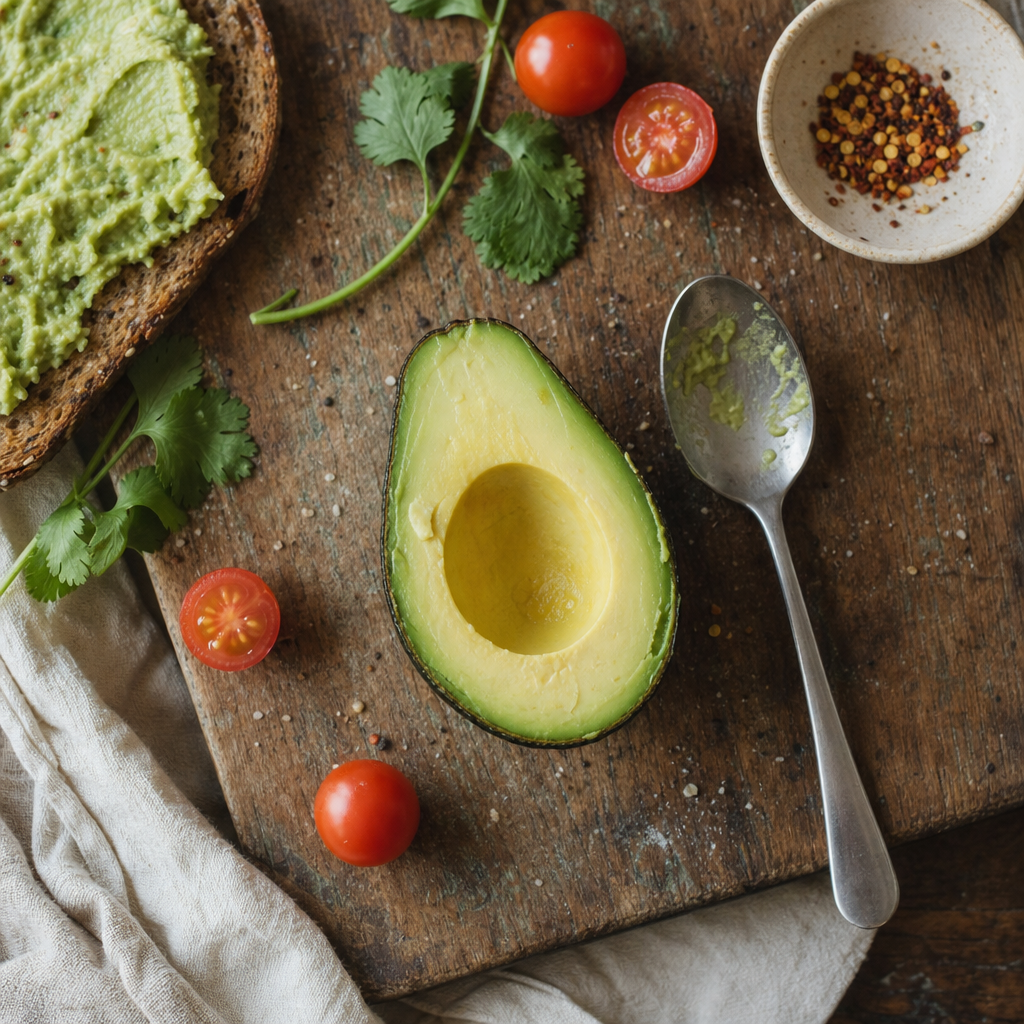
But if you swap the butter on your toast for mashed avocado? Now you’ve replaced saturated fat with monounsaturated fat, added fiber, and kept the calories roughly the same. That’s the kind of swap that moves the needle.
Easy Heart-Healthy Avocado Swaps
Instead of butter on toast → Mashed avocado with a pinch of salt and red pepper flakes
Instead of mayonnaise on a sandwich → Sliced avocado or mashed avocado spread
Instead of cheese on a salad → Avocado slices with a squeeze of lime
Instead of creamy dressing on a grain bowl → Whipped avocado with lemon juice and herbs
Instead of sour cream on tacos → Diced or sliced avocado
Putting the 4% Risk Reduction in Context
Let’s be honest about what a 4% reduction means. It’s modest. For comparison, improving your overall diet quality can lower heart disease risk by 14–29%. Statins typically reduce risk by 25–50% in people who need them.
But here’s the thing: those bigger changes are harder to make and sustain. Adding one avocado a day is a single, simple change. And when you combine it with other small shifts — like walking more, eating more vegetables, or cutting back on processed foods — those 4% increments add up.
As Kristina Petersen, PhD, the senior author of the 2026 study, told Medical News Today: “Four percent is a modest reduction compared with the 14–29% lower heart disease risk that has been associated with improving the entire diet. While improving the overall diet is likely to have a greater impact on heart health, identifying small, feasible dietary changes may help people make sustainable improvements over time.”
Who Should Be Cautious About Eating Avocados Daily?
Avocados are a healthy food for most people, but they’re not right for everyone in large amounts. Here’s who should be mindful:
If you take blood thinners. Avocados contain vitamin K, which can interfere with medications like warfarin. If you’re on a blood thinner, talk to your doctor before making avocado a daily habit.
If you have IBS or digestive sensitivity. Avocados are high in FODMAPs, which can trigger bloating and discomfort in some people with irritable bowel syndrome. A serving of about one-third of an avocado is usually fine, but a whole avocado might be too much.
If you’re watching calories closely. One whole avocado has about 240 calories. That’s fine as part of a balanced diet, but if you’re adding it on top of everything else without swapping anything out, those calories can add up. The swap strategy solves this problem naturally.
Frequently Asked Questions
Q: Do I need to eat a whole avocado every day to get the benefit?
A: The 2026 study used one avocado daily, but other research shows benefits with as little as two servings per week. Half an avocado is a reasonable daily serving.
Q: Does avocado oil work the same way?
A: Avocado oil contains healthy fats but lacks the fiber and other nutrients found in the whole fruit. For heart health, whole avocado is better.
Q: Will eating avocado daily make me gain weight?
A: The HAT Trial found no weight gain from adding one avocado daily for six months. When used as a swap for less healthy fats, it can actually support weight management by keeping you full longer.
Q: Can I get the same benefits from guacamole?
A: Yes, as long as it’s made with whole avocados and not loaded with added salt or sour cream. Homemade guacamole is a great option.
The Bottom Line
The science is clear: avocados are a heart-healthy food, and the latest research on avocado heart health shows they can lower a more nuanced risk marker — LDL particles — even when your standard cholesterol numbers look fine. The benefit is modest but real, especially when you use avocado to replace less healthy fats like butter, mayo, or cheese.
Here’s what I want you to take away: you don’t need to overhaul your entire diet overnight. Start with one swap today. Spread avocado on your morning toast instead of butter. Use it on your sandwich instead of mayo. Add slices to your salad instead of cheese. Small changes, done consistently, add up to real heart health benefits over time.
And if you’re concerned about your heart health — especially if you carry extra weight around your middle — consider asking your doctor about advanced lipid testing. Your LDL cholesterol might be fine, but your LDL particle count could tell a different story. Knowledge is power, and now you know what to ask.