

Healthy Wok Cooking: Why You Only Need 1 Teaspoon of Oil
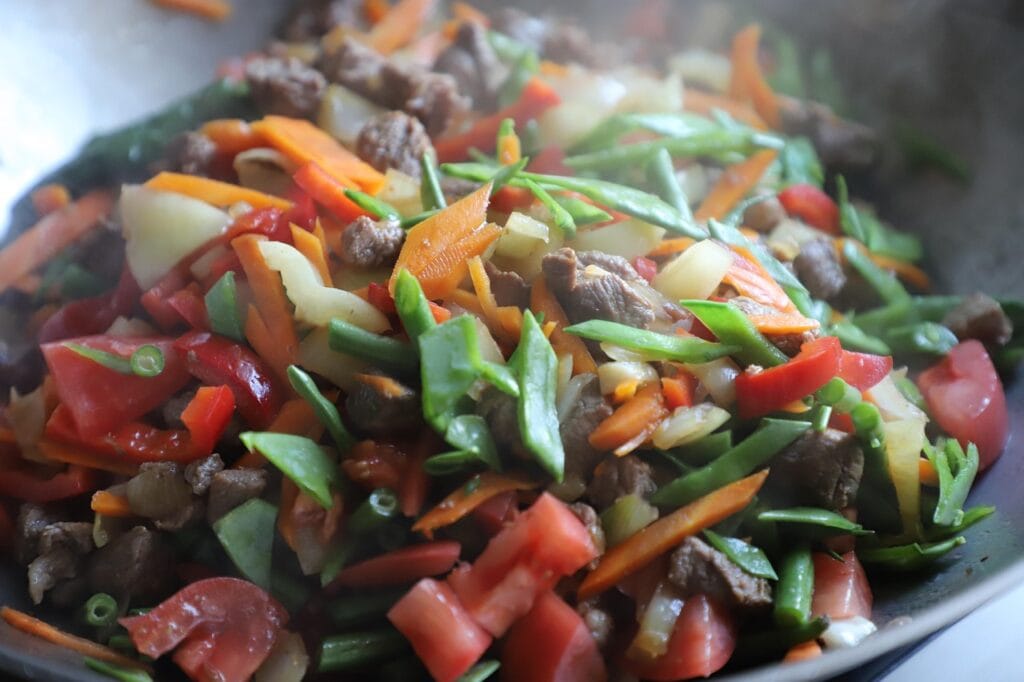
You love stir-fry. But you worry about the oil. That was the question from a Reddit user who wondered: Can I use just a teaspoon of oil in a traditional wok, or does authentic wok cooking require drowning everything in fat? It’s a great question — and the answer may surprise you. Healthy wok cooking isn’t just possible; a properly used wok actually needs less oil than a non-stick pan. Here’s the science, the best oils to use, and a simple method you can try tonight.
Key Takeaways
- A seasoned carbon steel wok creates a natural non-stick surface, so you need only 1–2 teaspoons of oil.
- Monounsaturated oils (avocado, peanut, light olive oil) are best for high heat and heart health.
- Stir-frying preserves more nutrients than boiling — it’s one of the healthiest cooking methods.
- Good ventilation and avoiding oil past its smoke point keeps your kitchen air clean.
Quick Answer: Can You Wok with Just a Teaspoon of Oil?
Yes – Here’s Why
A well-seasoned carbon steel wok at high heat needs 1–2 teaspoons of oil for a stir-fry serving two people. The wok’s shape (hot bottom, cooler sides) and the polymerized oil layer from seasoning create a naturally slick surface. You get that restaurant-style result without drowning your dinner in fat. The British Heart Foundation recommends 1 tablespoon for four people — so a teaspoon for two is right on target.
Why Healthy Wok Cooking Starts with the Right Oil
Not all oils are created equal, especially at the high temperatures a wok reaches (400–500°F). Here’s the thing: many cooking guides still say to just pick an oil with a high smoke point. But the British Heart Foundation explains that smoke point alone is misleading. By the time an oil visibly smokes, it’s already started breaking down. What matters more is the type of fat.
Oils high in monounsaturated fats — like refined olive, avocado, peanut, and rapeseed (canola) — are the most heat-stable while still being heart-healthy. Polyunsaturated oils like sunflower, corn, and soybean have deceptively high smoke points but break down more easily, forming potentially harmful compounds. A 2024 review in Foods confirms that oil composition, not just smoke point, determines stability at high heat (Abrante-Pascual et al., 2024).
Bottom line for your wok: Reach for a monounsaturated-rich oil. It will hold up to the heat and keep your meal heart-friendly.
The Best Oils for Healthy Wok Cooking
So which specific oils should you keep near your wok? Here’s our top picks, based on both heat stability and heart health, drawing from Harvard Health, the BHF, and the American Heart Association.
- Refined avocado oil – smoke point ~520°F, rich in monounsaturated fats. Perfect for very high heat.
- Peanut oil – smoke point ~450°F, neutral flavor, traditional for Asian stir-fries.
- Light/refined olive oil – smoke point ~465°F, not to be confused with extra virgin. Great all-purpose choice.
- Rapeseed (canola) oil – smoke point ~400°F, affordable and heart-healthy.
Oils to skip for cooking: Extra virgin olive oil (save for drizzling), sesame oil (use as finishing oil only), and coconut oil (high in saturated fat, raises LDL cholesterol).
How to Season Your Wok for Healthy Wok Cooking
Here’s a secret most home cooks miss: a seasoned carbon steel wok is naturally non-stick — no Teflon or PFAS chemicals needed. Seasoning builds a thin polymerized oil layer on the surface. That layer is what lets you use minimal oil. Without it, food sticks and you’ll need more fat.
Quick seasoning method:
- Wash your new wok with hot soapy water to remove factory coating.
- Dry it thoroughly over high heat until the metal turns blue-black.
- Add 1 tablespoon of a high-smoke-point oil (like avocado or peanut).
- Use a paper towel to spread the oil over the entire interior surface.
- Heat until the oil just starts to smoke, then wipe it clean with a dry towel.
- Repeat 3–4 times. The surface will darken and become slick.
After seasoning, your wok is ready for healthy wok cooking with just a teaspoon of oil. Each time you cook, the seasoning gets better.
How Much Oil Do You Really Need?
Let’s be honest: you don’t need to measure every drop. But if you’re tracking macros or just trying to cut back, here’s a practical guide. The BHF suggests 1 tablespoon of oil for 4 people. For a single wok meal for two, 1–2 teaspoons is plenty — that’s about 4–9 grams of fat and 40–80 calories.
What if you’re cooking protein like chicken or tofu? You might need an extra ½ teaspoon to prevent sticking. But here’s a trick: cook the protein first in the small amount of oil, remove it, then stir-fry vegetables without adding more oil. The vegetables release moisture that keeps things moving.
And if you want to go even lower? You can stir-fry with a splash of vegetable broth or water instead of oil. But for that authentic wok flavor, a little healthy oil goes a long way.
Is Healthy Wok Cooking Actually Good for You?
Yes — and the science backs it up. Stir-frying in a wok is one of the best cooking methods for preserving nutrients. A 2015 review in Critical Reviews in Food Science and Nutrition found that stir-frying retains glucosinolates (anticancer compounds) in broccoli, cauliflower, and kale better than boiling (Nugrahedi et al., 2015). Another study showed stir-fried cauliflower kept nearly 60% of its antioxidant activity, while boiling caused the greatest losses (Ahmed & Ali, 2013).
Plus, because wok cooking is fast — usually under 10 minutes — vegetables stay crisp and their vitamins are better preserved. These veggie-rich stir-fries also support a healthy gut microbiome — we’ve explored this in our guide to 18 meals that nourish your microbiome. And by using minimal healthy oil, you’re adding good fats that help your body absorb fat-soluble vitamins (A, D, E, K).
Practical Tips for Your First Low-Oil Stir-Fry
Your 5-Step Healthy Wok Cooking Method
- Preheat your wok over high heat until a drop of water sizzles and evaporates instantly.
- Add 1–2 teaspoons of oil and swirl to coat the bottom and lower sides.
- Cook aromatics first (garlic, ginger, chili) for 15–20 seconds.
- Add protein (chicken, tofu, shrimp) and cook until just done, then remove and set aside.
- Stir-fry vegetables — start with dense ones (carrots, broccoli), then add quick-cooking ones (bok choy, bell peppers). Return protein, add sauce, and toss for 1 minute. Serve immediately.
Pro tip: If food starts to stick before you’ve added sauce, deglaze with a splash of water, broth, or low-sodium soy sauce. This creates steam that loosens stuck bits and adds flavor without extra oil.
Frequently Asked Questions
Can I use extra virgin olive oil in a wok?
You can, but it’s not ideal for very high heat. EVOO has a lower smoke point (~375°F) and its delicate flavor compounds burn off. For wok cooking, use refined (light) olive oil instead. However, a 2007 study found EVOO actually preserved nutrients well in stir-fried broccoli (Moreno et al., 2007) — so if you’re cooking at a moderate heat, it’s fine.
Do I need a carbon steel wok, or can I use non-stick?
A carbon steel wok with good seasoning is your best bet for healthy wok cooking. Non-stick pans often have PFAS coatings that can degrade at high heat. Seasoned carbon steel is naturally non-stick and lasts for decades.
Is the smoke from wok cooking harmful?
Prolonged exposure to cooking oil fumes has been linked to health risks in commercial kitchens. For home cooks, the risk is low if you use a range hood or open a window. Avoid heating oil to its smoke point — that’s when compounds break down. Choose oils with high smoke points and cook in a well-ventilated space.
How do I track oil for my daily macros?
One teaspoon of oil = about 4.5g fat and 40 calories. One tablespoon = 14g fat and 120 calories. When you use 1–2 teaspoons in your wok, you’re adding only 40–80 calories to your entire meal. That’s a small price for great flavor and nutrient absorption.
The Bottom Line
So here’s the honest answer to the Reddit question: yes, you can absolutely use just a teaspoon of oil in a traditional wok. In fact, once you season your wok properly, you’ll find that healthy wok cooking uses even less oil than your non-stick pan. The key is choosing the right oil, mastering your heat, and building that seasoning over time.
Your wok isn’t the enemy of a healthy diet — it’s one of your best allies. With a small amount of good oil, fresh vegetables, and lean protein, you can create meals that are fast, flavorful, and genuinely good for you. Now go make that stir-fry!