

White Beans and Rice Skillet: A 20-Minute Healthy Dinner
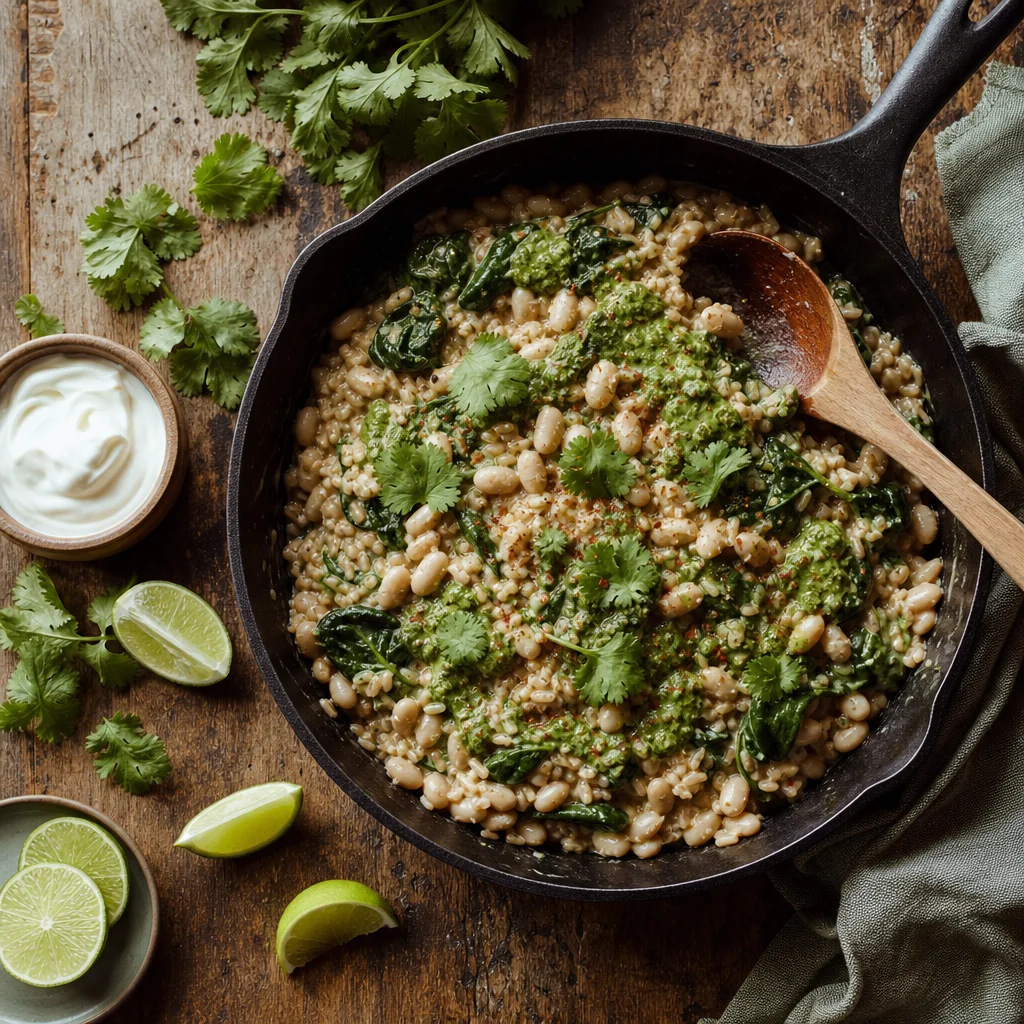
Key Takeaways
- White beans and rice form a simple 20-minute formula: beans + whole grain + creamy, tangy finish.
- Each serving delivers about 11g of plant protein and 7g of fiber — roughly 26% of your daily fiber target.
- Randomized trials show that adding beans to rice flattens the blood sugar response compared with rice alone.
- Skip the cream cheese. Blended beans or Greek yogurt give you the same creamy texture with less saturated fat.
- This is a true budget dinner: an estimated $2 per serving, using mostly pantry staples.
Picture this: It’s 5:45 on a Tuesday. Everyone’s hungry, and the “what’s for dinner?” question is already buzzing. You open the pantry and spot a can of white beans and a pouch of rice. White beans and rice may sound basic — but this humble pairing is a dinner superpower in disguise.
This classic combo is one of the smartest, fastest, and most budget-friendly meals you can make. This creamy 20-minute skillet brings it all together with a bright cilantro-lime finish. We’ll also unpack the science behind the pairing. Then we’ll show you how to make it lighter, cheaper, and completely your own.
Quick Answer: What Is the White Beans and Rice Formula?
It’s simple: one can of white beans, cooked rice, and a creamy, tangy finish. Sauté aromatics. Simmer the beans and rice in broth. Stir in your creamy element off the heat. Wilt in greens, and finish with lime and cilantro. Twenty minutes. One skillet. About $2 per serving.
Build the White Beans and Rice Skillet in 20 Minutes
Here’s the formula that makes this white beans and rice skillet so dependable. It works with what you have on hand. It scales for a crowd. Plus, it cleans up in minutes. Curious about safe pans? What the science says about nonstick pans has answers.
The Creamy Cilantro-Lime Skillet
Adapted from EatingWell’s Creamy Cilantro-Lime White Beans & Rice Skillet.
Serves 4 | 20 minutes
Ingredients:
- 1 tablespoon olive oil
- 1 small yellow onion, chopped
- 1 poblano or green bell pepper, chopped
- 3 garlic cloves, minced
- 1½ cups low-sodium vegetable broth
- 1 can (15 ounces) no-salt-added white beans, rinsed
- 1 pouch (8.8 ounces) microwavable brown rice, cooked
- 4 ounces softened cream cheese — or one of the lighter swaps below
- 1 (5-ounce) package baby spinach
- 1 teaspoon lime zest + 1 tablespoon lime juice
- ¼ cup chopped fresh cilantro
Directions:
- Warm the oil in a large skillet over medium heat. Add the onion and poblano, and let them cook until soft and fragrant, about 6 minutes. Stir in the garlic and cook for about a minute more, just until it smells amazing.
- Pour in the broth and add the rinsed beans plus the cooked rice. Let everything bubble gently until it’s hot all the way through, roughly 4 minutes.
- Pull the skillet off the burner — this keeps your creamy element from curdling. Fold it in now, and stir until the sauce turns smooth and velvety.
- Toss in the spinach, followed by the lime zest, lime juice, and most of the cilantro. Stir just until the greens wilt, about 60 seconds. Taste, add a pinch of salt only if it needs it, then finish with the remaining cilantro.
Per-serving nutrition, adapted from the EatingWell analysis: 320 calories, 11g protein, 7g fiber (26% DV), 579mg sodium (25% DV), 6g saturated fat.
A few formula notes from our kitchen: keep an extra splash of broth nearby to loosen the sauce. Taste before salting — canned beans and broth often bring enough sodium. And if you want it brighter, add more lime juice at the end. It makes a real difference.
Why White Beans and Rice Is a Nutritional Power Move
Now for the fun part — the science. Why does this humble combo deserve a regular spot in your rotation? The answer starts with protein.
It’s a complete protein pairing. White beans and rice each lack certain essential amino acids on their own. Together, they fill each other’s gaps. UCLA Health physicians explain how complementary proteins work. Beans bring the lysine that rice lacks. Rice brings the methionine that beans lack. Eaten together, they add up to a complete protein with all nine essential amino acids.
Here’s a modern twist, though. Experts now say you don’t need to pair them at the same meal. Eating a variety of plant proteins across the day works, too. So consider this combo a delicious convenience, not a rule. It covers your bases in one bowl, and that’s worth a lot on a busy night.
And if you want to get the most from the beans in your pantry, our guide to eating beans for iron absorption pairs perfectly with this dish — the lime finish even helps your body absorb the iron beans provide.
It steadies your blood sugar. This finding surprised even us. A randomized crossover trial in healthy women tested this. Adding just a half-cup of beans to white rice flattened the blood sugar response, compared with rice alone. The bean-and-rice meal delivered 11.2g of protein and 7.5g of fiber. The rice-only meal had 4.8g of protein and less than 1g of fiber.
The effect shows up beyond healthy adults, too. A crossover study in adults with type 2 diabetes found the same. Bean-and-rice meals lowered blood glucose at 90, 120, and 150 minutes after eating, versus rice alone. The takeaway? Even with white rice, beans do serious heavy lifting for steady energy.
It may support heart health. A 2025 meta-analysis of 31 randomized trials looked at non-soy legumes — the family white beans belong to. The finding: these legumes significantly lowered total cholesterol and LDL cholesterol. To be honest, the evidence on legumes preventing heart disease is less certain. But improving cholesterol markers is a solid, science-backed reason to make beans a regular player.
Evidence Check: What We’re Not Claiming
The current evidence on legumes and heart health is honest about its limits. Cohort studies haven’t consistently shown that beans prevent heart disease or diabetes. But randomized trials tell a clearer story. A 2025 meta-analysis of 31 trials, published in Nutrition Reviews, found that beans improve cholesterol. Two bean-and-rice crossover trials showed the same for blood sugar. So here’s our take: beans support a heart-healthy pattern. They’re not a magic bullet, and they don’t replace medical care.
Make It Creamy Without the Cream Cheese
The original skillet leans on cream cheese for its rich texture. That’s delicious. However, it adds about 6g of saturated fat per serving. Here’s the good news: you can get the same luscious texture with lighter options.
Lighter-Cream Swaps That Actually Work
- Blended beans (our favorite): Blend ½ cup of the rinsed beans with ¼ cup of broth until silky. Stir it in off the heat. You get creaminess, zero saturated fat, and even more fiber.
- Greek yogurt: Stir in ½ cup of whole-milk or 2% Greek yogurt at the end, off the heat. It adds tang and a protein boost. Don’t let it boil, or it may curdle.
- Silken tofu: Puree ⅓ cup with a splash of broth. It’s neutral, creamy, and entirely plant-based.
- Half-and-half: Use 2 ounces of cream cheese plus ½ cup of blended beans. All the richness, half the saturated fat.
Which should you choose? For the most natural-leaning, plant-forward option, blended beans are the move. If you’re chasing that classic tangy richness, Greek yogurt comes closest. And if you’re feeding skeptical kids, the half-and-half version may win everyone over.
Five Ways to Make This Skillet Your Own
What I love about the white beans and rice formula is how easy it is to adapt. Here are five ways to shift the flavor, protein, and heat to match your night.
- Add protein. Fold in rotisserie chicken, shrimp, or crispy tofu. Or top each bowl with a fried egg.
- Swap the greens. Use kale or Swiss chard and cook them a few minutes longer. Or stir in arugula at the very end.
- Crank the heat. Add a chopped jalapeño with the onion. Or stir in red pepper flakes, chipotle, or Calabrian chiles.
- Change the beans. Cannellini are prized for their creaminess. Great northern beans are firmer and less creamy. Navy beans are small and soft, with a classic soup-bean feel.
- Change the finish. Try avocado, pickled onions, warm tortillas, or a spoonful of salsa on top.
Sodium-Smart and Budget-Friendly: The Practical Details
Two practical concerns come up with white beans and rice dinners: sodium and cost. Let’s tackle both.
The sodium fix. The cream cheese version of this white beans and rice skillet lands around 579mg of sodium per serving. That’s roughly 25% of your daily target. Small swaps add up fast. Choose no-salt-added beans and rinse them well. Use unsalted or low-sodium broth. Skip the added salt, and lean on lime juice and cilantro for brightness. As a rough estimate, these swaps can trim about 200-300mg of sodium per serving, bringing you closer to the 350mg range.
The budget math. Beans and rice are two of the most affordable foods at the store. This skillet costs an estimated $1.50 to $2.50 per serving. Mayo Clinic notes that one pound of dried beans equals about four cans — at a fraction of the cost. If you go the dried route, an overnight soak and a slow simmer do the job. Cooked beans also freeze well.
A note on digestion. If beans make you feel bloated, you’re not alone. Most Americans don’t get enough fiber, and a sudden increase can cause gas and cramps. The daily fiber guidance from MedlinePlus is clear: add fiber gradually to avoid gas and bloating. Drinking plenty of water alongside can also help. Start with a smaller portion, and rinse your canned beans well. Your gut adjusts over time — and the payoff is worth it.
Frequently Asked Questions
Are canned white beans healthy?
Yes. Canned beans are just cooked beans — convenient and nutritious. Look for no-salt-added or low-sodium varieties, and rinse them well to cut sodium further.
Is the complete protein thing real?
It’s real, with a nuance. White beans and rice fill each other’s amino acid gaps, forming a complete protein together. But experts now say you don’t need to combine them at every meal. Variety across the day works, too.
Can I make this ahead or freeze it?
You can prep the parts ahead — cook the rice, chop the onion and pepper, and rinse the beans. The skillet itself is best fresh, but leftovers keep in the fridge for up to 4 days. Reheat with a splash of broth. If you plan to freeze, skip the creamy finish and add it after reheating. The sauce can separate otherwise.
Brown rice or white rice?
Brown rice adds a bit more fiber and a nuttier texture, which we like. But the blood-sugar research used white rice — and the beans still flattened the curve. Use whichever you have. Quick-cook brown rice or microwavable pouches keep it a true 20-minute dinner.
The Bottom Line
White beans and rice may be the most underrated dinner duo in your kitchen. This 20-minute skillet is proof: it’s creamy, bright, filling, and budget-friendly. The science backs it up, too. You get complementary protein, fiber that supports fullness, and a steadier blood sugar response than rice alone.
So tonight, open that can of beans. Cook up your rice. Pick a creamy finish — cream cheese, blended beans, or Greek yogurt — and make the skillet your own. That’s a healthy dinner win you can repeat all week long.
For more quick, dietitian-approved meals, see our healthy breakfast ideas for busy women.