Healthy Breakfast on the Go: 20 Ideas a Dietitian Recommends for Busy Women
You know the feeling — you’re racing out the door, coffee in hand, and breakfast is the last thing on your mind. But skipping that first meal isn’t as harmless as it seems, especially for women. Finding a truly healthy breakfast on the go can be the difference between a focused, energized morning and a cortisol-spiked, sugar-craving crash by 10 a.m. As a dietitian, I hear this struggle from clients constantly — and I have 20 practical, dietitian-approved ideas ready to change your mornings for good.
Quick Answer: What Makes a Healthy Breakfast on the Go?
A healthy grab-and-go breakfast combines protein, healthy fat, and fiber in a portable format. Aim for at least 15–20g of protein, a source of fiber, and a healthy fat to stabilize blood sugar and sustain energy for 3–4 hours. The best options are either prepared the night before or require zero prep in the morning. Keep reading for 20 ideas that check every one of these boxes.
Why a Healthy Breakfast on the Go Matters More for Women
Let’s start with the science, because this is more than a willpower issue. Breakfast plays a genuinely different role in women’s bodies — and the research backs that up in a significant way.
A study published in the Journal of Nutrition found that women who skipped breakfast showed measurably different hormonal profiles by midday compared to breakfast eaters. Specifically, breakfast skippers had lower satiety hormone activity, meaning their bodies were less effective at signaling fullness — even after eating lunch. That afternoon hunger spiral? It often starts at 7 a.m. when you skip breakfast.
There’s a stress connection too. Research published in Physiology & Behavior found that female breakfast skippers had elevated cortisol levels throughout the day — including higher blood pressure — compared to women who ate a morning meal. Cortisol is your primary stress hormone, and chronically elevated levels are directly linked to belly fat accumulation and poor metabolic health in women.
Furthermore, a comprehensive PMC review on breakfast and metabolic wellness showed that eating breakfast — particularly one rich in protein and fiber — improved glucose and insulin responses throughout the entire day. This is especially relevant for women managing hormonal balance or working toward sustainable weight loss.
The bottom line? A healthy breakfast on the go isn’t about perfection — it’s about protecting your hormones, metabolism, and energy levels from the very first hour of your day.
What Every Healthy Grab-and-Go Breakfast Needs
Before I walk you through the 20 ideas, let’s talk about the formula. Not every “grab-and-go” breakfast is actually healthy — a packaged granola bar loaded with sugar doesn’t count, even if the label says otherwise.
Every truly healthy breakfast on the go should hit three macronutrient targets. First, protein — ideally 15–25 grams. Protein slows gastric emptying, stabilizes blood sugar, and triggers satiety hormones. Second, healthy fat — from sources like nuts, seeds, avocado, or eggs. Fat extends fullness and supports hormone production. Third, fiber — from whole grains, fruit, or vegetables. Fiber feeds your gut microbiome and keeps digestion on track.
Additionally, aim for a breakfast that’s genuinely portable — meaning it doesn’t require a fork, a full kitchen, or ten minutes of active prep at 6:30 a.m. The best options are either fully prepared the night before or involve minimal assembly in the morning. That’s exactly what the 20 ideas below are designed to deliver.
What About Intermittent Fasting?
If you practice intermittent fasting and feel well skipping breakfast, that’s a legitimate dietary approach. However, if you’re frequently tired, craving sugar by mid-morning, or struggling with mood swings before noon, that may signal your body needs fuel earlier. These 20 healthy breakfast on the go ideas work equally well as your “first meal” whenever your eating window opens.
20 Healthy Breakfast on the Go Ideas a Dietitian Recommends
I’ve organized these into four categories based on prep style: make-ahead meal prep options, no-prep grab-and-go staples, quick-assemble ideas (under 5 minutes), and smart smoothie formulas. This way, you can choose based on how much time you have this week.
Make-Ahead Meal Prep Breakfasts (Prep Sunday, Eat All Week)
These are my favorite recommendations for busy women because you do the work once and reap the benefits all week. A single Sunday afternoon session sets you up with five mornings of effortless, nutritious fuel.
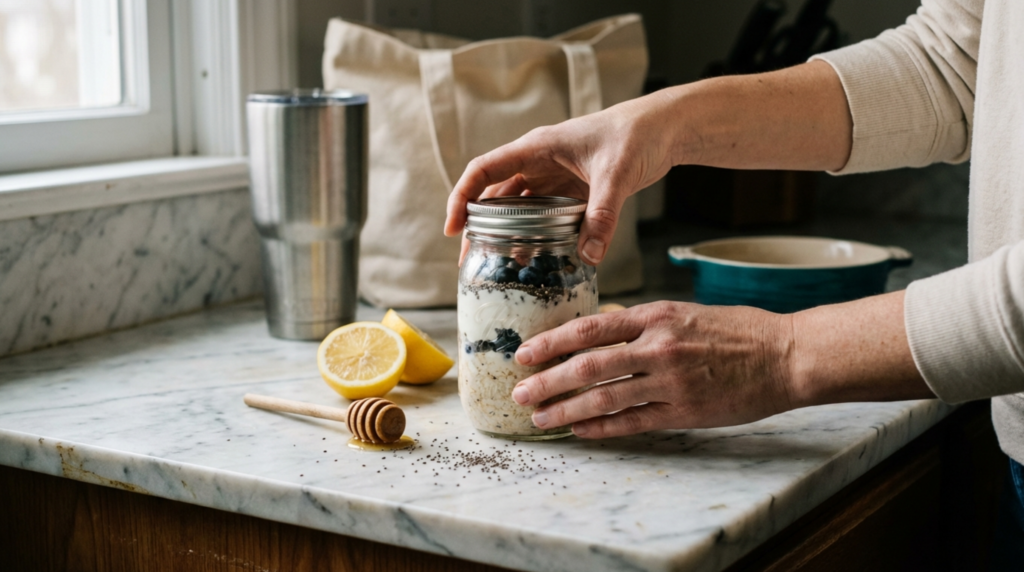
1. Overnight Oats in a Mason Jar
Combine ½ cup rolled oats, ¾ cup Greek yogurt, 1 tbsp chia seeds, a drizzle of honey, and your choice of fruit in a jar. Seal it and refrigerate overnight. In the morning, grab it and go. This delivers roughly 20g of protein, 8g of fiber, and keeps you full for hours. Try adding cinnamon — cinnamon supports blood sugar regulation and tastes amazing in oats.
2. Egg Muffins (Mini Frittatas)
Whisk 6 eggs with diced vegetables, cheese, and turkey sausage. Pour into a muffin tin and bake at 350°F for 20 minutes. These refrigerate for 5 days and freeze beautifully for up to 3 months. Two egg muffins deliver about 14g of protein and are completely portable — no utensils needed.
3. Chia Seed Pudding
Mix 3 tbsp chia seeds with 1 cup unsweetened almond or coconut milk. Add vanilla and a touch of maple syrup. Refrigerate overnight — the seeds absorb the liquid and form a thick, pudding-like texture. Top with berries in the morning. Chia seeds are exceptional for women’s health, providing omega-3 fatty acids, calcium, and 10g of fiber per 2-tablespoon serving. They’re also connected to reduced bloating and improved gut health.
4. Breakfast Burritos (Batch-Frozen)
Scramble eggs with black beans, peppers, and salsa. Wrap in whole-grain tortillas, wrap individually in foil, and freeze. On busy mornings, microwave for 90 seconds and head out the door. Each burrito provides a balanced hit of protein, complex carbohydrates, and fiber that sustains energy well into mid-morning.
5. Baked Oatmeal Bars
These are essentially homemade granola bars — and they’re far more nutritious than anything sold in a wrapper. Mix oats, banana, peanut butter, honey, chia seeds, and dark chocolate chips. Spread in a pan and bake. Cut into bars when cooled. Store in the fridge for a week or freezer for a month. Pair with string cheese for extra protein.
6. Greek Yogurt Parfait Cups
Layer plain full-fat Greek yogurt (not flavored — those are often loaded with added sugar), granola, and fresh or frozen berries in small lidded containers. Prepare five at a time on Sunday. Greek yogurt is a powerhouse for women — a single cup can provide 17–20g of protein alongside probiotics that support gut and hormonal health. For more high-protein snack inspiration, see our heart-healthy snacks for women guide.
7. Healthy Oat Apple Bread (Sliced and Frozen)
If you enjoy baking, make a batch of high-fiber oat bread on the weekend. Slice it, then freeze individual slices separated by parchment paper. In the morning, pop a slice in the toaster and top with nut butter or avocado. Our healthy oat apple bread recipe is moist, naturally sweet, and genuinely easy to make.
No-Prep Grab-and-Go Staples (Zero Effort in the Morning)
Sometimes life is chaotic and even Sunday meal prep didn’t happen. These options require nothing beyond having smart ingredients stocked in your kitchen or bag.
8. Hard-Boiled Eggs + Fruit
Boil a batch of eggs at the start of the week and refrigerate them in their shells. Grab two eggs and a piece of fruit on your way out. Simple, complete, and nutritionally excellent. Two hard-boiled eggs deliver 12g of high-quality protein, B12, choline (essential for brain health), and vitamin D.
9. String Cheese + Whole Grain Crackers + Apple
This combination hits all three macros perfectly — protein from the cheese, complex carbs from crackers, and natural sugar plus fiber from the apple. It requires zero prep, zero cooking, and fits in a bag. It’s one of the most underrated healthy breakfast on the go combinations I recommend to clients.
10. Cottage Cheese Cup + Berries
Single-serve cottage cheese cups are now widely available and pack 14–18g of protein per serving. Pair with a small container of berries for antioxidants and fiber. Cottage cheese is particularly beneficial for women because it’s high in casein protein — a slow-digesting protein that supports muscle maintenance, which becomes increasingly important after 40. It also provides calcium for bone health as women age.
11. Nut Butter Packet + Banana
Single-serve nut butter packets (almond, peanut, or cashew) are calorie-dense, satisfying, and require no refrigeration. Pair with a banana for quick energy and potassium. This combination stabilizes blood sugar better than a banana alone because the fat in nut butter slows glucose absorption significantly.
12. Mixed Nuts + Dried Fruit + Dark Chocolate
Create a small trail mix bag at the start of the week. Choose raw almonds or walnuts (rich in omega-3s), a small amount of dried cranberries or tart cherries, and one or two squares of 70%+ dark chocolate. This delivers healthy fats, natural sugar, and antioxidants. Keep the portion to about a ¼ cup — this is energy-dense food, so a little goes a long way.
13. Protein Bar (Dietitian-Approved)
Most protein bars are glorified candy bars — but a few are genuinely nutritious. Look for bars with: 15g+ protein, under 10g of added sugar, at least 3g of fiber, and a short ingredient list. RXBARs, ALOHA Bars, and KIND Protein bars tend to meet these criteria. Even so, I always encourage clients to use bars as a backup, not a daily habit. Whole foods are almost always superior. If you’re also using protein powder, consider making your own no-bake bars instead.
Quick-Assemble Breakfasts (Under 5 Minutes of Actual Prep)
These fall between fully prepped and completely no-effort — they require about 3–5 minutes of assembly in the morning, which most of us can manage even on hectic days.
14. Avocado Toast on Whole Grain Bread (Wrapped to Go)
Toast one slice of whole-grain bread, mash ½ an avocado with lemon juice and red pepper flakes, and top with two fried or hard-boiled egg whites. Wrap it in foil and walk out the door. This takes under 5 minutes and delivers fiber, monounsaturated fats, and protein in one satisfying package. Avocado is one of the most nutrient-dense whole foods you can eat — our guide to whether guacamole is healthy dives into exactly why avocado benefits women specifically.
15. Whole Grain Pita + Hummus + Veggies
Spread a generous portion of hummus inside a whole-grain pita and stuff it with baby spinach, sliced cucumber, and cherry tomatoes. This provides plant-based protein from chickpeas, complex carbohydrates, and a meaningful dose of vegetables first thing in the morning. It’s portable, mess-free, and genuinely filling. Check out our article on whether pita bread is healthy if you’re curious about the nutritional profile.
16. Microwave Mug Scrambled Eggs
This is one of my most-recommended hacks for clients who want eggs but think they don’t have time. Crack two eggs into a microwave-safe mug, add a splash of milk, and scramble with a fork. Microwave for 45 seconds, stir, then microwave for another 30 seconds. Done. Add cheese, hot sauce, or leftover veggies if you have them. You’ve made a protein-rich breakfast in under 2 minutes.
17. Smoothie (Assembled from Frozen Packs)
The secret to fast smoothies is frozen smoothie packs. On Sunday, portion out smoothie ingredients — frozen banana, spinach, berries, and flaxseed — into individual zip-lock bags and freeze. Each morning, dump one bag into the blender, add Greek yogurt or protein powder and almond milk, blend for 60 seconds, and pour into a travel cup. This method eliminates the “I don’t have time to make a smoothie” excuse entirely. For women managing their weight, consider adding weight loss-friendly ingredients to your smoothie formula.
18. High-Protein Yogurt Bowl
If you have an extra 3 minutes, a high-protein yogurt bowl is one of the most nutrient-dense healthy breakfast on the go options available. Use Skyr or Icelandic-style yogurt (which tends to be even higher in protein than standard Greek yogurt), top with walnuts, pumpkin seeds, and a handful of berries. Eat it at the table or put it in a lidded bowl for the commute. The health benefits of pumpkin seeds for women are substantial — they’re rich in zinc, magnesium, and plant-based omega-3s.
19. Whole Grain English Muffin Sandwich
Toast an English muffin, then stack it with a pre-cooked egg (or egg white patty, which you can batch-cook and freeze), turkey or lean chicken sausage, and a slice of cheese. Wrap tightly in foil. This delivers 20–25g of protein in a portable, satisfying format that feels like a treat without derailing your nutrition. Consider batch-prepping these on Sunday and refrigerating for 3–4 days.
20. Almond Flour Muffins
Almond flour muffins are a legitimately healthy option when made at home — they’re lower in carbohydrates than wheat-based muffins, higher in protein and healthy fat, and naturally gluten-free. Bake a batch on Sunday with blueberries, lemon zest, and a touch of honey. Two muffins make a satisfying, portable breakfast. For baking guidance, see our complete guide to almond flour for women who love to bake.
Healthy Breakfast on the Go: The Hormone-Balancing Angle Women Need to Know
Here’s something most generic breakfast articles don’t address: the composition of your morning meal directly influences your estrogen and progesterone activity throughout the day. This isn’t just relevant for women dealing with hormonal imbalances — it matters for every woman at every life stage.
Estrogen production relies on adequate dietary fat. If you consistently eat a fat-free or very low-fat breakfast, you may be subtly undermining your body’s ability to produce and regulate estrogen. This is particularly relevant for women in their 30s and 40s approaching perimenopause. Including healthy fats at breakfast — from eggs, nuts, avocado, or full-fat dairy — is a simple, evidence-informed way to support hormonal health.
Progesterone is also impacted by blood sugar stability. When you skip breakfast or eat a high-sugar morning meal, blood glucose spikes and crashes, which triggers cortisol. Elevated cortisol competes with progesterone, effectively lowering its functional activity. This is one reason women who chronically skip breakfast or eat sugar-heavy breakfasts often report worsened PMS, increased anxiety, and disrupted sleep. A protein-rich, fiber-forward healthy breakfast on the go directly supports progesterone balance through better blood sugar control. For a deeper dive, read our guide to foods that balance hormones naturally.
Moreover, women in perimenopause and postmenopause should pay particular attention to protein intake at breakfast. Research indicates that muscle protein synthesis — the process of building and maintaining muscle — is highest in the morning. Getting 25–30g of protein at breakfast, therefore, becomes a meaningful strategy for maintaining lean body mass and metabolic rate during midlife. This matters deeply for overcoming metabolic adaptation and weight plateaus that many women experience after 40.
How to Build the Best Healthy Grab-and-Go Breakfast Formula
You don’t always need a recipe — you need a formula. Once you understand the building blocks of a genuinely healthy breakfast on the go, you can mix and match based on what’s in your kitchen each week.
Think of it as three columns. In column one, your protein source: Greek yogurt, eggs (hard-boiled, muffin, or scrambled), cottage cheese, nut butter, or a quality protein bar. In column two, your fiber and complex carbohydrate: oats, whole grain bread, fruit, or vegetables. In column three, a healthy fat: avocado, nuts, seeds, full-fat dairy, or olive oil.
Additionally, think about convenience architecture. Stock your refrigerator with pre-cooked eggs on Sunday. Keep single-serve nut butter packets in your bag. Maintain a fruit bowl on the counter for grab-and-go access. Build your morning routine around the reality that great nutrition should be the path of least resistance — not the effortful exception. These principles also connect to broader healthy habits that support a healthy metabolism from the moment you wake up.
What to Avoid: Breakfasts That Look Healthy But Aren’t
This section might be the most valuable one in the article, because the marketplace is full of products marketed as healthy breakfast options that are essentially dessert in disguise.
Flavored yogurt cups often contain 20–28g of added sugar — more than a glazed donut. Most commercial smoothies (from chain cafés) are blended fruit juice and sugar without meaningful protein or fat. Many “granola bars” and “breakfast bars” are processed oats, corn syrup, and candy-coated coatings with less than 3g of protein. Even branded “protein” cereals often deliver only 7–9g of protein while carrying 30–40g of net carbohydrates per bowl.
The rule I give every client is this: read the nutrition label before the front of the package. Look for added sugar under 8g, protein above 12g, and fiber above 3g as your minimum targets for a genuinely healthy breakfast on the go. Additionally, be wary of the difference between genuinely healthy foods and healthy-seeming junk — the distinction matters more than most women realize.
Is Skipping Breakfast Ever Okay?
Yes — if you practice intermittent fasting intentionally and feel genuinely well, skipping an early meal isn’t inherently harmful. The research shows nuance here: disrupting your habitual breakfast pattern (whether that means adding it or removing it abruptly) appears to affect outcomes more than the pattern itself. The key is intentionality. If you’re skipping breakfast because you’re rushed and then reaching for a vending machine at 10 a.m., that’s a problem. If you’re following a structured eating window that works for your body, that’s a different conversation.
How Much Protein Do I Actually Need at Breakfast?
For most women, 20–30g of protein at breakfast is the evidence-based sweet spot. This range has been shown to maximize satiety hormone response, support muscle protein synthesis, and stabilize blood sugar through the morning. Women over 40 should aim toward the higher end of that range to offset the natural decline in muscle synthesis efficiency that occurs with age. For individualized guidance, see our guide on how much protein women need daily.
Can I Eat Breakfast at My Desk or in the Car?
Absolutely. Mindful eating is ideal, but a nutritious breakfast eaten in the car is infinitely better than skipping it or eating a sugar-heavy alternative at your desk at 10 a.m. Focus on making the food itself as healthy as possible — you can work on the mindful eating piece once the habit of eating breakfast is established.
Are Smoothies a Good Healthy Breakfast on the Go Option?
They can be — but the protein and fiber content is critical. A smoothie made entirely of fruit and juice is essentially liquefied sugar without the satiety benefit. Add Greek yogurt or protein powder (15g+ protein), nut butter or avocado (healthy fat), and spinach or chia seeds (fiber). Done right, a smoothie is one of the most nutrient-dense healthy breakfast on the go options available. Check out our high-protein frozen treat recipes for more inspiration.
What’s the Best Healthy Breakfast on the Go for Weight Loss?
For women focused on weight loss, the ideal breakfast on the go is high in protein (25–30g), moderate in healthy fat, rich in fiber, and low in added sugar. Egg muffins, Greek yogurt parfaits, overnight oats with protein powder, and avocado egg toast are all excellent choices. The metabolic advantage of a protein-forward breakfast — improved satiety hormones, stabilized blood sugar, and greater calorie burn from digestion — is directly relevant to women’s weight loss goals.
The Bottom Line: Make Healthy Breakfast on the Go Your Default
The biggest misconception about healthy eating is that it requires more time. In reality, once your kitchen is stocked with the right ingredients and you’ve built a simple prep routine, a healthy breakfast on the go takes less time than driving through a fast-food window — and the impact on your energy, hormones, and metabolism lasts all day.
Start with one idea from this list. Just one. Make overnight oats tonight. Boil a batch of eggs on Sunday. Freeze a bag of smoothie ingredients. The goal isn’t perfection — it’s building a system that makes healthy the easiest choice you make each morning.
Your mornings are already demanding. Your breakfast should be the one thing that works for you — not against you. These 20 healthy breakfast on the go ideas are designed specifically for women who want real food, real results, and a real life in between.
Related Articles You Might Enjoy
- How Much Protein Do I Need Daily? A Dietitian Answers
- Foods That Balance Hormones Naturally for Women
- Weight Loss for Women Over 40: The Complete Guide
- Anti-Bloat Meal Plan: 7-Day Reset That Actually Works
- 30-Second Morning Ritual to Boost Your Metabolism
- Heart-Healthy Snacks for Women: What a Dietitian Actually Eats