
How to Stop Sugar Cravings Before They Start
You know the feeling. You skipped lunch to get through your to-do list, and by 3 PM, the vending machine chocolate bar has your full attention. That healthy salad you packed? It suddenly looks about as appealing as cardboard. It’s easy to blame willpower. But here’s the thing: the science tells a very different story. Your sugar cravings aren’t a sign that you’re weak. They’re a sign that you’re hungry — and that hunger started hours ago.
New research suggests that one of the most overlooked reasons sugar cravings derail our best intentions is that we treat them as a willpower problem when they’re actually a hunger problem. By the time you’re starving, your brain is already primed to seek out the most rewarding, sweetest thing it can find. The good news? Once you understand this hunger-craving connection, you can short-circuit sugar cravings before they even start.
Key Takeaways
- Sugar cravings are a hunger problem, not a willpower problem — there’s growing evidence that when you’re hungry, your brain becomes more responsive to sweetness itself.
- Protein at breakfast makes a real difference — a 2026 clinical trial found that a high-protein breakfast reduced sweet cravings by 15 to 20 percent.
- Poor sleep directly fuels cravings — sleep deprivation shifts your brain toward wanting high-sugar, high-calorie foods.
- Managing your hunger rhythm throughout the day is more effective than any willpower trick for stopping sugar cravings before they start.
Why Sugar Cravings Happen: The Brain Science
Here’s what’s actually happening when a craving hits. Sugar activates the same reward pathways in your brain — dopamine and endorphin systems — that are involved in pleasure and satisfaction. A 2025 review in Brain and Behavior explains that chronic exposure to high-sugar foods can actually alter these systems, making cravings stronger and harder to resist over time.
But here’s the part most advice misses. There’s growing evidence that hunger amplifies the brain’s response to sweetness itself — meaning cravings may have more to do with how long it’s been since you last ate than with your willpower. When you haven’t eaten in a while, your brain’s reward system goes into high alert for anything sweet. This changes everything about how we think about cravings.
Think of it this way: your brain has a built-in reward system that says “sweet = energy.” When you’re hungry, that system cranks up the volume. It’s not a character flaw. It’s your biology trying to keep you alive.
How Protein Stops Sugar Cravings Before They Start
If cravings are a hunger problem, then the solution starts with keeping hunger in check. And the most effective tool for that? Protein.
A 2026 clinical trial published in Diabetologia found that a dairy-enriched diet with a high-protein breakfast reduced hunger and sweet craving scores by 15 to 20 percent. That’s not a small effect. That’s the difference between feeling in control of your food choices and feeling like you’re fighting a losing battle.
So what does this look like in practice? Aim for about 25 to 35 grams of protein at breakfast. That might mean:
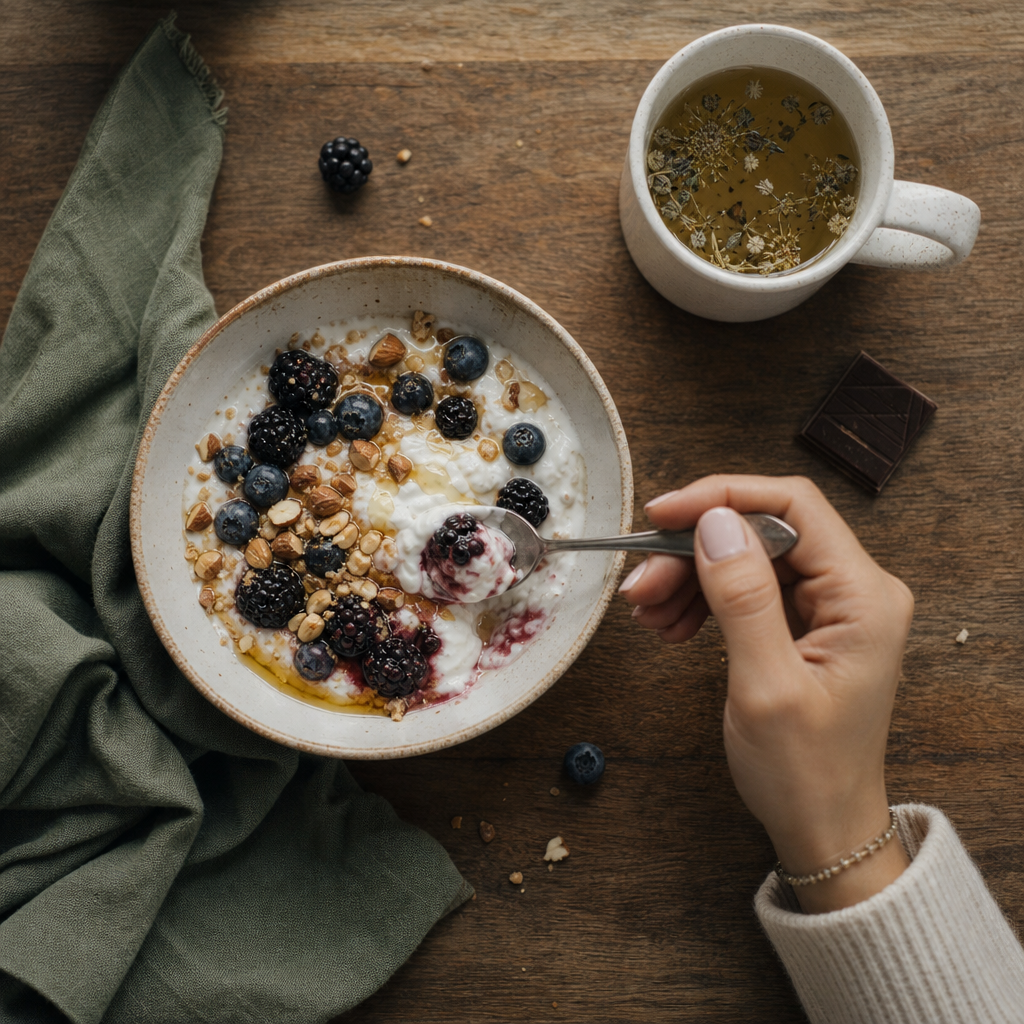
- A Greek yogurt bowl with berries and nuts (around 25g protein)
- Two eggs with black beans and avocado (around 25g protein)
- A protein smoothie with milk, banana, and protein powder (around 30g protein)
- Cottage cheese with fruit and seeds (around 28g protein)
The same principle applies to lunch and dinner. Include a protein source at every meal — chicken, fish, eggs, beans, lentils, tofu, or dairy. This keeps your blood sugar stable and prevents the hunger roller coaster that leads straight to the cookie jar.
The 3 PM Slump Solution
That afternoon sugar craving isn’t random. It’s the result of a blood sugar dip that started hours ago. The fix? A strategic snack around 2:30 to 3 PM that combines protein and fiber. Think: an apple with peanut butter, Greek yogurt with a handful of berries, or a handful of almonds with a piece of fruit. This small intervention can prevent the entire evening craving cascade.
The Sleep-Craving Connection You Can’t Ignore
Here’s something most sugar-craving articles gloss over: your sleep quality directly affects how much you crave sugar the next day. A 2025 systematic review in Nutrition Research Reviews found that sleep deprivation shifts appetite toward energy-dense, high-sugar foods. Sleep-deprived people don’t just feel hungrier — they specifically crave foods that are high in sugar and saturated fat.
The mechanism is clear. Poor sleep raises ghrelin, your body’s main hunger hormone. It also dampens leptin, the hormone that tells you you’re full. The result? You wake up with a brain that’s already primed to seek out quick energy in the form of sugar — which is why simple evening rituals like cinnamon and warm water before bed can be a helpful part of a better sleep routine.
If you’re struggling with sugar cravings, ask yourself honestly: how’s your sleep? Prioritizing seven to eight hours of quality sleep might do more for your cravings than any diet change ever could.
How Meal Timing Affects Your Cravings
You’ve probably heard conflicting advice about meal frequency. Some experts say eat six small meals a day. Others say stick to three. So which is it?
A 2019 study in Diabetes Care, conducted in adults with type 2 diabetes, found that a three-meal pattern with a substantial breakfast reduced hunger and cravings more than eating six smaller meals. But here’s the nuance: the key isn’t the number of meals. It’s making sure you never go so long without eating that your brain goes into emergency mode.
For most people, that means eating every three to five hours. Whether that’s three meals or four or five depends on your lifestyle, your schedule, and what feels sustainable. The principle is simple: prevent extreme hunger, and you prevent the craving spike that follows it.
What About Artificial Sweeteners?
This is where the science gets genuinely confusing. Some sources say artificial sweeteners increase cravings. Others say they don’t. A 2022 review in Nutrients found that most studies show non-nutritive sweeteners do not increase sweetness preference or subsequent energy intake. But the World Health Organization recommends reducing free sugars without using non-sugar sweeteners.
Here’s our take: if artificial sweeteners help you reduce your overall sugar intake without triggering more cravings, they can be a useful transitional tool. But the long-term goal is to gradually reduce your overall preference for sweetness. Over time, dialing back how sweet your foods and drinks are can help recalibrate your palate, making naturally sweet foods like fruit feel more satisfying.
Real Hunger vs. Craving: How to Tell the Difference
One of the most practical skills you can develop is distinguishing between true hunger and a craving. Here’s a simple test: would you eat a piece of fruit right now? If yes, you’re probably genuinely hungry. If only the sugary treat sounds good, it’s likely a craving — and that craving might be driven by boredom, stress, or habit rather than actual hunger.
Another clue: true hunger builds gradually and can be satisfied by a variety of foods. Cravings tend to feel urgent and specific. If you absolutely must have chocolate and nothing else will do, that’s a craving. If you’d happily eat a cheese stick or an apple, you’re probably hungry.
Quick Decision Guide: Is It Hunger or a Craving?
It’s probably hunger if: You’d eat a piece of fruit. The feeling built gradually. You feel it in your stomach. Any food sounds okay.
It’s probably a craving if: Only the specific food will do. The feeling came on suddenly. You feel it as a mental urge, not a stomach sensation. You’re stressed, bored, or tired.
What to do: If it’s hunger, eat a balanced meal or snack with protein and fiber. If it’s a craving, wait 10 minutes, drink water, and see if it passes.
Your Craving-Prevention Day: A Sample Plan
Here’s what a full day of craving-preventive eating might look like. The goal is to keep your blood sugar stable and your hunger in check from morning to night.
Breakfast (7:30 AM): Greek yogurt bowl with berries, almonds, and a drizzle of honey. Protein: ~25g. This sets you up for stable energy through the morning.
Lunch (12:30 PM): Grilled chicken salad with chickpeas, avocado, and a vinaigrette. Protein: ~30g. The fiber from the chickpeas and vegetables helps slow digestion.
Afternoon snack (3:00 PM): Apple slices with peanut butter. Protein + fiber combo that prevents the 3 PM slump craving.
Dinner (7:00 PM): Salmon with roasted sweet potatoes and broccoli. Protein: ~35g. The sweet potatoes satisfy any lingering sweet tooth naturally.
Evening (if needed): A small square of dark chocolate or a cup of herbal tea. Giving yourself permission to enjoy something sweet in moderation prevents the deprivation mindset that often leads to overeating.
How Much Sugar Is Too Much?
For context, the World Health Organization recommends limiting free sugars to less than 10 percent of total daily energy intake — that’s about 50 grams, or roughly 12 teaspoons. For additional health benefits, they suggest reducing to below 5 percent (about 25 grams or 6 teaspoons). The average American adult consumes well above these recommendations.
But here’s the thing: you don’t need to hit these targets overnight. Gradual reduction is more sustainable and more effective for most people. Start by identifying the biggest sources of added sugar in your diet — sugary drinks, desserts, sweetened yogurts, and breakfast cereals — and work on reducing those one at a time.
When to Talk to a Healthcare Provider
If you’ve tried managing your hunger rhythm, prioritizing protein, improving your sleep, and you’re still struggling with intense sugar cravings, it’s worth talking to a healthcare provider. Persistent, overwhelming cravings can sometimes signal an underlying issue like blood sugar dysregulation, insulin resistance, or hormonal imbalances.
Your provider can check your blood sugar and cholesterol levels, and discuss whether medications — including GLP-1 receptor agonists — might be appropriate for your situation. There’s no shame in needing medical support. Cravings are biological, not moral.
The Bottom Line
Sugar cravings aren’t a sign that you lack willpower. They’re a sign that your brain is responding to hunger, poor sleep, or stress in a completely predictable way. The most effective strategy isn’t to fight cravings in the moment — it’s to prevent them from happening in the first place. Eat enough protein, especially at breakfast. Don’t let yourself get overly hungry. Prioritize sleep. And give yourself permission to enjoy sweet things in moderation without guilt. That’s not giving up. That’s working with your biology instead of against it.