

5 Nutrients for Energy That Actually Power Your Day
Key Takeaways
- Caffeine is a band-aid, not fuel. It masks tiredness without fixing the nutrient gaps behind it.
- The 5 nutrients for energy that do the real work: B vitamins, iron, magnesium, vitamin D, and CoQ10.
- Supplements only help when you’re low. If your levels are normal, extra won’t energize you.
- Ask for ferritin, not just hemoglobin. Women with heavy periods carry the highest risk of iron deficiency.
- Food first beats pills. A nutrient-dense plate is the most sustainable fix for low energy.
It’s 3 p.m., and your second coffee has worn off. Your eyes feel heavy. Your brain feels foggy. So you reach for a third cup, telling yourself it will get you through the rest of the day. But caffeine isn’t fuel. The nutrients for energy your body actually needs aren’t in that cup.
Here’s the thing — caffeine is a band-aid. It masks tiredness; it doesn’t fix the reason you’re tired. These five nutrients — B vitamins, iron, magnesium, vitamin D, and CoQ10 — work behind the scenes. They help your body turn food into fuel you can feel. Here’s what the science says about each one, who’s most at risk, and how to fix it — food first.
Quick Answer: Can Nutrients Really Boost Your Energy?
Yes — but only when you’re actually low. The nutrients for energy with the strongest evidence are B vitamins, iron, magnesium, vitamin D, and CoQ10. If your levels are normal, taking more won’t give you a boost. The smartest move? Test first, then fix gaps with food and targeted supplements.
Why Caffeine Isn’t Fuel: The Real Science of Energy
Your body makes energy at the cellular level. Inside nearly every cell are tiny structures called mitochondria — think of them as your cells’ power plants. They convert the food you eat into ATP, the molecule your body uses for fuel.
A 2020 review in the journal Nutrients explains the process in detail. Turning food into ATP depends on a steady supply of vitamins and minerals. When even one is missing, energy production slows down. That’s when fatigue creeps in.
Caffeine, on the other hand, doesn’t create energy at all. It just temporarily masks your brain’s sleepiness signals. That’s why the boost fades fast — and why you reach for another cup a few hours later.
The Caffeine-Iron Trap
Here’s the catch: caffeine can make one energy problem worse. Coffee and tea can reduce how much non-heme iron your body absorbs — the kind found in plants, especially when you drink them with a plant-based meal. That coffee with your iron-rich breakfast may be working against you. Try moving coffee to about an hour after meals instead.
The 5 Nutrients for Energy That Actually Power Your Day
These five nutrients for energy have the strongest science behind them. Each one plays a specific role in keeping your energy engines running.
B Vitamins: The Fuel-Conversion Team
Think of B vitamins as the spark plugs of your metabolism. They help your body break down carbohydrates, fats, and protein into usable energy. The 2020 Nutrients review notes that all the B vitamins except folate play a role in energy production. A shortfall in any one of them can slow the whole system down.
Food sources: eggs, fish, poultry, beans, lentils, leafy greens, and dairy. Plant-based eaters can get B12 from fortified cereals and nutritional yeast. A 2023 randomized trial of B-complex and exercise fatigue found that 28 days of supplementation improved endurance in healthy adults.
The B12 Myth-Bust
Here’s what might surprise you. The NIH’s vitamin B12 fact sheet is direct: taking B12 does not improve endurance in people who have enough. B12 only helps fatigue when you’re genuinely deficient. That’s why it’s in every energy drink — marketing, not mechanism. If your levels are fine, B12 pills won’t energize you.
Iron: The Oxygen-Delivery Workhorse
Iron builds hemoglobin, the protein in red blood cells that carries oxygen to every tissue. Without enough oxygen, your cells can’t make energy efficiently. That’s why low iron can feel like exhaustion.
The NIH’s iron fact sheet lists women with heavy menstrual bleeding as a top risk group. Here’s the key nuance: you can feel fatigued from low iron before you become anemic. A 2026 trial of iron for fatigue in non-anemic women tested iron therapy in women with low ferritin — stored iron. After two months, fatigue dropped significantly.
Food sources: lean red meat, poultry, seafood, beans, lentils, tofu, and leafy greens. Pair plant iron with vitamin C — berries, citrus, bell peppers — to boost absorption.
Magnesium: The Multitasking Mineral
Every molecule of ATP needs magnesium to work. That alone makes magnesium essential for energy. Yet Harvard Health estimates that about 48% of Americans consume less than the recommended amount from food.
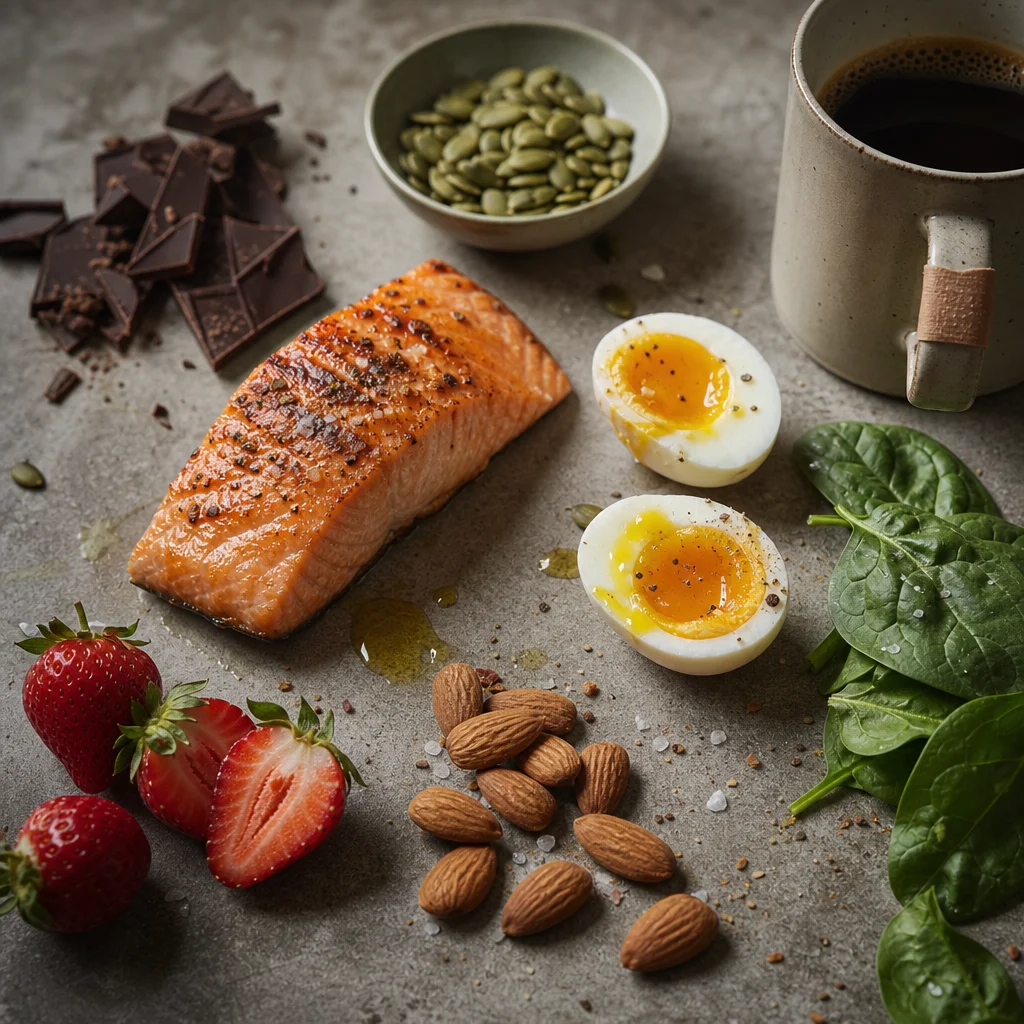
Low magnesium often shows up as fatigue, muscle cramps, or poor sleep. And sleep quality directly affects next-day energy. A 2025 trial of magnesium for sleep quality found that 250 mg of magnesium bisglycinate modestly improved sleep in poor sleepers. Food sources: pumpkin seeds, almonds, cashews, black beans, oats, spinach, and dark chocolate.
Vitamin D: The Sunshine Vitamin
Vitamin D supports muscle function and mood — both of which affect how energetic you feel. Low levels are linked to fatigue. A 2026 randomized trial of vitamin D for fatigue found that six months of vitamin D3 improved fatigue and mood. The study enrolled perimenopausal women with confirmed vitamin D deficiency.
The catch? It only helps if you’re actually low. A simple blood test — 25(OH)D — tells you where you stand. Food sources: salmon, trout, egg yolks, and fortified milk.
CoQ10: The Mitochondrial Helper
CoQ10 is a compound your body makes naturally. It helps your cells produce energy. A 2022 meta-analysis of 13 CoQ10 trials found a modest but real reduction in fatigue. Higher doses and longer use helped more.
CoQ10 is generally well tolerated. However, it can interact with blood thinners like warfarin. Always check with your clinician first.
Nutrients for Energy: Who’s Most at Risk of Running Low
When we talk about nutrients for energy, risk factors matter just as much as food sources. Some of us are more likely to hit a gap than others. Here’s where to look first.
- Heavy periods → iron. Menstrual blood loss drains iron stores month after month. Research on how common undiagnosed iron deficiency is in women found that 54% of one clinic cohort screened high-risk. If your periods are heavy and you’re tired, ask about ferritin.
- Plant-based diet → B12. Animal foods are the only natural source of B12. If you skip meat, fish, eggs, or dairy, you need fortified foods or a supplement.
- High stress → magnesium. When stress leaves you running on empty, magnesium is worth a closer look. Harvard Health estimates about 48% of Americans don’t get enough from food. Low magnesium shows up as fatigue, muscle cramps, or poor sleep. Food-first fix: pumpkin seeds, almonds, spinach, and dark chocolate.
- Limited sun → vitamin D. Cloudy climate? Indoor job? Daily sunscreen? Your vitamin D may be low.
Test, Don’t Guess: The 4 Labs to Ask For
Here’s the rule: test, don’t guess. Checking your nutrients for energy starts with four simple labs. Ask your clinician for:
- CBC (complete blood count) — screens for anemia.
- Ferritin — your body’s stored iron. This matters more than hemoglobin for catching early deficiency.
- Vitamin B12 — plus MMA, a sensitive marker, if your B12 is borderline.
- 25(OH)D — your vitamin D status.
Harvard Health’s guide to vitamins and minerals for energy is clear: if your levels are normal, extra won’t help. Extra iron can even be dangerous. It can build up in your organs. The upper limit for iron is 45 mg a day for adults.
Your Food-First Energy Plate: A Sample Day
A food-first approach to nutrients for energy doesn’t have to be complicated. Here’s a sample day that covers every nutrient we’ve discussed.
- Breakfast: fortified oats with strawberries and almonds — a great pick from our list of blood sugar foods for steady energy all day. The vitamin C in the berries helps your body absorb the iron in the oats.
- Lunch: spinach salad with chickpeas, bell peppers, and a hard-boiled egg. You’re getting iron, vitamin C, and B12 in one bowl.
- Snack: pumpkin seeds with dark chocolate. It’s a magnesium-rich combo — and one of our favorite healthy snack pairings for all-day energy.
- Dinner: salmon with quinoa and steamed broccoli. Salmon brings vitamin D and B12. Quinoa adds magnesium.
- Coffee rule: enjoy your morning cup, but wait about an hour after meals. Your iron absorption will thank you.
Need a portable pick-me-up for busy days? Our 20 energy ball recipes for sustained energy are made for exactly that.
Safety Boundaries: When Supplements Help — and When They Hurt
Let’s be honest about supplements: they’re tools, not treats. Taking more than you need doesn’t give you more energy. It can cause real harm.
Upper Limits to Respect
- Iron: only supplement if labs confirm low ferritin. Upper limit: 45 mg daily. Excess can damage your liver and heart.
- Magnesium: food first. Supplemental upper limit: 350 mg daily. High doses cause diarrhea and nausea.
- Vitamin D: 600-800 IU daily is the RDA. Upper limit: 4,000 IU. More isn’t better.
- B12: no upper limit, but no energy boost if you’re normal.
- CoQ10: generally safe, but talk to your doctor if you take blood thinners.
If you’re pregnant, breastfeeding, or taking medications, talk to your clinician before starting any supplement routine.
Red Flags: When Tiredness Needs a Doctor’s Visit
Most tiredness comes down to sleep, stress, or a shortage of nutrients for energy. But sometimes fatigue signals something more. See a clinician if you notice any of these:
- Fatigue lasting more than two weeks without a clear cause
- Tiredness despite 7-9 hours of sleep
- Shortness of breath, dizziness, or unusual weakness
- Other symptoms like hair loss, cold intolerance, or a racing heart
These can point to thyroid issues, anemia, or other conditions that need medical care — not just supplements.
Frequently Asked Questions
What vitamin gives the most energy?
If you’re deficient, iron and B12 have the strongest evidence for fixing fatigue. However, the honest answer is: it depends on what you’re missing. That’s why labs come first.
Can I get all these nutrients from food?
Yes. The sample day above covers every nutrient we discussed. Supplements are for confirmed gaps, not replacements for a healthy diet.
Does caffeine really reduce iron absorption?
Yes. Coffee and tea can reduce iron absorption, especially from plant foods. Wait about an hour after meals, and pair iron-rich meals with vitamin C.
The Bottom Line
Caffeine will keep masking your tiredness. But the nutrients for energy — B vitamins, iron, magnesium, vitamin D, and CoQ10 — are what actually power your day. Start with food. Then, if you’re still tired, ask for the four labs. And don’t guess with supplements. Your energy is worth a 10-minute conversation with your clinician.