
Women Workout Fueling: New Science for Hydration & Energy
If you’ve ever struggled with mid-workout energy, you’re not alone — and it’s not your fault. The science behind most workout advice was built on data from men. Finally, researchers are studying women directly. A new initiative from the Gatorade Sports Science Institute (GSSI) studied over 500 female athletes. The early results are revealing. Here’s what the latest research shows about women workout fueling and why the old rules don’t apply.
Key Takeaways
- The science gap is real. Only about 6% of sports science research has focused on women. Most advice is built on male bodies.
- Three key gaps found. A new study on 500+ female athletes found 43% start workouts dehydrated. Women replace only 20% of lost sodium (target is 50%). And 57% under-fuel with carbs during longer sessions.
- Fueling affects more than performance. Under-fueling can disrupt hormones, brain function, and recovery. It’s not just about energy during a workout.
- Short workouts don’t need mid-workout fuel. If you exercise for less than 60 minutes and have eaten earlier, you usually don’t need carbs during the session.
- Listen to your sweat. Women lose different electrolytes than men. Watch for signs of heavy or salty sweating. Adjust your plan based on how you feel.
Quick Answer: What’s the Real Deal with Women Workout Fueling?
The old advice was built on male bodies. New research on over 500 female athletes shows that women often start workouts dehydrated (43%), under-replace sodium (20%), and don’t eat enough carbs for longer sessions (57%). The fix isn’t about trying harder — it’s about smarter, female-specific strategies.
The Research Gap: Why Women Workout Fueling Advice Has Been Wrong
Let’s start with a number that puts everything in perspective. Only about 6% of sports science research has focused exclusively on women (according to a 2021 analysis in the Women in Sport and Physical Activity Journal). A 2024 review in the Proceedings of the Nutrition Society confirmed this persistent historical bias toward male participants. The advice we’ve been given on hydration, carbs, and electrolytes was largely built on male bodies.
The reality is that women workout fueling is a relatively new field of study. The gender gap in sports nutrition research means women have unique needs that are still poorly understood. This isn’t a personal failing — it’s a systemic research gap that has left women with generic advice.
What the Largest Female-Specific Study Actually Found
The GSSI “Body of Science” initiative is working to close this gap. Their first study looked at how over 500 female athletes across sports like basketball, soccer, and ice hockey prepare for and fuel their workouts. The results highlight three critical gaps.
Gap 1: Starting in a hydration deficit. Nearly half of the participants (43%) arrived at their workouts already dehydrated. This sets you up for fatigue before you even begin.
Gap 2: Not replacing enough sodium. Even when women drank enough fluid, they only replaced about 20% of the sodium lost through sweat. The GSSI recommends targeting closer to 50%. Not enough sodium can lead to muscle cramps, fatigue, and lower performance.
Gap 3: Under-fueling with carbohydrates. More than half of participants (57%) didn’t eat enough carbs during their workouts. Half ate no carbs at all. For sessions lasting 60 minutes or more, this can really drain your energy.
These numbers show a lack of female-specific data on women workout fueling. While this study has not yet been peer-reviewed, its findings match a growing body of independent research pointing the same way.
Carbohydrates: Your Body’s Preferred Fuel for Exercise
For women workout fueling to work well, think of carbs as high-octane fuel. When you exercise, your body uses stored carbs (glycogen) for quick energy. If you haven’t eaten enough, your tank is running on empty.
So how many carbs do you need? A 2026 review in The Journal of Nutrition updated the carbohydrate guidelines for exercise. Here’s a simple ladder based on your workout length:
- Under 60 minutes: No mid-workout carbs needed, especially if you have had a meal beforehand. Water is fine.
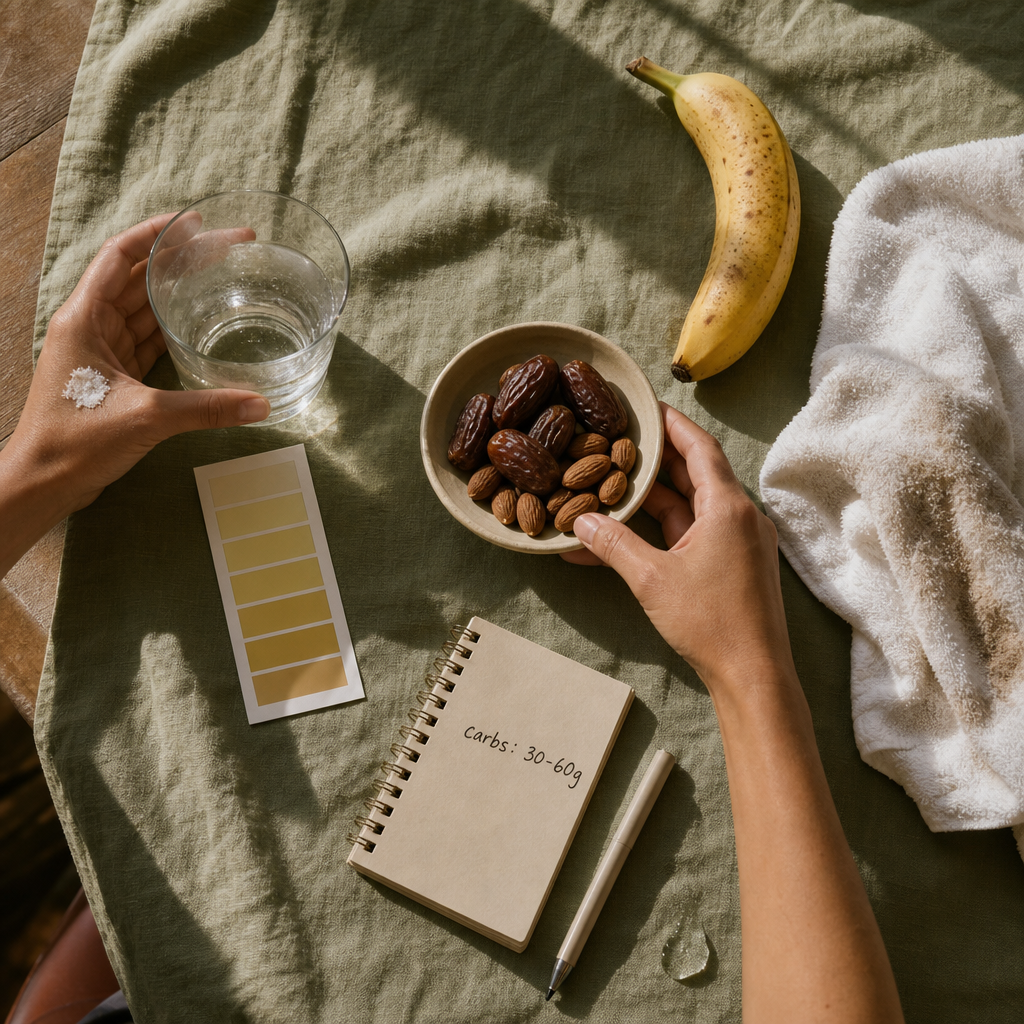
- 60 minutes to 2.5 hours: Aim for 30–60 grams of carbs per hour. This could be a sports drink, a banana, or some dried fruit.
- Over 2.5 hours: You may need up to 90 grams of carbs per hour. Use multiple sources like glucose and fructose for better absorption.
A common concern is: “But I’m exercising to lose weight. Won’t eating carbs sabotage that?” Here’s the thing — under-fueling can backfire. It can raise cortisol, slow your metabolism, and leave you so drained you move less the rest of the day. A small, well-timed carb snack can support your workout without hurting your goals.
The Electrolyte Problem No One Is Talking About
Here’s something most generic advice gets wrong: women are not simply smaller men when it comes to sweat. A 2026 study in Nutrients measured sweat electrolytes in 285 adults. It found that women sweat less overall but lose more potassium, zinc, and copper compared to men. Men lose more sodium.
This means the standard advice — “drink more sports drinks with sodium” — may not tell the whole story. Understanding the sweat electrolyte differences between sexes is key to feeling your best during exercise.
Are you a “salty sweater”? You might be if you notice white streaks on your clothes after a workout, your skin tastes salty, or you get muscle cramps often. If so, paying attention to sodium replacement is extra important for you.
Why Proper Fueling Changes More Than Your Workout
This isn’t just about having a better workout. Chronic under-fueling affects more than your gym session — including your muscular strength. The 2025 Female Athlete Triad Coalition consensus update confirmed that energy deficiency can disrupt menstrual function, bone health, and cognitive performance.
A 2026 study in Medicine and Science in Sports and Exercise found that female runners who under-fueled during a marathon had an 18.8% drop in working memory accuracy. They also showed a 26-30% increase in cognitive effort after the race. The researchers noted under-fueling and cognitive performance in women are closely tied — similar to findings on the Mediterranean diet and cognitive decline.
Energy availability and women’s health are deeply connected. When you don’t eat enough to support your activity level, your body conserves energy. It slows down functions it doesn’t see as essential — including reproductive and bone health. Proper fueling is a cornerstone of overall wellness, not just workout performance.
A Practical Fueling Strategy for Real Women
So how do you apply all of this? Here’s a simple framework you can start using today.
Before a morning workout: You’ve been fasting all night, so your glycogen stores are low. A small, easily digestible carb like a banana or toast with jam 30-60 minutes beforehand can help a lot.
Before an afternoon or evening workout: If you have eaten a balanced lunch 3-4 hours earlier, your energy stores should be fine. If you feel sluggish, a small snack like an apple or a handful of pretzels 30 minutes before can help.
During a workout: For any session under 60 minutes, water is enough. For longer sessions, aim for 30-60g of carbs per hour. This could be a sports drink, a gel, or whole food like dates or raisins. If you are a heavy or salty sweater, consider an electrolyte drink with both sodium and potassium.
After a workout: Focus on recovery. A mix of protein and carbs within 30-60 minutes helps rebuild muscles and refill energy stores. Think chocolate milk, a smoothie, or Greek yogurt with fruit.
The best approach is one that works for your body, your schedule, and your goals. Pay attention to how you feel. If you drag through workouts, feel brain fog, or struggle with recovery, your fueling strategy is the first place to look.
Frequently Asked Questions
Do I need a sports drink every time I exercise?
No. For workouts under 60 minutes, water is perfectly fine. For longer or very intense sessions, a sports drink can help replace fluids, sodium, and carbs. You can also make your own with water, a pinch of salt, and a splash of fruit juice.
What if I’m exercising to lose weight?
Fueling is not the enemy of weight loss. A small pre-workout snack (100-200 calories) can improve your performance, help you burn more calories, and keep you energized the rest of the day. Starving yourself before a workout is not a healthy strategy.
How can I tell if I’m properly hydrated?
The simplest check is your urine color. A light yellow means good hydration. Dark yellow or amber means you need more fluids. Another method is to weigh yourself before and after a sweaty workout — any weight loss is fluid loss that needs to be replaced.
The Bottom Line
You’re not doing anything wrong. The science just wasn’t built for you. Start with hydration, be mindful of salt, and fuel your body for the work you’re asking it to do. The best workout fuel is the one that leaves you feeling strong, energized, and ready to move again tomorrow. Women workout fueling doesn’t have to be complicated — but it does have to be yours.