

19 No Cook Snacks That Keep You Full (No Stove Needed)
Key Takeaways
- Snacking isn’t the problem — snack quality is. Whole-food snacks support energy and appetite control between meals.
- A balanced no-cook snack pairs protein with fiber and a little healthy fat. That combo keeps you satisfied longest.
- The 19 recipes here group into five categories: high-protein, high-fiber, no-added-sugar, freezer-friendly, and kid-pleasing.
- A short pantry staples list turns any hungry moment into a 5-minute snack — no stove needed.
- Follow basic food-safety rules: refrigerate perishable snacks within 2 hours and label make-ahead containers.
It’s 3 p.m. Your energy is dipping. The kitchen feels warm, and the last thing you want to do is cook. That’s exactly when no cook snacks save the day. Made with fruit, yogurt, nuts, beans, and other whole foods, they come together in minutes. No stove. No fuss. Just real nourishment.
Here’s what this guide covers. We’ll look at why no cook snacks deserve a regular spot in your routine. You’ll also get a simple formula for building a balanced one from scratch. Plus: all 19 recipes organized by what they deliver, a pantry list, and storage tips that keep everything fresh.
Quick Answer: What Makes a No-Cook Snack Balanced?
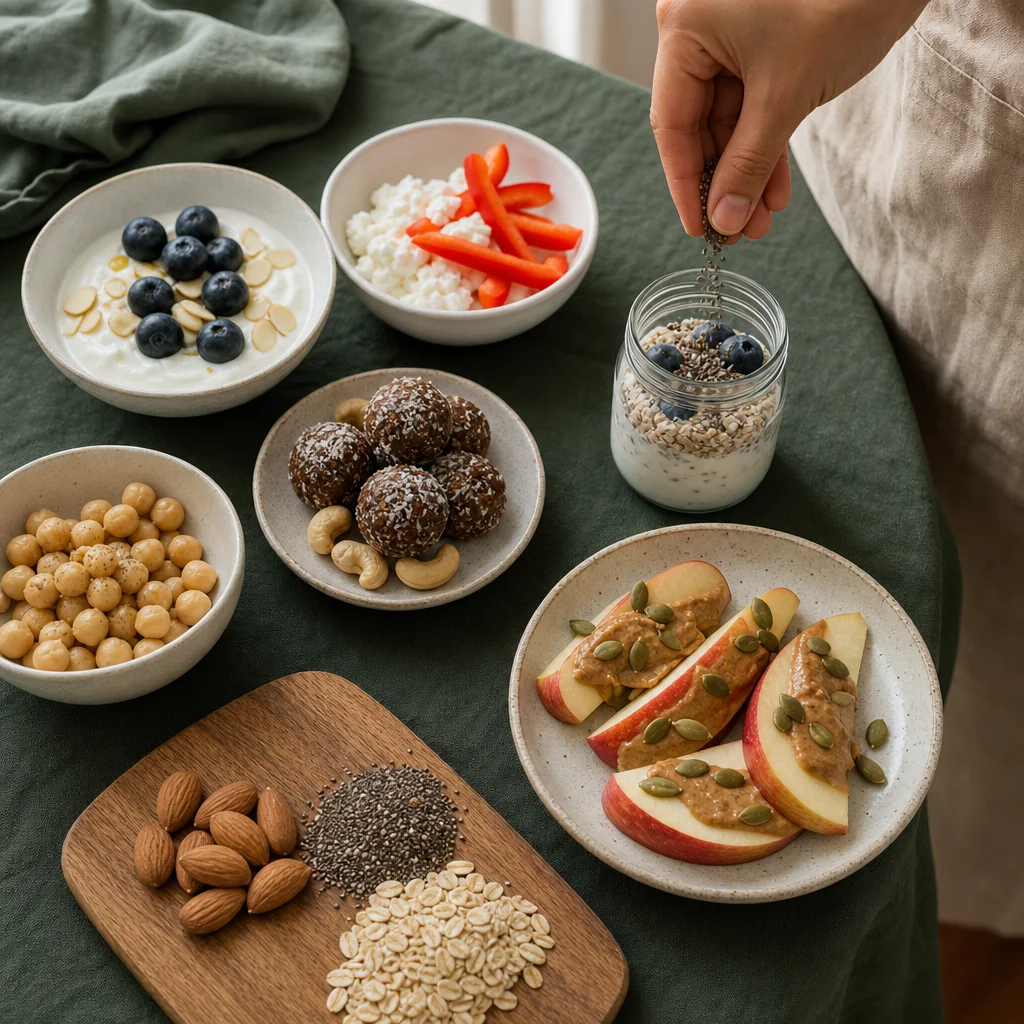
A balanced no-cook snack pairs a protein with fiber and a little healthy fat. Think Greek yogurt with berries and almonds, or apple slices with peanut butter and pumpkin seeds. No stove required.
Why No Cook Snacks Work
Let’s be honest. When hunger hits and time is short, the easiest choice usually wins. Too often, that’s a chip bag or a vending machine bar. But those ultra-processed snacks — foods built with additives and refined ingredients — are a different category from whole-food snacks.
The science here is striking. In a 2019 NIH randomized trial, people ate about 508 more calories per day on an ultra-processed diet. That’s compared with a matched whole-food diet. They also gained about two pounds in two weeks. The opposite happened on the whole-food diet. As the NIH explainer on ultra-processed foods notes, keeping whole-food snacks on hand makes the healthy choice easier.
Now, here’s the good news. Snacking itself isn’t the problem. Research on snack foods, satiety, and weight shows that whole foods high in protein and fiber enhance fullness. Think nuts, yogurt, prunes, and popcorn. So the fix isn’t cutting snacks. It’s upgrading them.
No cook snacks also solve a practical problem. On hot days, they keep the kitchen cool. On busy days, they’re grab-and-go by design. Convenience doesn’t have to mean compromise.
How to Build a Balanced No-Cook Snack
Here’s the thing. You don’t need a recipe to snack well. The best no cook snacks follow one simple formula: protein + fiber + healthy fat. Each piece does a job. Protein keeps you full. Fiber adds volume and steady energy. Healthy fat makes it taste good and last longer.
This matches what experts recommend. MedlinePlus guidance on healthy snacks, from the National Institutes of Health, suggests pairing a protein with a carbohydrate to stay fullest longest. Harvard Health’s smarter snacking tips call it the “combo snack” — more than one macronutrient at each snacking session.
Here are some no cook snacks you can build in five minutes: Greek yogurt with berries and almonds. Cottage cheese with bell pepper strips and avocado. Apple slices with peanut butter and pumpkin seeds. Carrots with hummus and a sprinkle of chia.
The 5-Minute Snack Formula
Pick a protein: Greek yogurt, cottage cheese, nut butter, beans, or string cheese.
Add a fiber source: fruit, vegetables, or whole grains.
Include a little healthy fat: nuts, seeds, or avocado.
Mix and match to make endless no-cook combos.
One portion note: nuts and nut butter are nutritious but dense in calories. MedlinePlus suggests a serving of nuts is about one ounce — roughly 23 almonds. So portion first, then put the bag away. Never eat straight from the container.
A quick word on fiber. It supports fullness and diet quality over time, but it’s not an instant appetite switch. In a small 2015 study on yogurt snacks and later calorie intake, extra fiber didn’t curb appetite at the next meal. Protein did more of the heavy lifting. So lead with protein, and let fiber and fat round things out.
19 No Cook Snacks, Grouped by What They Deliver
We’ve organized all 19 no cook snacks in this guide by what they deliver. That way, you can match the snack to the moment. Need high protein after a workout? Want something freezer-friendly on a hot afternoon? Or kid-pleasing for the lunchbox?
High-Protein Picks
These snacks lean on yogurt, cottage cheese, and nut butter. Reach for them when you need to stay full until dinner. For even more ideas, browse our roundup of 15 high-protein no-sugar snacks for summer.
- Everything Bagel Cottage Cheese Snack Jar: cottage cheese topped with crunchy bell pepper strips and crispy chickpeas — protein and calcium, plus plant fiber.
- Banana-Peanut Butter Yogurt Parfait: ripe banana adds natural sweetness. The classic duo delivers protein and healthy fats.
- Cottage Cheese-Berry Bowl: thawed berries with a hint of vanilla. Stir cereal in just before eating so it stays crunchy.
- Raspberry Yogurt Cereal Bowl: yogurt stands in for milk. Keep the cereal separate until you’re ready to eat.
High-Fiber Bites
Dates, oats, beans, and seeds do double duty here. They add fiber and natural sweetness at the same time. Want more? These high-fiber snacks for better blood sugar are a great next stop.
- Key Lime Pie Energy Balls: dates, cashews, coconut, and fresh lime juice. A zesty grab-and-go bite.
- Chai Energy Balls: warm spices like cinnamon, cardamom, and ginger over a fiber-rich date-and-oat base.
- Trail Mix Energy Bites: black beans act as the binder, adding plant protein and fiber. Dates and apricots bring the sweetness.
- White Bean-Stuffed Mini Bell Peppers: a creamy bean filling inside crisp peppers, topped with crunchy chickpeas.
No-Added-Sugar Options
Sweetness comes from fruit and dates here — not the sugar bowl. If you love berry-forward bites, our 19 berry breakfast recipes use the same fruit-first approach.
- Lemon-Raspberry Frozen Yogurt Bites: tangy Greek yogurt coats fresh raspberries. Crushed freeze-dried raspberries add color and flavor.
- Lemon-Strawberry Frozen Yogurt Bites: the same idea with juicy strawberries — no added sugar.
- Chocolate-Strawberry Nice Cream: four ingredients, dairy-free, and sweetened by ripe banana.
- Cottage Cheese-Berry Bowl: also earns a spot here.
Freezer-Friendly Favorites
Make a batch once, and you have a cold snack ready whenever the craving hits.
- Apple Crumble Yogurt Bark: applesauce swirl, warming spices, and a granola crunch.
- Strawberry-Chocolate Greek Yogurt Bark: frozen yogurt you break into chunks, just like chocolate bark.
- Vegan Chocolate-Dipped Frozen Banana Bites: banana, peanut butter, and vegan chocolate. Keep a stash for sweet cravings.
- Cranberry-Cashew Energy Cups: dried cranberries, cashew butter, and dark chocolate. A solid afternoon pick-me-up.
Kid-Pleasing (and Kid-Sized)
These hold up in a lunchbox and go down easy with little ones.
- Chocolate-Peanut Butter Energy Bars: dates sweeten the mix. Oats and peanuts add chew.
- Blueberry-Cashew Oat Bars: they hold together well for packing and stashing in a bag.
- Blueberry-Lemon Energy Balls: walnuts add plant-based protein and steady energy.
- High-Fiber Guacamole Snack Jar: bell pepper strips, cheese, and guacamole stacked in a jar. Swap pepper Jack for cheddar to cut the heat.
Need a dairy-free option? Use coconut or soy yogurt in place of Greek yogurt. Lean on beans, nut butter, and seeds for protein. Several of these snacks are already dairy-free, like the nice cream and frozen banana bites.
Stock Your No-Cook Snack Pantry
A well-stocked kitchen is the secret to consistent, healthy snacking. The NIH notes that when good snacks are on hand, you’re more likely to choose them. So let’s make sure yours is ready. For 15 more science-backed options to keep on hand, see our guide to heart healthy snacks.
The No-Cook Snack Staples List
Pantry: pitted dates, dried fruit (apricots, blueberries, cranberries), rolled oats, nuts (almonds, cashews, walnuts), nut or seed butter, seeds (chia, pumpkin, flax), canned beans (chickpeas, white beans, black beans), dark chocolate chips, unsweetened shredded coconut, whole-grain crackers and cereal.
Fridge: Greek yogurt, cottage cheese, kefir, fresh fruit (berries, bananas, apples), crunchy vegetables (bell peppers, carrots, snap peas, celery), hummus or guacamole.
With these staples, no cook snacks come together in minutes. Keep the healthy items at eye level. Pre-portion snacks into small containers so the easy choice is the healthy one.
Make-Ahead, Storage, and Food-Safety Tips
No cook snacks are perfect for batch prep. Set aside an hour on the weekend. You can fill the fridge and freezer with grab-and-go options for the week.
Food-Safety Rules That Matter
Follow the USDA refrigeration and food safety guidance. Perishable snacks — yogurt, cottage cheese, bean dips, cut fruit — should not sit at room temperature for more than 2 hours. When it’s above 90°F, that window shrinks to 1 hour. Keep the fridge at or below 40°F and the freezer at 0°F or below. USDA gives homemade protein-based salads (egg, chicken, tuna, ham, macaroni) a 3- to 5-day refrigerated shelf life. Use that as a conservative rule of thumb for yogurt parfaits and cottage cheese jars too — label them with the date.
A few practical rules of thumb. Pack ice packs for anything dairy on the go. Keep granola and crunchy toppings separate until serving. Energy balls and bars keep well in the fridge in a sealed container. Just write the date on the lid.
No-Cook Snack Questions, Answered
Is snacking bad for me?
No — and that’s worth repeating. Snacks supply close to one-third of daily energy for many people. However, research shows that snack quality — not snacking itself — is what matters. Whole foods high in protein, fiber, and whole grains support appetite control.
How many energy balls should I eat?
Portion them like nuts — a small handful. Energy balls are energy-dense because dates, nuts, and nut butter are concentrated. So portion first, then put the batch away.
What if I don’t eat dairy?
Swap Greek yogurt for coconut or soy yogurt. Use nut or seed butter for protein. Or reach for bean-based snacks like the trail mix energy bites and white bean-stuffed peppers. Several of the 19 snacks are naturally dairy-free.
Are no cook snacks as healthy as cooked ones?
Yes — healthy comes from the ingredients, not the heat. Fruit, vegetables, yogurt, nuts, and beans deliver their nutrients whether or not a stove is involved. Cooking can make some foods easier to digest, but it’s not a nutrition requirement.
The Bottom Line
Here’s the takeaway. You don’t need a stove to snack well. Keep a few staples on hand. Follow the protein + fiber + healthy fat formula. You’ll have a satisfying snack in minutes, and your kitchen stays cool on the hottest days.
Here’s one way to start. Pick two snacks from the list. Add their staples to your next grocery run. Then let the high-protein group carry you through a busy week.
Which stove-free snack will you try first? Start with one from the freezer-friendly group. You’ll thank yourself on the next hot afternoon.