
3 Lunch Templates to Lower LDL Cholesterol
You already know that lunch matters for your energy, your focus, and your afternoon mood. But what if your midday meal could also help you lower LDL cholesterol? That’s the kind of win-win that makes healthy eating feel less like a chore and more like a smart choice you can feel good about. Here’s the thing — you don’t need a complicated diet plan or a list of forbidden foods. You just need a simple formula that works.
Key Takeaways
- Dietary cholesterol is not the enemy. What actually raises your LDL is saturated fat and a lack of fiber — not the cholesterol in eggs or shrimp.
- Soluble fiber is your most powerful tool. Foods like beans, oats, barley, and apples bind to cholesterol in your gut and help flush it out.
- Heart-healthy fats help raise your HDL. Olive oil, avocado, nuts, and fatty fish improve your cholesterol profile in multiple ways.
- Build any lunch around three pillars: fiber-rich base + unsaturated fat + lean or plant protein. That’s the formula.
- Small swaps add up. Replacing butter with olive oil or adding beans to your salad can meaningfully lower your numbers over time.
The Truth About Dietary Cholesterol and Your Blood Levels
Let’s clear something up right away. For decades, we were told that eating cholesterol-rich foods like eggs and shrimp would raise our blood cholesterol. But here’s what the science actually says: for most people, dietary cholesterol has very little impact on blood cholesterol levels. The American Heart Association now emphasizes that the real culprits are saturated fat and trans fat, not the cholesterol in your food.
Your body actually produces most of its own cholesterol. When you eat more dietary cholesterol, your liver simply makes less to compensate. So what should you actually focus on? Two things: fiber and fat quality. These are the levers that truly move your numbers.
Quick Answer: What Actually Matters to Lower LDL Cholesterol?
To lower LDL cholesterol through your diet, focus on three things: soluble fiber (beans, oats, barley, apples, psyllium), unsaturated fats (olive oil, avocado, nuts, seeds, fatty fish), and keeping saturated fat low (limit butter, cheese, fatty meats, coconut oil, and ultra-processed foods). That’s it. No need to fear eggs or shrimp.
Pillar 1: Soluble Fiber — Your Best Friend for Lower LDL Cholesterol
If you only change one thing about your lunch, make it this: add more soluble fiber. This type of fiber dissolves in water and forms a gel-like substance in your digestive tract. That gel binds to cholesterol-rich bile acids and helps carry them out of your body before they can be reabsorbed. Your liver then has to pull more cholesterol from your blood to make new bile acids — and your LDL levels drop as a result.
A 2023 meta-analysis in Advances in Nutrition found that each 5-gram increase in daily soluble fiber reduced LDL by about 5.6 mg/dL. That’s a meaningful change from a single dietary tweak.
Where do you find it? Think beans, lentils, chickpeas, oats, barley, psyllium husk, apples, citrus fruits, carrots, and Brussels sprouts. A single cup of cooked black beans gives you about 6 grams of fiber — more than half of what you need for the day.
Pillar 2: Heart-Healthy Unsaturated Fats That Help Your Numbers
Here’s a common mistake: people think lowering cholesterol means eating a low-fat diet. But the type of fat matters far more than the total amount. Unsaturated fats — especially monounsaturated and polyunsaturated fats — can actually help improve your cholesterol profile.
Olive oil is a star player here. A 2023 review in Nutrients found that extra-virgin olive oil was linked to lower LDL and higher protective HDL levels. Avocado, nuts, seeds, and fatty fish like salmon and sardines offer similar benefits.
The key is substitution, not addition. Swap butter for olive oil on your vegetables. Replace processed snacks with a handful of almonds. Use avocado instead of cheese on your sandwich. These small swaps shift your fat profile without adding calories.
Pillar 3: Keeping Saturated Fat Low Without Feeling Deprived
Saturated fat is the main dietary driver of high LDL cholesterol. The American Heart Association recommends keeping saturated fat to no more than 6% of your total daily calories. For someone eating 2,000 calories a day, that’s about 13 grams — roughly the amount in a single fast-food burger.
Common sources include butter, cheese, cream, coconut oil, palm oil, fatty cuts of red meat, and processed meats like bacon and sausage. But here’s the good news: you don’t have to eliminate these entirely. You just need to be strategic. Use a small amount of cheese for flavor rather than as the main ingredient. Choose lean cuts of meat. Cook with olive oil instead of butter.
And remember — the occasional indulgence is fine. What matters is your overall pattern, not any single meal.
3 Easy Lunch Templates That Follow the Formula
Now let’s put it all together. Here are three lunch templates that hit all three pillars. Use these as starting points and swap in whatever you have on hand.
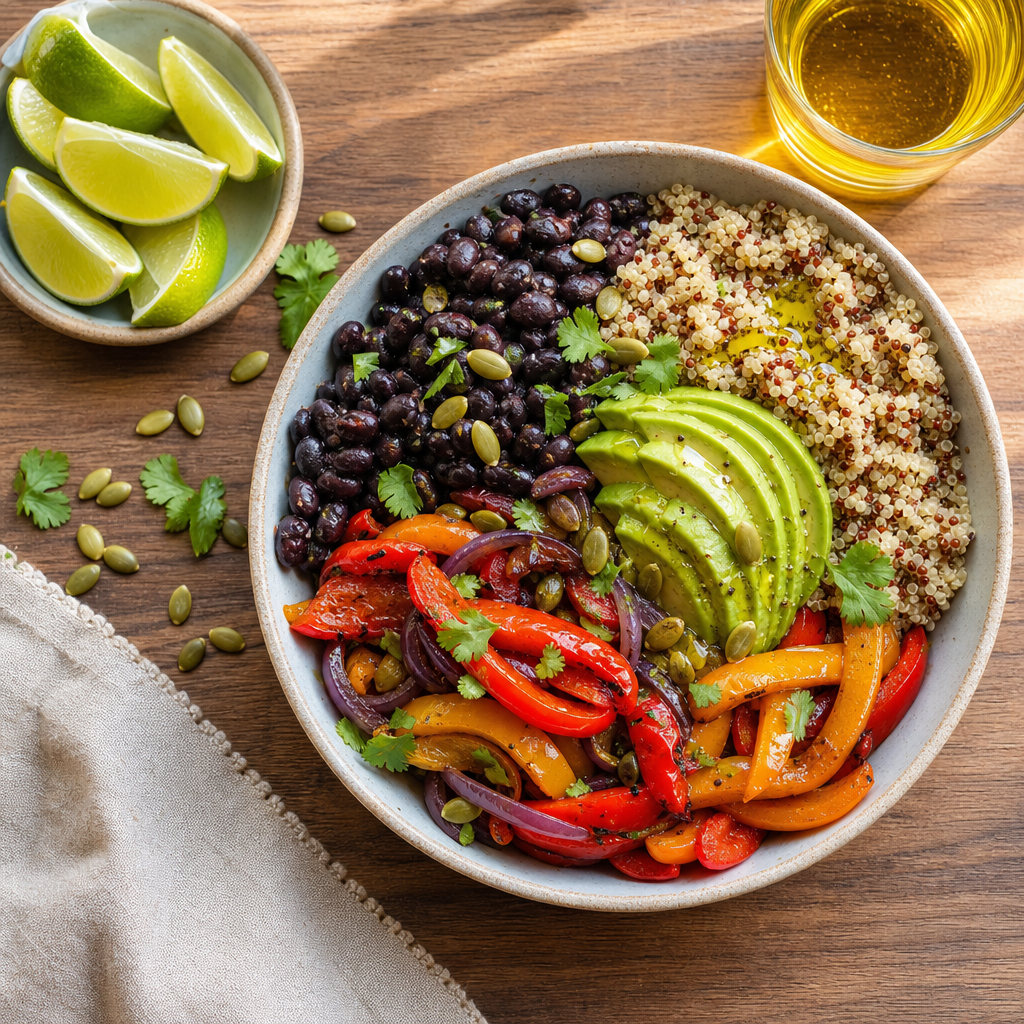
Template 1: The Bean & Grain Bowl
Base: 1 cup cooked quinoa or farro (fiber + whole grains)
Protein: ½ cup black beans or chickpeas (soluble fiber)
Veggies: Roasted bell peppers, onions, and zucchini
Fat: ¼ avocado + 1 tablespoon olive oil vinaigrette
Optional: Sprinkle of pumpkin seeds for extra fiber
Why it works: This bowl delivers about 15 grams of fiber and less than 2 grams of saturated fat. The beans provide soluble fiber that actively binds cholesterol, while the avocado and olive oil offer heart-healthy monounsaturated fats.
Template 2: The Salmon & Greens Plate
Base: 3 cups mixed greens + ½ cup cooked barley or lentils
Protein: 4-5 ounces grilled or canned salmon (omega-3s)
Veggies: Cherry tomatoes, cucumber, shredded carrots
Fat: 2 tablespoons tahini-lemon dressing or olive oil
Optional: 1 tablespoon flaxseeds for extra soluble fiber
Why it works: Salmon is rich in omega-3 fatty acids, which the NIH notes can help lower triglycerides. While the effect on LDL is mixed — some studies show a small increase — omega-3s are beneficial for overall heart health. The barley or lentils add soluble fiber, and the greens provide additional fiber with virtually no saturated fat.
Template 3: The Lentil Soup with a Side
Main: 1.5 cups lentil or split pea soup (homemade or low-sodium canned)
Side: Small whole-grain roll or ½ cup cooked quinoa
Topping: 1 tablespoon olive oil drizzled on top
Optional: Side salad with lemon vinaigrette
Why it works: Lentils are one of the richest sources of soluble fiber — a single cup of cooked lentils provides about 15 grams of fiber. The olive oil adds heart-healthy fat, and the whole grain adds even more fiber. This is one of the simplest, most affordable cholesterol-friendly lunches you can make.
Recipe Spotlight: Black Bean Fajita Skillet
One of our favorite examples of this formula in action is a Black Bean Fajita Skillet. It’s a one-pan meal that brings together all three pillars: black beans for soluble fiber, bell peppers and onions for veggies, avocado for healthy fat, and olive oil for cooking. It’s low in saturated fat (just 1 gram per serving) and delivers about 17 grams of fiber — more than half your daily needs in a single meal.
To make it, sauté sliced bell peppers and onions in olive oil until tender. Add rinsed black beans, cumin, chili powder, and a splash of lime juice. Cook until heated through. Serve with sliced avocado and a sprinkle of fresh cilantro. That’s it — a heart-healthy lunch in under 20 minutes.
What to Look for When Building Your Own Cholesterol-Friendly Lunch
Here’s a quick checklist you can use to evaluate any lunch. Aim to check at least three of these boxes:
- At least 6 grams of fiber. Beans, lentils, oats, barley, and vegetables are your go-tos.
- Less than 4 grams of saturated fat. Check labels on dressings, cheeses, and prepared foods.
- A source of unsaturated fat. Olive oil, avocado, nuts, seeds, or fatty fish.
- A vegetable or fruit. Aim for at least one serving of produce.
- A whole grain or legume. These provide the fiber that actively lowers LDL.
Frequently Asked Questions
Can I still eat eggs if I have high cholesterol?
Yes. For most people, dietary cholesterol in eggs has minimal impact on blood cholesterol. The American Heart Association says one egg per day is fine as part of a heart-healthy diet. What matters more is what you eat with the egg — skip the bacon and buttered toast, and pair it with vegetables and whole grains instead.
How long does it take to see results from dietary changes?
Most people see a meaningful drop in LDL cholesterol within 4 to 8 weeks of consistent dietary changes. The more fiber you add and the more saturated fat you replace with unsaturated fat, the bigger the change.
Do I need to avoid all saturated fat?
No. The goal is to keep saturated fat below 6% of your total calories, not to eliminate it entirely. A small amount of cheese on your salad or a bit of butter on your vegetables is fine. Focus on the overall pattern, not perfection.
The Bottom Line
You don’t need a complicated diet or a long list of forbidden foods to lower LDL cholesterol. The science is clear: focus on soluble fiber, choose unsaturated fats over saturated ones, and build your meals around whole foods. Lunch is the perfect place to start — it’s a meal you eat every day, and small changes here add up fast. Pairing your lunch choices with smart evening habits can make your cholesterol-lowering efforts even more effective.
Try one of the templates above this week. Notice how you feel. And remember — every fiber-rich, heart-healthy lunch is a step toward better numbers and a healthier heart.