

Freezer Breakfast Burritos: How to Make Them Healthy
Key Takeaways
- Freezer breakfast burritos turn one batch-cooking session into weeks of grab-and-go mornings.
- A well-built burrito can deliver roughly 20 to 25 grams of protein — enough to help take the edge off mid-morning hunger.
- At 0°F, frozen burritos stay safe far longer than you’ll keep them. The 2-to-3-month limit is about texture and taste, not safety.
- Choose 100% whole-grain tortillas and add beans or greens to boost fiber and nutrients.
Picture this: It’s 7:15 a.m. You overslept, the coffee isn’t ready, and there’s no time to cook. Wouldn’t it feel amazing to pull a warm, protein-packed breakfast out of your freezer? Freezer breakfast burritos make that possible.
I’m not talking about the pale, soggy frozen burritos from the convenience store. I mean the kind you batch once on a Sunday, wrap up tightly, and reheat in minutes on busy weekdays. Done right, they’re one of the smartest healthy-breakfast shortcuts you can stock.
Quick Answer: Are Freezer Breakfast Burritos Healthy?
Yes — when you build them well. Start with a whole-grain tortilla, add eggs or beans for protein, pile in cooked vegetables, and keep the cheese and salty meats modest. A homemade burrito like that beats most drive-thru or grab-and-go breakfasts on both nutrition and cost.
Why Freezer Breakfast Burritos Work
Let’s be honest: the hardest part of breakfast isn’t cooking. It’s deciding what to eat when you’re half awake. A batch of freezer breakfast burritos removes that decision completely.
Here’s why they earn their spot in my meal-prep rotation:
- They save real time. One cooking session can make six to twelve burritos. That’s up to two weeks of breakfasts handled.
- They’re portable. Need to eat in the car, at your desk, or between school drop-offs? No plate or fork required.
- They fight breakfast boredom. Fill with different beans, vegetables, and spices, and each batch can taste completely different.
- They’re budget-friendly. Homemade burritos cost a fraction of what you’d pay at a café — and you control the ingredients.
The best part? You don’t need to eat the same thing every day. Freeze one batch and it’s there when you need it. That flexibility is a gift on chaotic mornings.
Protein at Breakfast: What the Science Actually Shows
So why all the fuss about protein in the morning? The science is genuinely interesting — especially for anyone who hits a mid-morning energy slump.
A 2020 meta-analysis of 49 short-term trials found that protein reduced hunger and increased fullness in healthy adults. It also lowered ghrelin — that’s the “I’m hungry” hormone — and raised hormones linked to feeling satisfied. Those effects were strongest in the hours right after the meal.
A 2019 breakfast study from the Leidy research group tells an even more practical story. In that crossover trial, young women with higher body weight ate either a normal-protein breakfast (13 grams) or a higher-protein one (35 grams). The higher-protein breakfast produced greater fullness across an entire eight-hour day — even among women who usually skipped breakfast.
Now, here’s the honest part. Long-term studies on protein and appetite are less clear-cut. So I wouldn’t claim one burrito will magically suppress your appetite all day. But targeting roughly 20 to 30 grams of protein at breakfast is a reasonable, evidence-informed goal. And the NIH notes that a single large egg provides about 7 grams of high-quality protein. Two eggs get you halfway there before you even add beans or cheese.
The Base Recipe: Freezer Breakfast Burritos Done Right
There’s a reason freezer breakfast burritos have become a meal-prep favorite. They’re forgiving, flexible, and reheat beautifully when you follow a few simple rules.
The TEOHL Base Formula (Makes 6)
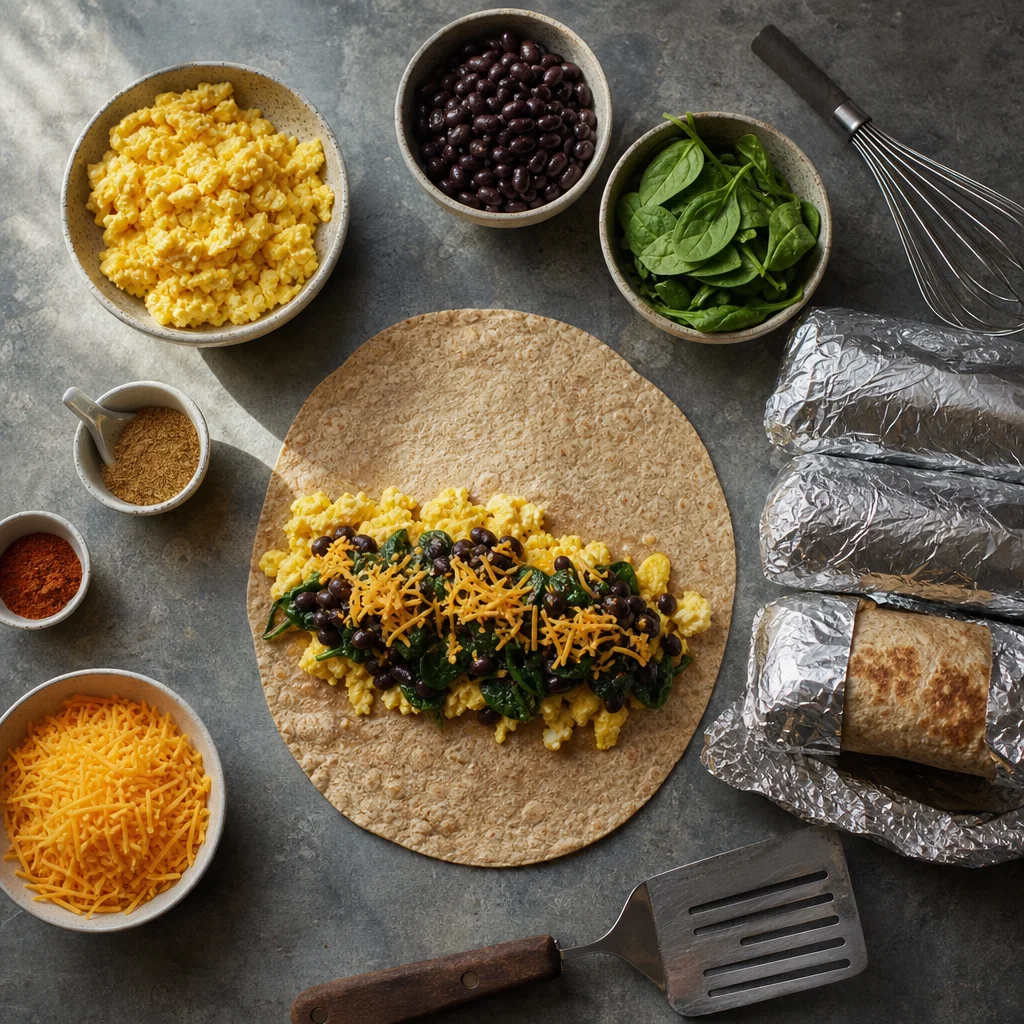
Gather: 12 large eggs, 1 can no-salt-added black beans (rinsed), 2 cups baby spinach, 6 whole-grain burrito-size tortillas, ⅔ cup shredded cheese, olive oil, and your favorite spices (cumin and smoked paprika work well).
Cook: Whisk the eggs and scramble them gently over medium-low heat. Remove them while they still look slightly glossy — they finish cooking during reheating. Wilt the spinach in the same pan, then stir in the beans and spices. Cool everything completely before assembling. This one step prevents soggy burritos later.
Assemble: Place about ½ cup of filling on each tortilla, sprinkle with cheese, fold in the sides, and roll tightly. Wrap each burrito in foil or parchment paper. Freeze on a flat sheet pan first, then transfer to a labeled freezer bag.
The nutrition math works in your favor here. Two eggs give you about 14 grams of protein. Add a portion of beans, a whole-grain tortilla, and a sprinkle of cheese, and you’re comfortably in the 20-to-25-gram range — no protein powder needed.
5 Easy Upgrades for a More Balanced Burrito
A basic egg-and-cheese burrito is fine. But with a few swaps, you can make it genuinely impressive. Here are five upgrades I use every time:
- Read your tortilla label. Many “whole-wheat” tortillas list refined flour first. Look for a tortilla where whole wheat is the first ingredient and fiber is meaningful — ideally several grams per serving.
- Add beans. Black beans bring plant protein, fiber, and a creamy texture. Rinsing canned beans also cuts sodium significantly.
- Use a mix of whole eggs and egg whites. For a lighter option, scramble 6 whole eggs with 1 cup of liquid egg whites. You keep the flavor but lower cholesterol and saturated fat.
- Treat cheese as a seasoning. A small handful adds plenty of flavor. Or use reduced-sodium cheese and save the salty meats for special batches.
- Choose freeze-friendly vegetables. Sautéed peppers, onions, sweet potato, and spinach freeze beautifully. Save fresh salsa, avocado, and raw tomato for after reheating — they get watery when frozen.
How to Store, Freeze, and Reheat Without Soggy Eggs
Here’s where most recipe blogs leave you guessing. First, the freezer question. Most recipes say freezer breakfast burritos stay good for about three months. Here’s the thing: that number is a quality guideline, not a safety deadline.
According to the USDA’s freezing and food safety guidance, food kept at 0°F remains safe indefinitely. Freezer storage times exist to protect quality. For egg-and-casserole-style dishes, the USDA suggests using them within 2 to 3 months for the best texture and flavor. After that, the tortilla may dry out or the eggs may lose their softness — but the food won’t make you sick.
The USDA’s leftover safety rules also apply. Refrigerate any cooked filling within two hours. Cool it quickly in a shallow dish, then assemble and freeze. When you’re ready to eat, reheat until the center reaches 165°F. If you don’t have a thermometer, that means steaming hot all the way through.
For the best texture, unwrap a frozen burrito and place it on a microwave-safe plate. Cover it with a damp paper towel to add steam. Microwave at 50% power for two minutes, flip, then finish on high for one to two minutes. A lower power keeps the eggs tender instead of rubbery.
Want a crisper tortilla? Thaw a burrito in the fridge overnight. Then heat it in a skillet, toaster oven, or air fryer until golden and hot inside. It takes longer, but the texture payoff is worth it.
What About the Eggs and Cholesterol?
If you’re watching your cholesterol, you may wonder whether a two-egg burrito is okay to eat regularly. That’s a fair question — and the research is genuinely mixed at high intakes.
On one side, the American Heart Association says current evidence doesn’t support a specific daily cholesterol limit for healthy people. Eggs can fit into a heart-healthy eating pattern. A 2025 umbrella review of 14 egg meta-analyses went further, concluding there’s not enough evidence to discourage eggs and that they can be part of a healthy diet.
On the flip side, some U.S. cohort analyses have linked very high egg intake with small increases in heart risk. So what should you do? If you’re generally healthy, two eggs a few times a week is reasonable within an otherwise balanced diet. If you have elevated LDL, diabetes, or heart disease, talk with your clinician. For a more conservative build, use one whole egg plus extra whites and lean on beans for protein. The saturated fat from heavy cheese and sausage deserves as much attention as the yolks do.
Common Questions, Straight Answers
How long do freezer breakfast burritos keep in the freezer?
They stay safe for months at 0°F. For the best quality — soft eggs, fresh tortilla, no freezer burn — aim to eat them within three months.
Why do my burritos get soggy when reheated?
Usually it’s trapped moisture. Cool the filling completely before rolling, avoid watery additions like salsa or raw tomatoes, and use a damp paper towel instead of a sealed lid in the microwave. Also, don’t overheat — eggs turn rubbery and release liquid when cooked too long.
Can I make them gluten-free or vegetarian?
Yes. Use gluten-free tortillas made from corn or rice, or check that your grain-free tortilla is sturdy enough to roll. For vegetarian burritos, skip the meat and lean on black beans, pinto beans, or tofu scramble for protein.
The Bottom Line
Freezer breakfast burritos can be one of the smartest habits you add to your healthy-living routine. Batch once, choose whole grains and fiber-rich fillings, and you’ll have a breakfast that’s ready before your coffee finishes brewing.
The secret isn’t a complicated recipe. It’s a few simple choices: real whole-grain tortillas, eggs or beans for protein, plenty of cooked vegetables, and a freezer stocked with labeled burritos. Future-you, running late on a Tuesday morning, will be very glad you did.