

Fruit and Blood Sugar: What Dietitians Actually Recommend
Key Takeaways
- The big picture on fruit and blood sugar: whole fruit raises glucose slowly, because fiber and water slow how fast the sugar arrives.
- Which fruit you pick matters. Berries, apples, and pears link to lower type 2 diabetes risk. Fruit juice links to higher risk.
- Pairing fruit with protein or fat flattens the glucose curve more than eating it alone.
- The Dietary Guidelines for Americans point to about 1.5 to 2 cups of fruit a day. Only about 12% of U.S. adults met that target in 2019.
- No fruit is banned. Portion, form, and pairing matter far more than the fruit itself.
Does eating a peach really spike your blood sugar the way a cookie does? If you’ve seen the viral warnings, you may be quietly wondering whether fruit belongs on your plate at all. Here’s the honest answer: most advice about fruit and blood sugar gets the wrong part wrong. Fruit does raise your blood glucose. That’s normal and expected — not a reason to abandon the produce aisle.
What actually matters is how fast that rise happens, how much fiber arrives with it, and what you eat alongside it. Below, we’ll look at what the research really shows, which fruits carry the strongest evidence, and how to enjoy fruit without riding an energy rollercoaster.
Quick Answer: Is Fruit Bad for Your Blood Sugar?
Here’s where fruit and blood sugar really stand — whole fruit is not the enemy. A 2023 meta-analysis of 19 randomized controlled trials found that eating more fruit lowered fasting blood glucose in people with diabetes. Fruit isn’t a free pass either. Portion size, the whole-fruit form, and pairing with protein or fat matter more than the fruit itself.
How Fruit and Blood Sugar Actually Work Together
Let’s start with the part most viral posts skip. Yes, fruit raises blood sugar. Fruit contains carbohydrate, and your body turns carbohydrate into glucose. A rise after you eat is a normal, healthy response.
However, the shape of that rise is what matters most. Fruit sugar comes wrapped in fiber, water, and polyphenols — plant compounds that give fruit its color. That package slows digestion, so glucose trickles in rather than rushing. As the CDC puts it, drinking fruit juice raises blood sugar faster than eating whole fruit.
Why does the shape matter so much? A slow rise is easy for your body to handle. A sharp spike triggers a large insulin release. That can leave you tired and hungry an hour later. So when we talk about fruit and blood sugar, the goal isn’t zero rise. It’s a gentler curve.
Now, the strongest evidence we have. A 2023 meta-analysis in Frontiers in Endocrinology pooled 19 randomized controlled trials with 888 participants. Eating more fruit lowered fasting blood glucose by about 8 mg/dL on average. HbA1c, the longer-term marker, barely moved.
That’s a partial win, and it’s worth being honest about. Fruit didn’t make blood sugar control worse. It improved one key measure. But fruit alone isn’t a blood sugar fix, and it isn’t a free-for-all either.
Why Whole Fruit Beats Juice Every Time
Picture this: a glass of orange juice and a whole orange. Both contain carbohydrate. Yet your body responds to them in very different ways.
The American Diabetes Association’s portion guidance makes the point fast. About 15 grams of carbohydrate equals one small whole fruit. Half a cup of canned fruit matches that. So does one-third to one-half cup of juice. And just two tablespoons of dried fruit gets you there.
Read those numbers again slowly. Two tablespoons of raisins carry the same carbohydrate as a small apple. That’s the concentrated-carbohydrate problem in a single line.
This is where the fruit and blood sugar debate gets genuinely interesting. A BMJ analysis of more than 187,000 adults followed them for decades. Each extra three weekly servings of fruit juice was linked to about 8% higher type 2 diabetes risk. Whole fruit, by contrast, tracked slightly lower.
Now, you might be thinking — isn’t juice basically fine? The juice evidence genuinely disagrees. A 2025 systematic review of randomized trials found 100% juice didn’t worsen glucose metabolism at all. Meanwhile, a JAMA Pediatrics review found the weight effect in adults vanished once researchers accounted for total calories.
On the flip side, whole fruit fills you up. Its fiber slows digestion and helps you feel satisfied. So whole fruit stays the default, while juice becomes an occasional, measured treat.
The Carb-to-Fiber Ratio: A Smarter Way to Judge Fruit
Here’s a question no grocery list answers: is a low-sugar fruit automatically a gentle one? Not quite. Sugar grams alone don’t tell the whole story.
What matters more is how much fiber travels with each gram of carbohydrate. Fiber is what slows the rise, so a fruit that brings more fiber per gram of carbohydrate tends to produce a gentler curve than one that brings very little. Some outlets call this the “carb-to-fiber ratio” — and it’s the missing piece in most fruit and blood sugar advice.
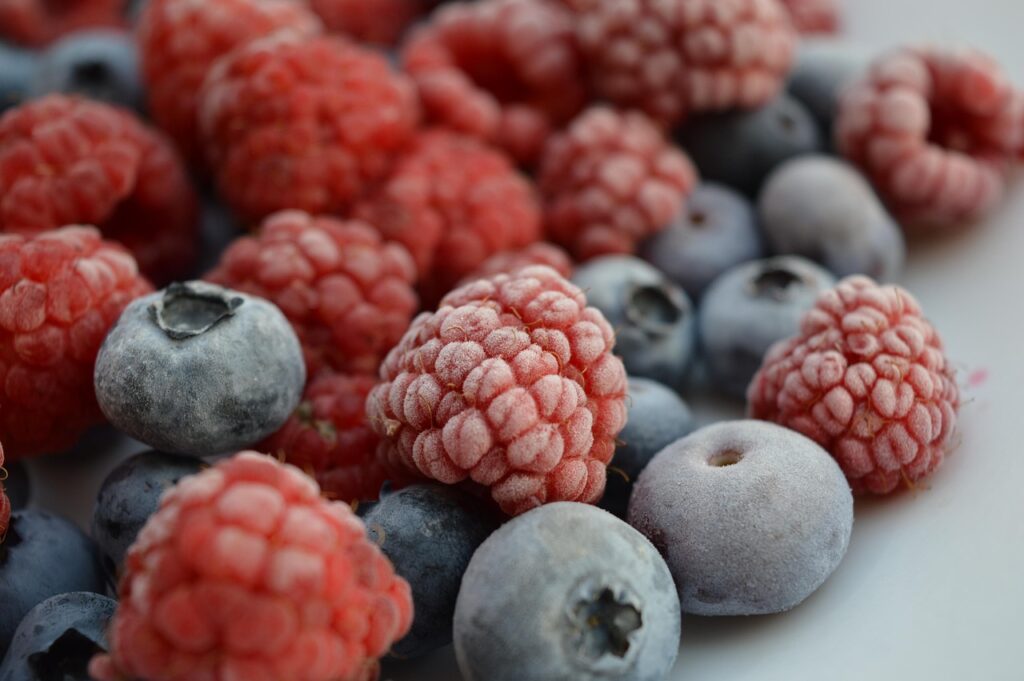
Watermelon is the perfect example. A cup is mostly water, so its total sugar looks modest. But it brings very little fiber along for the ride. Raspberries are the opposite — the sugar arrives with plenty of fiber, so the curve stays flat.
This explains why so many “low-sugar fruit” lists contradict each other. Watermelon and cantaloupe appear on both “enjoy freely” and “use caution” lists. Both instincts are half right. Keep melon to about a cup at a time.
The stakes here aren’t small. A 2024 Lancet meta-analysis pooled cohorts with more than 100,000 participants. High-glycemic diets tracked with 27% higher type 2 diabetes risk. The same analysis linked them to 15% higher cardiovascular disease risk and 8% higher all-cause mortality.
However, smart experts push back here. Harvard Health’s nutrition team calls the glycemic index “not a very practical tool” for individuals. Portion size and pairings change your response too much. Both things can be true. Glycemic quality matters across populations. For your own lunch, the pairing matters more.
Ranking Fruit and Blood Sugar Impact: What the Evidence Says
So which fruits should land in your cart? The clearest answer comes from that BMJ cohort study. Researchers tracked three groups of health professionals for decades. They recorded more than 12,000 cases of type 2 diabetes.
Berries led the pack. Every three weekly servings of blueberries was linked to 26% lower risk. Grapes and raisins came next, then prunes, then apples and pears, then bananas and grapefruit. Cantaloupe was the only fruit linked to higher risk.
A second Harvard analysis found the same pattern from a different angle. Higher intake of anthocyanins — the deep pigments in berries, apples, and pears — tracked with 15% lower diabetes risk. Blueberries eaten twice weekly or more showed 23% lower risk.
Notice what that means for fruit and blood sugar. “Fruit” is not one food with one effect. Blueberries and cantaloupe sit at opposite ends of the same graph.
Bananas deserve a special mention. They appear on nearly every “avoid” list online. Yet this data linked them to slightly lower risk, not higher. A banana with peanut butter delivers fiber and protein together.
The berry evidence has one nuance worth knowing. In a 2025 randomized trial, adults with prediabetes ate 32 grams of freeze-dried strawberry powder daily. That’s about 2.5 servings of fresh berries. After 12 weeks, their insulin resistance, fasting glucose, and HbA1c all improved.
That’s encouraging, especially for anyone with prediabetes. But be precise about what it shows. The dose was a concentrated powder, not a handful of fresh fruit. And the BMJ cohort found strawberries alone showed no clear protection. Berries as a group still have the strongest case.
A Practical Playbook for Steady Blood Sugar
Okay — so what do you actually do at breakfast tomorrow? Five habits do most of the work when it comes to fruit and blood sugar.
- Pair fruit with protein or fat. The CDC notes that eating carbs with protein, fat, or fiber slows the rise. Try berries with plain Greek yogurt, or apple slices with nut butter.
- Keep the peel on. Much of the fiber in apples, pears, and peaches lives in the skin. Peeling them throws away part of the benefit.
- Keep portions near a cup. The CDC suggests your fist as a rough guide for one cup of fruit. The ADA counts one small fruit or half a cup of canned fruit as about 15 grams of carbohydrate.
- Spread servings across the day. Harvard’s dietitian suggests up to three servings daily, spaced out. Three cups at once is a different story than one cup three times.
- Try fruit first at meals. Some small, early studies hint that eating fruit before a starchy food may soften the post-meal rise, but the evidence is thin. Treat it as a promising hint, not a rule.
None of this is complicated. However, it does require a shift in how you think. Instead of asking “is this fruit allowed,” ask “how much, and with what?” For the rest of the shopping list, our blood sugar foods grocery list has you covered.
Want to Know Your Own Response?
Harvard’s nutrition team suggests checking your glucose one to two hours after eating a specific fruit. A continuous glucose monitor makes that easy, but a standard meter works too. Track a few fruits over a week. You’ll learn more than any generic chart can tell you.
When to Be Careful
Grapefruit and grapefruit juice can interact with certain medications, including some statins and blood pressure drugs. If you take prescription medicine, check with your pharmacist before adding grapefruit to your routine.
Also worth knowing: the National Institutes of Health says there’s no clear proof that specific foods, herbs, or supplements manage diabetes. Whole-food patterns are what the evidence supports.
Your Fruit Questions, Answered
Below are the questions I hear most about fruit and blood sugar.
Does blood sugar go up after eating fruit?
Yes. Fruit contains carbohydrate, so some rise is guaranteed. Whole fruit produces a slower, gentler rise than juice or sweets, because fiber and water slow digestion.
Are bananas and grapes off-limits?
No. In that large BMJ cohort analysis, both were linked to slightly lower type 2 diabetes risk. Portion and pairing matter far more than the fruit itself.
Are smoothies as good as whole fruit?
It depends on how you build them. Blending releases the fruit’s sugars from some of the cell structure that whole fruit keeps intact — the CDC notes that juice raises blood sugar faster than whole fruit — so a smoothie can hit your bloodstream sooner than the same fruit eaten whole. Blend whole fruit with chia, flax, or Greek yogurt instead of pouring in juice — our blood sugar smoothie formula shows how.
Which fruits are highest in fiber?
Berries, pears, apples with the peel, kiwis, and pomegranate are strong choices. They deliver more fiber per gram of carbohydrate, which means a gentler curve. For more fiber-forward ideas, see our high-fiber snacks for better blood sugar.
Does eating fruit at night raise blood sugar more?
There’s no strong evidence that fruit in the evening raises blood sugar more than the same fruit earlier in the day. The bigger levers are how much you eat and what you eat it with. The CDC and Harvard both point to portion and pairing — protein, fat, or fiber eaten alongside — as what actually changes the glucose response. If you have diabetes or prediabetes, your own meter will tell you more than any time-of-day rule.
The Bottom Line
Let’s be honest about the big picture. The viral claim is that fruit is dangerous. The federal data says something very different.
In 2019, only 12.3% of U.S. adults met the recommended fruit intake — roughly one in eight. Women did slightly better than men, at 14.5%. And cost and access, not willpower, were the main barriers.
That’s worth naming, because frozen fruit and canned fruit packed in juice count too. They’re often cheaper and just as nutritious.
So here’s your takeaway. Fruit and blood sugar are not enemies. Whole fruit raises your glucose gently, brings fiber and polyphenols along, and links to lower diabetes risk in the largest studies we have.
Choose berries, apples, and pears most often. Keep the peel. Pair fruit with protein or fat. Keep portions near a cup. Spread servings across the day. And if you have diabetes or prediabetes, test your own response instead of trusting a generic list. If you’re planning snacks around fruit and blood sugar, our 25 best snacks for diabetics that won’t spike your blood sugar is a good next read.
That’s an approach you can keep for life — and it still leaves room for the peach.