

Foods for Heart and Gut Health: Build Your Grocery Cart
Key Takeaways
- One cart, two wins. Many foods for heart and gut health overlap because the same fiber, healthy fats and plant compounds do both jobs.
- A 2025 umbrella review of 33 meta-analyses found convincing evidence that higher fiber intake lowers cardiovascular death risk.
- Gut bacteria ferment fiber into short-chain fatty acids. Those compounds calm inflammation and help steady blood pressure, blood sugar and cholesterol.
- Most adults eat far less fiber than they need. Whole foods beat supplements for getting there.
- Go slowly. Adding fiber too fast causes gas and bloating, so build up over several weeks.
Picture your grocery cart at the end of a long week. Oats, a bag of apples, walnuts, a tub of plain yogurt. Nothing fancy. Yet those everyday picks are some of the best foods for heart and gut health at the same time. That is not a coincidence. Your heart and your gut run on one shared chemical conversation.
The same fiber and plant compounds that keep your cholesterol in check also feed the bacteria living in your gut. Here’s what most food lists skip: heart health and gut health are not two separate projects. They share the same levers. So let’s look at why, then build a cart you can actually shop from this week.
Quick Answer: Do the Same Foods Really Help Both Organs?
Yes, largely. Foods for heart and gut health overlap because both systems depend on fiber, healthy fats and polyphenols. Fiber helps your body clear excess cholesterol, and it feeds gut bacteria. Polyphenols turn down inflammation in blood vessels and in the gut lining. Scientists are still mapping the full pathway, but the direction of the evidence stays consistent.
Why Foods for Heart and Gut Health Are the Same Foods
Your gut holds trillions of microbes. Together they form your microbiome, a living community that helps digest food and shape immunity. As Harvard Health explains, your mix of microbes reflects your genes, your age and your medications. Mostly, though, it reflects what you eat.
Here is the payoff. Your gut bacteria ferment the fiber and polyphenols you eat. In doing so, they produce short-chain fatty acids. Those compounds travel through your blood. They quiet inflammation and appear to steady blood sugar, blood pressure and cholesterol.
However, a diet heavy in ultra-processed food pushes the system the other way. A 2026 review in Current Nutrition Reports describes how Western-style eating feeds harmful microbial pathways. Those pathways include TMAO and lipopolysaccharides, which researchers link to vessel inflammation.
But stay cautious with that last point. Scientists still debate how much TMAO matters in people. The review authors note its effects depend on diet, kidney function and each person’s unique microbes. So the honest takeaway is simple. Crowd your plate with plants instead of fearing single foods.
And this is where reality bites. Only about 10% of adults eat the recommended amount of fruit or vegetables, Harvard Health reports. Whole grains make up less than 16% of the average American’s grain intake.
Where the Science Still Has Gaps
The British Heart Foundation puts it plainly. Lab studies link gut changes to heart and circulatory disease, yet the exact mechanism is not fully understood. More human trials are needed. So treat the gut-heart link as strong, promising evidence — not a finished story. The fiber-and-heart link, by contrast, rests on much larger and longer studies.
The Best Foods for Heart and Gut Health: Building Your Cart
Now for the practical part. The foods for heart and gut health below earn a permanent spot in your cart. Each one brings at least one of three things: fiber, healthy fats or polyphenols. Better yet, most bring two or three.
Start With Oats and Whole Grains
Oats are rich in beta-glucan, a soluble fiber that helps lower LDL cholesterol. That ranks among the best-supported food claims in nutrition. A 2026 randomized trial also found that an oat-rich diet raised circulating short-chain fatty acids. Butyrate rose more on oats than on rice.
Here’s the honest caveat, though. That same trial found no significant change in the fecal microbiome or in inflammatory markers. So enjoy oats for the cholesterol and fatty-acid benefits. Just don’t expect a gut makeover in six weeks.
Practical move: choose steel-cut or rolled oats over instant packets. Then add berries, walnuts or ground flaxseed for extra fiber.
Nuts and Seeds Are the Quiet Overachievers
The walnut evidence is the most interesting in this whole article. In a randomized crossover trial, adults ate 42 grams of walnuts daily for three weeks. That is roughly a generous handful. Butyrate-producing gut bacteria rose sharply. Pro-inflammatory secondary bile acids fell by 25% and 45%. LDL cholesterol dropped 7%.
A second feeding trial added nuance. Part of the microbiome benefit may come from walnuts replacing saturated fat, not from walnuts alone. Even so, those bacterial shifts tracked with better blood pressure and lipid readings.
There is a bigger number too. A 2024 meta-analysis of 64 cohort studies found that fiber from nuts and seeds was linked to 43% lower cardiovascular death.
Practical move: swap the chips for a small handful of unsalted nuts. Keep portions modest, because nuts are calorie-dense.
Beans, Lentils and Other Legumes
Legumes do double duty by design. They deliver plant protein, fiber and prebiotic fuel in one package. A 2026 meta-analysis of 31 randomized trials found that non-soy legumes lowered total and LDL cholesterol.
Therefore, a lentil soup or a bean bowl is one of the easiest upgrades you can make. Replace some ground meat with lentils and you cut saturated fat while adding fiber. Rinse canned beans to trim added sodium.
One caution: beans cause gas at first. Start with a few tablespoons and build up from there.
Berries, Beets and Colorful Produce
Here is a fact that surprises most people. Human cells cannot digest about 90% of polyphenols, according to the British Heart Foundation. We rely on gut microbes to ferment them first. That is one more reason microbial diversity matters.
Colorful produce supplies those polyphenols. In one analysis, people who ate the most nitrate-rich vegetables had 12% to 26% lower cardiovascular disease risk. Beets and leafy greens are both rich in dietary nitrates.
Berries earn their reputation as well. Studies link regular, moderate blueberry intake with lower cardiovascular risk. Meanwhile, eating at least two servings of avocado a week was associated with 21% lower risk of a coronary heart disease event.
Add Fermented Foods for Live Cultures
Fermented foods bring live bacteria to the party. Plain yogurt, kefir, kimchi, sauerkraut, tempeh and miso all qualify. Harvard Health suggests checking the label for the words “contains live cultures.”
Refrigeration matters, too. Heat kills many bacteria, so shop the refrigerated section. For vegetable ferments, look for “naturally fermented” on the jar. Bubbles in the liquid are a good sign.
Here’s a detail that trips people up. Most jarred pickles and pickled beets sit in vinegar, not brine. Vinegar pickling does not create live cultures, so those products are not probiotic foods. That distinction matters more than the marketing suggests.
Dairy-free? Look for coconut or oat yogurt with live cultures. Otherwise, go straight to sauerkraut, kimchi and tempeh.
A Simple Day That Works for Both
You do not need a complicated plan. Here is one day that quietly stacks every food group above.
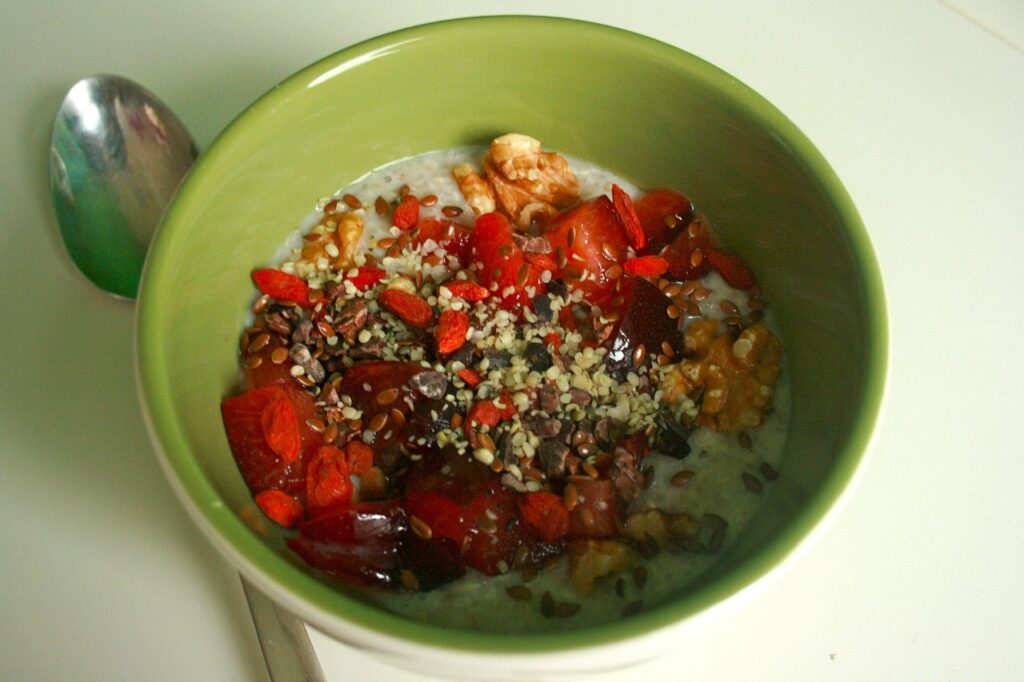
- Breakfast: overnight oats with kefir or soy yogurt, berries, ground flaxseed and walnuts.
- Lunch: lentil and beet salad over greens with extra virgin olive oil and sliced apple.
- Snack: an apple with a small handful of almonds.
- Dinner: walnut-crusted salmon with barley and sautéed spinach or chard.
That single day is a working example of foods for heart and gut health pulling in the same direction. Moreover, it covers five categories without any special shopping trip.
What to Cut Back On
Most articles tell you what to add. Fewer tell you what to limit. Cutting back is the other half of the foods for heart and gut health picture. According to AHA-aligned guidance, that means less sodium, saturated fat, added sugar and alcohol.
Processed meats, fatty meats, tropical oils, packaged snacks and sugary drinks all work against you. So does heavy drinking. You may have read that red wine protects the heart. Current guidance leans the other way, and no clinician today would suggest starting to drink for your heart.
Therefore, think in swaps rather than willpower. Olive oil instead of butter. Oats instead of a pastry. Nuts instead of a candy bar.
How to Add Fiber Safely
Fiber is the engine behind most foods for heart and gut health, so how you add it matters. Enthusiasm can backfire here. MedlinePlus warns that raising fiber too quickly causes gas, bloating and cramps. Build up gradually over several weeks instead. Drink enough water as you go, because fiber needs fluid to move comfortably.
Some people need extra care. If you live with IBS, higher-FODMAP foods like beans, certain fruits and some ferments may trigger symptoms. A dietitian can help you find your personal threshold. If you have kidney disease, ask your clinician before loading up on high-fiber, high-potassium foods.
If you are pregnant, check before drinking kombucha. It can contain small amounts of alcohol, and labels are not always reliable. If you take a blood thinner, ask your pharmacist about fiber timing and supplement interactions.
Finally, a word on omega-3 pills. The NIH Office of Dietary Supplements notes that the FDA advises no more than 5 grams a day of EPA and DHA from supplements. High doses can raise bleeding risk with blood thinners such as warfarin. Also, the American Heart Association does not recommend fish oil for people at low heart risk.
For most healthy adults, food comes first. Women need about 1.1 grams of ALA daily, and walnuts, flaxseed and chia seeds are good plant sources of it.
Common Questions
Can I just take a fiber supplement?
Supplements can help, but whole foods for heart and gut health bring more to the table. Plants also deliver polyphenols, vitamins and minerals that a powder cannot match. If you do use a supplement, start small and drink plenty of water.
Do frozen and canned foods count?
Yes. Frozen berries and vegetables keep their fiber and most of their polyphenols. Canned beans and lentils work well too. Just rinse canned goods to cut sodium, and choose fruit packed in water or its own juice.
How quickly will I notice a difference?
Digestion often responds first, sometimes within days. Cholesterol and blood pressure shifts take longer and build with consistency. This is a habit, not a quick fix, so give it a few months before you judge the results.
The Bottom Line
Foods for heart and gut health are not a special category you have to hunt for. They are oats, nuts, beans, berries, colorful vegetables, olive oil and fermented foods. In other words, they are the staples that have anchored healthy eating for generations.
Start with one swap today. Add berries to breakfast, or beans to lunch. Then build slowly, drink water, and let your gut adjust at its own pace.
Your heart and your gut have been talking to each other your whole life. Feeding them well is one of the few healthy habits that pays off twice.