

What Are Synbiotics? Food Pairings for Better Gut Health
Key Takeaways
- What are synbiotics? They team up live, helpful bacteria (probiotics) with the fiber fuel those bacteria eat (prebiotics).
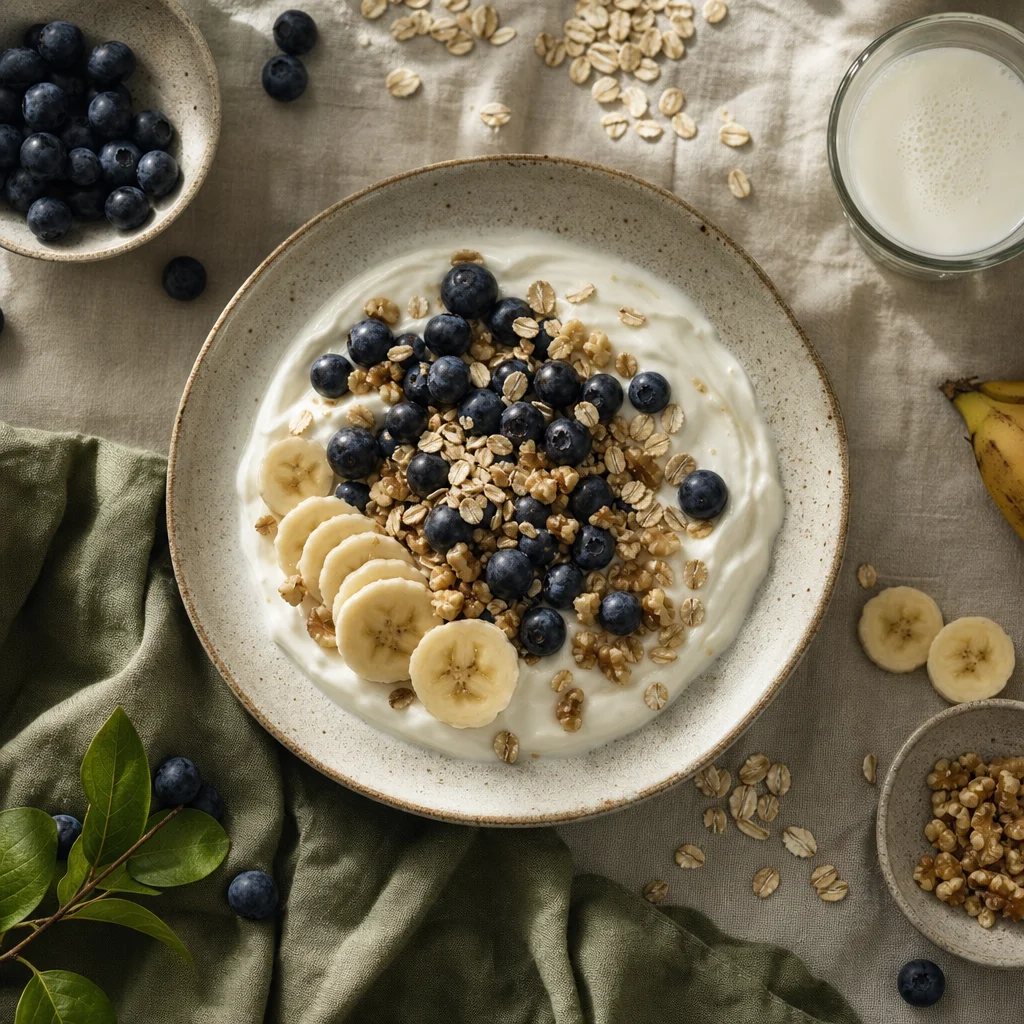
- Food comes first. Yogurt or kefir with oats, banana, or berries is a simple everyday pair.
- Research supports benefits for bloating, gas, and regularity. The exact product matters, though.
- Start small and go slow. This helps you skip the gas as your gut adapts.
You know probiotics. You’re warming up to prebiotics. Now a third word keeps showing up on yogurt cups and pill bottles: synbiotics. If you’re wondering what are synbiotics and whether you need one more gut-health term in your life, you’re in the right place.
What are synbiotics, exactly? Good news first: you don’t need to buy anything new to benefit. You can build synbiotic-style meals with foods already in your kitchen. Yogurt with banana. Kimchi with beans. Kefir with oats. This guide explains what the science says, and how to make it practical.
Quick Answer: What Are Synbiotics?
A synbiotic pairs probiotics (live, helpful bacteria) with prebiotics, the fiber that feeds them. The two work as a team in your gut. A true synbiotic also has proof it helps human health. Two ingredients in one jar aren’t enough.
What Are Synbiotics? A Gut Health Vocabulary Lesson
Let’s start with the basics. Probiotics are live microbes that support your health. In food, that means the live cultures in yogurt, kefir, and chilled kimchi or sauerkraut.
Prebiotics are the fuel for those microbes. Most are fibers in plants like oats, bananas, onions, garlic, asparagus, and beans. When your gut bacteria eat this fiber, they produce helpful compounds for digestion.
In 2020, an expert group called ISAPP set the gold standard. ISAPP is the International Scientific Association for Probiotics and Prebiotics. The group defines a synbiotic as a mixture comprising live microorganisms and substrate(s) selectively utilized by host microorganisms that confers a health benefit on the host.
Plain English? A synbiotic is a prebiotic and probiotic that work as one. The pair itself must help people. Without that proof, the honest label is contains probiotics and prebiotics.
ISAPP splits synbiotics into two types. A complementary synbiotic is a probiotic plus a prebiotic. Each stands on its own, and the pair is tested together. A synergistic synbiotic is a matched set. Its prebiotic was chosen to feed the exact probiotic it rides with. Most products sold today are complementary.
So when someone asks what are synbiotics, the short answer is easy. They’re probiotics plus prebiotics that work together, with evidence the pair helps. A spelling note: symbiotic with an m means two organisms living together. Synbiotic with an n means working together. One letter changes the whole meaning.
Why the Pairing Works Better Than Probiotics Alone
Here’s what surprises most people. The trip to your gut is rough. Stomach acid, bile, and digestive enzymes can kill many probiotic bacteria before they arrive. That’s one reason a plain probiotic sometimes falls flat.
Prebiotics can help. Research suggests they act like a travel snack. They give the good bacteria energy to survive the ride. Prebiotic fibers also resist stomach acid. So they arrive whole, ready to feed your gut passengers.
Then comes the payoff. In the colon, bacteria feed on the fiber. They release short-chain fatty acids. These compounds feed the cells that line your colon. They also keep your gut barrier strong. A 2024 review in the Journal of Food Science and Technology found synbiotics help new good bacteria settle in. They also feed the residents already living there.
What are synbiotics doing differently than a solo probiotic? In theory, they boost bacterial survival and feeding at the same time. Does the duo always beat a probiotic alone? Not fully. Results depend on the strains, the dose, and your own gut. Food makes it easy to test the idea yourself.
Synbiotic-Style Eating: Food Pairings That Feed Your Gut
Now you might be thinking: is my yogurt bowl a true synbiotic? Not by the strict definition. True synbiotics rely on exact strains and set doses from trials. But your bowl isn’t useless. Pair live cultures with plant fiber at the same meal. That’s synbiotic-style eating, and it’s a habit worth keeping.
A Day of Synbiotic-Style Meals
Breakfast: Plain yogurt with berries, oats, and walnuts. Or kefir overnight oats with banana and chia.
Lunch: A bowl of lentils or beans with roasted vegetables. Add a spoonful of chilled kimchi or sauerkraut on top.
Dinner: Tempeh stir-fry with asparagus, garlic, and onion over brown rice. Miso soup works too. Stir it in after the pot leaves the heat, so the live cultures survive.
Snack: A smoothie with plain kefir, a frozen banana, and a spoonful of oats.
Pick Fermented Foods With Real Live Cultures
Not every fermented food gives you live cultures. Heat kills them. Shelf-stable sauerkraut? Likely pasteurized. Cooked kimchi? Same problem. Many bottled kombuchas are pasteurized too. Read the label. Your best bets:
- Yogurt labeled live and active cultures.
- Chilled, unpasteurized kimchi or sauerkraut from the fridge section.
- Plain kefir with no added sugar.
Dairy-Free or on a Budget? No Problem
Dairy-free? Plant yogurt with live cultures, water kefir, miso, tempeh, and kimchi all deliver. Pair them with oats, bananas, beans, onions, or garlic. Tight budget? Oats, bananas, onions, garlic, and canned beans are cheap. A small jar of kimchi goes a long way as a topping.
What Are Synbiotics Actually Good For? Evidence, Not Hype
Here’s the thing. Some ads promise weight loss, better hearts, even cancer protection. Those claims usually come from one strain in one specific group. They don’t apply to synbiotics as a whole. So where does the evidence actually stand for everyday health?
The Strongest Daily Benefit: Regularity
A 2025 randomized trial gave older adults with ongoing constipation a synbiotic. The pair? A probiotic strain called Bifidobacterium lactis BL-99 plus FOS fiber. Weekly bowel movements were higher with the synbiotic — nearly five per week versus about three with placebo. Food also moved faster through the gut.
The gains lasted two weeks after stopping. This trial is one of several linking probiotic-plus-fiber pairs with healthy regularity.
Clinical groups stay careful, though. In 2025, the British Dietetic Association rated the evidence for synbiotic supplements as low — just two of 59 statements, at low or very-low evidence. Their stronger food advice? Specific whole foods like kiwi, prunes, and rye bread. The message is clear: whole food first.
Promising but New: Bloating and Gas
The newest study targets a very common complaint. In 2026, researchers followed 350 generally healthy adults with bloating. For six weeks, some took a multi-species synbiotic with pomegranate extract. Others took a placebo.
The synbiotic group reported less bloating, gas, and belly discomfort. At week six, 72.3% said they rarely or never felt bloated. Just 55.9% of the placebo group said the same.
Caveats matter. This is one product and one study, paid for by the maker. Encouraging, but not a promise from every brand.
Mixed but Real: Irritable Bowel Syndrome
IBS is a different story. A 2024 trial tested a nine-strain synbiotic in 202 adults with moderate-to-severe IBS. After 12 weeks, 70% of that group reported enough symptom relief. The product was well tolerated.
Yet reviews of the broader evidence are mixed. The NIH says IBS results depend on the product. If you have IBS, talk with your doctor. Ask about synbiotics tested in IBS patients.
Weight loss, heart health, cancer? Not proven for healthy people. Don’t let a label promise more than the research shows.
There’s your honest answer to what are synbiotics good for. Some things, for some people, with specific products. Also give it time. Most trials last four to twelve weeks. Your gut shifts slowly as bacteria adapt.
Synbiotic Supplements: How to Read the Label
In a pill or powder, what are synbiotics made of? Usually two things. A named probiotic strain, plus a prebiotic fiber like inulin, FOS, or GOS.
Here’s the catch. Quality and doses vary widely between brands. In the U.S., the FDA doesn’t test supplements for effectiveness before they go on sale. So label reading is your best tool.
Your Supplement Shopping Checklist
- Named strains, not secret blends. Look for the genus, species, and strain. Example: Bifidobacterium lactis BL-99. A proprietary blend tells you little.
- A clear CFU count. CFU means colony-forming units, or the number of live microbes per serving.
- A named prebiotic with a dose. Inulin, FOS, and GOS are common. You want to see grams or milligrams on the label.
- Proof the pair was tested as a pair. This is the big one. If that exact combination lacks human studies, the label really means contains probiotics and prebiotics. It’s not a proven synbiotic.
- A third-party seal. Look for NSF, USP, or ConsumerLab. It means an outside lab checked quality.
- Storage directions. Some products need the fridge. Follow the label so the cultures stay alive.
One more note on fiber. New to prebiotics? Start with the lowest dose. Too much, too soon can cause gas.
Are Synbiotics Safe? How to Start Without the Gas
Good news for healthy adults. These products are low risk. The NIH Office of Dietary Supplements says probiotics rarely cause harm in healthy people. Side effects, when they show up, are usually minor. Rare, serious infections have mostly occurred in people with weak immune systems or severe illness. Those people should check with a doctor first.
What about gas? It’s the most common complaint. And the prebiotic fiber usually causes it, not the bacteria. Your gut needs time to adapt. Here’s a gentle-start plan.
Your Gentle-Start Protocol
- Start small. Try a few spoonfuls of yogurt or kefir, or a small side of kimchi.
- Go slow. Add a little more over one to two weeks.
- Drink water. Fiber needs fluids to do its job.
- Check with your clinician if you are pregnant, breastfeeding, or managing a health condition.
Feel lasting pain or distress? Stop and talk with a doctor. Food pairings, on the other hand, are gentle enough for almost anyone to enjoy daily.
Frequently Asked Questions
What Are Synbiotics vs. Probiotics?
A probiotic is a live microbe with proven health perks. A synbiotic is a probiotic plus the prebiotic fuel made to help it work. Every synbiotic contains a probiotic. Most probiotics, though, are sold without their prebiotic partner.
Is Yogurt With Banana a Synbiotic?
In everyday terms, yes. It pairs live cultures with prebiotic fiber. That’s the pattern our gut thrives on. Strictly speaking, a true synbiotic needs a study of that exact pair. Think of meals as the practical version. Think of tested products as the studied version.
How Long Until Synbiotics Work?
Most trials last four to twelve weeks. Some people notice changes within weeks. Others notice little. Give your routine a fair shot. Track how you feel along the way.
Do I Need a Synbiotic Supplement?
Probably not. Most healthy people can get both parts from food. Start with the food pairings above. If you still want a product, choose one with named strains, a clear CFU count, and a named prebiotic dose. Then give it weeks, not days.
The Bottom Line: Start With Your Next Meal
So now you know what are synbiotics. And you know the simplest next step.
Tomorrow, try yogurt with berries and a spoonful of oats. Or blend a kefir smoothie with banana. Later in the week, add kimchi or sauerkraut to a bean bowl. That’s synbiotic-style eating. No special products needed.
Want a supplement instead? Choose with care. Look for named strains, a clear CFU count, and a named prebiotic with a dose. Third-party seals are a plus. Then give it four to twelve weeks.
Your gut is built meal by meal. Not by any single product. Pairing live cultures with plant fiber is one of the easiest ways to support it. You can start tomorrow at breakfast.