

How to Cut Back on Alcohol Without Losing Your Social Life
Key Takeaways
- You don’t have to quit drinking to get real health benefits. Fewer drinks count.
- Fewer than half of Americans know alcohol raises cancer risk. A 2025 Surgeon General advisory links it to at least seven cancers.
- Better sleep is often the first thing people notice. Alcohol raises obstructive sleep apnea risk by about 25%.
- One standard drink is 14 grams of pure alcohol, and most pours are bigger than that.
- A ready “no, thanks” makes every other strategy work better.
Picture this: the server sets a round of cocktails on the table, and every hand reaches in. You’d like to cut back on alcohol, but you don’t want to be the one explaining why. So you take a glass, sip slowly, and spend the next hour wishing you hadn’t.
If that sounds familiar, you’re in good company. Plenty of women want to drink less for better sleep, steadier energy, and lower long-term risk. What stops them isn’t willpower. It’s the social math.
Here’s the good news. Drinking less doesn’t have to mean missing out. It takes a few good sentences, a couple of go-to orders, and one honest look at your glass.
Quick Answer: Can You Cut Back on Alcohol and Keep Your Social Life?
Yes. Research suggests that pacing yourself and skipping rounds work best when you also feel confident saying no. So the fix isn’t avoiding people. It’s having the words ready and a drink already in your hand.
Why It’s Worth It to Cut Back on Alcohol
Let’s start with the honest part. You don’t have to be a heavy drinker for drinking less to matter. The World Health Organization says plainly that no level of alcohol is risk-free. At the same time, most harm comes from heavy or frequent drinking.
That distinction matters. It means you don’t need an all-or-nothing plan. Trimming a few drinks each week is a real win.
The Cancer News Most People Missed
In January 2025, the U.S. Surgeon General released an advisory linking alcohol to at least seven cancers. That list includes breast cancer in women, plus cancers of the colorectum, esophagus, liver, mouth and throat.
The advisory also notes that fewer than half of Americans know about this link. Meanwhile, the CDC reports that more than 20,000 people die from alcohol-related cancers each year.
If that number surprises you, you’re not alone. It’s one more reason to cut back on alcohol, even if you’d never call your drinking a problem. We go deeper on alcohol and cancer risk in women in our full guide.
How big is your personal risk? Small, but real. And it climbs with every drink. One glass a night isn’t a crisis. But it also isn’t neutral.
The Sleep Payoff You’ll Feel First
A glass of wine can help you drift off faster. Then it fragments the second half of your night, and your body notices.
A 2026 review in L’Encephale found that alcohol raises the risk of obstructive sleep apnea by about 25%. The same review reported that 60-70% of people with alcohol use disorder deal with insomnia.
Here’s what surprised me. The relationship runs both ways. Poor sleep makes relapse more likely, and drinking makes sleep worse. So better rest isn’t just a perk. It’s part of what keeps you going.
Rethinking the “Glass of Wine Is Good for Me” Story
Many of us grew up hearing that moderate drinking protects the heart. Mayo Clinic has re-examined that evidence and says the old heart-health benefit doesn’t seem to hold up.
A likely reason is that many studies compared moderate drinkers with people who had already quit. Some had stopped because they became ill. That made drinking look protective when it wasn’t.
The WHO agrees there’s no risk-free level. And as the Mayo Clinic analysis puts it, a healthy diet and physical activity have much greater health benefits than alcohol. If you want easy places to start, we keep a running list of heart-healthy snacks.
How Much Alcohol Is Actually in Your Glass?
Before you set a goal, you need to know what you’re counting. In the U.S., one standard drink contains 0.6 fluid ounces, or about 14 grams, of pure alcohol.
That’s roughly:
- 12 fl oz of regular beer (about 5% alcohol)
- 5 fl oz of table wine (about 12% alcohol)
- 1.5 fl oz of distilled spirits (about 40% alcohol)
Here’s where it gets uncomfortable. The same NIAAA guidance warns that these amounts may not match typical serving sizes. A generous pour at home, or a restaurant glass of wine, can easily be two standard drinks.
So your “one glass with dinner” may really be two or three. If you want to cut back on alcohol, measuring at home for one week is the fastest reality check. Use a measuring cup. Then you’ll know your real number.
Moderate drinking, per the CDC, means one drink or less a day for women and two or less for men. Read that as a ceiling, not a target. Given the cancer evidence, many experts now suggest aiming lower.
What to Say When You’re Not Drinking
Now for the real reason people struggle to cut back on alcohol: the awkwardness.
Good news. This is a skill, not a personality trait. NIAAA’s own guidance calls it “know your no.” The advice is to have a polite, convincing refusal ready and say it fast. Hesitate, and you give yourself time to invent excuses.
Read that again. Say it fast. That’s the whole trick.
Five Scripts You Can Borrow
Coworker happy hour: “I’m good with sparkling water tonight, but tell me about that trip.”
A host who keeps topping you off: “I’m pacing myself, thanks. Can I grab a water?”
A first date: “I don’t drink much these days. I sleep better and I like it.”
A wedding toast: Hold the glass and toast with whatever is in it — a sip of the real thing or sparkling water — then switch to soda water with lime.
Family asking why: “I’m taking a break for a few months.” You don’t owe more than that.
And if someone asks whether you’re pregnant? You owe them nothing. “Nope, just taking a break,” then change the subject. A short answer plus a new topic ends most conversations.
Another move that works surprisingly well: bring one person in on it. Tell a friend at the table what you’re working on. Having one person at the table who already knows your plan makes the “no” much easier to say.
Do Alcohol-Free Drinks Help You Cut Back on Alcohol?
This one is genuinely debated. The honest answer is “sometimes.”
Alcohol-free beer, wine and mocktails solve the visibility problem. You have something in your hand. Nobody asks questions. For many people, that’s enough.
But there’s a real counterargument. Some addiction specialists caution that the sensory cues of a familiar drink can stir up a craving. The aroma, the glass, the ritual, the ice clinking in the tumbler — those details can cue a craving for the full-strength version. Others point out that commercial mocktails are frequently loaded with sugar and can set off cravings in some people.
Read the Label: “Alcohol-Free” Isn’t Always Zero
Here’s a detail almost nobody mentions: “alcohol-free” doesn’t always mean zero. Some drinks that look like a beer or a wine contain small amounts of alcohol.
So if you want truly zero, check the label for 0.0%. It takes five seconds, and if you’re cutting back for health reasons, it’s worth the glance.
Fixing the Sugar Problem
Commercial mocktails are often sugar bombs. You swap one drink for another and end up sluggish an hour later.
The fix is simple. Build your own from three parts: something bubbly, something sour, something herbal.
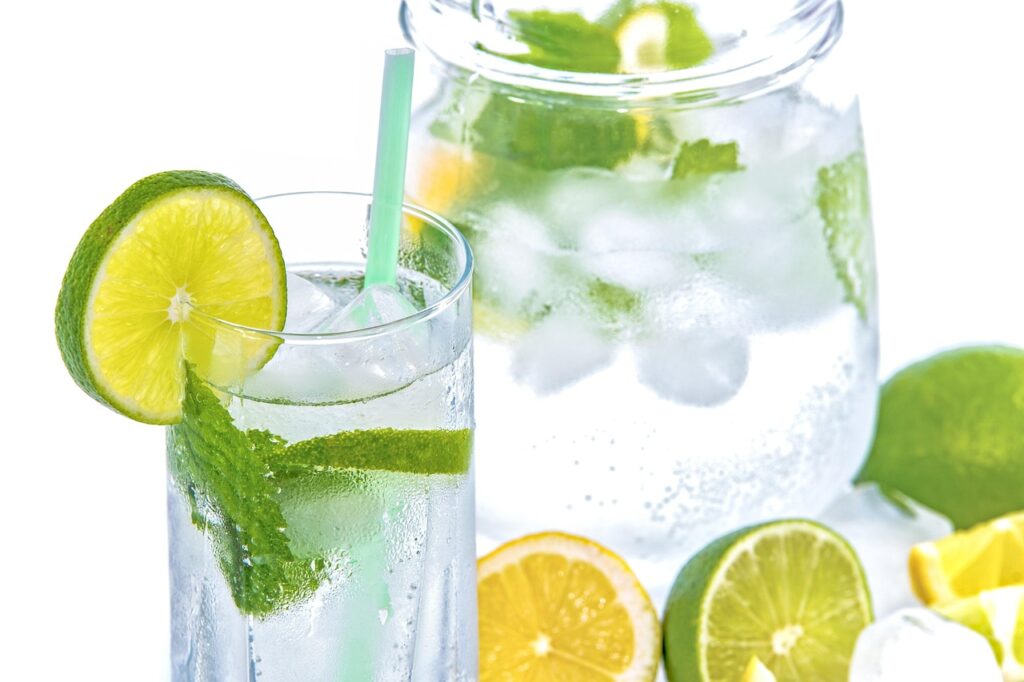
- Sparkling water + fresh lime + mint
- Unsweetened kombucha (check for a 0.0% label) + grapefruit + rosemary
- Club soda + a splash of cranberry + orange peel
These give you the ritual, the glass, the ice and the garnish, without the sugar crash. And having your drink in hand first changes everything.
A Two-Week Plan You Can Actually Follow
Here’s where it all comes together. A Cochrane review of 69 randomized trials found that brief, structured plans cut weekly drinking in both women and men. Longer counseling didn’t add much.
So keep it short. If you want to cut back on alcohol, pick two or three moves. Not ten.
- Week one: Track every drink. Note what, how much, and where.
- Week two: Set a goal. Choose your drinking days and your limit. Guidance often suggests two or three alcohol-free days a week, not just one.
One timing tip that helps a lot: many clinicians suggest stopping about three hours before bed. That gives your body time to process the alcohol before sleep begins.
Keep expectations honest, though. The same review found the plan reduced overall drinking. It did not eliminate big nights out.
When a Craving Hits
Urges pass. NIAAA suggests riding them out like a wave, knowing they crest and then fade.
Want something physical instead? A small 2026 randomized trial in Addictive Behaviors found that 20 minutes of moderate walking reduced alcohol craving more than a distraction task. The effect was strongest during the walk itself, so treat it as a short-term tool.
When Cutting Back Isn’t Enough: Safety First
Some people need more than scripts and a plan. That isn’t a failure.
If you drink heavily and stop suddenly, you can go into withdrawal. Symptoms can begin within hours. They include anxiety, sweating, shakiness and trouble sleeping. In serious cases, withdrawal is dangerous.
So talk to a clinician before you stop if you drink heavily most days. Medications can manage withdrawal safely. If you take daily medication, see our guide to alcohol and medication interactions.
And if you’re trying to cut back on alcohol with no progress after two to three months? NIAAA’s guidance is direct: consider quitting entirely, seeking professional help, or both.
Free, confidential help is available 24/7 through SAMHSA’s National Helpline at 1-800-662-HELP (4357).
Frequently Asked Questions
Will I feel a difference, and how soon?
Better sleep is often the first change people notice. That’s usually the earliest change you can feel.
Is it ruined if I slip?
No. It’s common to need more than one try. A slip is information, not failure.
What if my partner still drinks?
Make a plan together. Ask them to keep your usual drink out of the house, or to join you on alcohol-free nights.
Do I have to quit completely?
No. Cutting back is a legitimate health goal on its own. Quitting is one option, not the only one.
The Bottom Line
You don’t need a dramatic overhaul. The evidence says less is better, and the social side is more manageable than it feels.
Start with one change this week. Measure your pour. Pick two alcohol-free days. Have your “no, thanks” ready before you walk in the door.
Then pay attention to how you sleep. If you want to cut back on alcohol and actually stick with it, that first good night is the thing that keeps you going.