
5 Common Diet Principles Every Healthy Pattern Shares
Have you ever stood in the grocery aisle wondering which diet is actually worth following? The Mediterranean diet gets all the headlines. The DASH diet is what your doctor recommends for blood pressure. The MIND diet promises brain protection. And plant-based eating is everywhere. It is easy to feel like you need to pick a side. But here is the thing: the latest research suggests you do not have to choose at all. A growing body of evidence shows that these popular eating patterns share more than they differ. In fact, a 2026 systematic review published in Frontiers in Nutrition found that the Mediterranean, Nordic, Okinawan, and plant-forward diets all protect the brain through the exact same four mechanisms. The 2025-2030 Dietary Guidelines for Americans reinforce this message: eat minimally processed whole foods, prioritize plants, and choose healthy fats. This article breaks down the common diet principles that actually drive the benefits — so you can stop comparing labels and start applying what works.
Key Takeaways
- The Mediterranean, DASH, MIND, Nordic, Okinawan, and plant-forward diets all share the same core principles — you do not need to pick just one.
- The common diet principles are: eat more plants, choose healthy fats, include quality protein, eat fiber-rich whole grains, and minimize ultra-processed foods.
- A 2026 systematic review found that all four diets studied protect brain health through the same mechanisms: reducing inflammation, supporting blood vessels, feeding gut bacteria, and balancing certain fats in the body.
- The overall eating pattern matters far more than any single nutrient or supplement — the “food matrix” of whole foods is what delivers the benefits.
- You can apply these principles without following any named diet. A flexible, consistent approach is what leads to lasting results.
What the Research Actually Found
Let us start with the study that started this conversation. Researchers at Texas State University conducted a systematic review of 16 high-quality studies on dietary patterns and brain health in adults aged 60 and older. They looked at the Mediterranean diet (inspired by Greece and Italy), the Nordic diet (based on Scandinavian foods), the Okinawan diet (from a region in Japan known for longevity), and plant-forward eating patterns. The results were striking. All four diets were linked to better memory, faster thinking speed, and a lower risk of Alzheimer’s disease. But here is what surprised the researchers: the benefits did not come from any single superfood or nutrient. They came from the overall pattern of eating.
The 2026 systematic review of dietary patterns and cognition identified four common mechanisms that explain how these different diets protect the brain. First, they reduce inflammation throughout the body. Second, they support heart and blood vessel health. Third, they feed a healthy gut microbiome. Fourth, they help balance certain fat-like compounds called endocannabinoids that affect mood and memory. These mechanisms are not unique to any one diet. They are the result of the common diet principles that all four eating patterns share.
The 5 Common Diet Principles Every Healthy Pattern Shares
Here is where the confusion clears up. When you look at the Mediterranean, DASH, MIND, Nordic, Okinawan, and plant-forward diets side by side, they all emphasize the same five principles. The specific foods change based on region and culture, but the core ideas are identical.
Principle 1: Vegetables and Fruits at Every Meal
Every single healthy diet puts plants front and center. The Mediterranean diet features tomatoes, peppers, and leafy greens. The Nordic diet emphasizes root vegetables, cabbage, and berries. The Okinawan diet is built around sweet potatoes, bitter melon, and seaweed. The MIND diet specifically recommends six or more servings of leafy greens per week and at least one serving of other vegetables daily. The message is simple: fill half your plate with vegetables and fruit at most meals.
Principle 2: Healthy Fats as a Foundation
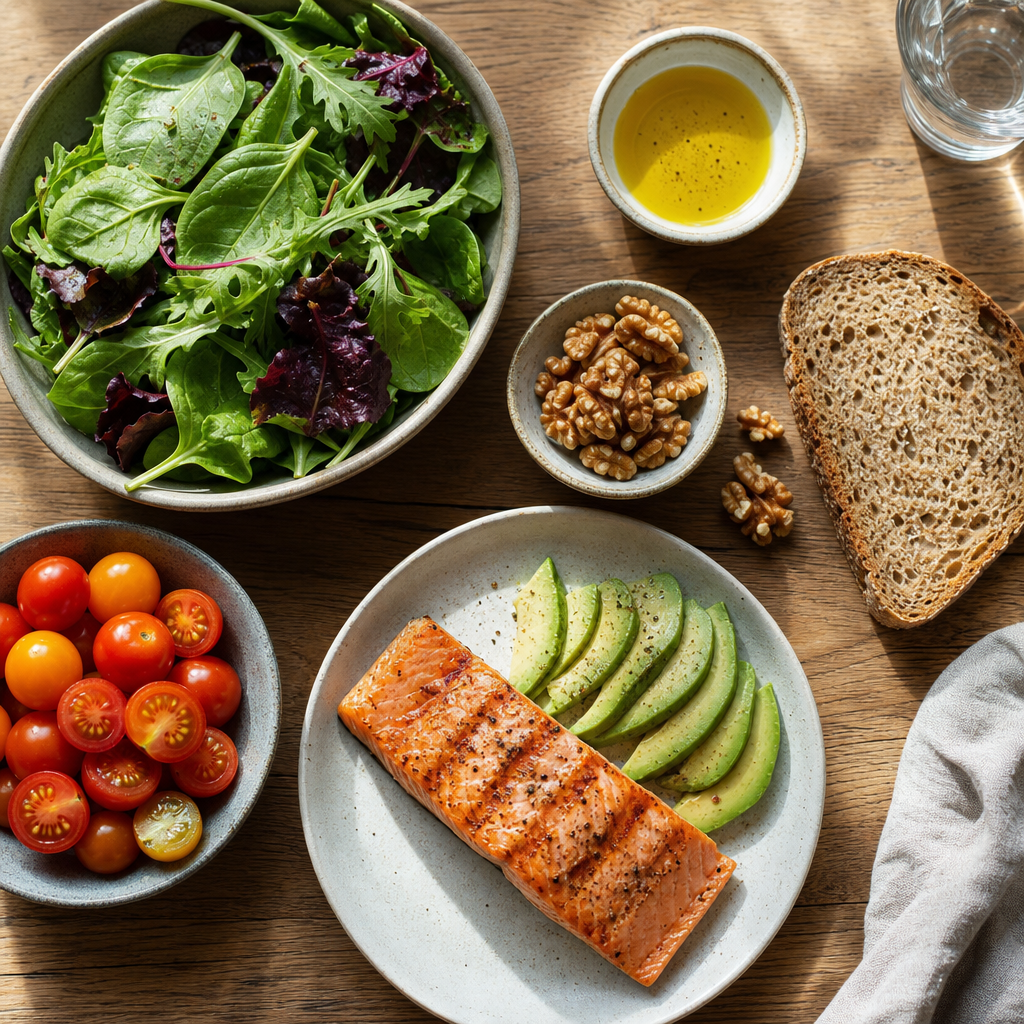
The fear of dietary fat is outdated. Healthy fats are essential for brain function, hormone balance, and nutrient absorption. The Mediterranean diet uses olive oil as its primary fat. The Nordic diet uses rapeseed (canola) oil as its primary fat source — both are rich in unsaturated fats. Fatty fish like salmon, mackerel, and sardines appear in all these diets. Nuts, seeds, and avocados are also common. The key is choosing unsaturated fats from whole foods and limiting saturated fats from processed sources.
Principle 3: Quality Protein from Plants and Fish
All these diets emphasize protein from plant sources — beans, lentils, chickpeas, and soy — along with fish and moderate amounts of poultry. Red meat is limited. The DASH diet includes low-fat dairy as a protein source. The Okinawan diet gets most of its protein from soy (tofu, edamame) and fish. The MIND diet recommends beans at least four times per week and fish at least once per week. The pattern is clear: prioritize plant proteins and fish, and treat red meat as an occasional food rather than a daily staple.
Principle 4: Fiber-Rich Whole Grains and Legumes
Fiber is the unsung hero of healthy eating. It feeds your gut bacteria, stabilizes blood sugar, and helps you feel full. The Mediterranean diet includes whole grains like farro, barley, and whole wheat. The Nordic diet features rye bread, oats, and barley. The MIND diet recommends three or more servings of whole grains per day. Legumes — beans, lentils, chickpeas — are a staple across all these patterns. They provide both fiber and plant protein in one package.
Principle 5: Minimal Ultra-Processed Foods
This is the principle that every healthy diet agrees on most strongly. Ultra-processed foods — sugary drinks, packaged snacks, fast food, refined grains, processed meats — are limited across all patterns. The DASH diet specifically targets sodium from processed foods. The MIND diet limits butter, cheese, red meat, fried foods, and pastries. The Nordic diet naturally avoids processed foods by emphasizing whole, seasonal ingredients. The NIH-supported study on MIND diet and cognitive health found that even moderate adherence to these principles — not perfection — was linked to slower cognitive decline.
How Different Diets Implement the Same Common Diet Principles
One of the most liberating findings from the research is that you do not need to follow a specific named diet. The principles are what matter. But it helps to see how different cultures apply them. Here is a quick comparison.
Mediterranean Diet
Primary fat: olive oil. Key vegetables: tomatoes, peppers, eggplant, leafy greens. Protein: fish, legumes, moderate poultry. Grains: whole wheat, farro, barley. Flavor: herbs, garlic, lemon. This is the most studied diet for heart and brain health.
Nordic Diet
Primary fat: rapeseed (canola) oil. Key vegetables: root vegetables, cabbage, berries. Protein: fatty fish (herring, mackerel), legumes. Grains: rye, oats, barley. Flavor: dill, mustard, pickled vegetables. A review comparing Mediterranean and Nordic diet similarities found they share more common ground than differences.
MIND Diet
Primary fat: olive oil. Key vegetables: leafy greens (6+ servings/week), all other vegetables (1+/day). Protein: fish (1+/week), poultry (2+/week), beans (4+/week). Grains: whole grains (3+/day). Special focus: berries (2+/week), nuts (5+/week). This diet was specifically designed for brain health.
Okinawan Diet
Primary fat: not oil-heavy; fats come from fish and soy. Key vegetables: sweet potatoes (staple), bitter melon, seaweed, mushrooms. Protein: tofu, fish, very little meat. Grains: limited; sweet potatoes replace grains as the main carbohydrate. Flavor: ginger, turmeric, miso. Known for the longest life expectancy in the world.
DASH Diet
Primary fat: limited; emphasizes unsaturated sources. Key vegetables: 4-5 servings/day, variety encouraged. Protein: lean poultry, fish, legumes, low-fat dairy. Grains: 6-8 servings/day, mostly whole grains. Special focus: low sodium (2300 mg/day or less). Designed to lower blood pressure, but shares all five common principles.
Why the Food Matrix Matters More Than Supplements
You might be thinking: “If these diets are so healthy, can I just take the key nutrients as supplements?” The research says no. And here is why. Whole foods contain a complex web of compounds that work together in ways scientists are still trying to understand. This is called the food matrix. When you eat a handful of walnuts, you get omega-3s, fiber, polyphenols, antioxidants, and dozens of other bioactive compounds. They interact with each other and with your body in ways that no single supplement can replicate.
The systematic review specifically noted that isolated nutrient supplementation has shown limited clinical efficacy for brain health. The benefits come from the whole pattern — the combination of foods eaten consistently over time. This is why the common diet principles approach is so powerful. You are not chasing one magic nutrient. You are building a dietary pattern that supports your health through multiple pathways at once.
How to Apply These Principles Without Following a Named Diet
Here is the practical part. You do not need to memorize food lists from five different diets. You just need to apply the five principles in a way that works for your life, your budget, and your taste preferences. Here is how to start.
Start with one meal. Pick breakfast, lunch, or dinner and apply the principles to that meal for one week. For example, make sure your lunch plate has vegetables, a healthy fat source, a plant protein or fish, and a whole grain. Do not worry about the other meals yet.
Crowd out, do not cut out. Instead of focusing on what to eliminate, focus on adding more of the good stuff. Add an extra serving of vegetables to dinner. Swap white rice for quinoa or farro. Have a piece of fruit instead of a packaged snack. Over time, the ultra-processed foods naturally take up less space on your plate.
Think in patterns, not perfection. The research consistently shows that consistent moderate adherence to these principles is more beneficial than perfect adherence for a short time. A 2024 NIH-supported study found that even moderate adherence to the MIND diet was linked to slower cognitive decline. You do not have to be perfect. You just have to be consistent.
Adapt to your culture and budget. The principles work with any cuisine. Love Asian food? Use bok choy, edamame, brown rice, and sesame oil. Prefer Latin flavors? Use black beans, corn, avocado, and cilantro. On a tight budget? Canned fish, frozen vegetables, dried beans, and bulk oats are all affordable options that follow the principles.
A Note on Individual Differences
The research also shows that individual factors like genetics and sex can influence how your body responds to different dietary patterns. The systematic review found that men and women may experience different types of cognitive benefits from the same diet. The APOE gene, which affects how the body processes fats, can also modify the benefits. This is an emerging area of research, and the general principles still apply to most people. But it is a reminder that there is no one-size-fits-all approach. Pay attention to how your body responds and adjust accordingly.
Frequently Asked Questions
Can I mix elements from different diets?
Absolutely. In fact, that is the whole point of the common principles approach. You can take the olive oil and fish from the Mediterranean diet, the berries and leafy greens from the MIND diet, the rye bread from the Nordic diet, and the sweet potatoes from the Okinawan diet. The principles are what matter, not the specific label.
Do I need to cut out all meat?
No. The research shows that reducing red meat and emphasizing plant proteins and fish is the pattern that supports health. You do not need to go fully vegetarian or vegan unless you want to. The Mediterranean and MIND diets both include moderate amounts of poultry and fish.
How long does it take to see benefits?
The studies in the systematic review followed participants for years to decades. But some benefits may appear sooner. A 2022 randomized trial found that three months of following a MIND-style diet improved working memory and attention. Consistency over time is what matters most.
Is the Nordic diet as well-studied as the Mediterranean diet?
The Mediterranean diet has a larger evidence base, but the Nordic diet is catching up. The 2026 systematic review included the Nordic diet alongside the Mediterranean, Okinawan, and plant-forward diets as equally supported for brain health. The evidence for heart health benefits is still growing for the Nordic diet.
The Bottom Line
Here is the truth that the research makes clear: there is no single best diet. The Mediterranean, DASH, MIND, Nordic, Okinawan, and plant-forward diets all work through the same five principles. Eat more plants. Choose healthy fats. Prioritize quality protein from plants and fish. Eat fiber-rich whole grains. Minimize ultra-processed foods. That is it. That is the secret that all these diets share.
The next time you feel overwhelmed by conflicting diet advice, come back to these common diet principles. They are the foundation that every healthy eating pattern is built on. You do not need to pick a side. You just need to eat more whole foods, more plants, and fewer processed items — consistently, over time. That is the approach that the science supports, and it is one you can actually stick with.