

Banana Baked Oats: High-Protein Recipe Without the Crash
Key Takeaways
- The oats are the real health story here. A 2023 meta-analysis of 28 randomized trials found that oats lower total and LDL cholesterol.
- Your ripe banana is not an added sugar. The honey, maple syrup, or brown sugar is — and it counts against a 50-gram daily limit.
- Aim for about 18–20 grams of protein per serving, and build it into the batter. The recipe below gets you there.
- Blend the oats for a cake-like crumb, or leave them whole — whole oats may preserve more of the beta-glucan thickness linked to fullness, though no study has compared the two directly.
- Bake, cool, slice, and freeze. One portion reheats in about a minute on a rushed morning.
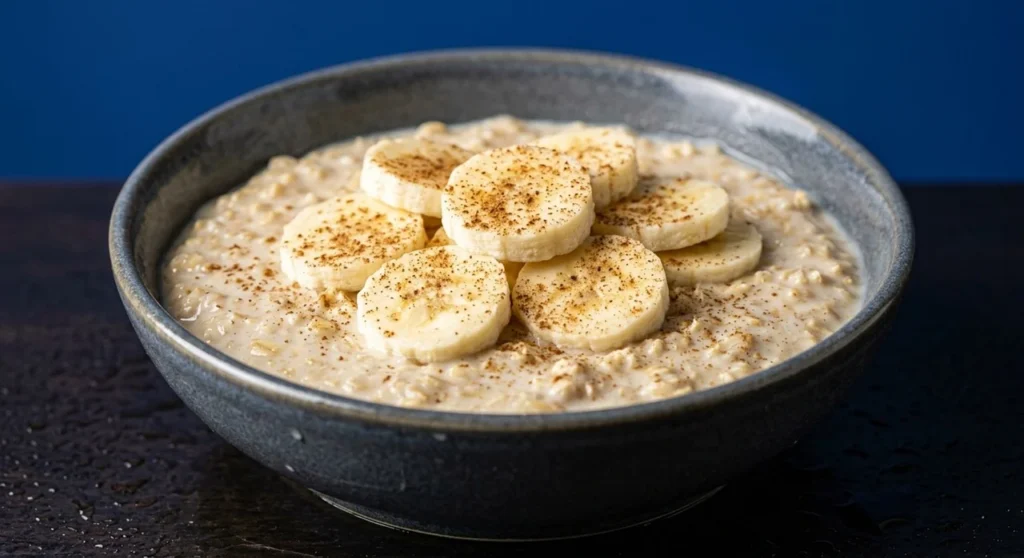
Banana baked oats taste like dessert, and that is entirely the point. Warm cinnamon, soft banana, and a little caramelized sweetness on top. It is the kind of breakfast that makes a dark morning feel generous.
But here is the thing. Most recipes online get built for flavor first and nutrition second. As a result, you can eat something labeled “healthy” and still feel hungry by 10 a.m.
So let’s explore a different version of banana baked oats. We will keep every bit of that cozy Bananas Foster character. Then we’ll add protein, trim the added sugar, and let the oats do what oats actually do well.
Quick Answer: Are Banana Baked Oats Healthy?
They can be — it depends on how you build them. The oats bring real fiber and cholesterol-lowering beta-glucan, a soluble fiber that forms a gel in your gut. The ripe banana brings natural sweetness. What decides the outcome is added sugar and protein. Keep added sugar near 10 grams per serving and push protein toward 20 grams, and this becomes a balanced breakfast. Load it with brown sugar, butter, and chocolate chips, and you have made dessert instead.
Why Banana Baked Oats Are a Better Breakfast Base Than They Look
Start with the oats, because they are doing more work than most people realize. A 2023 meta-analysis of 28 randomized trials covered 1,494 adults. It found that oats and oat fiber lowered total cholesterol and LDL cholesterol. However, HDL — the protective kind — stayed the same. The banana earns its place here too, which is why we pair them in our guide to heart healthy fruits.
That is a genuine heart benefit from a food, not a pill. Also, baking does not remove the fiber from the dish — though the same heat and grinding that shape the texture can change how that fiber behaves, which is what the next section is about. However, those cholesterol trials used oats in other forms, so the exact effect in a baked dish has not been measured.
Oats also help with appetite. In a randomized crossover trial in 48 adults, oatmeal — cooked as porridge — beat a ready-to-eat cereal on fullness, hunger, and desire to eat; the baked format itself has not been tested the same way. A later double-blind crossover trial found that 4 grams of oat beta-glucan raised fullness and satiety on its own.
In a companion crossover trial, people ate less at a lunch served four hours later — and the comparison there was another oat-based cereal, not a refined one. Furthermore, the researchers tied that effect to how thick the oats become in your gut.
The long-term picture is promising, though not a guarantee. A meta-analysis of eight cohort studies including 471,157 people found that those with the highest oat intake had about 22% lower rates of type 2 diabetes. On the other hand, that same analysis found no significant link to heart disease events. So oats are good — they are just not magic.
The Added Sugar Math Nobody Shows You
Now for the part almost nobody explains. By federal definition, added sugars include sugars from syrups and honey, according to the U.S. Food and Drug Administration. Added sugars do not include the sugars naturally found in fruit.
That one distinction changes how you read every recipe. Your ripe banana contributes naturally occurring sugar. Your maple syrup and honey count as added sugar, even though both are sold as “natural.”
The CDC puts a practical number on it. Adults should keep added sugar to no more than 10 grams per meal. The FDA sets the daily ceiling at 50 grams on a 2,000-calorie diet. Additionally, 5% of that value or less counts as low, while 20% or more counts as high.
Most of us are nowhere near those targets. In 2017–2018, US adults averaged about 17 teaspoons of added sugar daily. A CDC-authored analysis of national survey data went further. It found 30% of adults got more than 15% of their calories from added sugar. Sweet bakery products and syrups were among the top sources.
A 2024 cross-sectional study of 342 midlife women found that higher added sugar intake was linked to faster biological aging on an epigenetic clock. That is an association measured at one point in time, not proof. Still, it is one more reason to care about what is in the bowl.
So this is where your banana baked oats can quietly become a better breakfast. Let the fruit do the sweetening, and treat any syrup as a finishing touch rather than a base ingredient.
Dessert Flavor Without the 10 a.m. Crash
Carb quality at breakfast matters more than most people expect. A 2024 meta-analysis in The Lancet Diabetes & Endocrinology pooled ten large cohorts. Each one had at least 100,000 participants. Diets full of foods that spike blood sugar quickly were linked to 27% higher type 2 diabetes and 15% higher cardiovascular disease.
Encouragingly, diets rich in fiber and whole grains showed protection in the other direction. Therefore, the goal is not to avoid sweet flavors. The goal is to build a meal that releases energy slowly.
Oats already help here. In a randomized trial, about 4 grams of oat beta-glucan at breakfast lowered blood glucose at 30 minutes. It also lowered insulin at 30 and 60 minutes compared with a control meal. In short, the oats are your ally. Then protein and fat slow things down even more.
The Protein Upgrade Most Recipes Skip
If you remember one thing from this article, make it this. Protein is the missing piece in most baked oat recipes. Here’s what’s actually happening in the research.
A randomized crossover trial published in Nutrients compared two eggs a day with an oatmeal breakfast in 50 people. Over four weeks, the protein-forward breakfast raised satiety and lowered ghrelin, the hunger hormone. Reassuringly, the LDL/HDL ratio did not change.
So the ordering is simple. Oats beat refined cereal. However, protein beats oats. As a result, oats plus protein beats everything in that comparison — and that is the fastest upgrade you can make to banana baked oats.
For a repeatable breakfast, aim for roughly 18 to 20 grams of protein per serving. Good options include plain Greek yogurt, blended cottage cheese, eggs, or a scoop of protein powder — the same move our high protein muffins are built on. Also, a spoon of nut butter adds a little protein and a lot of flavor.
How to Make Banana Baked Oats That Keep You Full Until Lunch
This version of banana baked oats keeps the caramelized banana top and the warm spice. Then it builds protein into the batter instead of sprinkling it on at the end, where it is easy to skip.
Banana Baked Oats: The Protein-Forward Version
Makes 6 servings. Prep 10 minutes. Bake 35–45 minutes.
- 2 cups rolled oats (certified gluten-free if you need them)
- 2 very ripe bananas — one mashed into the batter, one sliced for the top
- 2 eggs, or 2 flax eggs to make it egg-free
- 2 cups plain Greek yogurt or blended cottage cheese
- 1/2 cup unflavored protein powder
- 1/2 cup milk of your choice, plus a splash if the batter looks thick
- 1 to 2 tablespoons maple syrup, optional
- 1 1/2 teaspoons cinnamon and 1/4 teaspoon nutmeg
- 1 teaspoon baking powder, 1/4 teaspoon salt, 1 teaspoon vanilla
- Optional: 1/2 cup chopped pecans or walnuts
Method: Heat the oven to 375°F and grease a 9×9-inch pan. First, whisk the wet ingredients in one bowl. Next, stir in the oats, protein powder, spices, baking powder, and salt. Pour the batter into the pan and lay banana slices on top. Finally, bake 35 to 45 minutes, until the center is set with no wobble when you nudge the pan and a knife inserted in the middle comes out mostly clean. Check at 35 minutes; if the center still looks wet, give it another 5 to 10 minutes. Then let it rest 10 minutes before slicing.
Protein estimate: About 18–20 grams per serving, using 2% plain Greek yogurt and a whey isolate protein powder; figures are estimates and will run lower with a plant protein blend or a lower-protein yogurt.
That resting step matters more than it looks. In crossover trials in 48 adults, oatmeal beat a cereal breakfast on fullness and hunger. The researchers also emphasized that well-hydrated, viscous oats were key to that effect. So give the oats a few extra minutes to soak.
One more note on sweetness. If your bananas are heavily speckled, start with one tablespoon of maple syrup — or none at all. The cinnamon and nutmeg carry more flavor than you would expect.
Texture vs. Function: Should You Blend the Oats?
Plenty of popular banana baked oats recipes — including our strawberry baked oats — blend everything smooth for a cake-like crumb. It is genuinely delicious. But does blending change what the oats do for you?
Possibly, yes. A review on oat beta-glucan notes that processing conditions can alter the fiber’s structure and behavior. Because that thickness is what drives the fullness and blood sugar effects, a finely blended batter may deliver less of them.
To be clear, blended and whole oats carry about the same grams of fiber. What changes is how thick the gel becomes in your gut.
Let’s be honest about the limits here. No study has compared blended baked oats with whole-oat baked oats head to head. Still, the trade-off is worth knowing. The blender version tastes more like cake, and the whole-oat version behaves more like oats. Both are good choices — just pick the one that matches your goal.
Make-Ahead, Freezer, and Reheat Without the Soggy Middle
Meal prep is where this breakfast earns its keep, just as it does for our make-ahead peach baked oatmeal. But don’t assemble the whole pan the night before. Given a night in the fridge, the oats soak up the liquid and the bake turns out dry and crumbly rather than soft.
If you want a head start, keep the dry mix and the wet mix in separate containers overnight, then stir them together just before baking. The assembled pan is the only version that suffers. Otherwise, bake a full pan ahead, cool it completely, and slice it.
For single-serve freezer portions, wrap each slice tightly and label it — the same portioning idea behind our single-serve banana bark. Then thaw overnight in the fridge and reheat in the microwave for about a minute. Add a splash of milk before reheating, because it keeps the texture soft.
As general food-safety practice, cool leftovers and refrigerate them within two hours. Then eat them within three to four days. If you want your banana baked oats to stretch past that, freezing individual slices is the better route.
A Blood-Sugar-Friendlier Way to Eat Them
If you are watching your blood sugar, this recipe does not need to disappear from your kitchen. However, a few adjustments help.
First, portion size matters more than any single ingredient. A smaller serving of banana baked oats with extra yogurt on the side will land gentler than a large portion eaten alone. Next, cut the maple syrup entirely and lean on very ripe banana. Then add fat and protein — nuts, Greek yogurt, or cottage cheese — because both slow digestion.
On the flip side, you may read that cooling and reheating baked oats creates resistant starch that blunts blood sugar. That effect has been studied in rice and potatoes, not in a baked oat dish. Therefore, we are not making that claim. Reheat for texture and convenience, not for a metabolic shortcut.
If you manage diabetes or take glucose-lowering medication, talk with your clinician or a dietitian about how this fits your plan. This article is general information, not personal medical advice.
Safety Notes and Sensible Expectations
A few practical cautions are worth a mention before you bake.
Gluten. Oats are naturally gluten-free, but they are often grown and processed near wheat. If you have celiac disease or gluten sensitivity, buy oats labeled certified gluten-free.
Allergens. Eggs, dairy and nuts are the common ones here. For egg-free, use 2 flax eggs. For dairy-free, replace the 2 cups of Greek yogurt or cottage cheese with unsweetened soy yogurt or a soy/pea-protein yogurt, swap the whey protein powder for soy or pea protein, and use a plant milk — but note this drops the protein to roughly 12–15 g per serving, so add a second protein source or eat a smaller portion and pair it with protein on the side.
Pregnancy and breastfeeding. Oats are a gentle, fiber-rich choice after birth. However, there is no established evidence that oats increase milk supply, despite what you may read. If you are breastfeeding and concerned about supply, ask a lactation consultant or your clinician.
When to ask a professional. If you have diabetes, kidney disease, a food allergy, or a prescribed medical diet, check with your clinician or dietitian before making this a daily habit.
Can I make banana baked oats without any sweetener?
Yes. Very ripe bananas — the ones with brown spots — carry enough sweetness on their own. Start by cutting the maple syrup completely, then taste the batter. If it needs a lift, add an extra pinch of cinnamon or a teaspoon of vanilla.
Does protein powder change the texture?
A little, yes. Protein powder thickens the batter, so add a splash of milk if it looks stiff. Unflavored or vanilla whey blends in smoothly; if you are dairy-free, use a soy or pea isolate instead and add a splash more liquid, and expect the per-serving protein to land lower than the whey version.
Can I use steel-cut oats instead of rolled oats?
Not as a straight swap. Steel-cut oats need far more liquid and much longer to soften, so a one-to-one substitution bakes up dry and gritty. Rolled oats are the right choice here. Also, remember that well-hydrated oats deliver more satiety, so a dry bake costs you twice.
Are banana baked oats a good choice if I have prediabetes?
They can fit, with adjustments. Cut the added sugar, keep the portion moderate, and pair each serving with protein and fat. Because high intakes of added sugar are linked to worse metabolic outcomes, how you build the recipe matters. Then review the plan with your clinician.
Your Simple Upgrade Checklist
- Use bananas with brown spots, then taste before adding syrup
- Build protein into the batter and aim for about 18 to 20 grams per serving
- Check the added sugar grams per serving against a 10-gram benchmark
- Let the bake rest 10 minutes so the oats fully hydrate
- Cool, slice, and freeze individual portions for weekday mornings
The Bottom Line
You do not have to choose between a breakfast that feels like a treat and one that actually fuels you. The oats are already working in your favor. In the trials to date, oats support healthier cholesterol numbers, a gentler blood sugar rise, and stronger fullness. Your job is simple. Keep the ripe banana, the cinnamon, the nutmeg, and that caramelized top. Then add protein, dial back the syrup, and let the whole thing rest before you slice it. And hold onto the one sentence that changes how you read every “naturally sweetened” label: the banana is not an added sugar, but the maple syrup and honey are.