

Single-Serve Banana Bark: 3-Ingredient Frozen Dessert
Key Takeaways
- Banana bark is a 3-ingredient frozen dessert: ripe banana, 70%+ dark chocolate, and flaky sea salt.
- It takes about 5 minutes of prep and 1 hour in the freezer — no baking required.
- The single-serve version makes portion control automatic: one piece, not an open bag.
- Darker chocolate means more flavanols and less added sugar per bite.
- Enjoy within 1 month for the best texture; tightly sealed, it keeps up to 3 months.
Picture this: it’s 9 p.m., and the chocolate craving hits. You want something sweet, but an open bag of cookies feels like a slippery slope. Here’s where banana bark comes in. This 3-ingredient frozen dessert is naturally sweet and perfectly portioned. It’s ready in minutes — no baking and no leftover tray calling your name.
In this guide, I’ll share the single-serve banana bark recipe. I’ll also explain why the banana + dark chocolate + salt combo actually works. Plus, you’ll learn how to pick a chocolate bar with more flavanols and less added sugar — and how to store your bark so it stays crisp.
Quick Answer: What Is Banana Bark?
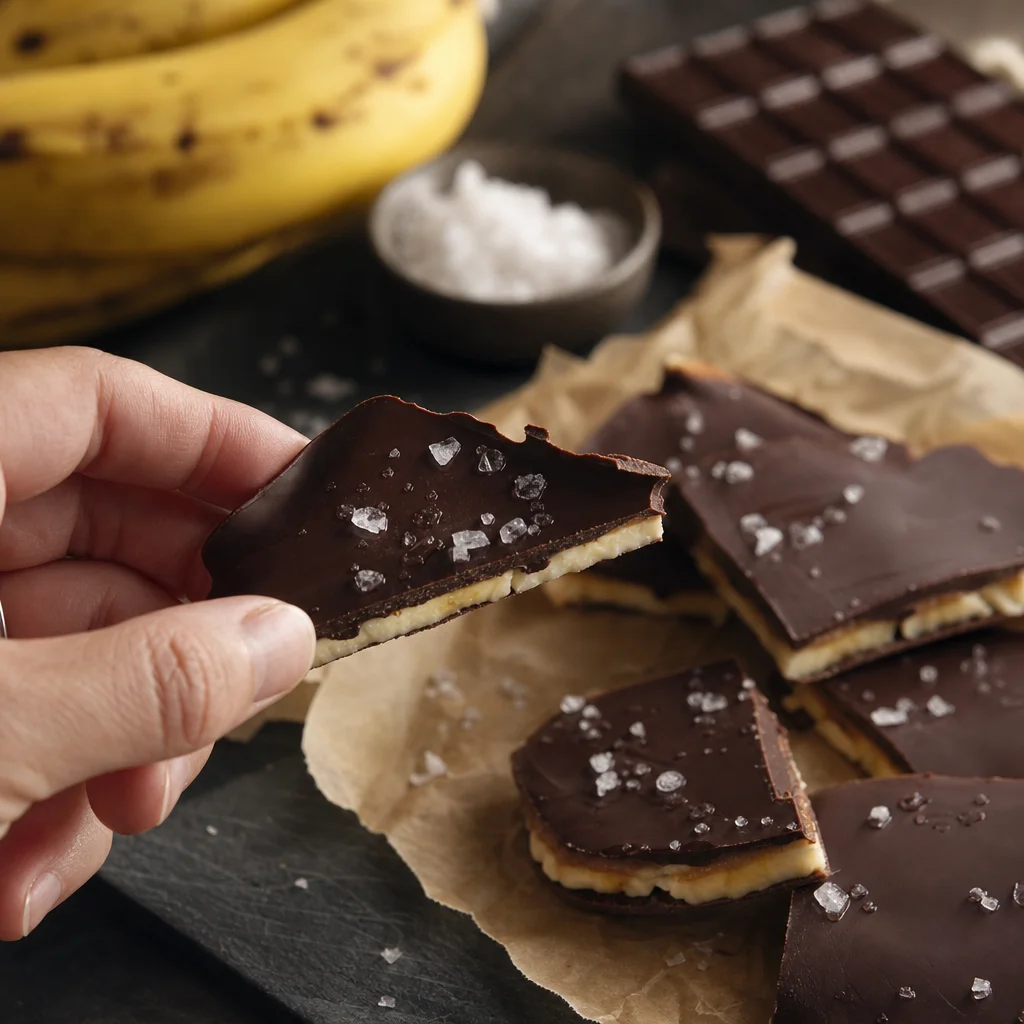
Banana bark is a frozen dessert made by pressing a ripe banana into a thin, flat layer. You cover it with melted dark chocolate and freeze it until firm. The classic single-serve version uses just three ingredients and about five minutes of hands-on time.
The Banana Bark That Tames a Chocolate Craving
Let’s be honest: the craving is not the problem. It’s completely normal to want something sweet at the end of the day. The real issue is what happens next. An open bag of cookies rarely stays open.
That’s the beauty of this dessert. The single-serve banana bark decides the portion for you. One banana. One ounce of chocolate. One serving. No tray to graze from, no “just one more piece” spiral.
Here’s the thing: most bark recipes online make a full tray. That’s perfect for a party. But a whole tray in the freezer, just for you, is a lot of temptation. This version flips the script. It’s built for one, so the portion control is already done.
Depending on the recipe, a serving of banana bark can run from about 85 to 275 calories. Your add-ins make the difference. Every version beats an open-ended evening of snacking.
The 5-Minute Banana Bark Recipe
What You’ll Need
- 1 medium ripe or overripe banana
- 1 ounce dark chocolate (70% cacao or higher)
- A pinch of flaky sea salt
Step 1: Press the banana. Line a small plate or baking sheet with parchment paper. Peel the banana and lay it on top. Cover with another sheet of parchment, then press down with a heavy skillet. You want a thin, even layer — about ¼ inch thick.
Step 2: Melt the chocolate. Chop the chocolate and microwave it in 30-second bursts, stirring between each, until smooth. That takes about 1½ minutes. No microwave? A double boiler works too.
Step 3: Top and freeze. Spread the melted chocolate over the banana. Sprinkle with flaky salt. Freeze for about 1 hour, until solid. Break into pieces and enjoy.
Pro tip: If the chocolate is too thick to spread, stir in a teaspoon of coconut oil. It thins the chocolate without changing the taste. This recipe also doubles or triples easily when you want a crowd-sized tray.
Why Banana + Dark Chocolate + Salt Actually Works
Now, you might be thinking: “Okay, it tastes good. But is banana bark actually better for me than a cookie?” Here’s what the science says.
The banana does more work than you’d think. A medium banana carries about 105 calories and 3 grams of fiber. It also delivers 422 mg of potassium and about 14 grams of naturally occurring sugar. That’s per USDA nutrition data for bananas. That sugar comes packaged with fiber and nutrients. Added sugar comes with none of that. The American Heart Association advises keeping added sugar to about 6 teaspoons a day for most women.
The dark chocolate brings flavanols — plant compounds linked to better blood vessel function. A 2016 meta-analysis of 19 trials found that cocoa flavanols improved insulin sensitivity. The study appeared in the Journal of Nutrition. A 2022 meta-analysis of 31 studies in the journal Foods reported that regular dark chocolate was linked with about 4 mmHg lower systolic blood pressure after two or more weeks — consistent with the broader flavanol evidence in the Journal of Nutrition meta-analysis.
However, here’s the honest part: chocolate is a treat, not medicine. Harvard researchers note you’d need about 700 calories of dark chocolate a day. That matches the flavanol dose used in supplements. The big COSMOS trial found cocoa supplements didn’t reduce heart attacks. They did reduce heart-related deaths, though — a meaningful signal. So the “70% or higher, small piece” habit is the sweet spot, not a daily bar binge.
And that pinch of flaky salt? It’s not just for looks. Taste science shows that a little salt suppresses bitterness. In dark chocolate, that lets the sweetness come forward. It’s the same trick behind salted caramel and every artisan chocolate bar you’ve ever loved.
How to Choose Your Dark Chocolate
The easiest upgrade for this recipe is the chocolate itself. Reach for 70% cacao or higher. The darker the bar, the more cocoa solids it contains. That means more flavanols and less room for added sugar. According to Harvard nutrition experts, darker chocolate is the best choice for health. Their one caveat? Don’t turn it into medicine.
Here’s how to make that work at the store. Flip the bar over and find the “Added Sugars” line on the Nutrition Facts panel. Don’t stop at total sugar. The exact amount varies by brand, so the label is your friend. An ounce of good 70% dark chocolate is a reasonable serving.
One more thing: flavanol content isn’t required on labels. So cacao percentage is the best practical guide you have. Processing also destroys some flavanols. And Consumer Reports has flagged lead and cadmium in some dark chocolate brands. These metals occur naturally in cacao. The fix isn’t to avoid chocolate — it’s to pick reputable brands and enjoy it in sensible amounts.
Ripe vs. Greener: The Ripeness Dial
If you’ve looked at multiple bark recipes, you’ve seen conflicting advice. Some say overripe. Others say firm. Here’s the truth: ripeness is a dial, and both ends work.
A yellow banana has about 12 grams of sugar per 100 grams, per USDA FoodData Central; overripe bananas run closer to 16 grams per 100 grams. That means overripe bananas are sweeter and softer. They’re also easier to press flat. For this recipe, that’s ideal. You get maximum natural sweetness with zero added sugar.
A greener banana is a different story. It has more resistant starch — a type of fiber that resists digestion. One small study in healthy women found that a cooked green banana drink lowered after-meal blood sugar by about 15%. So a slightly greener banana gives you a firmer, less sweet bark with a different fiber profile.
My take? For this recipe, go ripe or overripe. That’s where the “sweet enough without sugar” magic lives.
Easy Variations and Allergy-Friendly Swaps
One of the best things about this frozen treat is how easy it is to make it yours. Here are a few swaps that keep it delicious and healthy:
- Nut butter drizzle. Warm a spoonful of peanut, almond, or cashew butter and drizzle it over the chocolate. Nut-free? Sunflower seed butter works beautifully.
- Berry topping. Scatter raspberries or sliced strawberries on top before freezing. Their tartness plays off the sweet banana.
- Coconut crunch. Sprinkle unsweetened coconut flakes over the chocolate. Toasted adds even more flavor.
- Greek yogurt layer. Spread a thin layer of plain Greek yogurt over the banana before the chocolate. You get protein and an ice-cream-like texture. Just skip flavored yogurts — they often carry more added sugar than the chocolate does.
- No-added-sugar chocolate. Want to go lower on sugar? Use a no-added-sugar chocolate bar. Just read the label to confirm.
Each variation keeps the original promise: five minutes of prep, one serving, real ingredients.
Storage and Make-Ahead Tips
Here’s the answer to the question every recipe page argues about: how long does banana bark actually keep? For the best texture, enjoy it within 1 month. Bananas don’t freeze as firmly as pure chocolate. They can also absorb odors from your freezer. If you seal the pieces tightly, it stays good for up to 3 months. Use an airtight container with parchment between layers.
A few more tips. Break the bark into pieces before storing. That way you can grab one piece without thawing the rest. Work quickly when serving, because banana softens fast at room temperature. And if the bark is rock-hard, let it sit on the counter for about 5 minutes. That little wait makes a big difference in flavor.
Frequently Asked Questions
Is banana bark healthy?
It’s a dessert built from real food: fruit, dark chocolate, and a pinch of salt. Compared with a typical cookie or candy bar, it’s lower in added sugar and higher in fiber. But it’s not a health food — and it doesn’t need to be. It’s a smarter sweet that satisfies you with one portion.
Can I make banana bark without peanut butter?
Yes, absolutely. The single-serve base needs only banana, chocolate, and salt. Peanut butter is a delicious optional add-on, never a requirement. For a nut-free version, use sunflower seed butter. For no nut butter at all, the original 3-ingredient bark is perfect as-is.
Does banana bark spike blood sugar?
A ripe banana does contain natural sugar — about 14 grams in a medium one. However, that sugar arrives with about 3 grams of fiber, and a serving is just one piece — portion control matters more than any single food’s glycemic effect. Research on ripe raw plantain, a banana-family cousin, found a low glycemic index of about 38. That’s a measure of how quickly a food raises blood sugar. The takeaway? Portion control still matters. One serving is the sweet spot — literally.
The Bottom Line
So here’s your plan for the next chocolate craving. Keep a ripe banana on the counter and a good 70% bar in the pantry. When the urge hits, you’re five minutes away from a single-serve banana bark. It’s already portioned, naturally sweet, and genuinely satisfying.
The best part? You don’t have to choose between healthy and satisfying. This dessert gives you both — one crisp, chocolatey piece at a time.