

are roasted almonds still healthy
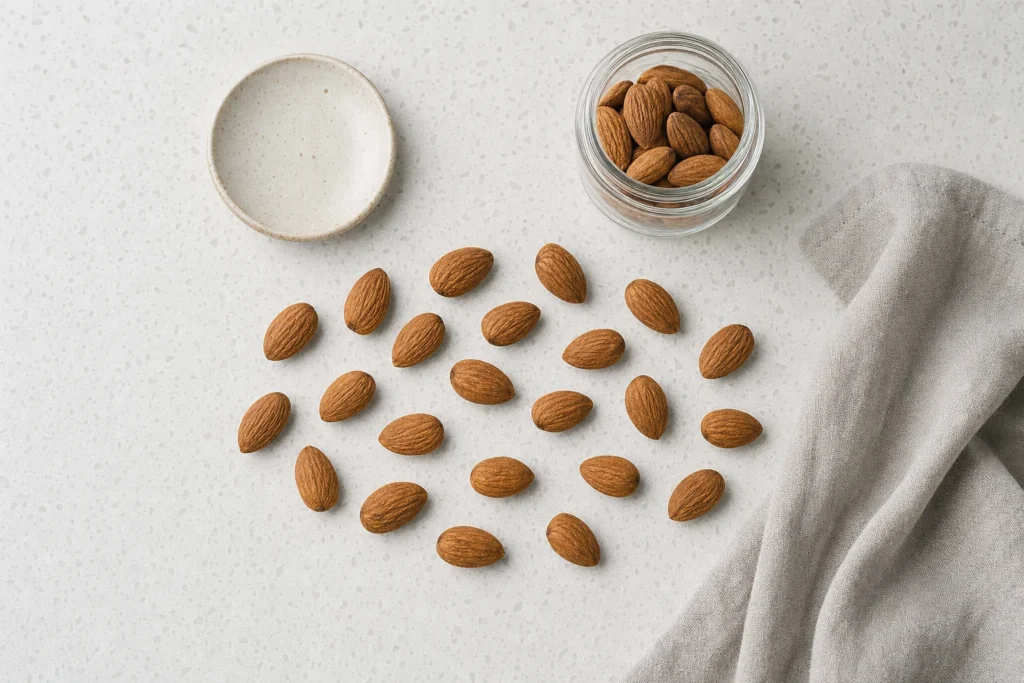
One ounce of dry-roasted almonds — about 23 nuts — still delivers 7.3 mg of vitamin E, roughly half of what most adults need in a day. That single number settles a lot of doubt. So are roasted almonds still healthy? Yes. Heat and browning change the calories and the crunch far more than they change the nutrition inside the kernel.
Last updated: November 21, 2026
Below you’ll find the numbers for one serving, a label decoder, a roast-level comparison, and a seven-day plan you can start this week. No guesswork, no vague promises.
Quick Answer: Are Roasted Almonds Still Healthy?
Yes. A 28 g serving of dry-roasted almonds (about 23 nuts) still has roughly 169 calories, 6 g of protein, 3.5 g of fiber, 15 g of fat (mostly unsaturated), and 7.3 mg of vitamin E. Dry roasting uses hot air, so it adds no fat. Oil, salt, and sugar coatings are what push the numbers up. Keep your daily portion between 28 and 42 g and choose plain over coated.
Are Roasted Almonds Still Healthy? The One-Ounce Numbers
Picture the bag in your desk drawer. The label says dry roasted, the almonds look golden, and you wonder whether that color cost you something.
It cost very little. Here is what one ounce — 28 grams, about 23 almonds — still provides.
| Nutrient (1 oz, dry-roasted, unsalted) | Amount |
|---|---|
| Calories | 169 kcal |
| Protein | 6 g |
| Total fat | 15 g (about 9 g monounsaturated, 1 g saturated) |
| Fiber | 3.5 g |
| Vitamin E | 7.3 mg (about half of the daily target) |
| Magnesium | 75 mg |
| Calcium | 75 mg |
| Sodium | 0–1 mg |
Those figures come from USDA FoodData Central, the same database dietitians use. Notice what is missing: added fat, added sugar, and sodium.
Dry roasting runs on hot air. The kernel loses water and gains color, while its nutrient core stays close to raw.
What Roasting Changes, and What It Leaves Alone
Heat is not neutral, though. Roasting nudges a few things up and a few things down.
Vitamin E takes a small hit. This fat-soluble vitamin is sensitive to heat and light, so some of it goes during roasting. Yet a serving still lands near 7 mg. The NIH Office of Dietary Supplements sets the adult daily target at 15 mg, so one ounce covers about half.
The brown skin matters. Almond skins hold fiber and polyphenols — plant compounds that act as antioxidants. Blanched almonds have that skin removed, so you lose part of the package. Keep the skin on when you have the choice.
High heat forms acrylamide. This compound appears when foods brown during roasting or frying. The FDA monitors acrylamide in roasted nuts, coffee, and fried potatoes. A light-to-medium roast keeps exposure low. Blackened, bitter almonds carry more.
Crunch changes how you eat. A crisp almond takes longer to chew. That extra chewing time helps your body register fullness before your hand reaches back into the bag.
Botanically speaking, almonds are seeds, not true nuts. Our guide on whether almonds are nuts explains the difference and why the allergy label still says tree nut.
Raw vs Roasted Almonds: Which Roast Level Works Best?
Four styles sit on most store shelves. They are not interchangeable, and the differences are easy to see side by side.
| Style | Vitamin E | Sodium | Acrylamide | Best for |
|---|---|---|---|---|
| Raw, skin on | Highest | 0 mg | Very low | Baking, chopping |
| Light dry-roasted | Slightly lower | 0–1 mg | Low | Everyday snacking |
| Dark roasted | Lower | 0–1 mg | Higher | Nut butters, bold flavor |
| Oil-roasted, salted | Slightly lower | 90–200 mg | Varies | Occasional treat |
Raw and dry-roasted almonds differ by only a few calories per ounce. Oil-roasted and coated versions are where the numbers climb.
So are roasted almonds still healthy if you eat them every day? Yes — as long as the label stays short and the portion stays sane.
On the flip side, honey-roasted and candy-coated almonds sit closer to dessert than to a plain nut. Enjoy them that way instead.
The Label Decoder: Four Lines to Read Before You Buy
You don’t need a nutrition degree. Four checks on the back of the bag do most of the work.
The Four Checks
1. Ingredients. If it reads “almonds” and nothing else, you have dry roasted. Oils in the list mean oil-roasted.
2. Sodium. Aim under 140 mg per 28 g — the threshold the FDA uses for a low-sodium food.
3. Added sugar. Look for 0 g. Honey or sugar coatings can add several grams per ounce.
4. Roast color. Medium brown is the sweet spot. A sharp, bitter taste means the batch went too dark.
The same four checks work for other nuts. Our look at whether cashews are healthy walks through the label the same way.
Are Roasted Almonds Still Healthy Every Day? Portion, Timing, and a 7-Day Plan
Portion comes first. Federal guidance counts nuts and seeds in the protein foods group and suggests about 5 ounces a week on a 2,000-calorie pattern, according to the Dietary Guidelines for Americans. That works out to roughly one small handful a day.
For most adults, 28 to 42 grams daily — 23 to 35 almonds — fits comfortably. Passing that mark is easy, because nuts pack a lot of energy into a small space.
The reality check: one ounce is about 169 calories. Four casual handfuls land near 660. That is the point where a healthy snack quietly starts working against your goals.
Timing helps more than willpower ever will. A mid-afternoon slot, around 3 to 4 p.m., covers the hunger gap before dinner. Thirty to sixty minutes before a workout, a small portion offers steady energy. What never works is the open bag at your desk.
| Day | When | Pairing | Almonds |
|---|---|---|---|
| 1 | 3:30 p.m. | 1 small apple | 28 g |
| 2 | After lunch | 150 g plain Greek yogurt | 28 g |
| 3 | 4 p.m. | ½ cup raspberries | 28 g |
| 4 | 45 min pre-workout | 1 hard-boiled egg | 28 g |
| 5 | Breakfast | Chopped into oatmeal | 28 g |
| 6 | 3 p.m. | Celery with 2 tbsp hummus | 28 g |
| 7 | Evening | 200 ml plain kefir | 28 g |
Pre-portion the whole week on Sunday. Seven small containers, 28 g each, takes about five minutes and removes the decision from your busiest hours.
One-Week Shopping List
- 150 g dry-roasted, unsalted almonds — your everyday snack
- 100 g raw almonds with skin — for chopping and baking
- Optional: 50 g slivered almonds for oatmeal
- Pairings: 1 bag of apples, 1 tub plain Greek yogurt, 1 bag frozen raspberries, 6 eggs, 1 tub hummus, 1 bottle plain kefir
Two varieties is the limit. Every extra bag in the pantry becomes extra grazing, and that is how portions drift.
If you want more pairings like these, our healthy snack ideas collection has options that fit the same 28 g formula.
Who Should Be Careful With Roasted Almonds
Roasted almonds suit most adults. A few situations call for extra care or a conversation with your clinician.
Tree nut allergy. Almonds are a tree nut, and roasting does not remove the proteins that trigger reactions. If you carry an epinephrine auto-injector, read every label every time. Food Allergy Research & Education explains how cross-contact happens in shared facilities.
Oral allergy syndrome. If birch pollen makes your mouth itch, raw almonds may do the same. Roasted nuts sometimes feel gentler, but confirm this with your allergist before testing it yourself.
Kidney stone history. Almonds are moderate in oxalate. If you have had calcium oxalate stones, ask about your ideal portion before making them a daily habit.
Sodium-restricted diets. Salted roasted almonds can add 90 to 200 mg of sodium per ounce. For heart failure or high blood pressure, buy unsalted and season them at home.
Sensitive digestion. The 3.5 g of fiber per ounce is a benefit, but doubling the portion can bring bloating. Build up slowly.
Weight goals. Calories add up faster than you expect. Weigh one portion once, and your eye will learn the size for good.
FAQ: Roasted Almonds Questions Readers Ask
Are roasted almonds still healthy?
Yes. Dry roasting leaves calories, protein, fiber, and most of the vitamin E intact. Coatings are what change the picture.
Do roasted almonds lose nutrients?
Vitamin E drops a little, and the skin’s polyphenols take a small hit. The loss is modest and no reason to switch back to raw.
Are salted roasted almonds bad for you?
Not bad, just salty. One ounce can carry 90 to 200 mg of sodium. If you watch salt, buy unsalted and add your own seasoning.
Are honey roasted almonds healthy?
Treat them as dessert. Sugar coatings add several grams per ounce and push the calorie count higher.
How many roasted almonds should I eat a day?
Between 23 and 35 almonds — 28 to 42 g — and always with a fiber or protein partner.
Raw or roasted almonds — which is better?
Raw has slightly more vitamin E. Dry-roasted wins on flavor and crunch, and you may eat less because of it. Both belong in a healthy diet.
Can I eat roasted almonds on a weight-loss plan?
Yes, if you count them. At 169 calories an ounce, almonds fit when they replace another snack rather than stack on top of it.
The Bottom Line
Roasting does not undo the benefits of almonds. One ounce of dry-roasted almonds still gives you 6 g of protein, 3.5 g of fiber, about 7 mg of vitamin E, and 169 calories.
Choose plain over coated, keep the portion near a handful, and place almonds in your day rather than in front of you. Small, unglamorous decisions like these are what a healthy routine is built from.
For the rest of your fat choices, our guide to healthy fats for women covers oils, avocado, and fatty fish in the same practical style.