

Is Hummus Healthy? Portions, Sodium and a 7-Day Plan
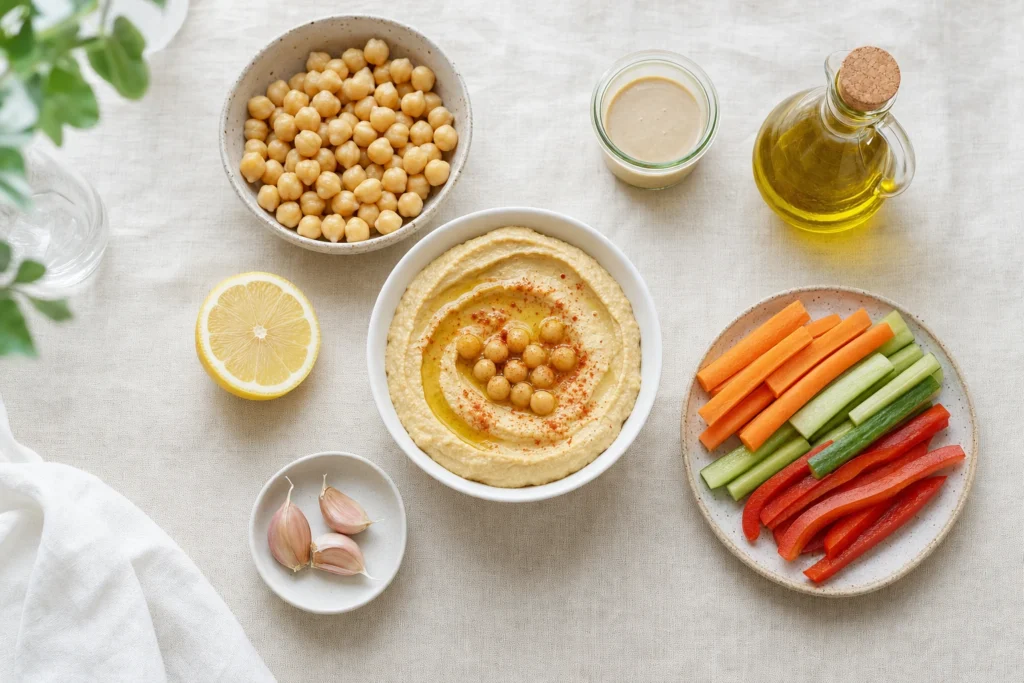
You are standing in the refrigerated aisle with a tub in one hand and a label you cannot quite decode in the other. So is hummus healthy, or just another dip with a good reputation? The answer is yes, and the numbers decide the rest. Two tablespoons (28 g) of commercial hummus carry about 67 calories, 1.6 g of fiber, 2.2 g of protein and 121 mg of sodium. What you do with the rest of the tub matters more than the tub itself.
Last updated: November 14, 2026
Quick Answer: The Short Verdict
Yes, for most adults. Two rules make it work. Keep the portion realistic in size: 2 tablespoons as a condiment, 57 g (about 4 tablespoons) as a snack. And choose the dipper: raw vegetables, not chips or white pita. A full 280 g tub holds roughly 1,190 mg of sodium, about half the daily limit. That makes it about five snack portions, not a weekend.
Is Hummus Healthy? What Two Tablespoons Actually Deliver
Hummus is chickpeas, tahini, olive oil, lemon and garlic blended smooth. Each ingredient brings something, and the blend is what makes the numbers interesting.
The USDA figures, reproduced in a comprehensive review of hummus research, are the ones to trust. That review was funded by a hummus company, which is worth knowing, but the USDA data inside it is the most complete published set for hummus. Per 28 g: 67 calories, 5.05 g fat, 2.21 g protein, 1.56 g fiber and 121 mg sodium.
Fat is the biggest line item. Those 5 g of fat supply about 45 of the 67 calories. Protein supplies roughly 9. So hummus is a fat source that happens to carry fiber and protein, not a protein food.
Brands vary, and that is normal. Expect 65 to 85 calories per 2 tablespoons, depending on how much tahini and oil a brand uses. Your tub may not match the label you read online.
| Portion | Calories | Fat | Protein | Fiber | Sodium | % of daily limit |
|---|---|---|---|---|---|---|
| 2 tbsp (28 g) | 67 | 5.1 g | 2.2 g | 1.6 g | 121 mg | 5% |
| 57 g (real snack) | 135 | 10.1 g | 4.4 g | 3.1 g | 242 mg | 11% |
| 100 g | 237 | 17.8 g | 7.8 g | 5.5 g | 426 mg | 19% |
Two tablespoons also deliver real mineral amounts: about 12% of the Daily Value for copper and 14% for manganese. Folate lands near 3% of the Daily Value. That is a modest amount for a dip, and it is worth knowing before you count on hummus for it.
Homemade and Store-Bought: Where the Sodium Comes From
Here is the part labels make hard to see. The sodium in hummus is not built into the recipe. It arrives from the can.
Plain chickpeas, boiled without salt, hold just 11.5 mg of sodium per 100 g. Commercial hummus holds 426 mg per 100 g. Same legume, about 37 times the sodium.
Tahini adds little. Sesame paste runs near 115 mg per 100 g, and a typical batch uses only 60 g of it. The salt and the canning liquid do the rest.
That is why rinsing matters. The FDA’s 2,300 mg daily sodium limit comes with a practical tip: rinse canned beans to remove some of the salt. Thirty seconds under the tap removes some of it, and it costs nothing.
Read the label the way the FDA does. Five percent of the Daily Value or less per serving counts as low, and 20% or more counts as high. At 121 mg per 2 tablespoons, most commercial hummus lands near 5% of the Daily Value — low by the FDA’s standard. It adds up fast, though: four tablespoons doubles it to about 10%, and a whole 280 g tub carries roughly half a day’s limit.
One more check: oil. Some brands use soybean oil instead of olive oil. Read the ingredient list, not the front of the tub — the same habit we break down in our healthy grocery shopping guide.
The Tub Math Nobody Prints
A 280 g tub equals 10 label servings of 28 g. It equals about 5 real snack portions of 57 g. Total sodium in the tub is roughly 1,190 mg, about 52% of the 2,300 mg daily limit. So one tub is five full snack portions, or about six days of the mixed rotation below — not a weekend.
How Much Hummus a Day? Start With 57 g, Not 28 g
Two tablespoons is a label serving, not an eating occasion. Researchers tested something closer to real life in a randomized crossover trial on afternoon hummus snacks.
Thirty-nine healthy adults ate a 240-calorie afternoon snack for six days per pattern. The hummus version used 57 g of hummus plus pretzels. The other patterns used a granola bar or no snack at all.
The hummus snack cut hunger, desire to eat and thoughts of food by about 70% versus no snack. The granola bar did not. Hummus also lowered later dessert snacking by roughly 20%, and afternoon blood glucose ran about 5% below the bar pattern.
Keep the scale in view. That is 39 people, six days, and healthy adults. Pretzels were part of the snack, so the effect is not hummus alone.
Practical translation: 2 tablespoons when hummus is a condiment, 57 g (about 4 tablespoons) when it is the snack. Four tablespoons is 135 calories. Eight tablespoons is 270 calories — and an unmeasured scoop reaches four tablespoons far more easily than you would guess.
Is Hummus Healthy for Weight Loss? What the Trials Show
It can help, but not because of anything magic in a chickpea.
No trial has tested hummus itself against body weight. The closest evidence covers pulses, the plant family that includes chickpeas. A meta-analysis of 21 pulse trials pooled 940 people and found a weight difference of 0.34 kg, just under a pound, over six weeks.
That is a real effect, and it is small. Survey data looks louder: hummus and chickpea eaters weigh about 6 kg less than non-eaters. However, that is a snapshot, not a cause. People who eat hummus differ in many other ways.
What does hold up is replacement. Swap mayonnaise, butter or jam for hummus and you cut calories, saturated fat, sodium and added sugar at once. One menu model found 90 fewer calories, 4 g less saturated fat, 35 mg less sodium and 9 g less added sugar in a single day.
Watch the fat. Roughly two-thirds of hummus calories come from fat, so an unmeasured snack plate can climb past 400 calories without a single chip.
Blood Sugar: The Swap Rule Most Guides Miss
Chickpeas sit low on the glycemic index, at 14 to 28 on a scale where white bread is 100. That sounds like a green light for pita. It is not.
A 2025 meta-analysis on chickpeas and blood sugar pooled 28 studies. Chickpeas lowered the total post-meal glucose response versus a matched carbohydrate. Peak glucose did not change, and the certainty of the evidence was very low.
The detail that matters most is easy to miss. Hummus eaten alone lowered post-meal glucose compared with white bread. Hummus added on top of white bread did not lower the response at all.
So the benefit is a swap, not a shield. Dip cucumber and pepper instead of bread and the low glycemic index works for you. Spread hummus on white toast and you have added fat, not protection.
If you live with diabetes or take glucose-lowering medication, count hummus as a carbohydrate food and fit it into your plan. Ask your clinician what portion suits you.
One Tub Plus One Batch: Seven Days
It is easy to finish a tub in three sittings. This week stretches it and keeps the sodium visible. The same portion-first logic runs through our guide to quinoa portions if you want the method for other staples.
| Day | How much | How to use it |
|---|---|---|
| Monday | 57 g | Snack with carrot and cucumber sticks |
| Tuesday | 57 g | Dollop on a grain bowl at lunch |
| Wednesday | 30 g | Sandwich spread instead of mayonnaise |
| Thursday | 57 g | Snack with red pepper and celery |
| Friday | 30 g | Thinned with lemon and water as dressing |
| Saturday | 57 g | Spooned over roasted vegetables |
| Sunday | 30 g | With celery while dinner cooks |
That week uses about 318 g of hummus and roughly 1,355 mg of sodium. That is one 280 g tub plus about 40 g from the batch recipe below. Spread over seven days, it averages near 190 mg a day, about 8% of the daily limit.
Notice the pattern: bigger portions on snack days, 2 tablespoons on condiment days. That rhythm keeps a dip from quietly becoming a side dish.
What to Dip Into It Without Doubling the Carbs
The dipper decides whether hummus helps you or just adds calories to a cracker. Rank your options before you open the tub.
Best: raw vegetables. Cucumber, carrot, red pepper, celery, radish, fennel. A cup of any of these stays well under 60 calories and adds the water, volume and crunch the dip lacks.
Fine in small amounts: whole-grain pita in a quarter pocket, or a few whole-grain crackers. Both add carbohydrate, so weigh them against the hummus.
Last: chips, fried pita and pretzel thins. They combine refined starch with salt, and they explain how a healthy snack passes 400 calories.
Restaurant plates deserve their own warning. A generous olive-oil drizzle adds about 120 calories per tablespoon, and a restaurant pour is often more than one. Ask for the oil on the side.
Beyond dipping, hummus works as a sandwich spread, as a dressing thinned with lemon, or spooned over roasted vegetables. Those uses stretch a tub further than a snack plate does.
A 400 g Batch With Exact Weights
Homemade is not automatically better. It is better when you measure, because you control the two variables that count: salt and oil.
- 250 g drained, rinsed chickpeas (one 400 g can)
- 60 g tahini
- 30 g lemon juice (about one lemon)
- 1 garlic clove, about 3 g
- 1 tsp ground cumin, about 2 g
- 15 g olive oil
- 60 to 90 g ice water
- Salt to taste, or none
Blend the chickpeas, tahini, lemon, cumin and garlic for 60 seconds. Pour in ice water in a thin stream until the texture loosens. Add the oil last and pulse for a few seconds.
You get about 400 g, roughly 14 servings of 2 tablespoons. Sodium lands near 30 to 60 mg per serving with rinsed chickpeas and no salt. Skip the rinse and it climbs to roughly 90 to 120 mg.
Adding salt? Do the arithmetic. One gram of salt adds about 400 mg of sodium to the batch — roughly 28 mg per serving on top of whatever the chickpeas bring. Two grams doubles that.
Shopping list: one can of chickpeas, one jar of tahini, two lemons, a head of garlic, olive oil, cumin, and three or four vegetables for dipping. Plus one 280 g tub, so you only cook the batch on a night that suits you.
Who Should Be Careful
Sesame allergy comes first, and it is not a mild concern. Sesame is one of nine major food allergens in US law, and tahini is sesame. Anyone with a sesame allergy should avoid traditional hummus entirely.
That allergy is also stubborn. A 2026 review of sesame allergy research notes low rates of spontaneous resolution and a risk of severe reactions. There is no portion at which hummus becomes safe for a sesame-allergic household.
A chickpea or legume allergy rules hummus out too. So does cross-contact in a shared food processor, which matters in a house with mixed allergies.
Irritable bowel syndrome is a different story. Chickpeas contain raffinose and other fermentable carbs, which feed gut bacteria and produce gas. Start at 2 tablespoons rather than 4 and increase gradually as your gut adjusts.
If you are watching sodium for blood pressure, read the tub. Above 140 mg per serving, a brand is not low sodium by FDA standards.
Pregnancy is usually straightforward. Hummus is a safe snack when it is pasteurised and kept cold. Do not count on it for folate, though, since 2 tablespoons gives about 3% of the Daily Value. Bring any personal question to your clinician.
Storage, Freezing and Recalls
Opened hummus is a moist, protein-containing dip, so it is perishable by nature. Keep it cold below 40°F and never leave it out for hours. The date on your own tub is the instruction written for the product in your fridge — follow it. As a general rule, serve it with a clean knife rather than a used one, and throw it out at the first sign of fizz, a sour smell, water pooling with a grey tint, or any visible mould.
Hummus can be frozen, though the texture usually suffers. Portion it before freezing, thaw it overnight in the fridge and stir it well. It may look grainy, which is fine for cooking and less fine for a party plate.
Undeclared allergens are one reason the FDA issues food recalls. The agency samples products to check that major allergens are declared on the label. When they are not, it works with firms to pull them from shelves. It is worth checking recall notices now and then if a tub tends to sit in your fridge.
Quick Questions About Hummus
Can you eat hummus every day?
Yes, in modest amounts. Two to four tablespoons daily fits a varied diet. Rotate it with other legume foods so the same snack does not run every afternoon.
Does hummus count as a vegetable or a protein?
Neither, really. Two to three ounces equals about 1/8 to 1/4 cup of legumes toward a weekly legume target. Treat it as a fat with a fiber bonus, and log it alongside high-protein, high-fiber snacks rather than as a vegetable serving.
Is hummus good for diabetics?
It is a low-glycemic food with fat and fiber that slow digestion. Keep the portion at 2 to 4 tablespoons, pair it with vegetables, and count the carbohydrate inside your plan.
Is chocolate hummus healthy?
It is a dessert. Sweetened versions carry added sugar the savory kind does not have. Read the label and treat it as a treat — our healthy chocolate snacks guide shows how to read that label.
Hummus or peanut butter on toast?
Hummus has less fat and fewer calories per tablespoon, and less protein. Peanut butter brings about 95 calories per tablespoon against hummus at 33. Our guide to picking a peanut butter jar runs the same label check in full.
How long does an open tub last?
Follow the date on the tub. As a general rule it is a short-lived food once opened — keep it cold and discard it at the first sign of fizz, a sour smell or mould.
How we researched this
We reviewed 7 sources, including systematic reviews, randomized controlled trials, meta-analyses, and government health agencies.
This article is for general information and is not a substitute for advice from your doctor or dietitian.
The Bottom Line
So, is hummus healthy? Yes, with two caveats that labels tend to bury.
The first is fat. About two-thirds of its calories come from fat, so a real serving is smaller than a scoop.
The second is sodium, and it is a canning problem rather than a recipe problem. Rinse the chickpeas and you have solved most of it.
Buy one 280 g tub and one can of chickpeas this week. Measure 57 g for snacks and 2 tablespoons for spreads. Dip vegetables, not chips. That plan fits a fridge, a budget and a Tuesday night, which is what a healthy habit needs to be.