

Is Quinoa Healthy? How Much to Eat Per Day
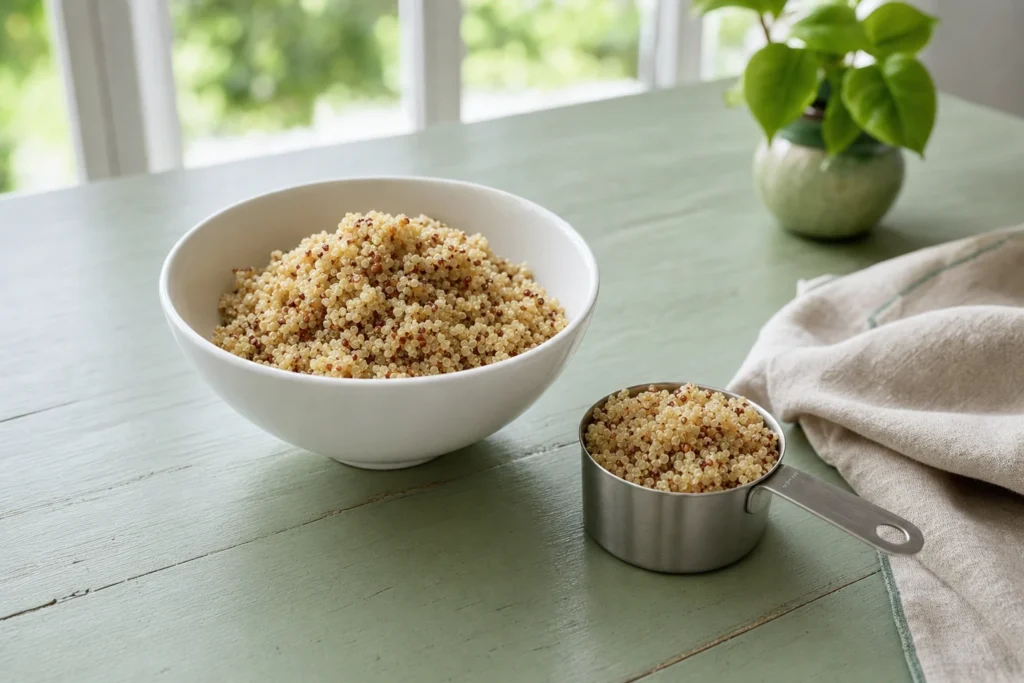
Is quinoa healthy? Yes. The portion size is where most people get it wrong. One cooked cup of quinoa has about 222 calories and 8 grams of protein. It also brings 5 grams of fiber and 39 grams of carbs. Half a cup lands near 111 calories and 3 grams of fiber.
Last updated: November 11, 2026
Those numbers change the conversation. Quinoa is a nutrient-dense whole food, not a low-calorie one. So the useful questions become: how much, how often, and what are you swapping it for?
Below you get a real portion ladder, a simple timing plan, a rinse-and-cook method that fixes the bitter taste, and the safety notes other guides skip.
Quick Answer: Is Quinoa Healthy?
Yes. Quinoa is a whole food with all nine essential amino acids, roughly 5 grams of fiber per cooked cup, and a gentler blood sugar response than white bread at the same carb dose. Most women do well with 3/4 to 1 cup cooked at a meal. If you watch your blood sugar, start at 1/2 cup. Keep the practical ceiling near 2 cups cooked per day.
Is Quinoa Healthy? The Numbers in One Cooked Cup
Start with what is actually on your plate. One cooked cup weighs about 185 grams, and most of that is water and carbohydrate. Here is the breakdown most guides skip.
| Cooked quinoa | 1/2 cup (93 g) | 1 cup (185 g) |
|---|---|---|
| Calories | 111 | 222 |
| Protein | 4 g | 8 g |
| Carbohydrate | 20 g | 39 g |
| Fiber | 3 g | 5 g |
| Fat | 2 g | 3.5 g |
Fiber is where quinoa separates itself from refined grains. One cooked cup delivers about 5 grams. Brown rice, a whole grain, gives about 3.5 grams at the same volume, and white rice, a refined grain, brings none.
Per 100 grams cooked, quinoa has roughly 23 grams of carbs and 2 grams of fiber. White rice has about 33 grams of carbs and no fiber. Same scoop, very different job in your body.
Minerals are the quiet bonus. A cooked cup supplies about 28% of the Daily Value for magnesium, 19% for folate, and 15% for iron, based on USDA nutrient data. It also adds manganese, copper, zinc, and phosphorus.
Then there is protein. Quinoa carries all nine essential amino acids, and it is unusually rich in lysine, the one most grains are short on. A review of quinoa’s nutritional and antinutritional properties describes it as an exceptional amino acid balance for a plant food.
However, 8 grams per cup makes quinoa a protein contributor, not a protein food. Eggs, Greek yogurt, or beans still do the heavy lifting on your daily total.
Your Portion Ladder: From Half a Cup to a Daily Ceiling
Here is the part that usually gets left out. Quinoa servings are written as “one cup,” and that means one cup cooked, never one cup of dry grain.
- 1/2 cup cooked (93 g): about 111 calories, 20 grams of carbs, 3 grams of fiber. The right starting point if you manage blood sugar, watch calories, or are new to high-fiber foods.
- 3/4 to 1 cup cooked: about 167 to 222 calories. A solid carb portion for most women at lunch or dinner.
- Up to 2 cups cooked per day: roughly 444 calories and 10 grams of fiber. Beyond that, quinoa starts crowding out other foods instead of adding variety.
That ceiling is arithmetic, not a rule handed down by a study. Most adults do best aiming for 25 to 35 grams of fiber a day. Two cups of quinoa covers about a third of that, and more usually means bloating.
Now the conversion that prevents the classic mistake. One cup of dry quinoa, about 170 grams, becomes about 3 cups cooked. That whole batch carries roughly 666 calories and 15 grams of fiber.
So a bag-measured cup of quinoa is a three-serving batch, not a single dinner. Cook one cup dry, then portion it into six half-cup containers for the week.
If you are choosing between grain-based sides, the same honesty applies to pasta and rice. Our guide on whether is orzo healthy walks through how a refined grain compares when the portion stays fixed.
Timing: Midday, Pre-Workout, or After Dark
Quinoa is easiest to tolerate at midday, when your digestion has a whole afternoon to work. That is also when most people can comfortably afford the carbs.
Pre-workout is the second good slot. Try 1/2 to 3/4 cup cooked about two to three hours before training. The carbs and fiber release steadily, and the protein adds a little to the tank.
Here is what dinner can look like. For most people, quinoa at night is perfectly fine. There is no evidence it disrupts sleep or does anything strange to your metabolism after dark.
The real issue is comfort. Fiber close to bedtime can feel heavy if you are sensitive. Keep a nighttime portion to 1/2 to 1 cup, and finish eating two to three hours before bed. That timing also helps if you are prone to reflux.
Is Quinoa Healthy for Diabetics? Portion Beats the Glycemic Index
You have probably seen the number 53 attached to quinoa’s glycemic index. It comes from a single measurement, not from a fixed property of the food.
Measured values for quinoa run from the 40s to nearly 90, depending on variety, processing, and cooking. One small study in healthy and diabetic subjects recorded a glycemic index of 89.4 for a quinoa breakfast. Buckwheat scored 26.8 in that same trial.
So why do dietitians still suggest it? Because the comparison that repeats across studies is quinoa versus refined starch, not quinoa versus nothing.
A small randomized crossover pilot study in healthy young adults matched quinoa and white bread at 25 and 35 grams of available carbohydrate. Quinoa produced a significantly lower blood glucose rise at both doses, plus better appetite scores. Gut tolerance was comparable.
Portion is the variable you control. A 12-week randomized trial in 46 adults with non-alcoholic fatty liver disease had them replace their grains with quinoa at lunch. Compared with the control group, insulin resistance and LDL cholesterol improved, and the benefit held even after adjusting for weight change.
That is not proof quinoa does the same for every woman, but it is the clearest demonstration that the swap itself, not the quinoa sitting beside your rice, did the work.
Notice the word replace. For a blood-sugar-friendly plate, try 1/2 cup cooked quinoa in place of the rice or pasta, next to protein and non-starchy vegetables.
Think glycemic load rather than index alone. Half a cup brings about 20 grams of carbs, which is a manageable load. A heaped cup and a half does not stay manageable for long.
Quinoa in Pregnancy: A Good Folate Food, Not a Folate Plan
Quinoa is safe and useful during pregnancy, with two conditions: rinse it well and cook it thoroughly.
Folate is where the nuance lives. One cooked cup provides about 78 micrograms of folate, roughly 19% of the Daily Value. That sounds generous until you look at how food folate works.
Only about half of the folate naturally present in food is absorbed, according to the NIH Office of Dietary Supplements. Folic acid from fortified foods and supplements absorbs far better.
Folate needs rise to 600 mcg DFE during pregnancy. Clinical guidance recommends 400 to 800 mcg of folic acid daily, started before conception when possible. Quinoa contributes. It never replaces that supplement.
Iron follows the same pattern. A cooked cup gives about 2.8 mg, while pregnancy needs climb to 27 mg a day. Use quinoa as one piece of a bigger plate, not as your iron strategy.
The fiber earns its place too. Constipation is common in pregnancy, and 5 grams per cup is a gentle way to keep things moving.
How to Cook Quinoa So It Tastes Good the First Time
If your last batch tasted soapy or came out like porridge, the fix is mechanical, not mysterious. Follow this order.
- Rinse for 30 seconds. Put the dry quinoa in a fine mesh strainer and run cold water over it, rubbing the grains with your fingers. This strips saponins, the bitter coating on the seed.
- Use a 1:1.75 water ratio. One cup dry quinoa to 1.75 cups water gives separate, fluffy grains. Use 1:2 if you like it softer.
- Simmer for 15 minutes. Bring it to a boil, then cover and drop the heat to low.
- Rest off the heat for 5 minutes. Keep the lid on. This finishes the grain without scorching the bottom.
- Fluff with a fork and cool before storing. Spread it on a tray for 10 minutes, then refrigerate.
Most packaged quinoa is already mechanically washed, so the rinse is insurance against bitterness rather than a food-safety step. It costs you 30 seconds.
Three quinoa failures and what caused them
Bitter or soapy: saponins left on the seed. Rinse longer, or soak 30 minutes first.
Mushy: too much water, or no covered rest at the end. Measure the ratio.
Gummy: heat too high, or you stirred it like risotto. Leave it alone while it simmers.
Texture trouble is not unique to quinoa. The same water-to-grain math decides whether oats turn creamy or gluey, which is why our comparison of blended oatmeal vs cooked oats is worth a look if consistency is your sticking point.
Five Mistakes That Make Quinoa Backfire
- Treating a cup of dry quinoa as one serving. It becomes 3 cups cooked, or roughly 666 calories.
- Adding it instead of swapping it. Quinoa beside rice is just extra carbohydrate. The trial evidence comes from replacement.
- Skipping the rinse. Then deciding you hate quinoa because of one bitter batch.
- Drowning it in oil or sweet sauce. The grain is lean; the dressing often is not.
- Calling it a free food. At 222 calories per cooked cup, it counts. Nutrient-dense is not the same as calorie-free.
Keep the rest of the plate simple. A spoon of guacamole or a yogurt-based sauce adds flavor without the sugar hit of a bottled dressing, and our piece on is guacamole healthy covers the fat question properly.
Who Should Be Careful With Quinoa
Quinoa suits most people. It is not right for everyone at every dose, though, and a few groups need a plan rather than a warning.
- Kidney disease. A cooked cup supplies about 22% of the Daily Value for phosphorus and 7% for potassium. If you follow a renal diet, ask your kidney dietitian where quinoa fits.
- History of calcium oxalate stones. Quinoa contains oxalate and appears on higher-oxalate food lists. Treat this as a precaution rather than a proven risk. Keep portions moderate, drink enough water, and pair quinoa with calcium-rich foods, which bind oxalate in the gut.
- Fiber-restricted diets and the low-FODMAP elimination phase. Start at 1/2 cup and check your tolerance with your dietitian. Thresholds vary from person to person.
- Sensitive digestion or a saponin reaction. If quinoa leaves you bloated, soak it 30 minutes and rinse thoroughly before cooking, then try a smaller portion.
- Known quinoa allergy. Rare, but real. Seek medical care for hives, swelling, or trouble breathing after eating it.
Is Instant Quinoa Healthy? Flakes, Packets, and Seasoned Cups
Speed changes the product. Quinoa flakes are rolled flat and cook like instant oatmeal, so they work when 20 minutes is not available.
Read the label instead of assuming. Flakes and instant cups vary in fiber per serving, and flavored versions often carry added sodium, sugar, and oil. The seasoning sachet is usually where the sodium lives. If label reading feels slow, a few healthy grocery shopping habits make it quicker.
Plain dry quinoa plus your own seasoning gives you control. That is the version every portion in this guide refers to.
Quinoa and Weight Loss: What the Trials Actually Show
No trial has tested quinoa as a weight-loss intervention. That point matters, because the claim shows up everywhere.
What exists is smaller and more modest. In one randomized crossover trial, healthy adults aged 50 to 75 ate 15 grams of quinoa biscuits daily for four weeks. They lost 0.61 kg more than the control group and saw small drops in total and LDL cholesterol. The authors themselves called the changes modest.
Another four-week crossover in 37 overweight men used 20 grams of quinoa flour in bread and found no between-group difference in weight or cholesterol. Dose and duration decide whether quinoa does anything measurable.
So skip the fat-burning story. Swap quinoa for white rice or white pasta and the same plate becomes more filling for similar calories, thanks to fiber and protein. That is a genuine advantage. It is not a shortcut.
The same swap logic works at breakfast. Trading white toast for a smaller portion of quinoa changes the fiber math more than it changes the calories. We apply that test to bread in our breakdown of is pita bread healthy.
Your Quinoa Questions, Answered
Is quinoa healthy to eat every day?
For most people, yes. Keep it to 1/2 to 1 cup cooked at a meal and up to about 2 cups cooked a day. Rotate it with oats, beans, and other whole grains so you get a wider spread of nutrients.
Is quinoa healthy or unhealthy?
It is a healthy whole food. What it is not is low in calories. At 222 calories per cooked cup, it needs to replace something on your plate rather than sit beside it.
Is quinoa healthy carbs?
Yes, it is a carb food and a good one. One cooked cup brings about 39 grams of carbs, 5 grams of fiber, and 8 grams of protein. That fiber and protein combo is what makes it a better choice than refined starch.
Is quinoa healthy at night?
There is no evidence it is harmful in the evening. If fiber feels heavy late at night, keep the portion to 1/2 to 1 cup and finish eating two to three hours before bed.
What are the healthiest ways to serve quinoa?
Two reliable plates. For breakfast, use 1/2 cup cooked quinoa with milk, cinnamon, and berries. For dinner, build a bowl with 1/2 cup quinoa, beans or lentils for protein, greens, and a lemon-olive oil dressing.
The Bottom Line
Quinoa is a healthy whole food with real fiber, real minerals, and a complete amino acid profile. The number that decides whether it works for you is the portion. Aim for 3/4 to 1 cup cooked at a meal, drop to 1/2 cup if you are managing blood sugar, and stop around 2 cups cooked a day. Remember that 1 cup dry becomes about 3 cups cooked, so measure before you cook. Then swap it in for rice or pasta instead of adding it, rinse it for 30 seconds first, and let the fiber and protein do the work while you keep your prenatal supplement, your medications, and your kidney care exactly as your clinician advised.
How we researched this
We reviewed 8 sources, including government health agencies, randomized controlled trials, systematic reviews, and the USDA FoodData Central database.
This article is for general information and is not a substitute for advice from your doctor or dietitian.