
Healthy Grocery Shopping: 9 Small Choices That Make a Big Difference
What if the smallest choice you make at the grocery store had the biggest impact on your health? From the checkout lane to the produce aisle, every decision during your weekly shopping trip either supports or undermines your wellness goals. The science is clear: healthy grocery shopping isn’t about willpower—it’s about strategy. And the latest research reveals that the way you shop matters just as much as what you eat.
Quick Answer: What Makes Grocery Shopping Healthier?
Healthy grocery shopping comes down to planning before you go, navigating the store strategically (start at the perimeter), reading labels beyond marketing buzzwords, avoiding the checkout lane traps (70% of checkout foods are unhealthy), and choosing more plant-based whole foods. Research shows that women who meal plan and use grocery lists make significantly healthier purchases—and even lose more weight over time.
The Checkout Lane Trap: Why Healthy Grocery Shopping Starts at the Register
Let’s start at the end of your shopping trip—the checkout lane—because that’s where most healthy intentions fall apart. You’ve loaded your cart with vegetables, lean proteins, and whole grains. Then you wait in line, surrounded by candy bars, chips, and sugary drinks strategically placed at eye level.
This isn’t accidental. Research from the University of California, Davis found that 70% of foods and beverages at grocery store checkout lanes are unhealthy. For snack-sized options—the ones most likely to be impulse purchases—that number jumps to 89%. Candy alone accounts for 31% of checkout offerings, followed by sugary beverages at 11% and salty snacks at 9%.
Food companies pay stores for that prime real estate because the checkout lane is the only place every customer must pass through. And it works. Three-quarters of shoppers who purchased candy or soda at checkout later expressed regret about the purchase. That’s not a personal failure—it’s a system designed to exploit impulse decisions.
The good news? Berkeley, California, became the first city in the world to implement a healthy checkout policy in 2021. Within one year, unhealthy products at checkout were cut nearly in half. Shoppers in stores with healthier checkout policies made 76% fewer purchases of typical checkout snack foods. The takeaway for your own healthy grocery shopping: awareness of these tactics is your first line of defense.
Your Small Choices at the Register Can Change Communities
Here’s something most shoppers don’t realize: that “round up to the nearest dollar?” question at checkout can make a genuine difference beyond your own cart.
Sprouts Farmers Market’s Healthy Communities Foundation, for example, has raised nearly $7 million through in-store round-up donations over just two years. That money funds nutrition education programs, school gardens, and after-school cooking classes in over 100 communities across the United States. Since 2015, the foundation has helped build more than 160 community gardens.
Why does this matter for your health? Because community-level nutrition education creates a ripple effect. When children learn to grow, prepare, and enjoy fresh food, those habits travel home to their families. School garden programs have been shown to increase children’s willingness to eat vegetables and fruits—habits that stick into adulthood.
Rounding up a few cents might seem insignificant in the moment. But collectively, those micro-decisions fund the kind of grassroots nutrition infrastructure that makes healthy eating more accessible for entire communities. It’s one of the easiest ways to extend your healthy grocery shopping beyond your own kitchen.
The Perimeter Strategy: How to Navigate the Store for Healthier Choices
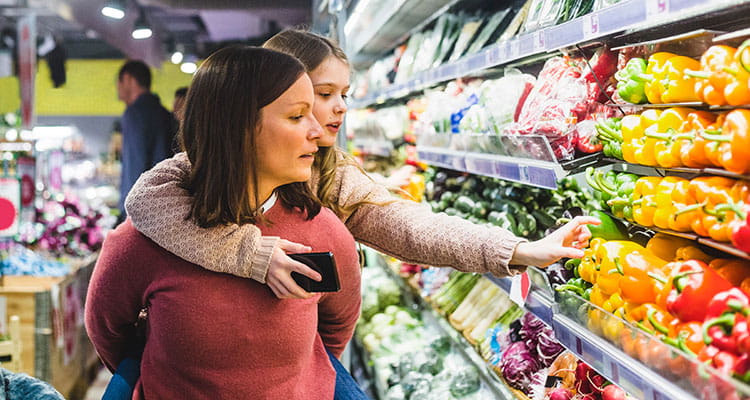
Dietitians and cardiologists agree on one of the simplest healthy grocery shopping strategies: shop the perimeter first. Fresh produce, lean proteins, dairy, and seafood are almost always stocked along the store’s outer walls. The center aisles? That’s where packaged and ultra-processed foods live.
Start your trip in the produce section and fill your cart with colorful fruits and vegetables before moving to anything else. This isn’t just about willpower—it’s about visual psychology. When your cart already looks full and healthy, you’re less likely to add items that don’t match. A cart full of greens and fresh berries creates a visual standard that processed snacks don’t live up to.
From produce, move to the protein section. Prioritize wild-caught fish like salmon (which is rich in omega-3 fatty acids and supports heart health in women), free-range poultry, and plant-based proteins like beans and lentils. These choices align with what the latest research suggests is optimal for disease prevention.
Speaking of disease prevention: a landmark study published in February 2026 in the British Journal of Cancer analyzed data from 1.8 million people and found that vegetarians had significantly lower risks of five cancers—pancreatic, breast, prostate, kidney, and multiple myeloma. Pescatarians (who eat fish but not meat) had lower risks of colorectal, breast, and kidney cancers. Even simply reducing red meat intake and eating more poultry showed measurable benefits.
You don’t need to go fully vegetarian to benefit. The pattern from this research is clear: the more plant-based your cart looks, the better your long-term health outcomes are likely to be.
Label Reading: The Healthy Grocery Shopping Skill That Changes Everything
Marketing teams are brilliant at making unhealthy products look like health foods. Terms like “natural,” “organic,” “gluten-free,” and “lightly sweetened” create a halo effect that can override your judgment. Developing the habit of reading actual nutrition labels—not just front-of-package claims—is one of the most powerful healthy grocery shopping skills you can build.
Here’s what to focus on. First, check the ingredient list. Ingredients are listed in order of quantity. If sugar, high-fructose corn syrup, or any processed oil appears in the first three ingredients, that product isn’t as healthy as its packaging suggests. Choose products with short ingredient lists made up of recognizable, whole-food items.
Second, watch for hidden sugars. Sugar goes by dozens of names—dextrose, maltose, cane juice, agave nectar, rice syrup, and many more. The American Heart Association recommends women consume no more than 25 grams (about 6 teaspoons) of added sugar per day. A single “healthy” granola bar can contain half that amount. For smarter breakfast choices, check out our guide to healthy breakfasts on the go.
Third, compare sodium levels. Canned soups, sauces, and even bread can contain shockingly high sodium. Choose low-sodium versions whenever available, and aim for less than 600mg per serving for packaged meals.
Finally, ignore the front of the package entirely and go straight to the Nutrition Facts panel and ingredient list. That’s where the truth lives. A product labeled “made with whole grains” might contain mostly refined flour with a token amount of whole wheat.
The “5 Ingredient Rule”
A simple guideline many dietitians recommend: if a packaged product has more than 5 ingredients—or contains ingredients you can’t pronounce—consider whether a simpler alternative exists. This isn’t about perfection. It’s about building awareness that shifts your choices gradually toward whole, minimally processed foods.
Never Shop Hungry: The Science Behind This Classic Advice
You’ve heard it before, but the science behind “never shop hungry” is more compelling than you might think. When your blood sugar drops, your brain enters a scarcity mindset. It prioritizes quick energy—which translates to reaching for high-calorie, processed foods rather than the nutrient-dense options your body actually needs.
This isn’t a matter of discipline. It’s biology. Your prefrontal cortex—the part of your brain responsible for long-term planning and healthy decision-making—literally functions less effectively when you’re hungry. Meanwhile, the brain’s reward centers light up more intensely around high-sugar, high-fat foods when blood sugar is low.
The fix is simple. Eat a balanced snack or small meal before heading to the store. Something with protein and healthy fat—like a handful of nuts, a heart-healthy snack, or yogurt with berries—stabilizes blood sugar and helps your rational brain stay in charge of your grocery choices.
If you find yourself at the store already hungry, buy a piece of fruit or a small bag of nuts from the produce section first and eat it while you shop. It’s a small investment that can save you from a cart full of regrettable impulse purchases.
The Meal Planning Advantage: How Preparation Makes Healthy Grocery Shopping Effortless
Research consistently shows that women who plan meals ahead and use grocery lists make healthier purchases, waste less food, and are more likely to maintain a healthy weight. It’s not about restriction—it’s about removing the chaos that leads to poor choices.
Start small. You don’t need to plan every meal for the week. Choose three main dinners that share overlapping ingredients—for example, chicken, rice, and vegetables can become a stir-fry one night, a grain bowl the next, and a soup the third. This approach reduces waste, saves money, and simplifies your shopping list. For recipe inspiration, explore our collection of gut-nourishing meals.
Organize your list by store section—produce, proteins, dairy, pantry staples, frozen—so you move through the store efficiently without backtracking through tempting aisles. Many women find that 15 to 20 minutes of planning on Sunday afternoon transforms their entire week of eating.
Keep a running list on your phone or a notepad on the refrigerator throughout the week. When you run low on a staple—olive oil, oats, eggs, frozen vegetables—add it immediately. This eliminates the “I’ll remember” trap that leads to aimless browsing and impulse buys at the store.
Wild vs. Farmed: Making Smarter Seafood Choices at the Store
The seafood aisle offers one of the most impactful choices you can make for both your health and the environment. Not all fish is created equal, and understanding the difference between wild-caught and farmed fish can significantly influence your health outcomes.
Wild-caught fish—particularly salmon, sardines, and mackerel—tend to have higher omega-3 fatty acid content, lower levels of contaminants, and a more favorable omega-3 to omega-6 ratio. For women, omega-3s support cardiovascular health, reduce inflammation, and may help manage symptoms during perimenopause and menopause.
When shopping for fish, look for labels indicating the fish is wild-caught and sustainably sourced. Flash-frozen wild fish is often fresher than “fresh” farmed fish that has been sitting in transport for days. Canned wild salmon and sardines are affordable, shelf-stable pantry heroes that deserve a regular spot on your grocery list.
The British Journal of Cancer study mentioned earlier found that pescatarians had a 15% lower risk of colorectal cancer compared to meat eaters. Adding wild fish to your weekly rotation—even just twice a week—supports your gut, heart, and overall cancer risk profile.
Healthy Grocery Shopping on a Budget: Smart Strategies That Work
One of the biggest myths about healthy eating is that it’s expensive. While organic grass-fed everything can certainly add up, healthy grocery shopping on a budget is absolutely achievable with the right strategies.
Buy seasonal produce. Fruits and vegetables in season are fresher, more flavorful, and significantly cheaper than out-of-season imports. Visit local farmers’ markets near closing time for the best deals—vendors often discount remaining produce to avoid taking it home.
Embrace frozen produce. Frozen vegetables and fruits are flash-frozen at peak ripeness, often retaining more nutrients than “fresh” produce that traveled thousands of miles. They’re also cheaper and eliminate the pressure to use everything before it spoils. Stock your freezer with frozen berries, spinach, broccoli, and mixed vegetables as reliable meal planning staples.
Buy pantry staples in bulk. Dried beans, lentils, rice, oats, nuts, and seeds are nutrient-dense, shelf-stable, and dramatically cheaper per serving when purchased in larger quantities. These ingredients form the foundation of healthy meals like our red lentil vegetable soup and cost a fraction of processed convenience foods.
Choose store brands. Generic versions of staples like canned tomatoes, olive oil, whole grain pasta, and frozen vegetables are typically identical in quality to name brands at 20-40% lower cost. Compare ingredient lists and you’ll often find they’re made in the same facilities.
The “Day-Old Produce” Secret
Most grocery stores have a day-old produce cart offering perfectly edible fruits and vegetables at 50-75% off regular prices. These items are cosmetically imperfect or nearing their peak ripeness—which actually makes them ideal for same-day cooking, smoothies, and soups. Check this section every trip. It’s one of the best-kept secrets of budget-friendly healthy grocery shopping.
Online Grocery Shopping: A Surprising Health Advantage
If impulse buying is your biggest challenge, online grocery shopping might be your secret weapon. Research from Harvard T.H. Chan School of Public Health found that online grocery shoppers spent less money on candy and desserts compared to in-store shoppers. Without the visual temptation of checkout displays and strategically placed junk food, your rational brain stays in control.
Online shopping also makes it easier to stick to your list, compare nutrition labels without time pressure, and avoid the hunger-driven impulse purchases that happen when you’re physically wandering the aisles. Many services now offer curbside pickup, so you get the convenience of online selection without delivery fees.
However, online platforms have their own tricks. Home pages often promote processed snack foods, and “suggested items” algorithms push high-margin products that may not align with your health goals. Stay disciplined by using the search function to find specific items from your list rather than browsing categories.
Your Healthy Pantry Checklist: What to Always Have on Hand
A well-stocked pantry is the foundation of consistent healthy eating. When you always have nutritious basics available, you’re far less likely to default to takeout or processed convenience meals. Here’s what dietitians recommend keeping stocked at all times.
For grains and legumes, keep brown rice, quinoa, oats, dried lentils, canned chickpeas, and black beans. These provide fiber, plant protein, and complex carbohydrates that sustain energy and support gut health.
For healthy fats, stock extra virgin olive oil, nuts (almonds, walnuts), seeds (pumpkin seeds, chia, flax), and natural nut butters. These fats support hormone production, brain function, and nutrient absorption—all critical for women’s health.
For flavor and health boosters, keep canned tomatoes, garlic, onions, ginger, Ceylon cinnamon, turmeric, and apple cider vinegar. Spices add flavor without sodium or calories, and many—like cinnamon and turmeric—carry their own evidence-based health benefits.
For the freezer, maintain a supply of frozen berries, spinach, broccoli, wild-caught salmon or shrimp, and whole-grain bread. These are your emergency healthy meal builders. With frozen vegetables, canned beans, and a grain, you can assemble a nutritious dinner in under 20 minutes on even the busiest nights.
How Often Should I Go Grocery Shopping?
Most dietitians recommend one main weekly shopping trip with a possible mid-week stop for fresh produce. Shopping less frequently reduces impulse purchases and forces more intentional planning. If you find yourself running to the store daily, it may be a sign that your pantry staples need restocking or your meal planning needs a refresh.
Is Organic Always Worth the Extra Cost?
Not always. Focus organic spending on the produce items that matter most—those on the “Dirty Dozen” list that tend to carry higher pesticide or chemical residues. For thick-skinned produce like avocados, bananas, and sweet potatoes, conventional is generally fine. Eating more fruits and vegetables—organic or not—is always better than eating fewer because of price concerns.
What’s the Best Day to Go Grocery Shopping?
Tuesday and Wednesday mornings are typically the least crowded shopping times, which means less stress, faster trips, and fewer impulse decisions driven by frustration. Many stores also restock produce early in the week, so you get the freshest options. Avoid shopping on Saturdays and Sunday afternoons when stores are most crowded and your patience—and willpower—are most likely to wear thin.
Should I Buy Fresh, Frozen, or Canned Produce?
All three count toward your daily intake and have nutritional value. Fresh is ideal when in season and eaten within a few days. Frozen is excellent for convenience and nutrient retention—flash-freezing locks in vitamins at peak ripeness. Canned works well for beans, tomatoes, and some fruits (choose options packed in water or their own juice, with no added sugar or sodium). A mix of all three is the most practical approach for consistent healthy eating.
The Bottom Line: Small Grocery Choices Create Big Health Outcomes
Healthy grocery shopping isn’t about overhauling everything overnight. It’s about small, consistent choices that compound over time—choosing the perimeter over the center aisles, reading labels instead of trusting packaging claims, planning meals before you shop, and staying aware of the checkout traps designed to derail your intentions.
The research supports this approach from every angle. Meal planning leads to healthier purchases and better weight management. Plant-forward shopping carts are linked to lower cancer risk. Online ordering reduces impulse buying. And even rounding up at the register contributes to nutrition education that benefits entire communities.
Every trip to the grocery store is an opportunity. Not a test of willpower—an opportunity to choose foods that nourish your body, support your hormonal health, protect your heart, and fuel the life you want to live. Start with one strategy from this guide on your next trip, and build from there. Your cart is your first prescription for better health.