

Is Cottage Cheese Diabetic Friendly? Yes — Here’s Why
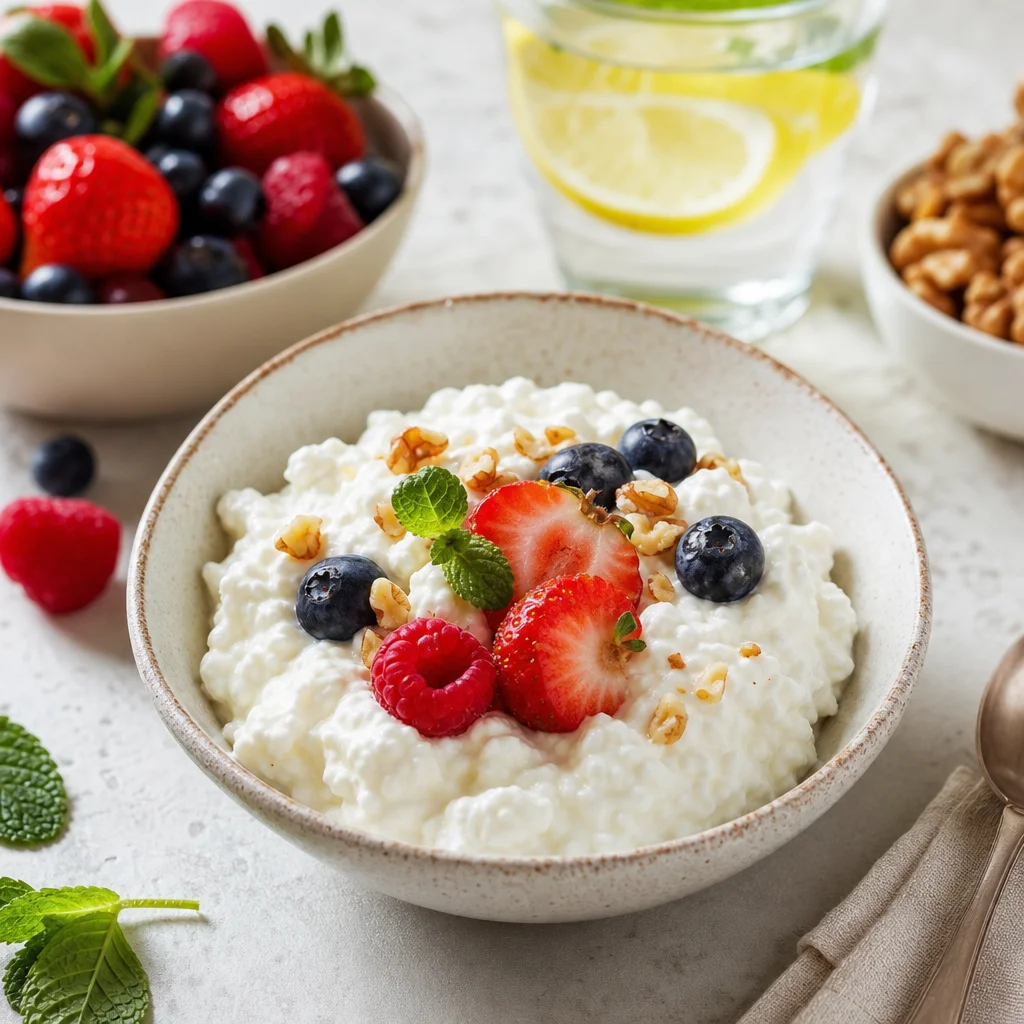
Plain cottage cheese is one of the easiest dairy foods to fit onto a blood-sugar-friendly plate. The question “is cottage cheese diabetic friendly” comes down to three numbers: carbs, protein and sodium. Half a cup of plain 2% cottage cheese has about 5 grams of carbs and 12 grams of protein. That is a food that barely moves your blood sugar. Here is what the label does not tell you.
Last updated: November 9, 2026
Quick Answer: Is Cottage Cheese Good for Diabetes?
For most women with prediabetes or type 2 diabetes, yes. A half-cup serving (113 g) of plain cottage cheese has roughly 3 to 5 grams of carbs and 12 to 14 grams of protein. Pick a tub with under 300 to 400 mg sodium per serving. Type 1 diabetes and kidney disease need a separate talk with your care team.
Is Cottage Cheese Diabetic Friendly? Why the Carb Count Matters
Carbohydrate is the nutrient that raises blood glucose. Cottage cheese carries very little of it. A half cup of the 1% version has about 3 grams. The 2% version lands near 5 grams. Nearly all of that is lactose, the natural milk sugar.
For scale, think about the alternatives. Half a cup of cooked white rice sits near 22 grams of carbs. One slice of sandwich bread sits near 15 grams. Cottage cheese adds very little glucose load to a meal.
Protein sits alongside the carbs. A half cup delivers 12 to 14 grams of complete protein. That means it supplies all nine amino acids your body cannot build on its own. Protein also slows digestion, so a meal leaves your stomach more gradually.
Is Cottage Cheese Healthy for Diabetics? What the Research Shows
Now you may be asking whether the protein actually blunts a glucose rise. It does, but less than most headlines suggest.
A 2024 meta-analysis in The Journal of Nutrition pooled 154 feeding trials. In people without diabetes, dairy protein cut the post-meal glucose response by about 52%. In adults with type 2 diabetes, that drop was about 18%. Insulin rose by roughly 34% in the type 2 group.
So the benefit is real, but modest. The bigger reason cottage cheese suits a diabetes eating pattern is simpler. It starts from almost no carbohydrate at all.
A 2026 review of 46 randomized trials in type 2 diabetes reached a related conclusion. Dairy effects shift with the type of dairy, the dose, the timing and any added sugar. “Dairy” as one category tells you very little.
The ADA consensus report on nutrition therapy makes a parallel point. There is no single required diabetic diet. The specific food and the portion matter more than a general label.
What a Half-Cup Really Contains
Concrete numbers help. This table uses USDA FoodData Central data, converted to a half cup (113 g).
| Per half cup (113 g) | 1% milkfat | 2% milkfat | Full-fat |
|---|---|---|---|
| Calories | 81 | 92 | 111 |
| Protein | 14 g | 12 g | 12.5 g |
| Carbs | 3 g | 5 g | 3.8 g |
| Fat | 1.2 g | 2.6 g | 4.9 g |
| Saturated fat | 0.7 g | 1.4 g | 1.9 g |
| Sodium | 459 mg | 348 mg | 356 mg |
| Cholesterol | 4.5 mg | 14 mg | 19 mg |
| Potassium | 97 mg | 141 mg | 118 mg |
| Phosphorus | 151 mg | 170 mg | 180 mg |
| Lactose | ~3 g | ~4.4 g | ~3 g |
Two results surprised me. First, full-fat cottage cheese is not higher in carbs than the leaner tubs. It is slightly lower, because cream dilutes the lactose. Second, USDA data for 1% cottage cheese shows the leanest version is also the saltiest.
Put simply, is cottage cheese diabetic friendly at every fat level? On carbs, yes. The real differences are calories, saturated fat and sodium.
So do not shop on fat percentage alone. Read the sodium line first, then the added sugar line, then the fat line.
The Sodium Reality Check
Sodium is the number that separates a good tub from a mediocre one. Standard brands run about 348 to 459 mg per half cup, based on USDA composition records. No-salt-added tubs land closer to 50 mg.
That is roughly a tenfold spread for the same protein and the same carbs. Therefore it is the most useful swap on the shelf.
Where does that fit in a day? Controlled US feeding trials use 2,300 mg of sodium daily as their middle reference level, as the DASH-Sodium trial describes. Two standard half-cups would be about 700 to 900 mg. That is close to a third of your day before anything else.
Is cottage cheese diabetic friendly twice a day? It can be, if you buy the low-sodium tub. You can also rinse and drain full-fat curds in a fine sieve to cut surface salt.
Does Cottage Cheese Have Healthy Fats? Cholesterol and Your Heart
Cottage cheese is not a high-fat food by cheese standards. A half cup of the full-fat version has about 4.9 g of fat, with 1.9 g saturated. Cholesterol stays low at about 19 mg, against 207 mg in one large egg.
For cholesterol, then, cottage cheese is a mild player. Saturated fat is the line worth counting. USDA values put it at 0.7 g for 1%, 1.4 g for 2% and 1.9 g for full-fat.
Does that make full-fat cottage cheese bad for your heart? Not automatically. A 2025 randomized trial in adults with prediabetes compared full-fat and non-fat yogurt. The main glucose outcome showed no difference. Some secondary markers favoured full-fat, though the study was small at 13 people.
Here is the balanced version. Fat level is a calories-and-saturated-fat decision, not a blood-sugar decision. If your LDL runs high, the leaner tub costs you less. If full-fat keeps you satisfied and your numbers are good, it is a fair choice.
Now, does cottage cheese have healthy fats in the olive-oil sense? Not really. Its fat is mostly saturated, with modest amounts of mono- and polyunsaturated fat. Treat it as a protein food, not a fat source. For better fat choices, see our heart-healthy snacks for women guide.
Is Cottage Cheese Healthy and Low Calorie? Portions and Timing
Yes, it is a genuinely low-calorie protein food. A half cup runs about 81 calories at 1%, 92 at 2% and 111 at full-fat.
Does it keep you full? Somewhat. A 2024 controlled trial in 30 women found that a high-protein dairy breakfast raised fullness for three hours. It did not reduce how much those women ate at lunch.
How much is sensible? One half-cup serving with a meal or snack suits most people. Two servings a day is fine when the sodium is low. Spread them across the day rather than eating a full cup at once.
Timing is flexible. Many women use it as an afternoon snack, because protein plus fibre softens the pre-dinner hunger window. Others prefer it at breakfast with berries.
The pairing matters more than the cottage cheese itself. Add fibre and fat to lower the glycemic load of the plate. Berries, chia, ground flax or a few walnuts all work. Our guide to fruit and blood sugar covers the best fruit choices. Frozen berries work just as well, and our piece on frozen foods for blood sugar explains why.
Who Should Be Careful With Cottage Cheese
Is Cottage Cheese Healthy for Pregnancy?
Yes, when it is pasteurized. The CDC lists pasteurized cottage cheese among the safer choices in pregnancy. Listeria risk attaches to raw-milk cheese and unheated soft queso fresco-type cheese. It does not attach to standard cottage cheese.
Two rules cover it. Check that the tub says pasteurized. Then keep it cold and eat it by the date on the lid.
Lactose intolerance versus dairy allergy
A half cup holds roughly 3 to 4.4 g of lactose, depending on fat level. Most lactose-intolerant adults can handle up to 12 g in one sitting. So half a cup is usually comfortable, and lactose-free tubs exist if it is not.
A dairy allergy is a different thing. It is an immune reaction to casein or whey protein, not a digestion problem. If dairy has ever caused hives, swelling or breathing trouble, skip cottage cheese entirely.
Type 1 diabetes
One clear boundary belongs here. In that same 2024 meta-analysis, added protein raised glucose in adults with type 1 diabetes by about 40%. Therefore protein dosing in type 1 diabetes belongs with your care team.
Kidney disease and blood pressure
A half cup supplies about 151 to 180 mg of phosphorus and 97 to 141 mg of potassium. Both nutrients are restricted in advanced kidney disease. If you limit either one, ask your team before making cottage cheese a daily habit.
How we researched this
We reviewed 10 sources, including the USDA FoodData Central database, government health agencies, meta-analyses, systematic reviews, clinical guidelines, and randomized controlled trials. Research date: November 9, 2026.
This article is for general information and is not a substitute for advice from your doctor or dietitian.
FAQ: Quick Answers on Cottage Cheese
Is cottage cheese bad for you before bed?
No. It is a slow-digesting protein, which makes it a reasonable evening snack. The overnight metabolism claim comes from studies in young resistance-trained men. General adults should not expect that effect.
Is cottage cheese bad for you every day?
Not for most people. Sodium is the thing that adds up over a week. If it becomes a daily habit, buy no-salt-added and keep the rest of your day lower in salt.
Are cottage cheese recipes healthy?
Usually yes, with one caveat. Blending it into dips, eggs or pancakes adds protein and creaminess. Watch for recipes that add sugar, syrup or extra salt. Our cottage cheese snack guide keeps the sugar low.
How to make cottage cheese healthy
Start with plain. Add your own fruit, herbs, olive oil or black pepper. Rinse and drain it in a fine sieve when the sodium is high. Skip fruit-flavoured tubs, which can reach 15 to 20 g of carbs per serving.
Is cottage cheese healthy or unhealthy?
For most people, healthy. It is a whole, minimally processed food with a strong protein-to-carb ratio. The risks sit in sodium, added sugar and individual tolerance.
Cottage cheese ideas that keep carbs low
Try it with tomato, cucumber, olive oil and black pepper. Whip it into a dip. Stir it into scrambled eggs or use it in place of sour cream. For a dairy comparison, our Greek yogurt benefits guide runs the protein numbers.
The Bottom Line
The Bottom Line
So is cottage cheese diabetic friendly? For most women managing prediabetes or type 2 diabetes, yes. A half cup gives you 12 to 14 grams of protein and only 3 to 5 grams of carbs.
The catch is sodium, not sugar. Choose a tub under 300 mg per serving, or rinse what you already have.
Then keep it simple. Plain cottage cheese, your own fruit or vegetables, and a portion you can hold in one hand. That is a healthy snack you can repeat without thinking.