

Blended Oatmeal vs Cooked Oats: What Actually Changes
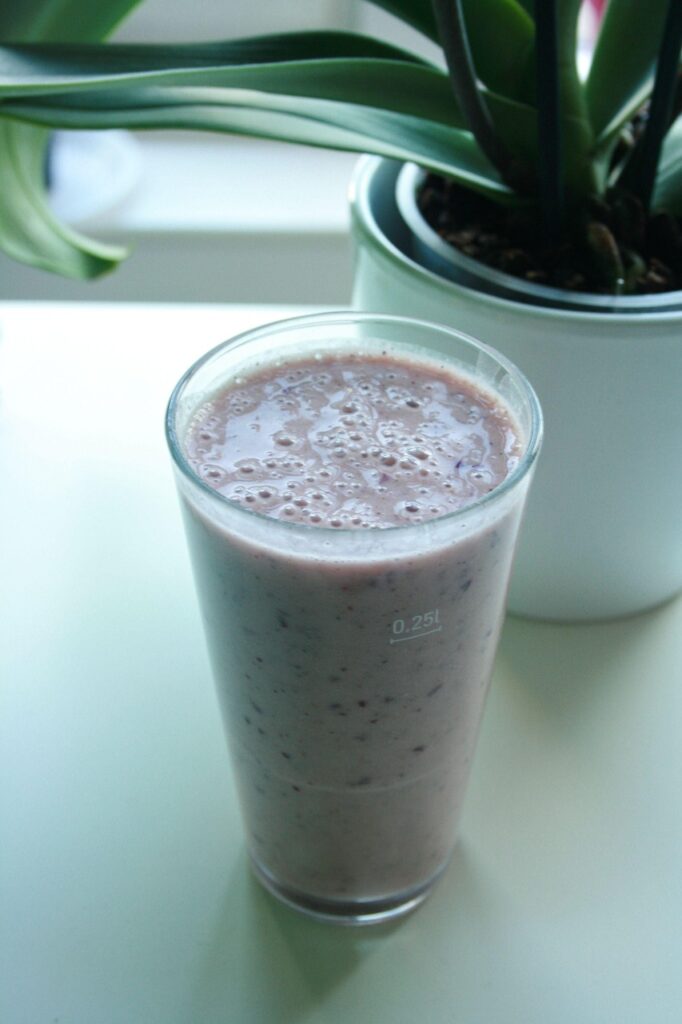
Key Takeaways
- Blending is mechanical, not chemical. The fiber, beta-glucan, protein and minerals all stay in the glass.
- The FDA counts ground whole oat flour as an approved oat source for the heart-health claim. Grinding does not erase that benefit.
- Blended oatmeal can digest faster, and a faster meal is easier to finish quickly. Pace — not the blender — is the real variable.
- Fullness depends far more on what you add and how slowly you drink it than on the blade.
Have you ever poured your oats into a blender and quietly wondered whether you just ruined breakfast? You are not alone. That exact question — cooked oatmeal versus blended oatmeal — recently landed in a nutrition forum. The person asking had already formed a theory. Solid oats stay in your body longer, they reasoned. Liquid moves through faster. So does blending change anything beyond texture?
Here is the honest answer. Some things change. Most things do not. And the biggest factor in whether your oats keep you full has nothing to do with the blender at all.
Let’s look at what the research really shows. Then we’ll build a breakfast that actually works.
Quick Answer: Is Blended Oatmeal as Healthy as Cooked Oatmeal?
Nutritionally, yes. Blending keeps the fiber, the beta-glucan and the minerals intact, and it does not erase the heart benefit. What changes is speed — of digestion and of eating. A blended breakfast can disappear in two minutes, and that fast pace is what may leave you hungry sooner. So make it thick, add protein and fat, keep something to chew, and give yourself at least ten minutes.
What Blended Oatmeal Changes — And What It Doesn’t
Start with the mechanics, because this part is simple. A blender blade adds no heat and no chemicals. It just breaks food into smaller pieces.
That still matters, however. Smaller particles soak up liquid faster. They also give digestive enzymes more surface area to work on. As a result, the same oats may move through your body at a different speed.
What stays the same is everything on the label. Fiber stays. Beta-glucan — the soluble fiber that gives oats their power — stays. Protein, magnesium, iron and zinc all stay too.
The Strongest Proof: A Federal Rule
The FDA’s authorized health claim for oat beta-glucan and heart disease lists which oat forms qualify. Alongside rolled oats and oat bran, it names whole oat flour — steamed and ground oats. Ground oats made the list. That tells you grinding is not treated as a loss.
The same claim offers a number worth remembering. About 3 grams of beta-glucan a day, inside a diet low in saturated fat, is the intake tied to lower heart disease risk. That is a target you build toward across a whole day, not something one bowl has to solve.
Then there is the cholesterol evidence, and it is stronger than most people realize. A 2023 review in Clinical Nutrition ESPEN pooled 28 trials and 1,494 people. Oat interventions lowered total cholesterol and LDL, the harmful kind.
Here is the fascinating part. Even isolated beta-glucan — an extracted, heavily processed oat fiber — still lowered LDL and triglycerides in that analysis. If an extracted fiber survives that much processing, your blender is not undoing your breakfast.
One honest caveat, though. Neither oats nor the extracted fiber raised HDL, the helpful kind. So blended oatmeal supports heart health, yet it is not a complete cholesterol plan.
Does Blended Oatmeal Keep You Full?
Now to the question you probably came here for. Your instinct is partly right, and that deserves a straight answer.
Where the Chewing Theory Holds Up
A 2018 meta-analysis in Appetite pooled 40 studies. Researchers found that chewing-related actions reduced both hunger and food intake. The effect was modest but real. Eating rate and texture genuinely changed how much people ate.
So yes, chewing matters. However, the story does not end there.
Where It Falls Apart
A 2020 trial in the American Journal of Clinical Nutrition tested something bold. Researchers thickened a breakfast with oat beta-glucan. That slowed stomach emptying from roughly 105 minutes to roughly 285 minutes.
Then they measured appetite. They found no difference at all. Pizza eaten at lunch looked the same in every group, landing between about 830 and 890 calories. Slower stomach emptying did not automatically mean more fullness.
On the flip side, an older crossover study in Physiology & Behavior found no satiety gap between liquid and solid food. Both suppressed hunger equally. Timing mattered more than form.
And here is what should settle your nerves. Mayo Clinic Health System recommends blending a quarter to half a cup of rolled oats into a smoothie. Their own guidance says it gives your breakfast the staying power of oatmeal.
No study has compared blended oatmeal with cooked oatmeal head to head, though. That is the honest limit of what we know. What the research does show is narrower. Pace and texture affect how much you eat. Liquid form alone does not reliably reduce fullness.
A Note on Who Funded the Research
Two of the strongest oat-satiety trials had co-authors from a large oat company. That does not make the results wrong, and other independent teams have found similar things. But you deserve to know it. Good science gets repeated by people with no money in the outcome.
The Blood Sugar Question Nobody Has Tested Directly
Blending does have one measurable downside worth knowing about. It is about speed, not damage.
A 2019 randomized trial in the British Journal of Nutrition measured blood sugar rises after different oat forms. Steel-cut oats caused the smallest rise, at 1.93 mmol/L. Large-flake oats came next at 2.19. Instant oats hit 2.47, and a highly processed oat cereal hit 2.49.
Notice the pattern. Less processing meant a gentler blood sugar rise. Now notice something else. Instant oats and the processed cereal were nearly identical. The gap across oat types is real, yet it is modest.
Critically, no trial has tested blended oatmeal against cooked rolled oats. So anyone who tells you blending spikes your blood sugar is guessing.
Here is what you can control instead. Choose a less-processed oat before you blend it. Add protein and fat, because both slow the whole meal down. Keep the portion defined, so you are not guessing at the end. And if you have diabetes or prediabetes, treat this as a conversation with your clinician. Want more blood sugar friendly meals? Our blood sugar salad comparison is a good next read.
The Real Variable Is Your Eating Pace
If one finding reframes this whole question, it is this one. A 2020 study in Nutrients followed 7,011 people. Faster eaters took in about 105 more calories a day. They carried roughly 5 kilograms more body weight. Additionally, they were twice as likely to become overweight.
That is an association, not proof of cause. Still, it points somewhere useful. How fast you eat may matter more than whether your oats get chewed or sipped.
This is why blended oatmeal is not the villain here. The blender is not the problem. Ninety seconds is the problem.
So aim for at least ten minutes with your breakfast. Use a spoon rather than an open glass, so each bite takes effort. Add nuts, seeds or berries that you actually have to chew. Those small changes restore the slower pace your body expects.
How to Build a Blended Breakfast That Actually Holds You
A formula beats a theory, so here is one you can repeat. Blended oatmeal works best when you build it like a meal, not a drink.
The Five-Part Build
Oats: a quarter to half a cup of rolled oats, measured once so you know your number.
Liquid: enough to blend smoothly, but not so much that it turns watery. Thickness is the goal.
Protein: Greek yogurt, milk, soy milk, or a scoop of protein powder.
Fat: nut butter, chia seeds or ground flax.
Texture: chopped walnuts, pumpkin seeds or whole berries — something your teeth have to work for.
Thickness matters because of what happens in your mouth and stomach. Oat beta-glucan forms a gel when it meets liquid. A 2014 randomized trial in Nutrition Journal found that this early thickening may be the key to appetite control. A thin drink skips right past it.
Want a template with real numbers? Mayo Clinic’s carrot cake overnight oats delivers 9 grams of fiber and 21 grams of protein in 395 calories. Blend the same ingredients for a smoother version. That is a breakfast built to hold you.
For a warm version, whisk a quarter cup of blended oats into simmering milk for two to three minutes. Top with peanut butter and sliced banana. Then eat it with a spoon, slowly, and enjoy the change in texture. For a make-ahead option, try our zucchini oatmeal cups.
On the flip side, do not over-blend. A thin, watery drink goes down too fast. Blend only until smooth, and then stop.
Who Should Be Careful
Oats suit most people well, but a few situations deserve attention before you make this a daily habit.
First, fiber ramp-up. Jumping into a high-fiber breakfast can cause gas and bloating. Start smaller and build over a week or two. Drink water alongside it, because fiber needs fluid to work well.
Next, blood sugar management. If you have diabetes or prediabetes, blended oatmeal may hit faster than steel-cut oats would. Pair it with protein and fat, keep the portion consistent, and check with your clinician. These are not reasons to avoid oats — just reasons to build the bowl carefully.
Also consider gluten. Oats are naturally gluten-free, yet cross-contact happens during growing and processing. If you avoid gluten for medical reasons, buy oats labeled gluten-free.
Finally, chewing difficulty. If dental work, braces or surgery makes chewing hard, a blended breakfast is a practical option. Ask your clinician or a dietitian to help you meet your protein and fiber needs at the same time.
Common Questions About Drinking Your Oats
Does blending oats destroy fiber?
No. Blending is mechanical, so it cannot break fiber molecules apart. Blended oatmeal still contains its fiber, its beta-glucan and its minerals. What changes is particle size, which affects how quickly your body can reach them.
Should I blend my oats if I want to manage my weight?
It depends on your pace and your add-ins, not on the blender. A thick blended oatmeal with protein, fat and something to chew can be a satisfying breakfast. A thin, sweet drink you finish in 90 seconds probably will not hold you. A 2013 systematic review of fiber and satiety found that oat beta-glucan is among the better-supported fibers for fullness — but fiber alone is never a guarantee. If you sweeten it, it helps to know how honey and sugar compare.
The Bottom Line
Blended oatmeal keeps the nutrition that makes oats worth eating. The fiber, the beta-glucan and the heart benefit all survive the blade. That part is settled, and you can stop worrying about it.
What changes is speed, and speed is something you control. Make it thick. Add protein and fat. Keep something to chew. Give it ten minutes.
You are not choosing between a healthy breakfast and a convenient one. You are choosing how you build it. Both a warm bowl and a cold glass can work beautifully — the meal just needs to slow you down a little.
So go ahead and press the button. Just drink it like you mean it.