

Anti-Inflammatory Dinner: The 3-Part Heart-Healthy Plate
Key Takeaways
- There is no official anti-inflammatory diet. A Mediterranean-style way of eating has the best evidence behind it.
- An anti-inflammatory dinner has three parts: an omega-3 protein, a fiber-rich base, and colorful vegetables.
- The American Heart Association target is two 3-ounce servings of fatty fish a week, not salmon every night.
- A 2022 review found fiber lowers LDL cholesterol and blood pressure, even in people who take heart medicine.
- Whole foods beat pills. In one side-by-side review, tomato foods beat lycopene capsules on most heart markers.
Picture this: it is 6:30 p.m., and you want dinner to do more than fill you up. That is the promise behind every anti-inflammatory dinner headline you scroll past. Here is the thing, though. Most of those articles hand you a food list and stop there.
You do not need another list. You need a formula you can rebuild tonight from what is already in your kitchen. So let’s break down what an anti-inflammatory dinner really is. Then we will look at what the research shows and how to build one fast.
Quick Answer: What Makes a Dinner Anti-Inflammatory?
An anti-inflammatory dinner is not one recipe. It is a pattern. Start with an omega-3 protein, add a fiber-rich base of beans or whole grains, then pile on colorful vegetables. Finish with olive oil, lemon, and fresh herbs. Bake, roast, or grill instead of frying. Skip the wine and the supplement aisle.
What an Anti-Inflammatory Dinner Actually Is
Let’s clear up one thing first. There is no officially defined anti-inflammatory diet, according to Harvard Health. It is a way of eating overall, not a strict plan you follow or fail. Cleveland Clinic puts it the same way. That difference matters, because it means you have room to improvise.
The real target is chronic inflammation. That is a slow, low-grade immune response that damages tissue over years. Researchers link it to heart disease, type 2 diabetes, dementia, and some cancers. Acute inflammation is different. That is just your body healing a cut.
Two eating patterns have the best evidence: the Mediterranean diet and the DASH diet. Large trials have tested the Mediterranean pattern head to head. As a result, it is the closest thing we have to a proven approach.
The Three Building Blocks Your Heart Wants
Every anti-inflammatory dinner rests on the same three legs. Miss one, and the plate still tastes fine. But it stops doing the work your blood vessels care about.
Block One: An Omega-3 Protein
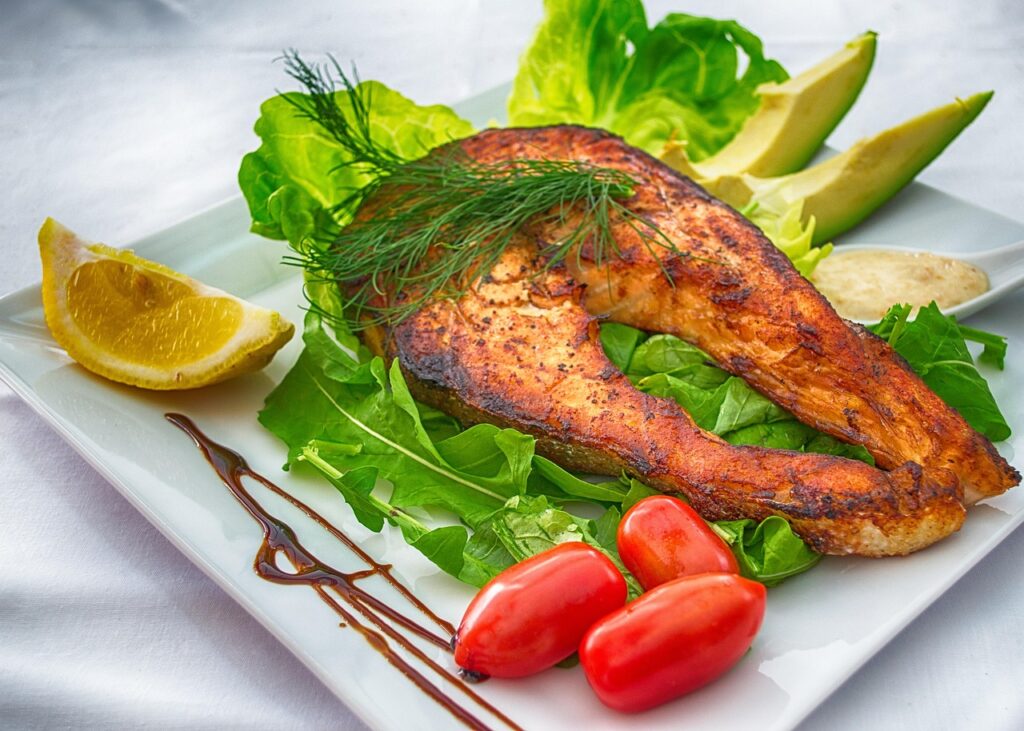
Salmon is the easy pick, fresh or frozen. Sardines, herring, mackerel, anchovies, and mussels also work. The American Heart Association names all of them as fatty fish worth eating.
Here is why it matters. Omega-3s are structural. Your body builds cell walls with them, and one type, DHA, piles up in your brain and eyes. They also help lower blood fats and support the lining of your blood vessels.
Block Two: A Fiber-Rich Base
Beans, lentils, whole grains, and starchy vegetables fill this role. They are also where most of the heart benefit quietly lives.
Want ready-made ideas? Our roundup of anti-inflammatory dinners with 6 grams of fiber or more shows how far a single plate can go toward your daily target.
A 2022 review in BMC Medicine pooled three cohort studies and 12 trials. Higher fiber intake lined up with lower death rates in people who already had heart disease. The trials also found lower LDL cholesterol and lower blood pressure. That blood pressure result had the highest certainty of any outcome measured.
One more point needs emphasis. People benefited whether or not they already took heart medicine. So fiber is not a swap for your prescription. It is a second lever.
Block Three: Colorful Vegetables, Herbs, and Olive Oil
Think broccoli, leafy greens, peppers, tomatoes, red onion, garlic, and fresh herbs. These bring polyphenols, plant compounds that act as antioxidants in your body.
For the same idea in a bigger bowl, see how to build the ultimate anti-inflammatory salad.
Real marker data backs this up. In a PREDIMED analysis of 1,180 people, higher polyphenol levels in urine tracked with lower heart risk. The link followed a dose pattern. And those compounds came mostly from olive oil, nuts, fruit, and vegetables.
How Much Fish, Exactly?
Here is the most useful number in this article. The American Heart Association suggests two servings of fish per week. One serving is 3 ounces cooked, or about three-quarters of a cup of flaked fish.
Two servings is a weekly goal, not a nightly one. That matters, because a lot of wellness writing implies you need salmon on the table every night. You do not.
Now, what if you do not eat fish? This is where most advice gets it wrong. Flaxseed, chia, and walnuts supply ALA, a plant omega-3. But the NIH Office of Dietary Supplements notes your body turns ALA into EPA and DHA only in very small amounts.
In practice, that means flaxseed is not a swap for salmon. The NIH has set no daily goal for EPA or DHA at all. Only ALA has an official target: 1.1 grams a day for women and 1.6 grams for men.
If you want EPA and DHA without fish, algal oil is the vegetarian choice. It comes from algae. Talk with your clinician before adding any supplement, especially if you take a blood thinner.
Choosing Fish Without Overthinking It
Canned sardines and anchovies sit on a shelf and cost little, so they make an easy pantry backup. Salmon, herring, and mussels are flexible weeknight picks. If you are pregnant, nursing, or feeding young children, check current FDA mercury advisories before choosing larger fish. Rotating your choices is the simplest safety habit of all.
Portions That Make an Anti-Inflammatory Dinner Work
Portions are where this plate becomes real. Yet most advice skips the amounts. Luckily, a government plan already did the math.
The DASH eating plan from the NHLBI sets daily serving goals for a 2,000-calorie diet. Vegetables and fruit each get four to five servings. Grains get six to eight. Meat, poultry, and fish get six or fewer.
Notice the shape. Vegetables and grains have a floor. Meat has a ceiling. That one idea reframes your plate fast.
Sodium counts too. This is where inflammation and blood pressure overlap. DASH caps sodium at 2,300 milligrams a day. Dropping to 1,500 milligrams lowers blood pressure even more.
So how does that look on one plate? Aim for about two servings of vegetables. Add a serving of beans and a serving of whole grains. Then keep the protein about the size of your palm.
Cooking Method: The Quiet Variable
Cooking method is the quiet variable in an anti-inflammatory dinner. You can buy perfect ingredients and still undo them in the pan.
Research backs the frying warning. A 2025 study in the American Journal of Clinical Nutrition followed more than 10,000 people. Those with a fried-food-linked gut bacteria profile had higher rates of diabetes and major heart events. Sibling comparisons showed similar results, which makes the finding stronger.
So bake, roast, grill, or air-fry instead. Harvard Health points to roasting, steaming, boiling, and a quick saute as better picks than deep-frying.
One more note on frying. The old worry was trans fats, which have largely left the food supply. Today the issue is simpler: added oil calories, saturated fat, and oil that has been reheated many times.
What to Keep Off the Plate
Subtraction counts as much as addition in an anti-inflammatory dinner. Ultra-processed food carries the clearest signal of all.
A 2025 scoping review in Nutrients mapped 24 studies on ultra-processed food and inflammation markers. Among adults, 11 of 17 analyses found higher C-reactive protein with greater intake. Five found no link. One found a link only in women.
CRP is a marker of inflammation in your blood. So that is a strong link, not proof of cause. Still, the practical swap is easy. Trade the jarred sauce, the frozen dinner, and the deli meat for whole ingredients in the same dish.
Not sure what to buy instead? Our anti-inflammatory foods grocery list maps the whole store aisle by aisle.
Also keep alcohol out of the picture. Many popular food lists still name red wine as anti-inflammatory. But current alcohol advice caps intake at one drink a day, and less is better. A 2025 review in Cardiovascular Research calls wine in a healthy diet increasingly debated.
Good news: the polyphenols in grapes, berries, olive oil, and nuts come without the alcohol.
Herbs, Spices, and the Supplement Trap
Herbs and spices belong on the plate. They add flavor with almost no calories, and they carry polyphenols too. Garlic, ginger, rosemary, chili, black pepper, cinnamon, and turmeric all count.
If you want to stock your rack with the ones that pull the most weight, we rounded up the anti-inflammatory herbs dietitians love for cooking.
This is where supplement marketing usually takes over. Turmeric capsules sell well for inflammation. Yet the evidence is mixed.
One 2023 meta-analysis of 66 trials found curcumin lowered CRP and two other inflammatory proteins. A separate 21-trial review in fatty liver disease found no real change in C-reactive protein or TNF-alpha. That review also warned about possible contamination in some products tested.
So use turmeric in your curry. Do not treat a capsule as the point of the plate. High-dose curcumin can also interact with blood-thinning medicine.
Marker Reduction Is Not the Same as Fewer Heart Attacks
This part almost never gets explained, and it is worth two minutes. Markers like CRP do move with diet. That change is real and repeatable.
A 2024 meta-analysis in Cardiovascular Research pooled 53 randomized trials and 171,668 people. Omega-3s lowered CRP on their own, apart from any cholesterol change. So the effect was real.
But the same authors added a key caveat. Whether lowering CRP actually prevents heart attacks still needs more study. In other words, the mechanism looks promising, and the outcome claim is unproven.
Where outcome evidence is strong, it sits at the pattern level. Large trials such as PREDIMED and CORDIOPREV support the Mediterranean diet for heart risk. One dinner is a brick, not a building.
Whole Foods Beat Pills
Here is a closing point the research supports firmly. Antioxidants work better on an anti-inflammatory dinner plate than in a capsule.
In one side-by-side review, researchers set tomato foods against lycopene capsules. For most heart measures, the whole food won. Blood pressure was the single exception favoring the capsule.
The same pattern shows up with fish. For most healthy adults, salmon is the better default than fish oil. The supplement evidence comes mainly from people who are already ill.
Turmeric is the cautionary example. Capsules have produced conflicting results across trials. So the honest move is to use the spice in your dinner as a flavorful, polyphenol-rich seasoning, not as a treatment.
On the flip side, supplements do have a place in some cases. A 2026 meta-analysis found omega-3 supplements lowered death rates in hospitalized or seriously ill patients. The authors saw the biggest benefit in people who already had heart disease. They also said the findings do not apply to healthy adults at home.
How to Build It in 30 Minutes
Here is the anti-inflammatory dinner formula in real life. Treat it as a template, not a recipe. Swap any column and it still works.
The Three-Column Template
- Column one, omega-3 protein: salmon, sardines, mackerel, or canned salmon
- Column two, fiber-rich base: lentils, chickpeas, white beans, farro, or whole-grain orzo
- Column three, colorful vegetables: broccoli, Brussels sprouts, peppers, tomatoes, red onion
- The finish: extra-virgin olive oil, lemon, garlic, and fresh herbs
Roast the vegetables and the protein together on one sheet pan at 425 degrees. Meanwhile, toss the base with olive oil and lemon. Then scatter herbs over everything.
This template hits each DASH target in miniature. You get about two vegetable servings and one bean serving. You also get one whole-grain serving, plus fish toward your weekly goal.
Do this twice a week and your fish goal is covered. Fill the other nights with beans, lentils, and vegetables. Then the pattern takes care of itself.
Short on time on those other nights? These anti-inflammatory recipes for make-ahead dinners do the cooking on Sunday.
Safety Notes Before You Change Anything
Let’s be honest about what can go wrong with a sudden shift.
Fiber first. Jumping from low fiber to high fiber in one week causes real bloating, gas, and cramping. Cleveland Clinic suggests giving any diet change three to six months. Start with one extra serving a day and build slowly.
Fish second. If you are pregnant, planning a pregnancy, or nursing, check FDA mercury advisories before choosing fish. Within those limits, the benefits still outweigh the risks.
Supplements third. Fish oil and high-dose curcumin can interact with blood thinners. Talk with your clinician or pharmacist before you combine them.
Allergies fourth. Fish, shellfish, tree nuts, and soy show up all through this pattern. Swap in safe choices if any of those are off-limits for you.
Finally, remember what food can and cannot do. It supports treatment. It does not replace it. Keep taking your medicines and keep your appointments.
None of these cautions changes the anti-inflammatory dinner pattern itself. They just make it safer to follow.
Frequently Asked Questions
Does one anti-inflammatory dinner make a difference?
Honestly, one meal is a single brick. Clinicians often note that change starts two to three weeks after you remove a trigger food. Fuller change takes three to six months. Consistency moves markers, not one perfect plate.
Is canned fish as good as fresh?
Canned sardines, anchovies, and salmon all count as fatty fish. They are also shelf-stable and cheap. Just check the sodium on the label, because brands vary a lot.
Can I eat pasta or rice with this dinner?
Yes. Whole-grain pasta, brown rice, farro, and oats all count toward your grain servings and your fiber. White versions are the ones worth limiting, since they lose the bran and germ.
Are seed oils inflammatory?
Probably not in the way you have read. The omega-6 ratio argument lacks strong human trial support. Extra-virgin olive oil is still the best default for flavor and polyphenols.
Do I need a fish oil supplement?
For most healthy adults, no. The strongest supplement evidence comes from people who are already hospitalized or living with heart disease. If you take a blood thinner, ask your clinician first.
The Bottom Line
An anti-inflammatory dinner is not a recipe you memorize. It is a pattern you can rebuild any night of the week.
Start with an omega-3 protein twice a week. Anchor the rest of the plate in beans, lentils, or whole grains. Pile on colorful vegetables, then finish with olive oil, lemon, and herbs. Cook it by baking, roasting, or grilling instead of frying.
Finally, give it time. Food patterns shift markers over weeks and months, not overnight. Above all, the strongest heart evidence points to food on a plate, not pills in a bottle.
Sources
- Harvard Health: Anti-inflammatory diet, foods that help reduce chronic inflammation
- Cleveland Clinic: Should You Follow an Anti-Inflammatory Diet?
- American Heart Association: Fish and Omega-3 Fatty Acids
- NIH Office of Dietary Supplements: Omega-3 Fatty Acids
- NHLBI: DASH Eating Plan
- BMC Medicine: Dietary fibre in hypertension and cardiovascular disease
- Cardiovascular Research: The Mediterranean diet and cardiovascular disease
- Cardiovascular Research: Lipid-lowering therapies and C-reactive protein
- BMC Medicine: PREDIMED urinary polyphenol signature and heart risk
- American Journal of Clinical Nutrition: Fried food, gut microbiota and cardiometabolic risk
- Nutrients: Ultra-processed food and systemic inflammatory biomarkers
- Cytokine: Curcumin supplementation and inflammatory markers
- Advances in Nutrition: Whole food versus lycopene supplement
- Nutrition Reviews: Omega-3 supplementation and mortality