

5 Anti-Inflammatory Herbs Dietitians Love for Cooking
Key Takeaways
- Your spice rack is medicine. Many culinary herbs are packed with antioxidants that help fight inflammation.
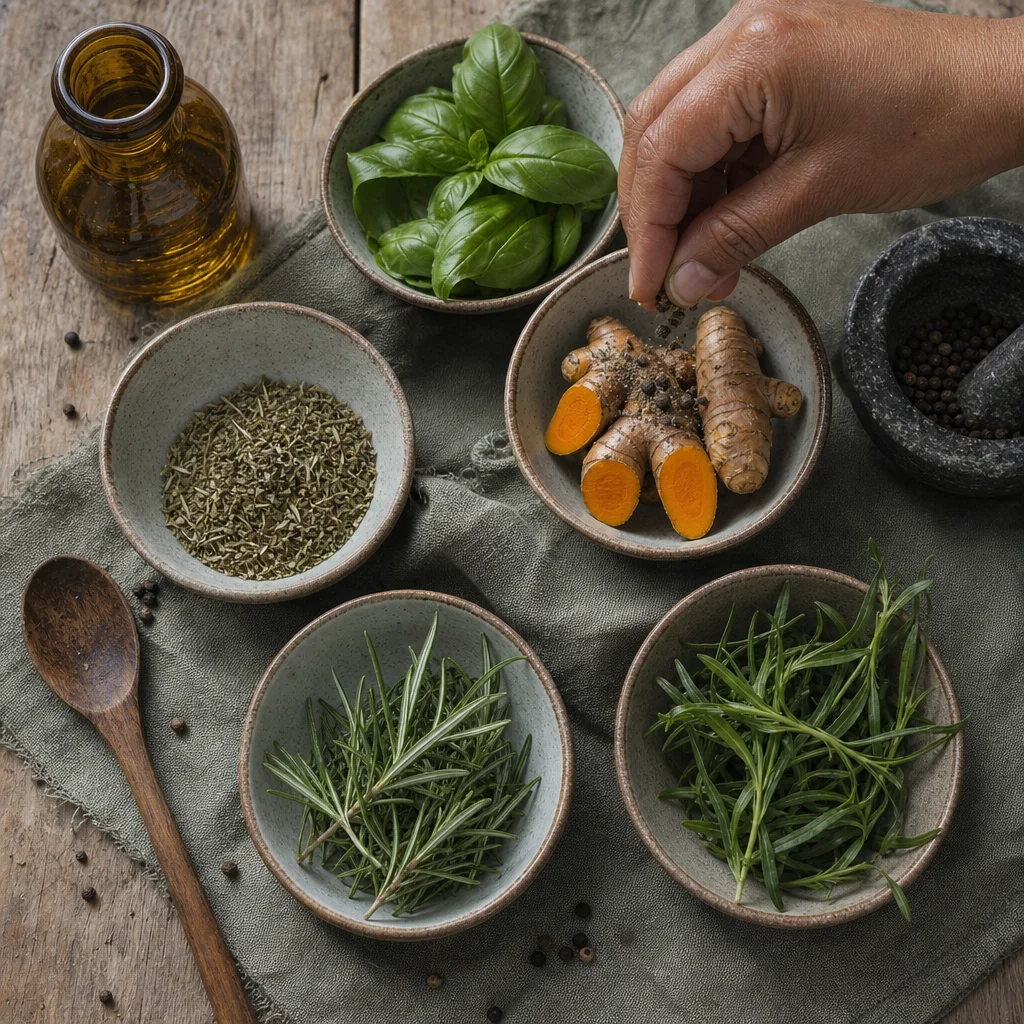
- Five stand-out herbs — basil, turmeric, oregano, rosemary, and tarragon — have the strongest evidence for anti-inflammatory benefits in everyday cooking.
- Cooking doses work. A 6g blend of mixed herbs (about 1 to 2 teaspoons) cut post-meal inflammation in a trial from The Journal of Nutrition.
- Pairing matters. Black pepper greatly boosts turmeric absorption. Fat helps too — herbs love olive oil.
- Consistency beats quantity. Small amounts of anti-inflammatory herbs used daily across many meals add up over time.
Open your spice cabinet. What do you see? If you’re like most home cooks, you have jars of dried oregano, basil, and rosemary sitting there — maybe turmeric too. Here’s the thing: those little jars hold real power. Dietitians and researchers agree that anti-inflammatory herbs like these are some of the most helpful tools we have for managing long-term inflammation. And you don’t need fancy supplements or expensive powders. You just need to cook with them. Often. Let’s look at how they work and how to use them every day.
Quick Answer: Do Anti-Inflammatory Herbs Actually Work in Food Amounts?
Yes. Many studies use high supplement doses. But a growing body of evidence shows that cooking amounts — roughly 3 to 6 grams (1 to 2 teaspoons) of mixed herbs per day — can lower signs of inflammation. The keys are using them daily, mixing different herbs, and smart combos like turmeric with black pepper and fat.
What Makes Anti-Inflammatory Herbs So Powerful?
Let’s be honest. We mostly reach for herbs to make food taste better. That’s fine — they do that well. But the science behind them is truly impressive.
Most kitchen herbs belong to the mint family. They make compounds called polyphenols and oils as a natural defense. When we eat them, those same compounds affect our body. A 2019 review in Genes & Nutrition confirmed that herbs and spices have antioxidant, germ-fighting, and anti-inflammatory effects in people. The authors note that even small daily amounts can benefit health.
Here’s what’s happening inside you. The active parts of anti-inflammatory herbs — like rosmarinic acid, curcumin, carvacrol, and eugenol — work through many pathways at once. They can lower markers of inflammation such as C-reactive protein (CRP) and tumor necrosis factor-alpha (TNF-α). They can turn on NRF2, your body’s main antioxidant system. And they can calm an overactive immune response.
Top Anti-Inflammatory Herbs to Try in Your Kitchen
Not all herbs are equal when it comes to fighting inflammation. Based on recent research, here are five that dietitians recommend most. Each has specific compounds that give it power.
Basil
You know basil as a pizza or pasta topping. But this herb is truly good for you. Basil contains eugenol (a natural pain reliever) and rosmarinic acid (a strong anti-inflammatory). A 2024 trial in Frontiers in Pharmacology found that basil oil rubbed on the skin helped knee osteoarthritis as much as a common anti-inflammatory gel. While that study tested topical application, rosmarinic acid — one of basil’s key anti-inflammatory compounds — has been shown to be bioavailable when consumed orally from mint-family herbs.
How to use it: Toss fresh basil into salads, stir it into ricotta for a savory spread, or add dried basil to tomato sauces and soups. It’s one of the most flexible anti-inflammatory herbs to keep on hand.
Turmeric
Turmeric is both a spice and an herb. Its bright yellow color comes from curcumin, the compound behind most of its benefits. A 2025 review of 104 trials in Foods found that curcumin cut CRP, TNF-α, and IL-6 — three key signs of inflammation. It also improved blood sugar, triglycerides, and HDL cholesterol in people with metabolic syndrome.
Now, you might think: does a sprinkle on dinner really work? Partly. Curcumin is hard for your body to absorb alone. But here’s the trick — black pepper contains piperine, which can boost turmeric’s absorption many times over. And curcumin needs fat, so cook it with olive oil or coconut milk.
How to use it: Add turmeric to curries, stir-fries, soups, and golden milk lattes. Always pair it with black pepper and a fat source.
Oregano
Oregano is one of the most antioxidant-rich herbs you can buy. A 2025 review in Pharmaceuticals showed that oregano contains carvacrol and thymol — two potent compounds with anti-inflammatory, antioxidant, and germ-fighting effects. The same review found oregano’s compounds may also fight cancer cells in lab studies.
What I find interesting is how well oregano works with other foods. Pair it with tomatoes, olive oil, beans, and lentils — the core of the Mediterranean diet. This eating style is linked to lower inflammation and better heart health. Adding anti-inflammatory herbs like oregano to these meals just adds more benefit.
How to use it: Sprinkle dried oregano on pizza, pasta, roasted veggies, and dressings. Fresh oregano works great in marinades for chicken or fish.
Rosemary
Rosemary is a fragrant powerhouse. It has two main anti-inflammatory compounds: rosmarinic acid and carnosic acid. A 2021 review in Phytotherapy Research found that these compounds block inflammatory pathways like NF-κB, COX-2, and TNF-α. A 2025 study in Frontiers in Pharmacology showed that carnosic acid turns on NRF2 in human colon cells, meaning it fights inflammation right in your gut.
Rosemary also shows up in pain research. A 16-week study found that a daily tea high in rosmarinic acid cut pain and stiffness in people with knee osteoarthritis.
How to use it: Rosemary goes well with roasted potatoes, meats, veggie soups, and rice. Blend chopped rosemary into butter or ricotta for a tasty spread on toast.
Tarragon
Tarragon may not get as much love as other herbs, but it deserves a spot. Its anise-like flavor lets you make bold dishes without much salt. Tarragon is part of the Artemisia plant group, which has well-known anti-inflammatory and antioxidant properties. Early studies suggest its active compounds may fight bacteria and help digestion.
How to use it: Add chopped tarragon to chicken salad, tuna salad, roasted mushrooms, or green beans. It also works well in vinaigrettes with lemon juice and Dijon mustard.
Fresh vs. Dried: Which Gives More Benefits?
You’ve likely wondered about this. Which is better — fresh or dried? The honest answer is both, for different reasons.
Dried herbs have more concentrated antioxidants gram for gram. Drying removes water, leaving behind a higher density of plant compounds. A teaspoon of dried oregano has more anti-inflammatory power than a tablespoon of fresh.
Fresh herbs, on the other hand, keep water-soluble nutrients like vitamin C and some B vitamins that break down during drying. They also hold volatile oils that give aroma — some of which are lost when dried.
The smart move? Use both. Use dried in cooked dishes like soups, stews, and sauces where they can rehydrate. Use fresh as finishing touches — sprinkle over finished dishes for brightness and delicate oils.
Simple Ways to Add More Herbs to Your Daily Meals
Here’s the thing. You don’t need to change your whole diet. Small, steady additions add up. A 2020 trial in The Journal of Nutrition found that a 6g blend of mixed herbs (including basil, oregano, rosemary, and turmeric) cut post-meal inflammation in men who were overweight. The effect only showed at 6g, not at 2g.
Six grams is about 1 to 2 teaspoons of dried herbs. That’s easy to reach across a day of normal cooking. Here’s how:
Daily Herb Integration Ideas
- Breakfast: Sprinkle rosemary and turmeric into scrambled eggs. Add fresh basil to avocado toast.
- Lunch: Whisk dried oregano and tarragon into salad dressing. Make a pesto with basil, olive oil, and nuts.
- Dinner: Season roasted veggies with rosemary and oregano. Add turmeric and black pepper to soups, curries, or rice.
- Drinks: Muddle fresh basil or rosemary into water with berries. Make golden milk with turmeric, black pepper, and coconut milk.
- Make a blend: Mix equal parts dried oregano, rosemary, basil, and turmeric plus black pepper. Use it on everything.
Safety and Precautions When Using Culinary Herbs
This is normal to wonder about. Herbs are food, but some have strong compounds that can interact with drugs at very high doses.
For cooking amounts — a sprinkle here and there — the risk is very low for most people. These are food ingredients, not supplements. Still, a few things to know:
- If you take blood thinners like warfarin, large amounts of rosemary and turmeric have vitamin K and may affect INR. A sprinkle on food is fine. Check with your doctor before using high-dose supplements.
- Pregnancy and breastfeeding: Cooking amounts of all these herbs are safe. Skip medicinal doses unless your doctor says it’s okay.
- If you have gallstones or bile duct issues, talk to your doctor before eating large amounts of turmeric. It can trigger bile production.
- People with low iron: some herbs can block iron absorption in very large amounts. Cooking uses are unlikely to cause problems.
As always, if you have a medical condition or take prescription drugs, tell your healthcare provider about your herb use. Natural doesn’t always mean risk-free at every dose.
Frequently Asked Questions
Q: Can I get enough anti-inflammatory benefit from herbs in cooking, or do I need supplements?
Research suggests that using herbs daily in cooking — about 3 to 6 grams across your meals — provides real benefits. Supplements give higher amounts, but they aren’t needed for everyone. Starting in the kitchen is safer, more enjoyable, and easier to keep up.
Q: How long do dried herbs keep their helpful compounds?
Dried herbs stay good for about a year or two when kept in a cool, dark spot in tight containers. After that, the oils break down and the benefits drop. If your dried herbs have lost their smell, they’ve likely lost some health power too.
Q: Does cooking destroy the anti-inflammatory compounds in herbs?
Heat can break down some compounds, but it also frees others from plant cells. A good rule: add delicate fresh herbs (basil, tarragon) at the end of cooking or as a garnish. Add sturdy dried herbs (oregano, rosemary) early so they can flavor the dish. Turmeric likes gentle heat, which helps release curcumin.
Q: Can herbs replace my anti-inflammatory medication?
No. Herbs in food are a helpful addition, not a replacement for prescribed drugs. If you have a long-term inflammatory condition, keep taking your medicine and use herbs as extra support. Talk to your doctor about it.
The Bottom Line
Your spice rack is already a set of anti-inflammatory herbs. You don’t need pricey supplements, complex plans, or rare ingredients. What matters is using them consistently — every day, across meals, in smart mixes.
Start simple. Pick two or three herbs from this list that you already like. Use them a bit more often. Pair turmeric with black pepper. Add rosemary to roasted veggies. Toss fresh basil into salads. Small things, done daily, add up to real health gains — and building your anti-inflammatory foods grocery list can help you stock your kitchen for success.
And the best part? These anti-inflammatory herbs make your food taste better too. That’s a win you can feel at every meal.