

Habits That Raise Cholesterol: 3 Daily Fixes
Key Takeaways
- The habits that raise your cholesterol most aren’t about eggs. They’re about sitting, sleep, and fiber.
- Oat beta-glucan cuts LDL by roughly 7 to 10 mg/dL at about 3 grams a day.
- Movement helps blood pressure, blood sugar, and weight. Its LDL effect on its own is small.
- Short sleep is tied to lower HDL and higher triglycerides. The LDL link is weak.
- No habit outruns genetics. If numbers stay high, ask about family history and Lp(a) testing.
Picture this: you eat oatmeal, you skip fried food, and your cholesterol still climbs. It’s frustrating. And it’s common, because many everyday habits that raise cholesterol have nothing to do with food.
They hide in your workday, your evenings, and your mornings. So let’s look at the three daily patterns that matter most.
We’ll also show you where the science is strong, where it’s surprisingly thin, and what actually moves your numbers.
Quick Answer: Do daily habits really raise cholesterol?
Yes, but not equally. Saturated fat, added sugar, smoking, and low fiber have the strongest evidence. Long sitting, short sleep, and skipped breakfast are tied to worse numbers too. However, the habits that raise cholesterol are not all backed by equal proof.
The Habits That Raise Cholesterol Most — Ranked by Evidence
Not every habit deserves the same worry. So here’s how the habits that raise cholesterol stack up, from strongest evidence to weakest.
Tier 1 — strong evidence. Saturated fat, added sugar, low fiber, smoking, and alcohol all have decades of research behind them. For example, the American Heart Association’s 2021 dietary guidance focuses on overall eating patterns. It calls for whole grains, minimally processed foods, and far less added sugar.
Tier 2 — moderate, mostly observational. Long sitting, short sleep, and skipped breakfast show up in large population studies. Yet trials that actually change these behaviors often fail to move cholesterol. That gap matters, and we’ll dig into it below.
Tier 3 — worth knowing. Some medications, thyroid problems, and inherited conditions can raise cholesterol too. These aren’t habits at all. However, they explain why some people do everything right and still see high numbers.
Habit 1: Sitting All Day, Even If You Exercise
You got your workout in. Then you sat for nine hours straight. Does the sitting cancel out the workout? Partly — but not in the way you’ve been told.
What Movement Really Does — and Doesn’t Do
Here’s what’s actually happening. A meta-analysis of 62,056 adults found that replacing 30 minutes of sitting with brisk movement was linked to higher HDL and lower triglycerides. More movement also tracked with lower risk of obesity, high blood pressure, and diabetes.
Now the flip side. A review of 17 trials helped sedentary adults sit less and move more. Their BMI, blood sugar, and systolic blood pressure all improved. But their cholesterol numbers did not.
Another meta-analysis found the same pattern. Exercise improved blood pressure and resting heart rate. It did not significantly change total cholesterol, HDL, LDL, or triglycerides.
So should you skip the walk? Absolutely not. Movement keeps your blood pressure, blood sugar, and weight in a healthier range. Just don’t expect it to fix a high LDL on its own.
The Right Kind of Movement for Your Numbers
If you want to be precise, the type of movement matters. A network meta-analysis of 47 trials ranked combined aerobic plus strength training best for raising HDL. Intervals ranked best for total cholesterol. So pair your walks with weights.
The good news? Of all the habits that raise cholesterol, this one is the easiest to interrupt. Stand up every hour. Take phone calls on your feet. Walk to refill your water bottle.
Habit 2: Skimping on Sleep
You’ve probably read that poor sleep raises LDL cholesterol. That claim is everywhere. So let’s check it against the actual data.
A nationally representative US study of 2,705 adults looked at sleep length and blood fats. Short sleep was linked to lower HDL and higher triglycerides. However, it found no meaningful link to LDL at all.
Why Body Weight and Sleep Apnea May Be the Real Story
Then there’s the confounding problem. A Dutch study of 4,260 adults found that sleep-lipid links vanished once researchers adjusted for body weight and sleep apnea. In other words, the pattern may run through weight and breathing, not sleep itself.
That matters for one practical reason. If you snore, wake up gasping, or feel drained after eight hours, ask your doctor about a sleep study. Treating sleep apnea may help your numbers more than an extra hour in bed.
A steady wind-down routine helps too — see our guide to evening cholesterol habits that lower LDL.
Does that mean sleep doesn’t matter? Not at all. Sleep still shapes your blood pressure, blood sugar, appetite, and mood. It simply isn’t one of the daily habits that raise cholesterol by pushing LDL upward.
Habit 3: Skipping Breakfast (or Skipping Fiber?)
Here’s a headline you’ve seen before. Breakfast skippers have higher cholesterol. In the data, that’s loosely true. A meta-analysis of nine studies tied breakfast skipping to 13% higher odds of high cholesterol.
But that evidence is entirely observational. People who skip breakfast may also work night shifts, sleep less, or smoke. So we can’t say skipping breakfast causes high cholesterol.
And the story gets more interesting. A 36-month study of 383 adults found that both very small and very large breakfasts were linked to worse triglycerides and lower HDL. Oversized breakfasts showed the biggest effects.
So the real variable isn’t whether you eat breakfast. It’s what’s in it — and how much.
The Fiber Lever That Actually Moves LDL
That leads to the strongest dietary lever in this whole article: fiber. Specifically, oat beta-glucan — a soluble fiber in oats that forms a gel in your gut. A meta-analysis of 28 randomized trials found that 3 grams a day lowered LDL by about 10 mg/dL.
Two more analyses agree. A review of 58 trials found a drop of roughly 7 mg/dL. And a 2022 meta-analysis in adults with high cholesterol landed near 10 mg/dL again.
Notice what didn’t change. None of these analyses showed a rise in HDL. So oatmeal won’t fix a low “good” cholesterol number. It targets LDL specifically.
One honest note. A 2024 review rated this evidence moderate. It found no proven effect on heart attacks or strokes. Oat fiber can also cause gas, nausea, or loose stools. So raise your intake slowly over a few weeks.
Adding fiber for the first time? Our guide to natural constipation relief shares gentle ways to start.
What 3 Grams of Oat Beta-Glucan Looks Like
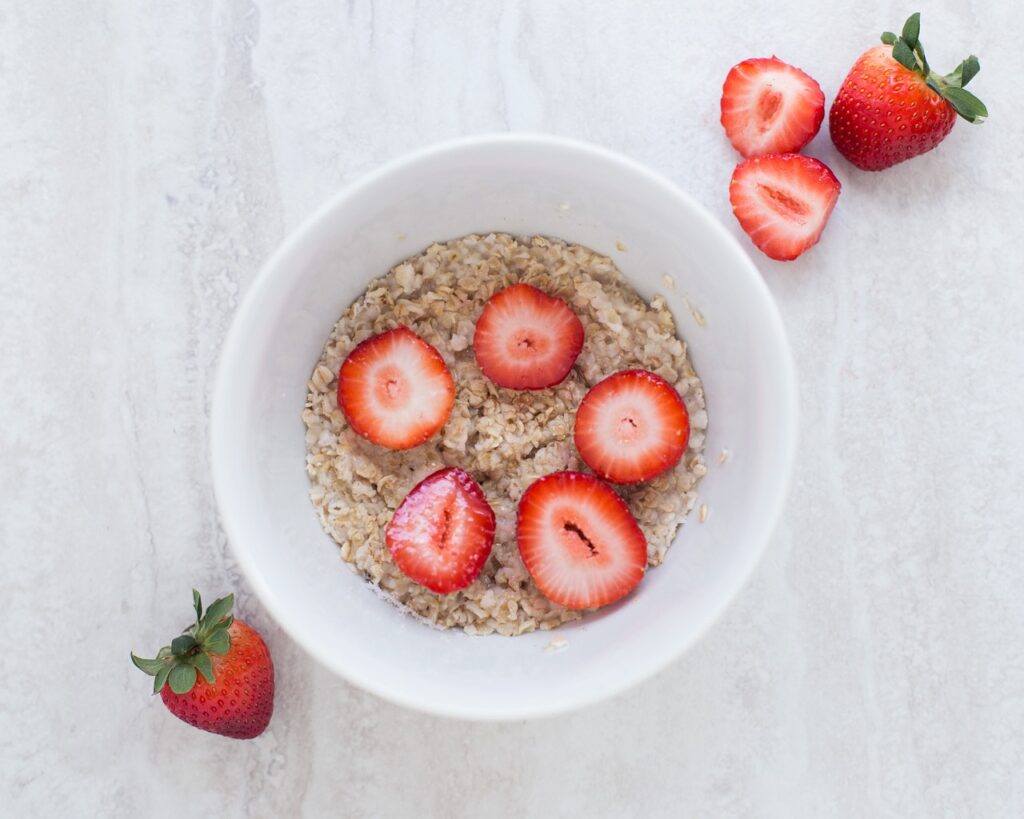
Roughly 1 to 1.5 cups of cooked oat bran, or about three servings of oatmeal-style oats. A simple build: about one cup of dry oats, a spoon of chia, a handful of berries, and some nuts.
Among the many habits that raise cholesterol, a low-fiber breakfast is the one you can change tomorrow morning. So start there. Need more fiber-forward ideas? See 18 meals that nourish your microbiome.
Other Habits That Raise Cholesterol That Get Overlooked
Sitting, sleep, and breakfast grab the headlines. However, a few other daily patterns carry stronger evidence — and far less attention.
Sugar, Alcohol, Tobacco, and Stress
Added sugar and sugary drinks. Your liver turns extra sugar into triglycerides. Over time, that can raise triglycerides and lower HDL. The American Heart Association advises cutting back on added sugars in food and drink. Cutting back? Our list of snacks that won’t spike your blood sugar can help.
Alcohol. A nightly glass of wine feels harmless. Yet regular drinking raises triglycerides and adds empty calories. The AHA is blunt here: if you don’t drink, don’t start. If you do drink, keep it limited.
Smoking and secondhand smoke. Tobacco damages blood vessel walls and lowers HDL. Even secondhand exposure works against you. Quitting is the single biggest heart-health step most people can take.
Certain medications. Some prescription medicines — including certain diuretics, retinoids, and immunosuppressants — can affect blood cholesterol. So if your numbers rose after starting a new medicine, ask your doctor or pharmacist whether it could be a contributor.
Long-term inflammation. Chronic inflammatory conditions have been linked with less favorable lipid levels. So if you live with one — such as rheumatoid arthritis or psoriasis — keep an eye on your lipid panel too.
Chronic stress. Much of stress’s effect on cholesterol appears to run indirectly — through less sleep, more comfort eating, and less movement. So the fix is often behavioral.
Taken together, these are real habits that raise cholesterol for many people. The upside? Most respond well to simple swaps.
What Your Cholesterol Numbers Actually Mean
None of this matters if you don’t know your starting point. High cholesterol has no symptoms. So a lipid panel — a simple blood test — is the only way to know.
The CDC’s target cholesterol levels are clear. Aim for a total cholesterol near 150 mg/dL. Optimal LDL sits around 100 mg/dL. HDL should be at least 40 mg/dL in men and 50 mg/dL in women. And triglycerides should stay under 150 mg/dL.
A total cholesterol above 200 mg/dL may be considered high. Because you can’t feel it, testing is the only way to catch it early.
So get the test. Only then can you tell which of the habits that raise cholesterol are actually moving your numbers.
When Healthy Habits Aren’t Enough
Sometimes you do everything right and your numbers stay stubborn. That isn’t a personal failure. It’s information — and the habits that raise cholesterol are only part of the picture.
Genetics play a big role for some people. Familial hypercholesterolemia is an inherited condition that affects roughly 1 in 200 to 1 in 250 people. Most don’t know they have it.
Other causes are worth ruling out too. These include an underactive thyroid, certain medications, and insulin resistance.
Questions Worth Asking Your Doctor
- Should I be screened for familial hypercholesterolemia?
- Can I get a lipoprotein(a) test? Lp(a) is a genetically determined particle that’s associated with higher cardiovascular risk.
- Could any medication I take be pushing my cholesterol up?
- Should we check my thyroid?
- At what point do we talk about medication?
Remember the bigger picture too. The joint AHA and ACC guideline treats healthy living as the foundation for everyone. However, for higher-risk patients, medication is a separate decision. It’s made with your clinician — not instead of your habits.
One more practical note. Grapefruit juice can interfere with how your body handles certain statins. So ask your pharmacist before adding it to your morning routine.
The Bottom Line
Your cholesterol isn’t just about what’s on your plate. It’s shaped by how you sit, how you sleep, and how you start your day.
Here’s your simple plan. Break up long sitting stretches every hour. Protect a steady sleep window, and get snoring checked. Build a fiber-forward breakfast around oats. Then cut back on added sugar, alcohol, and tobacco.
Be patient with yourself too. The fiber gap has the clearest payoff of any single change — roughly 7 to 10 mg/dL off your LDL. No other habits that raise cholesterol respond as well to one adjustment.
Movement, meanwhile, keeps your blood pressure, blood sugar, and weight healthier. That’s plenty of reason to keep moving. Just don’t expect it to carry the whole load.
And if your numbers stay high? Talk to your doctor. Ask about family history, Lp(a), thyroid, and medication. Good habits plus good information beat good habits alone.