

Late-Night Snacks for Gut Health: Dietitian-Approved Swaps
Key Takeaways
- The same snack that feels fine at 4 PM can cause bloating or reflux at 10 PM. Gravity and your body’s wind-down change how food is handled.
- The biggest late-night culprits: high-fat dairy, salty chips, spicy foods, and candy.
- Swap smart: Greek yogurt or banana nice cream for ice cream, carrot sticks with hummus for chips, banana or kiwi for candy.
- Keep a two to three hour buffer between your last bite and bedtime. Research links late meals to worse reflux and poorer sleep.
- A small, fiber-rich snack is your safest bet when late-night hunger strikes.
It’s 10 PM. The lights are low, your teeth are brushed, and you’re two steps from bed. Then the freezer starts whispering your name. Or your hand lands on the chip bag. Sound familiar? When it comes to snacks for gut health, timing matters more than you think. The same food that feels fine at 4 PM can leave you bloated, gassy, or reaching for antacids at 10 PM. It’s not your imagination. Your body handles food differently once it’s winding down for sleep.
The good news? You don’t have to swear off evening snacks. You just need to know which ones to skip, which to swap in, and when to eat them. That’s what this guide covers \u2014 the why behind the 10 PM hunger trap, plus a swap table you can use tonight.
Quick Answer: Is a Bedtime Snack Bad for Your Gut?
Not necessarily. The problem isn’t snacking at night. It’s what, how much, and when you eat. Skip high-fat, salty, spicy, and sugary foods close to bed. Choose small, fiber-rich whole foods instead. And aim to eat two to three hours before lying down.
Why Late-Night Snacks for Gut Health Hit Differently
Let’s be honest: a bowl of ice cream at 4 PM probably won’t bother you. At 10 PM, it might. Why? Because your body is shifting into rest mode, and digestion slows down.
Gravity is part of the story. When you’re upright, gravity helps keep stomach contents where they belong. Once you lie down, that help disappears. That’s why experts at Cleveland Clinic advise staying upright after meals.
There’s also a muscular valve called the lower esophageal sphincter, or LES. Picture it as a one-way trapdoor. When it works well, it keeps stomach acid inside. Certain foods can relax that valve, and high-fat foods are the biggest culprits.
Your body clock matters too. A 2025 review of late-night eating suggests that eating close to bedtime can delay melatonin. That’s the hormone that helps you sleep. It can also raise nighttime stress hormones. In plain terms: very late eating works against your natural wind-down.
So when experts talk about snacks for gut health, they’re not just talking about what you eat. They’re also talking about when and how you eat it.
The 4 Worst Late-Night Snacks for Gut Health
When dietitians talk about late-night snacks for gut health, four categories come up again and again. Here’s why each one hits differently at night.
1. High-Fat Dairy (Ice Cream)
Ice cream is high in fat, and fat slows gastric emptying. That’s how quickly food leaves your stomach. When food sits longer, it can trigger indigestion and disrupt sleep. Plus, many adults have some lactose intolerance without realizing it. That can show up as gas or bloating late at night.
On the flip side, that doesn’t mean everyone must skip dairy at night. The key is fat content and your own tolerance. If ice cream regularly leaves you uncomfortable, choose something lighter instead \u2014 see our dietitian-approved picks for frozen foods for gut health.
2. Salty Snacks (Chips and Pretzels)
Chips feel light, but your stomach may disagree. CDC data on sodium intake shows Americans average more than 3,300 milligrams of sodium a day. That’s well above the 2,300 mg limit. A handful of chips at night adds to an already salty day.
Dietitians note that salty snacks can make you extra thirsty before bed. That may mean more bathroom trips overnight. It can also contribute to bloating and water retention. And if those chips are fried or greasy, the fat adds reflux risk too.
3. Spicy Foods
Spicy foods are a classic trigger for indigestion. Capsaicin \u2014 the compound that brings the heat \u2014 can slow digestion and irritate the esophagus. Clinical guidance lists spicy foods among commonly reported reflux triggers \u2014 though research suggests they bother some people more than others.
However, spice isn’t a problem for everyone. But if you have a sensitive gut or IBS, it’s especially risky at night.
4. Sugary Snacks (Candy)
Candy makes blood sugar spike and then crash. A 2026 review of diet and the gut microbiome notes a key pattern. Diets consistently high in sugar can shift gut bacteria toward less helpful strains.
But let’s keep perspective. One candy bar won’t wreck your microbiome. It’s the pattern that matters. If late-night sugar is a nightly habit, that’s when your gut starts to feel it.
The 10 PM Swap Table: Better Options for Your Gut
You don’t have to eliminate evening snacks. You just need better options. Choosing better snacks for gut health doesn’t mean deprivation. Here’s a swap table built around the four trouble categories. Each swap keeps the feel of the original \u2014 creamy, crunchy, savory, or sweet \u2014 without the night-time backlash.
| Skip This | Try This Instead | Why It Works |
|---|---|---|
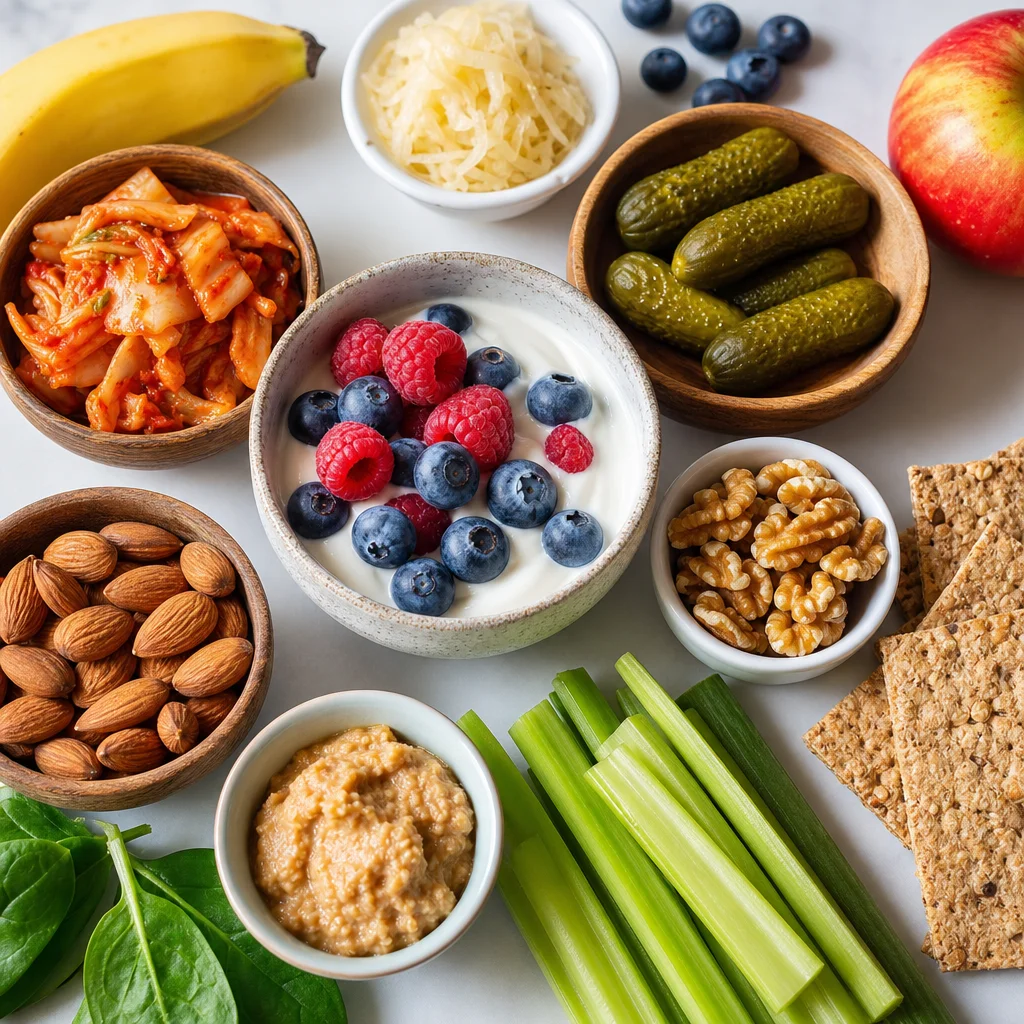
| Ice cream | 1/2 cup plain Greek yogurt with berries, or banana nice cream | Probiotics add beneficial bacteria to your gut, and the berries’ fiber feeds them. Protein keeps you full, with less fat and sugar. |
| Chips or pretzels | Carrot sticks with 3 tbsp hummus | Same crunch. Plus fiber from carrots and plant protein from chickpeas. |
| Spicy snacks | Whole-grain crackers with cheese, roasted chickpeas, or avocado toast | Satisfying and savory. No capsaicin, and fiber supports gut bacteria. |
| Candy | 1 banana or 2 kiwis | Prebiotic fiber feeds good bacteria. Kiwi has strong evidence for digestive comfort. |
There’s real science behind the fiber-first approach. An AJCN randomized trial on fiber snack bars is worth knowing about. Adding just 3 to 7 grams of fiber to daily snacks measurably increased Bifidobacterium. That’s a beneficial type of gut bacteria. In short: every snack is a chance to feed your gut.
Kiwi deserves a special mention. A randomized trial of kiwifruit found clear results. Eating two green kiwis a day improved bowel regularity and eased digestive discomfort.
Fiber targets for adults range from 21 to 38 grams a day. Most of us fall short. Mayo Clinic’s fiber guide confirms that whole-food snacks are a smart way to close that gap.
Keep the portion small. That’s enough to take the edge off hunger without overloading digestion. The point is building a habit of snacks for gut health that satisfy you. If dairy bothers you, choose lactose-free Greek yogurt. Or try kiwi and banana nice cream instead.
Timing Rules That Protect Your Gut (and Your Sleep)
What you eat matters. But when you eat matters just as much. These timing rules make the biggest difference. And they work for snacks for gut health too.
Give yourself a two to three hour buffer. A 2026 Nutrients study on late meals and reflux is clear. Researchers linked eating less than two hours before bed to higher odds of reflux symptoms. The Maastricht Study on meal timing and sleep found something similar. A longer last-meal-to-bedtime gap was associated with better sleep.
Here’s a realistic ladder. Ideal: three hours or more. Good: two hours. Compromise: a small snack, then 30 minutes upright before bed.
Stay upright after your snack. Sitting upright for 20 to 30 minutes gives gravity time to do its job.
Sleep on your left side if you’re reflux-prone. Research on reflux and sleeping position found a clear pattern. Lying on the right side produced about four times more reflux episodes per hour than the left.
Check in with yourself first. Are you actually hungry? Or are you bored, stressed, or tired? If it’s not real hunger, a glass of water or a few deep breaths might be enough.
Sensitive Gut? Here’s How to Adjust
A sensitive gut doesn’t mean giving up snacks for gut health. Lactose intolerance is more common than most people think. The good news? Strained (Greek) yogurt typically contains less lactose than regular yogurt. That’s because straining removes some of the lactose-rich whey. Still, tolerance varies from person to person. If it still bothers you, try lactose-free or plant-based yogurt. Kiwi is another great choice.
If you have IBS, go slow with new fiber. Start with a small portion and watch how your gut responds. The savory swaps \u2014 crackers with cheese, roasted chickpeas, avocado toast \u2014 are gentler than spicy options.
And if you’re new to fiber-rich snacks, expect some gas at first. That’s a normal adjustment, not a problem. Mayo Clinic’s fiber guide suggests adding fiber slowly over a few weeks. Drink plenty of water too.
Your Late-Night Snack Questions, Answered
Is the occasional bowl of ice cream really that bad?
No. One bowl won’t wreck your gut. The issue is habit. If ice cream regularly leaves you bloated or refluxing, that’s your cue to swap. If it doesn’t bother you, enjoy it earlier in the evening and stay upright afterward.
What if I’m lactose intolerant but love yogurt?
Strained Greek yogurt has less lactose than regular yogurt. If that still bothers you, choose lactose-free or plant-based options. Kiwi and banana nice cream also work well.
Which side should I sleep on to avoid reflux?
The left side. Research shows less acid exposure when you lie on your left. That’s a simple change that can make a real difference.
How fast will I notice less bloating?
There’s no universal timeline \u2014 it varies from person to person. Some people feel a difference within a week or two of consistent swaps; others need longer. The most reliable guide is your own food-and-symptom journal. Track what you eat and how you feel for a week or two, then look for patterns. Remember \u2014 the best snacks for gut health are the ones that work for your body.
The Bottom Line
Late-night snacking isn’t a moral failure. It’s biology. The 10 PM hunger trap is real. And the fix isn’t willpower \u2014 it’s smarter choices.
Pick snacks for gut health that are small, fiber-rich, and easy to digest. Keep them two to three hours before bed when you can. Stay upright for a while after eating. And trust how your body responds \u2014 that’s the most reliable guide of all.
One swap tonight. That’s all it takes to start.